dailynewsnblog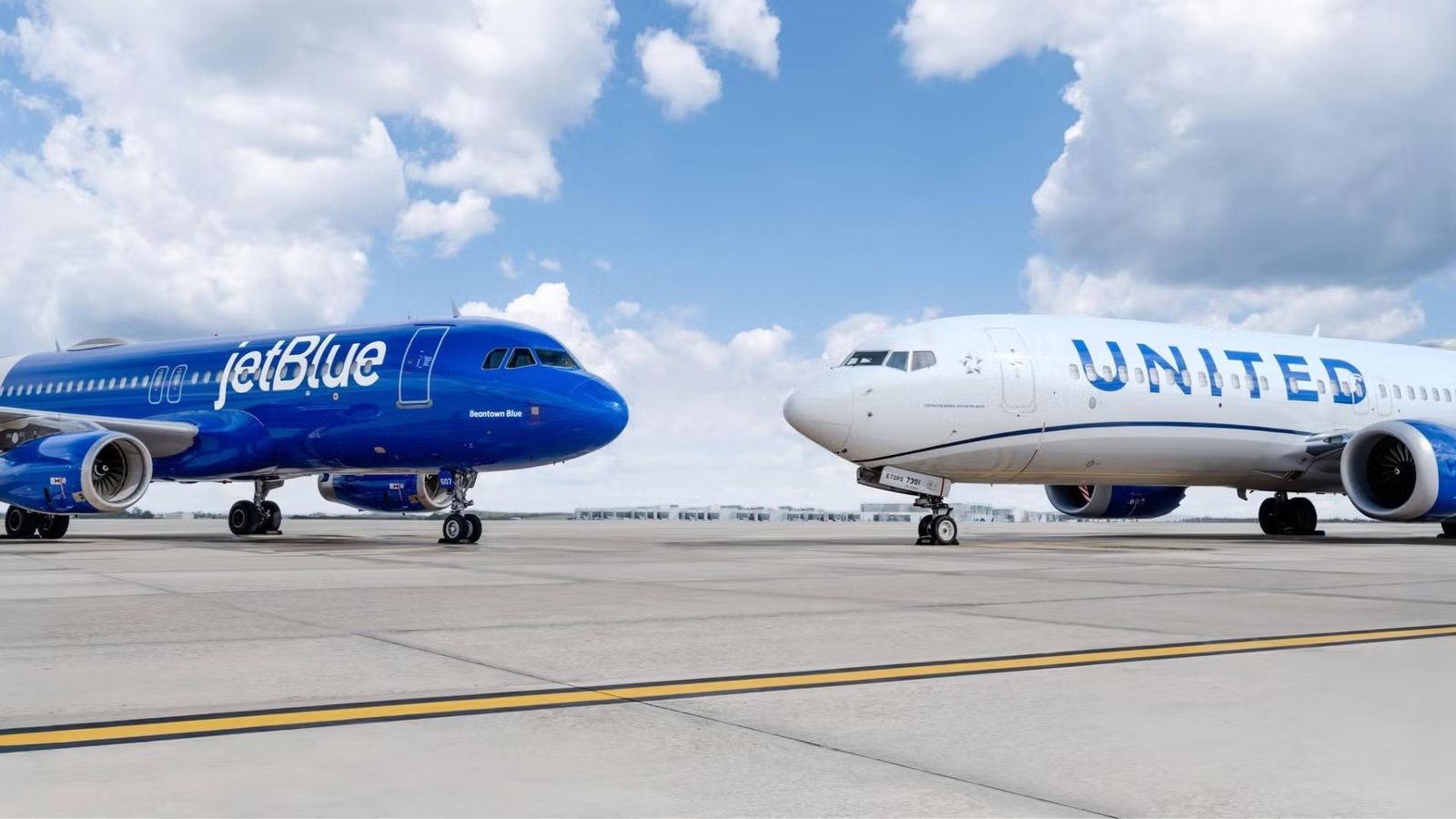
The possibility of closer ties between  United Airlines and JetBlue Airways is once again drawing attention after comments from United CEO Scott Kirby suggested there may be room for greater collaboration between the two carriers. While industry observers have long speculated about potential consolidation among US airlines, the latest discussion appears to be focused on expanding cooperation rather than pursuing a traditional merger.
Kirby’s remarks, reported by Live And Let’s Fly, arrive as both airlines continue to navigate a rapidly evolving aviation landscape. United has spent recent years expanding its international reach and strengthening its premium offerings, while JetBlue has been exploring ways to enhance its competitiveness following a series of regulatory and strategic challenges. Against this backdrop, a deeper partnership could provide advantages for both companies while avoiding many of the obstacles associated with a full-scale combination.
United & JetBlue Operate At Very Different Scales

Any discussion about closer ties between United and JetBlue requires an understanding of the significant differences between the two airlines. United ranks among the world’s largest carriers, operating a fleet of more than 1,000 aircraft and connecting travelers to hundreds of destinations across North America, Europe, Asia, Africa, South America, and Oceania. Its sprawling hub system gives the airline a truly global reach that few competitors can match.
JetBlue, while much smaller, has carved out an influential position within the US market. The airline operates a fleet of nearly 300 aircraft and serves destinations throughout the United States, the Caribbean, Latin America, and parts of Europe. Despite its more modest size, JetBlue transports tens of millions of passengers each year and remains a recognizable brand known for its customer-focused approach.
The differing strengths of the two carriers help explain why industry observers see potential value in a deeper relationship. The two airlines are already more closely linked than a typical codeshare agreement, having integrated parts of their loyalty offerings to allow customers to earn and redeem rewards across both networks. That groundwork was highlighted when United and JetBlue introduced their Blue Sky partnership last year.
“Blue Sky reflects our airlines’ shared focus on innovation and the customer experience,” Kirby said.

One of JetBlue’s greatest assets is its concentration in the northeastern United States. The airline has spent decades building a strong presence at both John F. Kennedy International Airport (JFK), LaGuardia Airport (LGA), and Boston Logan International Airport (BOS), which are home to two of the country’s most competitive aviation markets. Those operations have allowed JetBlue to establish itself as a major player despite competing against significantly larger rivals.
For United, greater access to JetBlue’s network could help strengthen its position in regions where passenger competition is particularly intense. While United already maintains a substantial operation through Newark, additional cooperation could create more travel options and improve connectivity for customers flying beyond the Northeast.
JetBlue could also gain from closer alignment with a carrier that offers one of the most extensive international route networks in the industry. The ability to provide customers with easier access to destinations around the world would enhance JetBlue’s appeal without requiring the airline to undertake costly network expansion on its own.
JetBlue Facing Lawsuit From Pilots’ Union Over Blue Sky Partnership With United Airlines
Discontent is growing in the flight deck.
Cooperation May Be Easier Than Consolidation

While merger speculation often attracts headlines, the practical realities facing the airline industry make partnerships a more achievable option. Regulators have adopted a more aggressive approach toward airline consolidation in recent years. A notable example was the successful challenge to JetBlue’s proposed acquisition of Spirit Airlines, which a federal judge blocked in early 2024 over concerns that the deal would reduce competition and ultimately lead to higher fares for consumers. The earlier dissolution of the American Airlines–JetBlue Northeast Alliance also highlighted regulators’ willingness to scrutinize arrangements that they believe could weaken market competition.
Catch what other flight trackers miss
Emergency squawks, holds, NOTAMs — live signals, no signup.
Open tracker
Catch what other flight trackers miss
Emergency squawks, holds, NOTAMs — live signals, no signup.
Open tracker
A broader commercial relationship can deliver meaningful benefits without requiring two companies to become one. Airlines can coordinate certain services, expand booking opportunities, and provide reciprocal loyalty perks while continuing to operate as separate businesses. This approach allows carriers to pursue growth opportunities while avoiding many of the challenges and uncertainties associated with obtaining approval for a full merger.
In that context, Kirby’s comments may be less about corporate consolidation and more about maximizing strategic opportunities. Given the complementary nature of their networks, United and JetBlue could potentially create value for both airlines, and for passengers, through a closer working relationship that falls well short of a full merger.