dailynewsnblog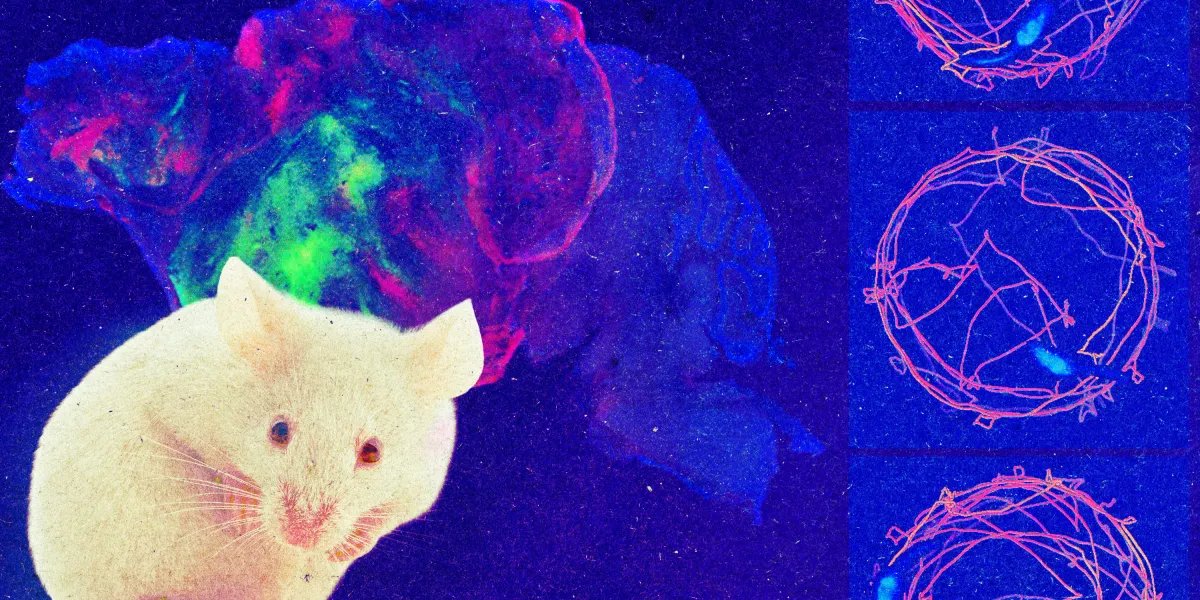
The effort to mix the brain tissues of distant species is being reported today in the journal Nature by a team at Stanford University, led by neuroscientist Sergiu Pașca.
Pașca’s group previously showed that human brain “organoids”—small blobs of neural tissue—could survive, and even function, after being injected into the heads of baby rodents.
Now, Pașca has taken things a step further by genetically modifying mice so their brains don’t fully develop in the first place. These modified mice are missing most cells of both the cortex and the hippocampus, two key brain areas.
That creates much more room for the human cells to take hold, he says. “Human cells that are placed in these animals will divide, will grow, and within a few weeks to a few months they will take most of that space,” he says. Pașca says one surprising discovery is that the mice lacking brain tissue seemed fairly normal—they walked around and squeaked. But they did have memory problems. In a maze test, they couldn’t remember what parts they’d explored.
The mice with the added human cells, by contrast, performed better on the maze test. That means the human tissue is playing some role in the animals’ cognition.
Pașca believes what he is calling “xenocortical mice” could be useful in studying brain injuries. However, the report is also a dramatic demonstration of “the combined power of genetic engineering and stem-cell technology to reshape biology,” says Carsten Charlesworth, a scientist who works in a different Stanford lab and was not involved in the research.
Already, brain organoids are being tested in labs to see if they can be connected to computers to play video games. Other scientists have proposed using them like replacement parts to treat stroke victims.
“What’s most remarkable to me is the extent to which human neural tissue introduced after birth grew and connected with the mouse nervous system across a species barrier,” says Charlesworth. “As these technologies advance, they’ll increasingly force us to challenge our traditional assumptions.”