dailynewsnblog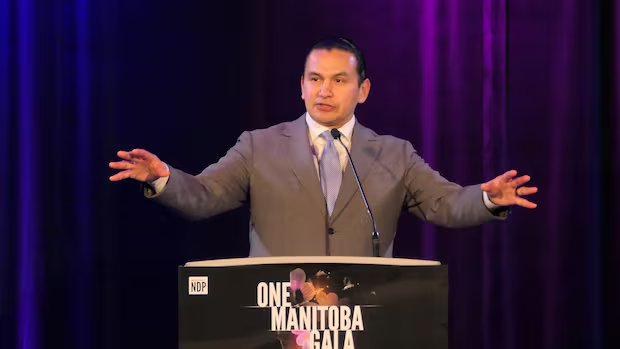

Listen to this article
Estimated 4 minutes
The audio version of this article is generated by AI-based technology. Mispronunciations can occur. We are working with our partners to continually review and improve the results.
Manitoba will ban youth from using social media and AI chatbots, Premier Wab Kinew announced on Saturday.
The proposed law protecting youth from the harmful effects of social media will be the first of its kind in Canada.
The premier said the platforms are intentionally designed to get people “addicted to the infinite scroll,” contributing to mental health issues like anxiety and depression.
“They’re doing these very awful things to kids all in the name of a few likes, all in the name of more engagement, and all in the name of money,” Kinew told 900 people at an NDP fundraising gala in Winnipeg on Saturday night.
“More money for a group of rich tech bros who already have a ton.”
Social media use among youth has been linked to health issues ranging from reduced sleep and attention to long-term mental health issues, but academics say more study is needed to establish causes.
“These platform are not neutral. They have been built this way to maximize engagement,” Kinew said. “They amplify comparisons between yourself and artificial standards, they amplify outrage and they expose kids to content they’re not ready for.”
While Canada’s heritage minister has said the federal government is “very seriously” considering similar age restrictions, and lawmakers in other provinces are also pushing the idea, Kinew’s government is the first to lay out a plan.
The premier didn’t say the age the province is considering for the ban, how it will be enforced, or a timeline for when it would be implemented. He didn’t speak to reporters after his speech.
Manitoba’s plan follows an Australian law requiring social media companies to take reasonable steps to prevent anyone under 16 from having an account or else face penalties. The world-first ban came into effect in December.

Manitoba Premier Wab Kinew said social media platforms are “doing these very awful things to kids all in the name of a few likes,” and he’s vowing to fight back by banning youth from using these platforms, along with AI chatbots.
Tech analyst and journalist Carmi Levy said early data shows some degree of success, with nearly five million accounts belonging to Australian youth deactivated a month after the law was implemented.
“At the same time, we also have evidence that kids are simply shifting their attention to other platforms that were not included in the ban,” Levy said Saturday evening, like AI platforms, which were not included in the Australia ban.
Manitoba is “casting a much wider net,” Levy said. “They will recognize that AI poses as significant as or even worse a risk than social media does, and that it has to be included in any kind of legislation that ultimately takes place.”
Australia required companies to deactivate or remove accounts of users in this age cohort and ensure they cannot set up new ones. Companies who fail to oblige face up to $48.8 million Cdn in fines. The ban currently applies to platforms like TikTok, Facebook, Instagram, X, Snapchat, Twitch, Kick and YouTube.
Following Australia’s lead
Indonesia and Vietnam have followed suit by implementing their own age restrictions since Australia enacted its ban.
In France, a law aiming to establish a ban for youth under 15 is making its way through parliament, with the European Union saying it’s ready to roll out its own age verification app for online platforms.
Dozens of other countries are also considering enacting their own age restrictions, including Canada.
Non-binding resolutions passed at the federal Liberals’ party convention earlier this month calling on the government to set age restrictions on social media and artificial intelligence chatbots.
Lawmakers in Nova Scotia, Quebec and Saskatchewan are also considering the idea.
“It’s a good thing for governments at all levels to have something to say, to be part of this growing national discussion,” Levy said. “The more stakeholders we have at all levels of government, the better able we will be to arrive at solutions that actually help.”