dailynewsnblog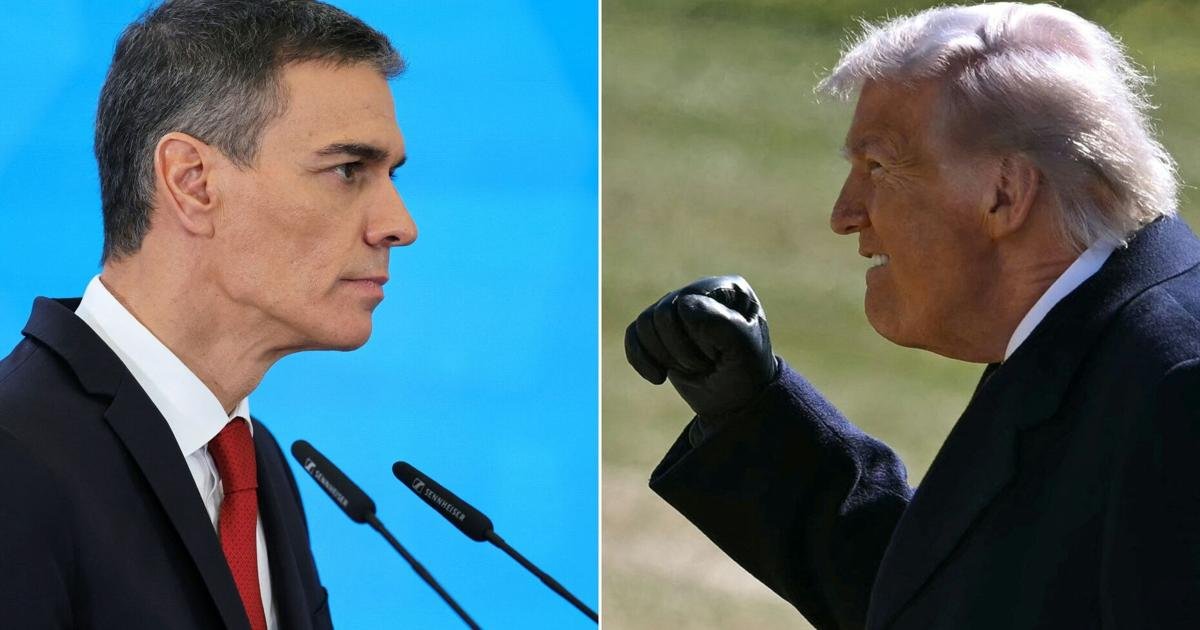
It was a very public January rebuke to U.S. President Donald Trump, whose bully tactics had exposed what the prime minister called the “fiction” of a world that operated along fair and consistently applied rules.
Less noticed was an article penned this month by Spanish Prime Minister Pedro Sánchez, the socialist leader who has gained the world’s attention not by pivoting away from American menace, like Carney, but by standing up to it.
In the article, Sánchez echoed Carney’s concern about the increasingly unpredictable state of the world. But he criticized the Canadian leader’s call to forge new, middle-power alliances “rather than waiting for the old order to be restored.”
A period of heightened conflict, during which victories go not to who is in the right but who (in Trump’s view) has “the cards,” is the time to bolster the system that has guided the western world since the Second World War — not abandon it.
“Acknowledging the cracks in the building should not make us demolish it,” Sánchez wrote in Le Monde Diplomatique. “A world without a rules-based order is a world in which brute force counts more, coercion is cheaper and co-ordination to solve humanity’s problems is harder.”
It is one of many examples of the 54-year-old Spanish leader going against the global current, and not even the most recent.
With anti-immigrant sentiment simmering in Europe, he pledged last week to regularize 500,000 undocumented migrants living in the country.
This week, he urged European Union member states to cancel an association agreement with Israel on the grounds that “a government that violates international law … cannot be our partner.”
The bid by Sánchez was ultimately rejected, but not without a debate that revealed growing unease over Israel’s actions in Gaza, the West Bank and against Lebanon and Iran.
“There is silent resistance, and a more vociferous resistance, if you will,” Arancha González, a former foreign minister under Sánchez, said in an interview.
The Spanish leader is increasingly opting for the louder of the two options — domestic political opposition and Donald Trump be damned.
Sánchez has condemned the U.S. military operation to capture Venezuelan president Nicolás Maduro and put him on trial in New York. His government was among the first to formally recognize Palestinian statehood in reaction to Israel’s war in the Gaza Strip.
And he was the lone leader at the 2025 NATO summit to reject a massive defence spending increase.
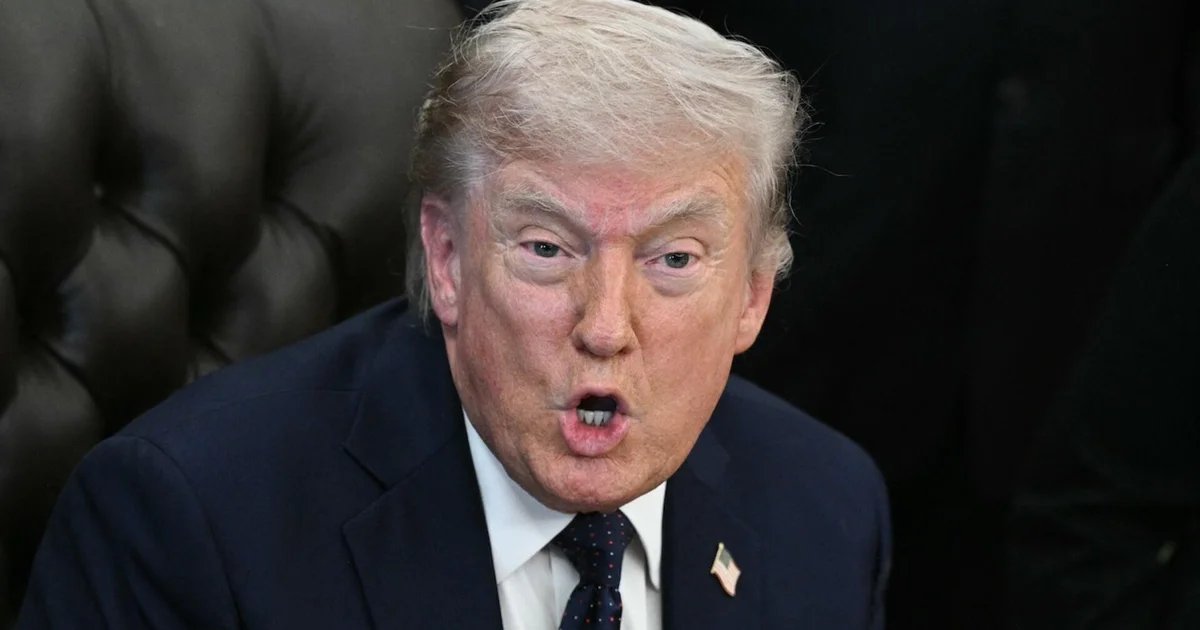
“Let me give you the good news: the people of Spain are fantastic,” Trump said last month when asked if Spain was helping in the Iran war.
“The leadership? Not so good.”
Sánchez could take Trump’s taunting as a badge of honour in a contentious moment in global affairs. But after eight years as prime minister, it is just another challenge in a political career that has been marked by them, as he detailed in his 2019 autobiography, “Resistance Manual,” published the year after his Socialist Party came to power.
Raised and educated in Madrid, he learned politics first as an aide in the European Parliament, then while working to heal the ravages of war in Bosnia as an aide to the United Nations high representative.
He was first elected as a Madrid city councillor before jumping to national politics in 2009 and, five years later, becoming leader of Spain’s Socialist Party.
It was a turbulent two years, marked by political deadlock, Sánchez’s refusal to form a coalition government with the conservative People’s Party and, ultimately, an intraparty revolt against his leadership, which prompted his resignation in 2016.
But that wasn’t surrender. Instead, he hopped in a car and launched a sort of guerrilla leadership campaign to win over the party’s members and counter the leadership executives who had turned against him.
“It was three guys and himself, driving around the country, but going to the different cities and different villages, going to … members of the party to talk to them, to convince them that he was sincere,” said González, whose term as Spain’s top diplomat preceded a move to Paris, where she is dean of SciencesPo’s Paris School of International Affairs.
“He’s forged himself a personality in which he is very respectful of what people say, so it’s very much about democracy.”
Sánchez was re-elected to lead the party seven months later and, in 2018, was sworn in as prime minister.
“He’s got this underdog kind of mentality that likes to make a comeback,” González added.
Governing has brought its own problems.
Spain was one of the countries worst-hit by the COVID-19 pandemic. And the Spanish economy’s reliance on tourism made it one of the most affected in Europe.
Sánchez’s party has also been hobbled by a string of corruption scandals.

Pedro Sánchez kisses a woman during a Spanish Socialist party campaign rally in Getafe, Spain on Friday, Dec. 4, 2015. His climb to power was soon to require at least one detour, as he lost and regained the party leadership before becoming prime minister.
Daniel Ochoa de Olza AP
One of the most significant have been accusations that a former transport minister (a close collaborator and confidante), accepted bribes in exchange for public contracts for medical masks during the pandemic.
Last week, Sánchez’s wife, Begona Gomez, was also charged with corruption after a two-year investigation into allegations she used her influence to advance her career as a director at a Madrid university.
The Spanish leader has attributed the charges against his wife to a campaign of political harassment — an extension of the fractious legislature that has prevented his left-wing minority coalition from passing a budget since 2023.
That impasse has not, however, prevented him from introducing a series of reforms that have contributed to the country’s strong economic growth.
Heavy investment in renewable energies is predicted to cushion the impact of rising energy prices from the Iran war and the closure of the Strait of Hormuz to marine traffic. And regularizing undocumented migrants, when other countries are trying to seal their borders, will help address labour shortages while the extra tax revenue will fund the country’s pension system.
Getting these domestic matters right is most crucial to Sanchez’s bid for re-election next year. But his growing presence on the world stage and his public battles with Trump seem to be giving him a second wind.
He was among the clearest to condemn the American and Israeli attacks on Iran as a violation of international law and the first to close airbases to U.S. military flights when other leaders were wobbling under American pressure and searching for a coherent response.
“Spain’s position is the same as in Ukraine or Gaza,” Sánchez said in early March. “No to the breakdown of international law that protects us all. No to resolving conflicts with bombs. No to war.”
That slogan — “No to War” — hearkens back to the 2003 American invasion of Iraq, in which Spain’s conservative then-leader, José María Aznar, agreed to send troops despite widespread public opposition.
González, the former foreign minister, called it “a disastrous alignment, with the harshest terrorist attack that we’ve ever suffered in the country.”
She refers to a March 2004 set of simultaneous bombs that exploded on commuter trains around Madrid in jihadist retaliation for Spain’s Iraq deployment. The bombings killed nearly 200 people just days before Spanish national elections, which ushered in a Socialist government that promptly withdrew from the Iraq mission.
“Now, when people hear ‘Iran,’ they remember Iraq,” González said. “It’s not that we are more virtuous than others. It’s that we’re more traumatized by our recent history.”
That context helps explain how Sánchez has come by his political principles and why, as his current foreign minister, José Manuel Albares, boasted recently, Spain is “in the corner of peace.”
“Everything is connected right now, absolutely everything: Iran, Gaza, Lebanon, Ukraine, Greenland, Cuba,” he said in an interview with El Diario this month. “It all stems from the same thing: trying to impose the law of the strongest against the international order of peace.”
Broad, guiding principles, though, do not make it any easier for Sánchez to stand alone in defence of them.
“I don’t think Sánchez is comfortable being a public enemy of one of the most powerful men on the planet,” Irene Lozano, a former Sánchez minister who helped pen his autobiography, wrote last month in El Diario.
But she argued that it was nevertheless crucial.
“In dark times, sometimes the most radical act is to say the same thing that’s been said for decades: international law, rules-based order, dialogue. It’s about keeping the light on.”