dailynewsnblog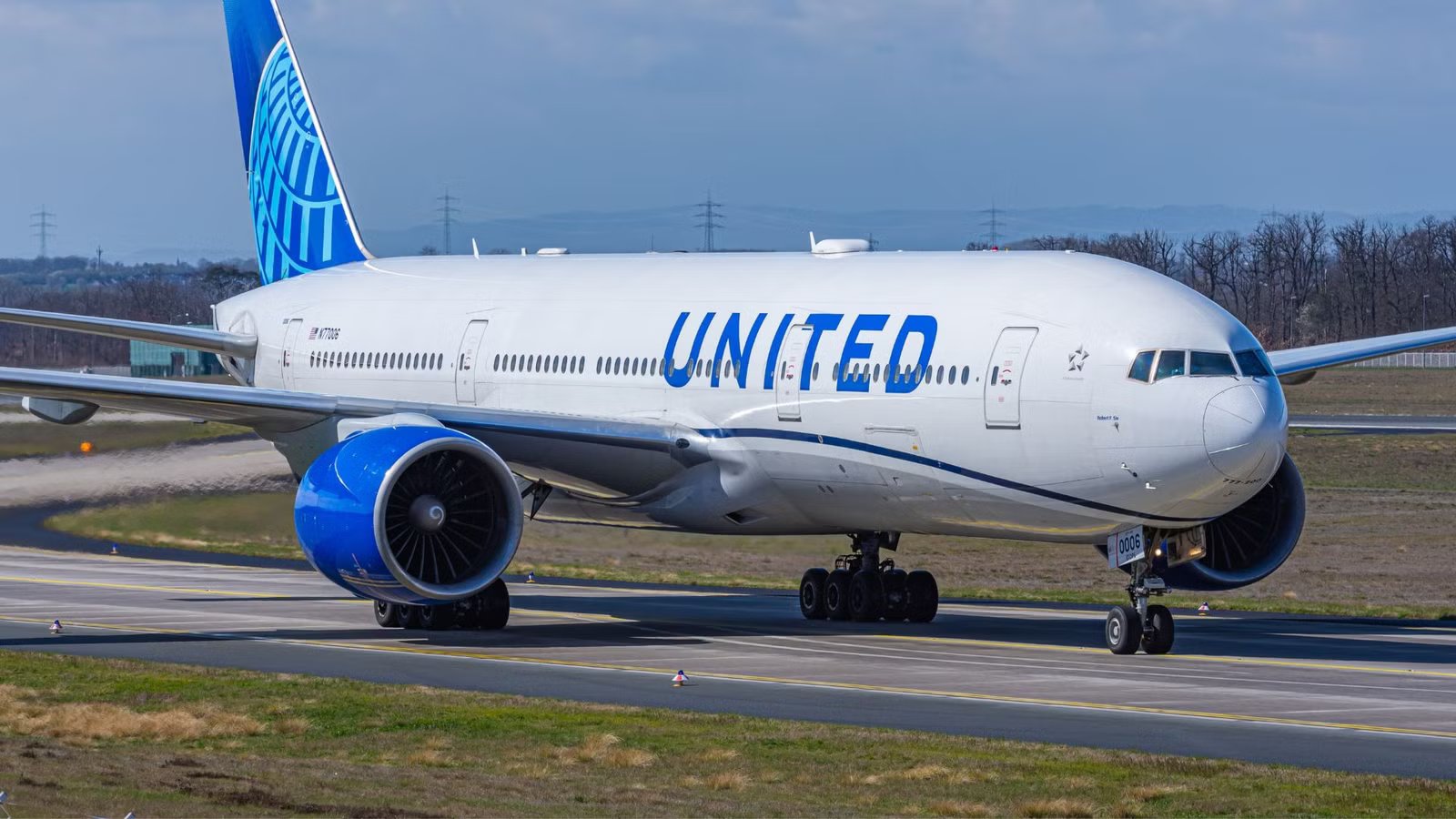
For decades, in-flight Wi-Fi was treated as a secondary perk rather than an essential part of air travel. That mindset has changed rapidly as passengers now board aircraft expecting the same digital experience they receive on the ground. Business travelers want uninterrupted VPN access, families stream entertainment across multiple devices, and international flyers increasingly rely on messaging and cloud-based work during ultra-long-haul journeys. Airlines that fail to meet those expectations are facing growing criticism from customers who see poor connectivity as outdated rather than unavoidable.
Against that backdrop, United Airlines is navigating a complicated transition period. The carrier has invested heavily in next-generation internet technology while still operating large portions of its long-haul fleet with older satellite-based systems supplied by Panasonic Avionics. Recent reliability complaints, highlighted by One Mile at a Time, on Pacific services have intensified discussion across the aviation industry about whether United may ultimately reduce its dependence on Panasonic as Starlink deployment expands throughout the fleet.
United’s Pacific Flights Facing Mounting Complaints

United operates one of the largest transpacific networks in commercial aviation, with nonstop flights linking hubs such as San Francisco, Los Angeles, and Newark to destinations including Singapore, Sydney, Hong Kong, and Seoul. Many of these services last between 12 and 17 hours, placing them among the world’s longest regularly scheduled passenger flights. Those extended journeys create particularly demanding conditions for in-flight connectivity, as hundreds of passengers attempt to remain online simultaneously while traveling across vast oceanic regions where satellite coverage and bandwidth capacity can become constrained.
Concerns surrounding United’s Pacific Wi-Fi performance have become increasingly visible in recent months, particularly on  Boeing 777, 787, and 767 aircraft equipped with Panasonic connectivity systems. Travelers have described flights where internet service slowed dramatically or disappeared entirely for hours at a time. In Reddit discussions, travelers referred to some United 777 aircraft as “NoWiFly” jets due to recurring outages. A passenger on X said:
“I’ve just endured my third consecutive long-haul flight on United with no WiFi. I’ve just decided to choose any other airline available, even if I have to connect to DC through New Zealand.”
Starlink Is Creating A Massive Performance Gap

United’s expansion of Starlink connectivity is making the differences between older satellite networks and newer low-earth-orbit systems far more noticeable to passengers. Conventional in-flight Wi-Fi providers typically rely on geostationary satellites positioned roughly 22,236 miles (35,786 kilometers) above Earth, which can introduce higher latency and slower response times. Starlink’s satellites operate much closer to the planet, allowing data to travel faster and creating a smoother browsing experience that can better support streaming, cloud-based work, live television, and even video conferencing during flights.
Starlink’s average download speeds of 135 Mbps to 350 Mbps, with peak speeds frequently exceeding 500 Mbps, far exceed the speeds typically associated with many legacy in-flight internet systems. United has stated that more than 300 regional aircraft now feature Starlink service, representing roughly 25% of the airline’s daily departures and supporting over 167,000 flights since deployment began. The airline also says customer satisfaction scores related to onboard Wi-Fi have increased substantially following the rollout.
As more travelers experience Starlink on shorter domestic and regional flights, expectations across the broader fleet are shifting quickly. Passengers who encounter fast, stable connectivity on one aircraft are often frustrated when boarding long-haul jets still equipped with older Panasonic systems that struggle with buffering, interrupted sessions, and inconsistent speeds. Online discussions increasingly compare Starlink-enabled flights to home broadband service, while legacy connectivity products are criticized for failing to keep pace with modern passenger demands. That widening performance gap is strengthening speculation that United could eventually accelerate Starlink deployment across a larger portion of its international widebody fleet.

Starlink Users: Is The Inflight WiFi Product Worth The Hype?
In recent years, the world of inflight WiFi has been revolutionized by the introduction of fast, free Starlink connectivity by an increasing number of airlines around the globe. The product is said to be a step up, but is it worth the hype?
I’ve never flown on an aircraft equipped with Starlink WiFi, and, while I like to use flights as a chance to enjoy a precious few hours offline, it would be great to hear from those of you who have experienced the product. Does it live up to the hype in terms of speed and consistency? What would you change about it? Let us know your thoughts and experiences in the comments!

Although Panasonic has faced increasing scrutiny over connectivity performance, the company still plays a major role across United’s long-haul fleet. Its involvement extends beyond onboard internet, covering elements of the airline’s inflight entertainment systems and broader cabin technology infrastructure on several aircraft types. Transitioning away from those systems is considerably more complicated than installing new antennas, as it requires engineering work, regulatory certification, software integration, and aircraft maintenance downtime.
Certification for larger long-haul aircraft has also slowed the pace of Starlink’s expansion. United has moved quickly to equip regional jets with the new technology, but integrating Starlink onto widebody aircraft such as the 777 and 787 involves demanding approval standards. Aviation industry discussions suggest the FAA continues reviewing aspects of certain widebody installations, which helps explain why many international aircraft still rely on Panasonic-supported systems for the time being.
Operational and financial realities also make an immediate transition unlikely. United intends to continue expanding Starlink across its fleet through the end of 2027, meaning a substantial number of long-haul aircraft will likely continue using legacy connectivity systems for another 18 to 24 months. Some jets may ultimately operate mixed configurations that combine Panasonic-supported services with newer connectivity platforms. Rather than a sudden split, the shift appears more likely to unfold gradually as United continues modernizing its onboard technology strategy.