dailynewsnblog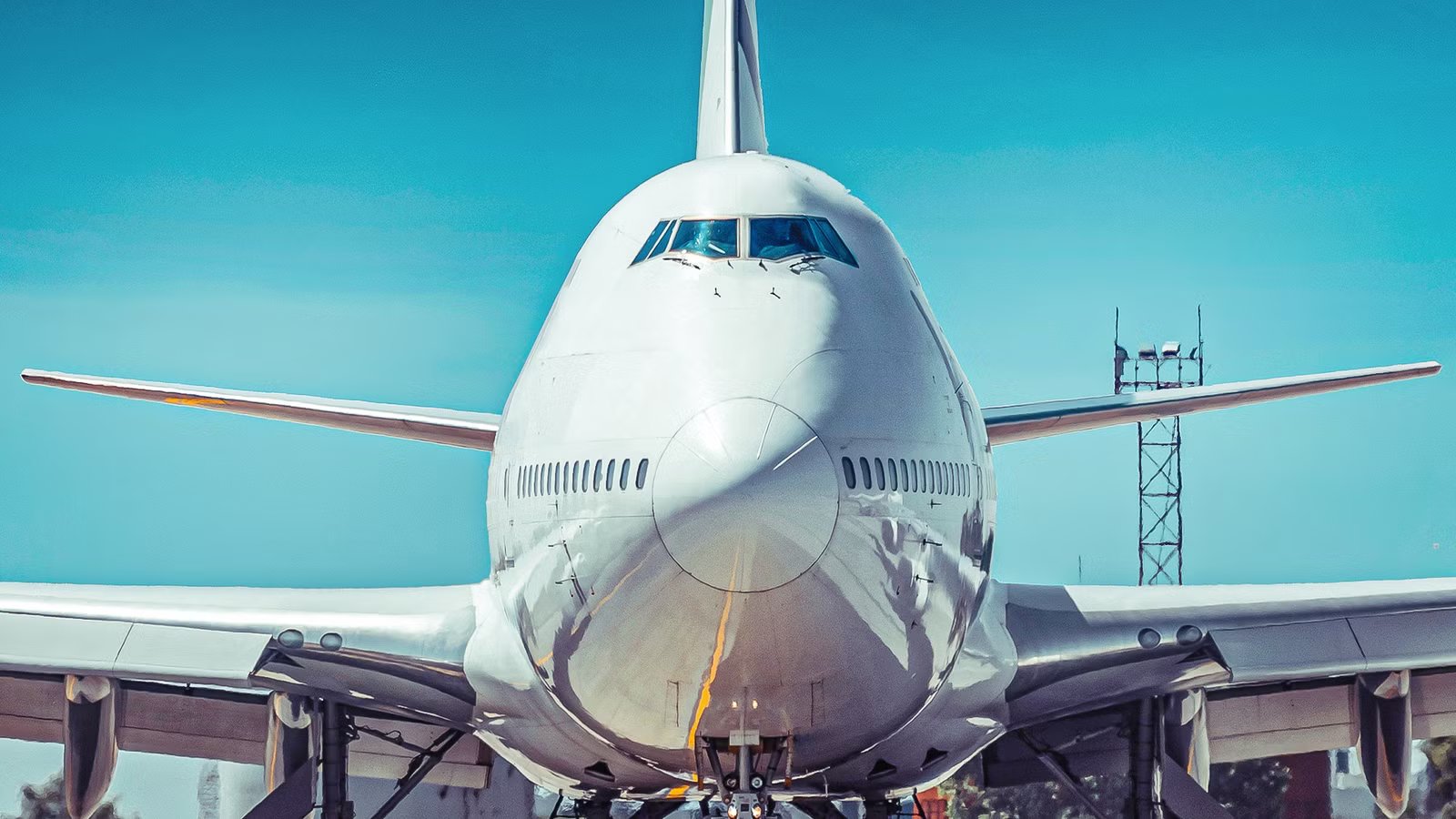
The story of the Boeing 747 and its inception has been told countless times, and among the most persistent myths in commercial aviation history is the belief that the 747’s distinctive raised upper deck was an accidental byproduct of a last-minute styling choice or an aerodynamic miscalculation. Casual observers have assumed that engineers added the pod as an afterthought to create space for luxury passenger lounges. In reality, a bit of market forecasting helped shape the profile of the world’s most recognizable widebody airliner.
When chief engineer Joe Sutter and his team at  Boeing began designing the 747 in the mid-1960s, the commercial aviation industry stood on the precipice of a supersonic revolution. Airline executives expected high-speed jets like the Concorde and Boeing’s proposed 2707 SST to dominate intercontinental passenger routes, rendering large subsonic airliners obsolete within ten years. To protect the multi-million dollar investment required to develop a widebody airframe, Boeing engineered the 747 from the ground up as a heavy-lift cargo transport capable of carrying standardized intermodal shipping containers.
Designed With Intent

The 747’s iconic hump was a completely deliberate engineering solution designed from day one. Placing the cockpit on an elevated upper deck allowed technicians to swing open the entire nose cone for straight-in cargo loading. This arrangement helped to solve a complex logistics puzzle, allowing main-deck freight operations to work without needing flight control cables or hydraulic lines to be disconnected every time the nose door opened.
During the initial development phase, Boeing evaluated several structural layouts to accommodate massive industrial freight. Placing a side cargo door on a widebody jet works well for palletized goods, but inserting 40 feet (12.2 meters) intermodal shipping containers requires an unobstructed, front-loading opening. Raising the flight deck completely above the main cabin floor created a continuous, tunnel-like cargo bay running from the tip of the nose all the way to the aft pressure bulkhead.
Boeing built upon the foundational work it completed during the US Air Force Heavy Logistics System competition in the early 1960s. Although Lockheed ultimately won that contract with the C-5 Galaxy, Joe Sutter adapted the high-cockpit, front-loading concept for commercial application. Sizing the main deck around two side-by-side 8 ft by 8 ft (2.4 m by 2.4 m) shipping containers established an industrial benchmark for global logistics that endured for over five decades.
What Can Be Done With The Hump?

The engineering and market forces that sculpted the 747’s upper deck were influenced by the threat of supersonic passenger travel, Pan American World Airways‘ insistence on transoceanic scale, and standardized freight dimensions. When Pan Am chairman Juan Trippe placed the launch order for 25 aircraft in 1966, he demanded an airliner capable of doubling the capacity of the Boeing 707. However, because Trippe and Boeing leadership both believed the Concorde and Boeing 2707 would soon capture long-haul passenger demand, the design had to guarantee profitability as a freighter once passenger yields declined.
To accommodate standard intermodal containers on the main deck, Joe Sutter’s team had to design a widebody fuselage spanning over 20 ft (6.1 m) across. Placing the cockpit in the nose would have required breaking hydraulic and electrical connections every time cargo was loaded, so lifting the flight deck onto an upper level became mandatory. Initially, the space behind the flight deck on early variants was so small that it only housed crew quarters and avionics racks. As aerodynamic testing showed that stretching the upper deck profile reduced drag, Boeing added extra seating capacity, eventually expanding the hump across subsequent production generations.
The evolving upper deck space opened up completely unexpected operational niches for airlines worldwide. Western carriers like Pan Am and TWA converted early upper decks into luxurious passenger lounges featuring bar service and swivel armchairs, and on the opposite end of the spectrum, Japanese operators recognized its potential for domestic density. Japan Airlines (JAL) and All Nippon Airways (ANA) used short-range variants like the 747SR and 747-400D on high-frequency routes between Tokyo, Osaka, and Okinawa. Using both the massive main deck and the expanded upper deck, these Japanese domestic giants carried upwards of 560 passengers per flight, turning a space born from freight logistics into the highest-density short-haul transport in aviation history.
A Difference Of Opinion

Boeing chief engineer Joe Sutter and Pan American World Airways founder Juan Trippe held a clear, shared vision for the aircraft, though their engineering perspectives initially clashed over the upper deck’s shape. Trippe originally envisioned a full-length double-decker passenger transport to solve severe airport congestion on transoceanic routes. However, Sutter fiercely resisted a full double-deck layout due to FAA emergency evacuation constraints and the firm belief that the aircraft needed an efficient, single-deck cargo floor once supersonic jetliners took over long-haul passenger travel.
Sutter maintained that designing the jet as a dual-purpose freighter was the only way to safeguard Boeing’s massive financial risk. During negotiations with Pan Am leadership, Sutter directly challenged the full double-deck concept, convincing Trippe that a wide main deck capable of holding two side-by-side shipping containers offered far greater commercial longevity.
Sutter’s insistence on prioritizing cargo mechanics over a full double-deck passenger cabin proved to be the single most consequential decision in commercial aviation history. When the US government canceled funding for the Boeing 2707 SST in 1971, and Concorde production was capped at just 20 airframes due to high operating costs and sonic boom restrictions, the 747 did not face sudden obsolescence. Instead, the elevated cockpit allowed the 747 to pivot seamlessly between global passenger flagship and primary industrial freighter across six decades, ultimately yielding a total production run of 1,574 aircraft.
Side Door Or Nose Door?

Most dedicated freighters, such as the Boeing 777F or Airbus A350F, rely exclusively on a large main-deck side cargo door positioned behind the wing root. Side doors are efficient for loading standard pallets and shipping containers, but they impose severe physical limitations when handling long, rigid outsized cargo like oil field drill pipes, heavy machinery shafts, or aerospace assemblies.
The upward-hinging nose door of the 747 removes turning radius constraints entirely, allowing cargo to slide straight into the fuselage on motor-driven rollers along the cabin floor. In contrast, side-door freighters require outsized freight to be angled through a side hatch, limiting maximum payload length to what can clear the fuselage door frame during rotation. Loading a 40 ft (12.2 m) industrial pipe into a side-door freighter can only really be achieved with complex crane maneuvers and custom rigging, whereas a 747-8F can ingest continuous single-piece payloads measuring up to 185 ft (56.4 m) in length without structural interference.
Side-door loading relies heavily on specialized high-loader platforms to rotate and realign heavy items outside the aircraft, so often adverse weather or tight ramp spaces can delay operations. The raised cockpit layout of the 747 completely isolates the flight crew and upper deck systems from ground loading crews on the main deck, allowing simultaneous front and side loading operations that no conventional twin-engine widebody freighter can replicate.
Fighting Against Physics

The teardrop fairing ultimately became an aerodynamic asset; however, adding a raised flight deck atop a 20 feet (6.1 meters) wide fuselage presented significant structural and drag challenges. Early wind tunnel testing indicated that sticking a bulbous pod on top of the forward cabin would generate massive pressure drag and disrupt smooth airflow over the upper fuselage. Engineers worried that the severe drag penalty would degrade cruise fuel efficiency and create high-speed buffeting along the vertical stabilizer during high-altitude transit.
To resolve the drag issue, Joe Sutter’s team refined the aft profile of the hump, stretching the upper deck fairing into a gently sloped teardrop curve. Rather than penalizing performance, the smooth contour unexpectedly produced favorable aerodynamic interference near the wing root. It functions similarly to an area-rule fairing, smoothing local air acceleration over the forward crown, reducing transonic wave drag at Mach 0.85 and providing exceptional pitch stability across the flight envelope.
Despite these aerodynamic triumphs, the mechanical complexity of a hinged nose introduced continuous maintenance and operational trade-offs. Technicians need to routinely inspect the 16 locking latches and alignment pins to prevent pressurization leaks or structural misalignments under heavy cyclic stress. Even more vital to consider, loading heavy industrial machinery straight through the nose needs precise weight distribution to avoid exceeding maximum floor beam bending moments and retain the structural integrity of the airframe over thousands of flight hours.
What Remains Of The Cargo-First Approach

Far from being a cosmetic accident or an afterthought for luxury lounges, the 747’s hump stands even today as a masterclass in functional engineering driven by a clear cargo-first philosophy. Joe Sutter’s design team anticipated a future where freight would outlast long-haul passenger demand, and transformed a market miscalculation regarding supersonic airliners into the most versatile widebody profile in industrial history. The raised cockpit resolved a critical logistics bottleneck, allowing front-loading freight operations to exist without compromising structural pressure boundaries or flight deck access.
Modern regulatory and aerodynamic realities guarantee that a podded, multi-deck widebody architecture will almost certainly never be built again. Current FAA evacuation mandates requiring full aircraft egress within 90 seconds, combined with the structural weight penalties of multi-floor beam networks, make double-deck designs unviable against high-efficiency twin-engine jets. Modern widebodies prioritize streamlined composite tubes optimized for dual-turbofan fuel burn, leaving the 747’s silhouette as a singular monument to 1960s engineering pragmatism.
While new multi-deck airframes are a thing of the past, active 747-400F and 747-8F freighters will continue to dominate heavy industrial logistics for decades to come. With their unmatched ability to ingest outsized payloads up to 120 feet (36.6 meters) straight through the nose, these airframes remain irreplaceable assets for global supply chains. The hump was never an aesthetic flourish, but an operational safeguard, one that secured the Queen of the Skies a dominant operational career spanning over half a century.