dailynewsnblog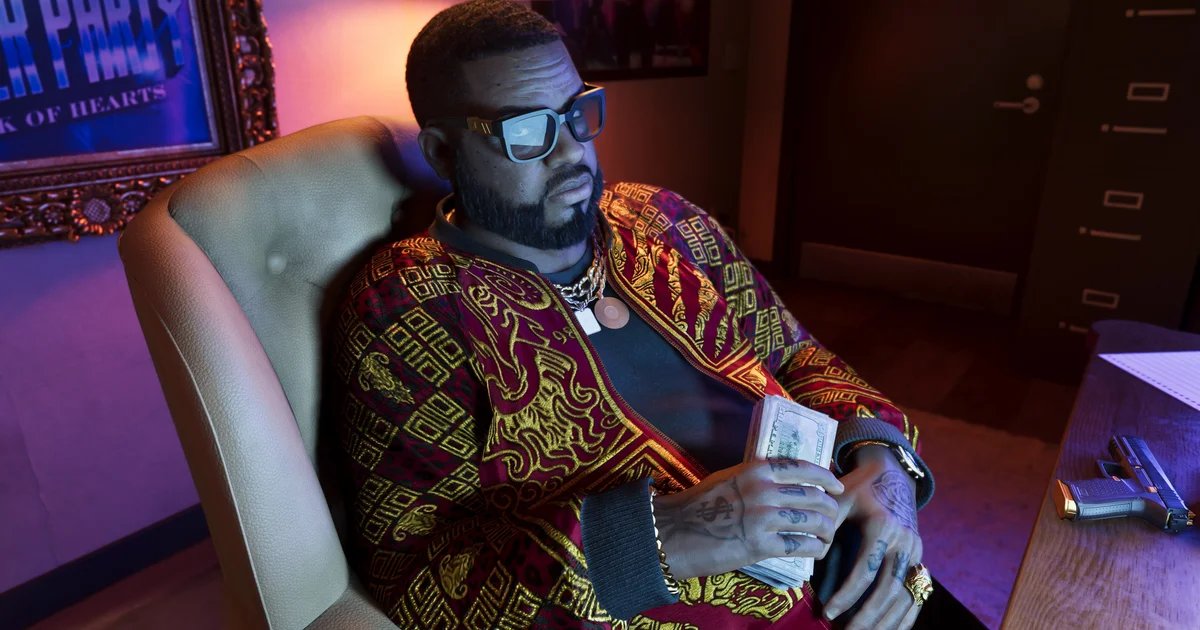
Gaming hardware costs an absolute megaton, right now, but don’t you worry, says Strass Zelnick, CEO of Rockstar parent company Take-Two Interactive – we’ll soon be playing all our games via streaming services anyway. Speaking during the company’s latest investor call, Strauss suggested that the games industry will “be in commercial streaming mode within three years” – that’s to say, people will be accustomed to streaming live gameplay from potent central computers over low latency connections, and all of this RAMnarök stuff will be a thing of the past. Haha, look at you gawping! You are thinking a word in your head, and it rhymes with “Nadia”.
“Look, the rising cost of hardware is not a good thing,” Zelnick commented during Take-Two’s latest earnings call, when asked for his “big picture thoughts” on the subject of generative AI-fuelled home computing price rises. “We wouldn’t argue that it is. I don’t think it will slow us down any because we believe we’re delivering experiences that people want. However, a lower price point for hardware would be a good thing because there’d be more hardware in people’s hands.
“I cannot argue this is a positive, equally we don’t see it as a headwind either,” he went on. “Going forward, look, two things that I think are relevant. Probably the most relevant thing is the world continues to move to open systems. That will continue. 20 years ago when we showed up here at Take-Two for a console release that was available on PC at launch, PC would represent 1-2% of the overall sales. Today, that can be 40% or 50% in a similar situation. I believe that’s going to grow because people have PCs that have outboard controllers, they work great as game machines, and I think that will continue.
“Number two,” he continued, “with the advent of streaming, which we really do believe is around the corner in terms of having something that’s low latency and really works well for consumers, machines that weren’t game machines before will become game machines. Without regard to what happens in the console business, which is of consequence to us, of course, we see the overall installed base as a practical matter growing materially. If you believe in streaming, and to be clear, we really do and I’m happy to put a timeline on it. I think we’ll be in commercial streaming mode within three years. By commercial, I mean low latency. That can 10X the effective installed base.”
Zelnick doesn’t think Take-Two’s revenues will go up ten times alongside the adoption of low latency streaming, because people will continue to play on home hardware, but he does think it’ll “create great opportunity” to sell games in less affluent regions outside Take Two’s “core markets”.
Elsewhere in the call, Zelnick observed that “companies like Take-Two, and there aren’t many of us, but there are some, basically derive about 80% of their revenue from the US, Western Europe, and one or two countries in Asia.” He’d like to “flip” that percentage, commenting that “the rest of the world’s really underrepresented, even though they love video games, of course, and even though they have devices, typically low-res, low-capable mobile devices, but devices nonetheless”.
Promises of a great streaming Rapture and an associated democratisation of access to high-end gaming aren’t new. Indeed, you have probably forgotten how sick you were of hearing them. Google bet the farm on streaming with their Stadia handheld and cloud service, announced to much fanfare in 2018 and eventually retired in 2023. Nowadays, streaming services have become part of life – Nvidia have GeForce Now, Amazon have Luna, and PlayStation and Xbox offer streaming as part of their subscription packages – but streaming doesn’t show any indication of taking over from downloads, mostly because even in richer countries, the digital infrastructure isn’t there. And also, possibly, because people would rather their access to art and entertainment didn’t depend on their internet connection.
Later in the earnings call, another analyst brought Stadia up with Strauss, commenting that “it feels like we’ve been down this road at least twice”, and asking whether Strauss had seen any solution to the fundamental problem of latency. “It is a very fair and accurate comment,” Strauss replied, before rolling out a load of bluster. “Even when we supported Stadia some years ago, at the same time we were supporting Stadia about concerns about latency. You’re right, certain things remain perpetually in the future, like nuclear fusion which is perpetually 30 years away, although people think it’s not, now. I hope it’s not.
“I don’t think that’s the case here because of enormous advances in hyperscaler networks and advances in edge network technology,” he said, “and I think, for example, there’s one player in the market that’s looking at rolling out a significant edge network that would address latency, at least in the US. I picked three years kind of because we know it’s not tomorrow, but I don’t think it’s five years. But of course, I could be wrong. We’re not betting any of our company on this.”
Some smudgy context: hyperscaler networks are basically really big cloud services that can dial up and down swiftly in response to demand. Edge network technology is all about redistributing computing tasks away from overloaded data centres to hazily defined “edge devices”.
Do you stream games? Do you see yourself doing that more or less exclusively, in three years time? Given Zelnick’s suggested timeframe, I guess the more pertinent question here is: would you stream GTA 6 on PC, as and when they announce a port?