dailynewsnblog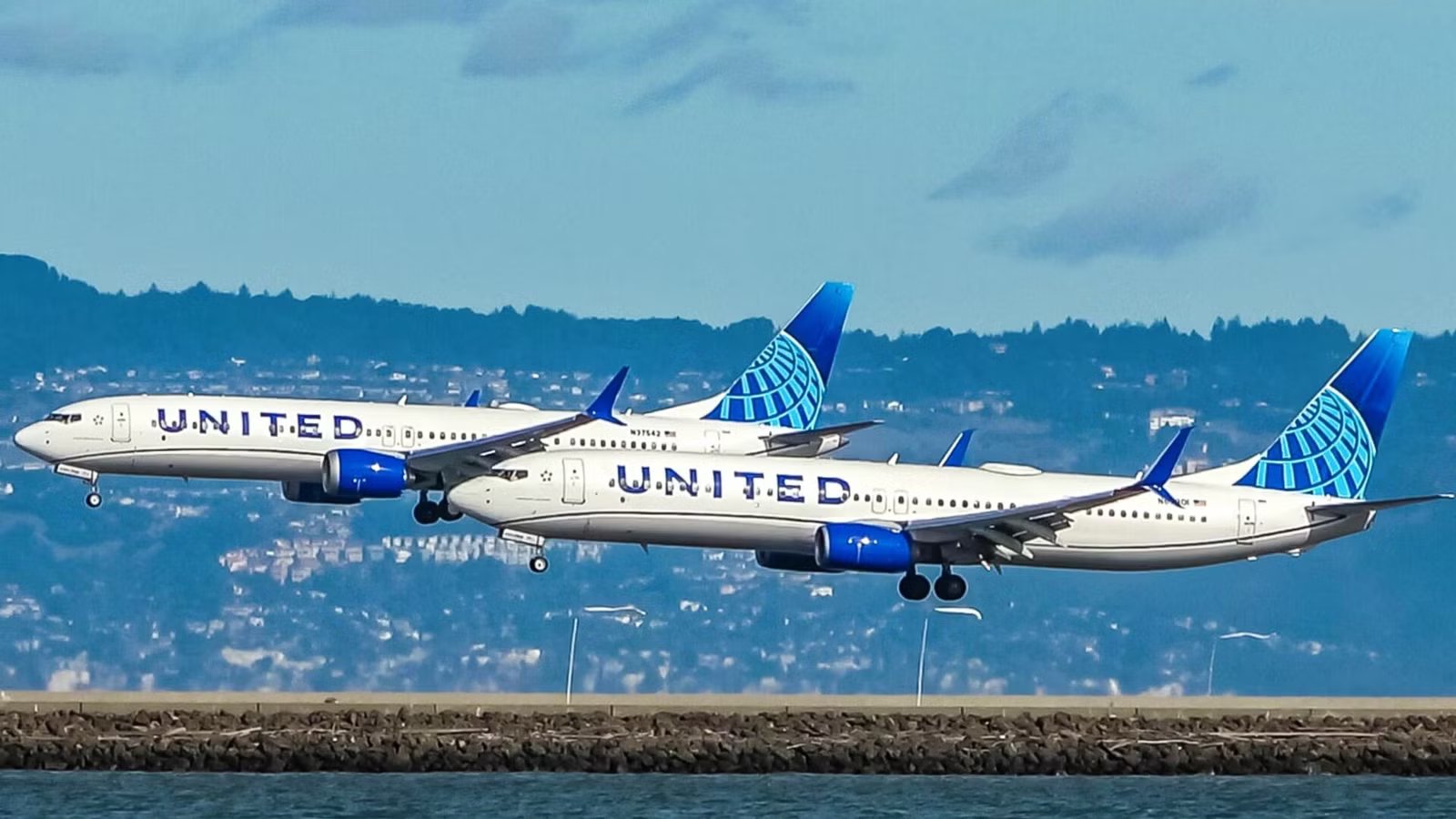
 San Francisco International Airport (SFO) is set to get some relief from a summer of unusually severe disruption after the Federal Aviation Administration (FAA) approved a new procedure allowing staggered parallel landings. The change, due to take effect on August 12, partially unwinds restrictions imposed at the end of March that sharply reduced the number of aircraft SFO could land during otherwise favorable weather.
The consequences of those restrictions have been substantial. The San Francisco Chronicle reported that from April 1, average delay times at SFO had quadrupled, increasing from less than five to 20 minutes. At the same time, the proportion of flights delayed 15+ minutes more than doubled, rising from 18% to 41%. While the landing restriction has not been the only culprit — SFO is simultaneously rebuilding one of its four runways — the combination of the two constraints produced one of the airport’s most disruptive summers in years.
Why The FAA Banned Side-By-Side Landings

SFO’s runway layout makes it unusually dependent on carefully choreographed parallel operations. Its two primary east-west arrival runways, 28L and 28R, are separated by only about 750 feet (230 meters). For decades, when visibility was good, air traffic controllers could clear aircraft for approaches to both runways while pilots who had the other aircraft in sight maintained visual separation. That allowed SFO to land aircraft effectively side by side despite having far less spacing between its runways than would be required for independent instrument approaches.
That changed on March 30. The FAA prohibited the use of those side-by-side visual approaches, saying the move was a safety measure needed to comply with aircraft separation policy. Instead, controllers had to rely on radar separation standards, placing aircraft behind or offset from traffic using the neighboring runway. The FAA did not identify a specific accident or near miss at SFO that prompted the change, but acknowledged that it would likely cause delays.
“San Francisco International Airport will experience some flight delays due to a runway repaving project and an FAA safety measure. It requires staggered approaches, with one aircraft offset from the aircraft on the parallel runway.”
The timing could hardly have been worse. Also on March 30, SFO closed Runway 1R for six months as part of a $180 million project to repave the runway, upgrade lighting and markings, and improve adjacent taxiways. During the closure, arrivals and departures were concentrated on 28L and 28R, while parallel Runway 1L was repurposed as an additional taxiway. Runway 1R is currently expected to reopen on October 2.
Even before the FAA’s intervention, SFO expected the construction to cause delays. The airport had forecast around 15% of arriving flights would be affected. But after the landing restriction, that estimate increased to approximately 25%. According to the Chronicle, maximum clear-weather arrival capacity was expected to fall from 54 aircraft per hour to 36; the FAA said roughly half of that 18-flight reduction was attributable to the construction and half to its new separation rules.
The Result: 41% Of Flights Were Delayed

The actual disruption proved far worse than those initial forecasts suggested. An analysis by the Chronicle of flights after April 1 found that 41% were at least 15 minutes late, compared with 18% during the equivalent period in 2025. Around 37% of arrivals were delayed, but departing passengers suffered even more: 45%, or 16,740 departures, were at least 15 minutes late, versus 16%, or 5,962 flights, a year earlier.
SFO Operational Measure | 2025 | 2026 |
|---|---|---|
Flights delayed ≥15 minutes | 18% | 41% |
Departures delayed ≥15 minutes | 16% | 45% |
Arrivals delayed ≥15 minutes | 20% | 37% |
Average delay across all flights | 5 minutes | 21 minutes |
Planned clear-weather arrival capacity | 54/hour | 36/hour |
The average delay is particularly revealing because it includes flights that operated on or close to schedule. Across all services, the figure rose from roughly five minutes in spring 2025 to more than 20 minutes in 2026. The disruption was also concentrated around SFO’s busiest periods: more than half of flights between 1:00 PM and 9:00 PM were delayed, while early-morning departures remained substantially more reliable. Worse for locals, domestic flights were also more heavily affected than international services.
Individual bad days demonstrated what happened when another constraint was added to an airport already short of capacity. On May 28, easterly winds reduced arrivals to just 25 per hour and triggered an FAA ground delay program. Inbound flights were held an average of 2 hours and 44 minutes, with 413 flights delayed and 47 canceled, while the maximum assigned delay approached 10 hours. On July 6, another ground delay program affected 415 flights and produced average delays of over an hour.
Not all of those delays can be blamed on the new landing restriction. SFO’s runway project removed additional capacity, while its location beside San Francisco Bay leaves operations particularly vulnerable to fog, low clouds and unfavorable winds. But the restriction reduced the airport’s ability to absorb those other problems. A disruption that might previously have been recovered through a higher arrival rate could instead generate a queue of aircraft that propagated delays across the airline network.
Staggered Parallel Landings Begin August 12

The Chronicle has now exclusively revealed that the FAA is relenting, and giving SFO another way to use 28L and 28R. Beginning August 12, a revised procedure will permit staggered parallel landings, allowing aircraft to approach both runways in a more efficient sequence without returning to the true side-by-side visual operations prohibited in March. SFO spokesperson Doug Yakel said the FAA had approved a higher frequency of arrivals and expects the change to provide some relief.
“On August 12th, the FAA will implement a revised procedure to allow for staggered parallel landings at SFO,” he explained. “While this will not fully restore the arrival rate we had when true side-by-side landings were permitted, this is nonetheless a step in the right direction.”
There is an important distinction between the new procedure and the system SFO previously enjoyed. Aircraft will not simply return to approaching alongside one another with pilots maintaining visual separation. Instead, they will be staggered, allowing the parallel runways to be used more effectively while maintaining FAA-required spacing. SFO has previously used closely spaced parallel runway procedures with aircraft offset from one another rather than operating as a side-by-side pair.
A second improvement should follow in the Fall. Runway 1R remains scheduled to reopen in early October, removing the construction constraints that have compounded the FAA rule throughout the summer. SFO therefore faces a two-stage recovery: more efficient staggered arrivals from August 12, followed by the return of its full runway capacity in October. The old side-by-side landing procedure may not be coming back, but after a period in which 41% of flights and nearly half of departures were delayed, often severely, SFO will take whatever additional capacity it can get.