dailynewsnblog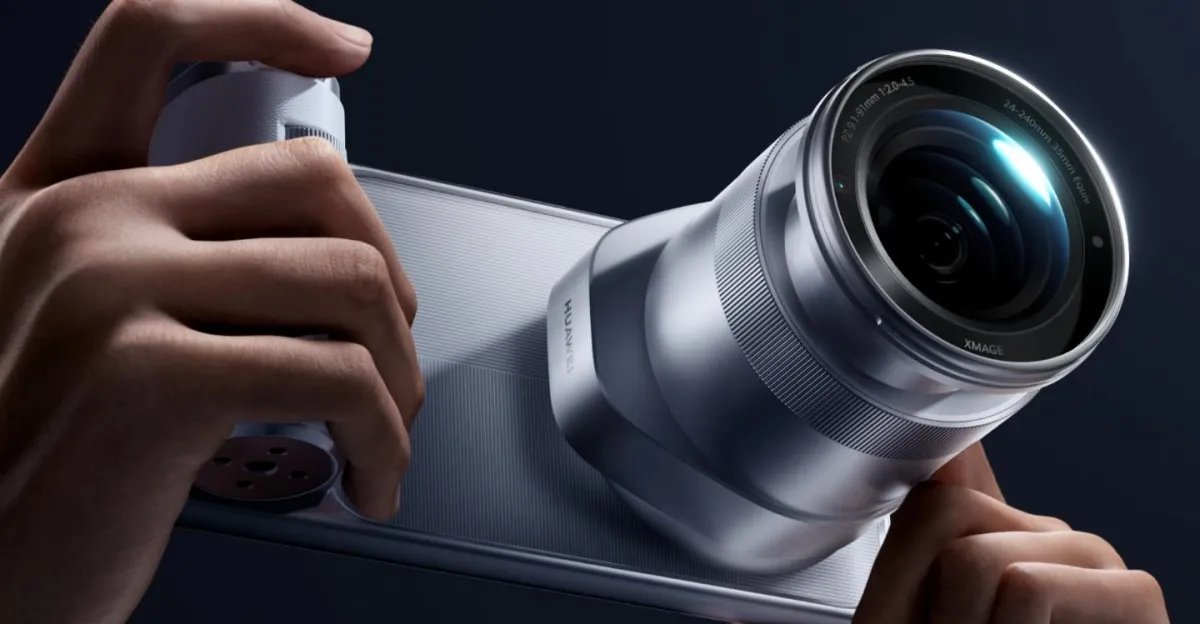
Over the last few years, Chinese Android manufacturers have followed Vivo’s example of launching add-on “teleconverter” lenses for their flagship phones, enabling long-distance photography that the phones on their own could never match. Today, Huawei one-upped everybody with the add-on lens for its Mate 90 Pro Max flagship, which is not only a comically huge zoom lens, but also includes its own image sensor.
The 1-inch-type, 50-megapixel RYYB sensor inside the Ruiying Z10 is bigger than any inside the phone itself, so attaching this lens doesn’t just give you better glass, it’s actually a complete overhaul of the camera capabilities. And while other teleconverters have so far had fixed focal lengths, this is a true zoom lens that covers 24-240mm, with a variable aperture of f/2.0-f/4.5. This is almost a camera in its own right, only using the phone for power, processing, and software.
Impressively, Huawei also appears to have designed the lens to attach directly to compatible phones, instead of needing an intermediary case for a mounting point. The obvious downside to the Z10 is that it’s absolutely enormous, even by teleconverter standards — you’re not going to fit this thing in your pocket. But at 346g it’s still smaller and more portable than even most mirrorless cameras, and you’ll probably be able to take it into venues where cameras aren’t permitted, like concerts and sports matches. Then there’s the price: at ¥5,999 (around $895) this is more expensive than some flagship phones.
Huawei says the Z10 is compatible with the collector’s edition of the Mate 90 Pro Max and its Mate 90 RS variant, the only two models in the new Mate 90 series with the screw-mount around the camera island. They have impressive cameras in their own right, with an f/1.4-f/4.0, 50-megapixel, variable aperture main camera using a 1.1.28-inch-type sensor; a 200-megapixel 4x periscope telephoto with the same size sensor; and a 40-megapixel ultrawide. The 6.9-inch OLED display can hit 12,000 nits of peak brightness, and it’s powered by a 6,800mAh battery and Huawei’s own Kirin 9050 Pro chip. The Mate 90 and Mate 90 Pro are both slightly smaller, with streamlined specs across the board.
Update, October 1st: Added the Z10’s price.