dailynewsnblog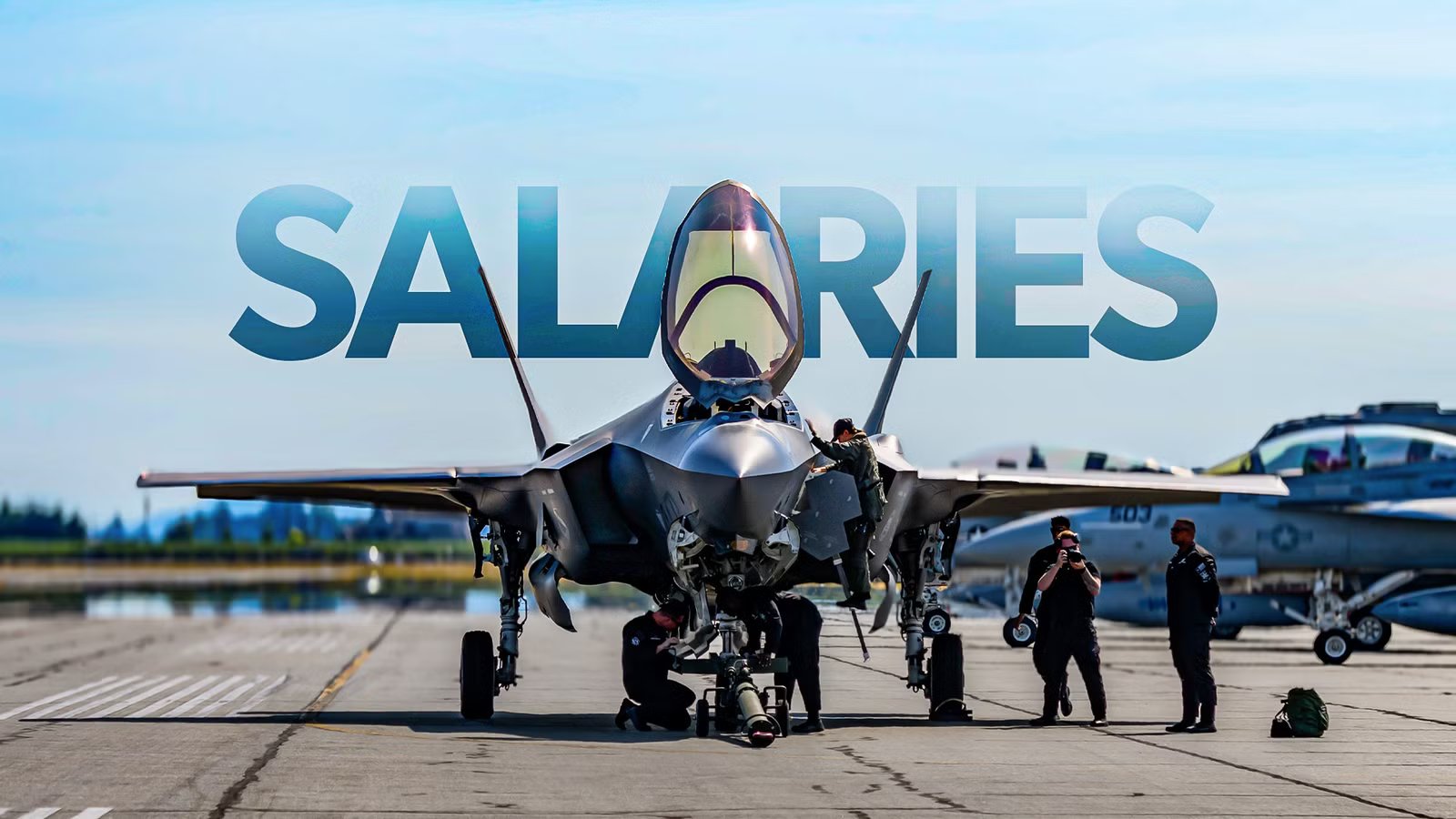
Comparing the fighter pilot salaries around the world requires taking metrics from a variety of forces based on both their composition and organization. The United States of America maintains the world’s largest inventory of military aircraft by a wide margin. It’s an armada of more than 13,000 aircraft. By comparison to the closest adversary, near-peer China, that is more than double the number of planes. Yet these enormous forces are spread across the globe to support allies on every corner of the planet.
Looking to the United Kingdom and Japan, the respective aviation branches of their militaries represent some of the best-equipped and best-trained medium-power forces on Earth. According to Payscale, the average salary is around 80,000 per year, with the bottom end of the spectrum being $60,000 and the high end $120,000. However, that does fail to capture several outliers. Comparing these four Air Forces is a concise and balanced means to develop a clear and informed spectrum of data on the career prospects of military aviators around the world.
Ultimately, American Pilots have a higher average by comparison to most others, while Japanese and Chinese aviators often have similar pay scales. The United Kingdom is lagging behind the others on average, but several important qualifying factors are also important to consider as well. For example, while the average salary of a Chinese military pilot is on the low end, naval aviators make exceptionally high hazard pay and actually top the charts as some of the best-paid fighter pilots in the world.
Reigning Champ Of Air Power: The United States of America

The United States Air Force and Navy fighter pilots are paid using the same basic pay tables, which are updated annually by Congress. An entry-level pilot at the rank of Second Lieutenant or Ensign starts with a baseline salary of approximately $50,000 to $60,000. Once a pilot gains experience and is promoted to a mid-career Captain in the Air Force or a Lieutenant in the Navy, their base salary scales up into a bracket between $74,000 and $98,000. The total take-home pay is significantly higher than these baseline numbers because of mandatory allowances and targeted retention cash.
Senior Fighter pilots who achieve the rank of Lieutenant Colonel or Commander and take charge of entire squadrons move into a baseline bracket that pays between $110,000 and $142,000 annually. Pilots receive a tax-free Basic Allowance for Housing that can add up to $40,000 per year depending on where they are stationed, alongside a monthly aviation career incentive pay that reaches up to $1,000 based on years of aviation service. The USAF also offers the Aviation Bonus program, which allows eligible fighter pilots to sign multi-year contracts that pay up to an extra $50,000 annually for a total of $600,000 over time, according to Stripes.
Catch what other flight trackers miss
Emergency squawks, holds, NOTAMs — live signals, no signup.
Open tracker
Catch what other flight trackers miss
Emergency squawks, holds, NOTAMs — live signals, no signup.
Open tracker
One Force, Three Service Branches: America’s Combat Flyers

The United States Marine Corps aviation branch operates under a distinct operational philosophy: every Marine is a rifleman first, and aviation exists entirely to support the infantryman on the ground. Because of this close-air-support mandate, USMC fighter pilots track through a highly specialized operational pipeline that combines naval aviation tactics with amphibious combat doctrine.
American branches differ in their deployment stipends rather than their core pay charts. Navy fighter pilots operate primarily from aircraft carriers, making them eligible for specialized Sea Pay and tax-free Hardship Duty Location Pay during extended sea cruises. Air Force pilots operate entirely from land bases, so their additional financial top-ups come from temporary duty allowances when deployed to forward operating areas. According to Air & Space Forces magazine, the USAF also offers experience bonuses for fighter, bomber, special operations, mobility, reconnaissance, and helicopter rescue pilots worth between $105,000 and $420,000.
Marine pilots utilize the same basic military pay tables as the Air Force and Navy, but their day-to-day deployment environments radically alter their final take-home pay. When deployed aboard Navy ships, they draw Sea Pay. When operating from forward bases, they qualify for Imminent Danger Pay and tax-free zones, which can push a senior pilot’s true annual compensation package well past $200,000.
Why The US Navy Is Quietly Expanding Its Aircraft Carrier Fleet
America is getting more of the mighty flat tops.
The Complexities Of Military Aviation In China

The People’s Liberation Army Air Force (PLAAF) keeps official military budgets tightly controlled, resulting in an opaque, multi-layered tier system. The framework shifts the emphasis away from guaranteed high baseline salaries toward high-stakes operational execution. The PLAAF splits compensation into a baseline salary (determined by military grade and service length) and heavy performance, duty, and hazard multipliers.
While a junior fighter pilot’s base pay sits modestly between RMB 372,400 ($54,000) and RMB 448,300 ($65,000), elite pilots enjoy substantial supplements. Naval aviation pilots assigned to high-stress carrier flight operations receive hazard payouts. For top-tier, highly experienced strike pilots flying advanced platforms like the Chengdu J-20 stealth fighter, or naval aviators conducting high-risk carrier operations in the Western Pacific, these strategic operational packages add a massive premium. These targeted hazard and flight-hour multipliers regularly push the total annual compensation for China’s elite pilots into a range of RMB 1,034,500 ($150,000) to RMB 2,069,000 ($300,000).
Below is a quick comparison of the estimated averages for the four nations’ air forces, with a breakdown by seniority level. Data is based on figures from The Aero World and AndCareer.co.jp:
Country | Entry-Level Monthly Pay | Mid-Career Monthly Pay | Senior-Level Monthly Pay |
|---|---|---|---|
USA | $5,300 | $10,400 | $13,400 |
UK | £3,200 ($4,260) | £6,800 ($9,040) | £9,200 ($12,240) |
Japan | ¥350,000 ($2,287) | ¥366,000 ($2,392) | ¥516,000 ($3,372) |
China | RMB 12,000 ($1,740) | RMB 25,000 ($3,630) | RMB 38,000 ($5,510) |
China’s pay difference lies between the traditional land-based Air Force and the rapidly expanding Naval Air Force. Land-based PLAAF pilots see highly stable, predictable earnings tied strictly to standard training schedules, flight hours, and regional cost-of-living adjustments. Conversely, PLANAF carrier-based pilots receive much higher total compensation because their pay structure leans heavily on specialized maritime hazard pay, carrier-landing qualification bonuses, and active blue-water deployment stipends designed to reward the extreme risks of naval aviation.
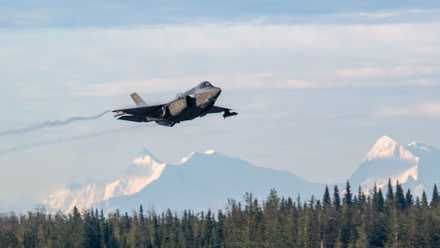
How The F-35 Lightning II Stacks Up Against The J-20 Mighty Dragon In 2026
How do the headline stealth fighters of the East and West compare?
Japan’s Self-Defense Force Fighter Pilots

A Japanese pilot holding the rank of Third Lieutenant or Second Lieutenant starts with a guaranteed baseline salary ranging from approximately $18,300 to $35,950 annually (¥2.8 to ¥5.5 million). As an officer advances through years of service and is promoted to a mid-career First Lieutenant, the baseline civil service wage increases to a bracket between $20,915 and $36,600 annually (¥3.2 to ¥5.6 million yen). Senior pilots, such as a First Class Colonel commanding an entire fighter squadron, see their guaranteed annual base pay fall into the $37,250 to $43,790 (¥5.7 to ¥6.7 million) bracket.
The Japan Air and Maritime Self-Defense Force pays fighter pilots strictly based on the National Public Service salary schedules. Pilots are legally treated as specialized national civil servants, framing compensation around institutional loyalty and rigid career structures. The total take-home pay for fighter pilots is still higher than baseline civil service thanks to seasonal bonuses, cost-of-living adjustments, and flight allowances. The model is designed for low baseline volatility. Compensation scales with seniority ranks and progression steps, like other militaries, plus flight pay.
JASDF fighter pilots flying platforms like the F-15J or F-35A operate under a heavy, high-tempo alert rhythm, which regularly triggers specialized scrambling bonuses whenever they are ordered to intercept foreign aircraft approaching Japanese airspace. Meanwhile, JMSDF naval aviators fly F-35Bs from helicopter destroyers, making them eligible for maritime deployment allowances and sea-duty stipends that financially compensate for extended operational windows away from their home ports.
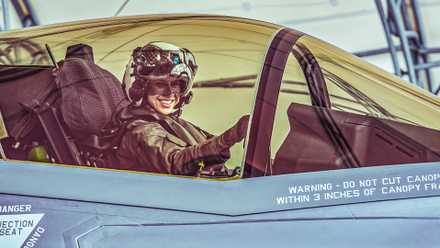
How Much Money Do US Marine Corps Fighter Pilots Earn In 2026?
A closer look at the pay that comes for flying with the Marines.
What It Pays To Fly Fighters In The United Kingdom

The Royal Air Force and Royal Navy Fleet Air Arm share identical baseline pay scales because all UK Armed Forces branches follow standard military salaries. The actual take-home earnings are significantly higher because the military applies fixed financial additions directly to these base figures. For full-time, active-duty troops, there is an automatic 14.5% ‘X-Factor’ incentive pay added to base salary. This compensates for the hardships and liabilities of military service. Additionally, qualified pilots will receive Recruited Retention Pay.
During initial officer training, pilots in both branches receive a starting salary of £38,400 ($51,120) annually, according to the Flying Engineer. Once they complete advanced flying training, earn their wings, and reach the operational rank of Flight Lieutenant in the RAF or Lieutenant in the Royal Navy, their salary will step up to the next salary bracket. That averages out to £81,600 ($108,480) annually. Senior unit commanders, like RAF Squadron Leaders or RN Lieutenant Commanders, fall into an annual salary bracket that reportedly pays £110,400 ($146,880) annually.
The difference between the two branches comes down to extra stipends, not the baseline pay scales. Royal Navy pilots deploy for months at a time on aircraft carriers, which qualifies them for a tax-free Longer Separation Allowance. That steadily accumulates for every night spent away from their home port. RAF pilots are primarily land-based, meaning their extra income comes from temporary duty allowances paid on overseas deployments. These deployment bonuses boost the otherwise predictable climb up the standard pay grades of the promotion ladder.