dailynewsnblog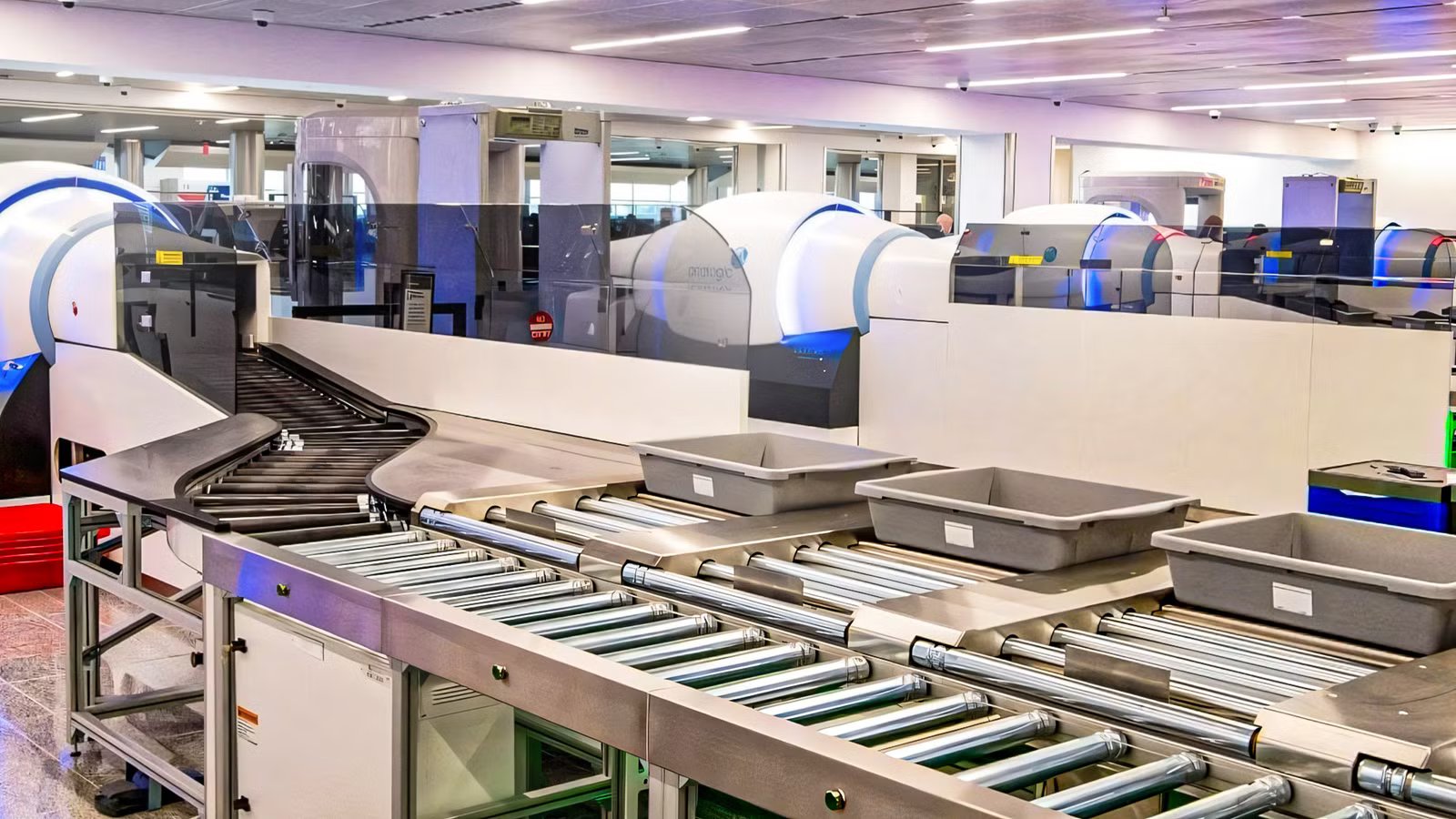
Airport security in the US is changing in ways many travelers may not immediately notice, even as they pass through checkpoints every week. The massive investment by the Transportation Security Administration in new screening technology is steadily reshaping what happens between the moment passengers join the security line and the moment they collect their belongings on the other side.
While the experience is often marketed as faster and more convenient, the reality is more complicated than simply spending less time unpacking laptops and toiletries. At the center of the shift is the TSA’s rollout of advanced 3D computed tomography scanners, backed by contracts worth up to $781.2 million for hundreds of new screening systems.
These machines promise a more frictionless checkpoint experience, but they are also quietly changing three habits that have defined air travel for decades. These include how passengers pack their carry-on bags, how strictly those bags are measured, and how travelers prove their identity before entering the secure area.
The TSA Is Replacing Traditional X-Ray Machines With 3D CT Scanners

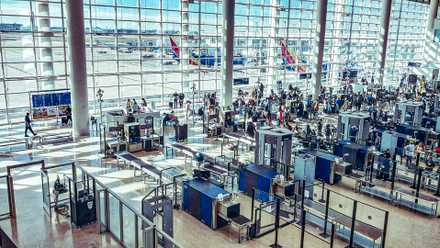
For years, airport security checkpoints followed a familiar routine. Passengers approached the conveyor belt, removed laptops from backpacks, pulled liquids from carry-on bags, emptied pockets, and hoped they had not forgotten something buried deep inside their luggage. That process was largely driven by the limitations of conventional X-ray equipment, which produced relatively simple two-dimensional images that sometimes required security officers to see items separately.
The new generation of CT scanners works differently and is changing the airport experience. Similar to the technology used in medical imaging, these systems create detailed three-dimensional images that security officers can rotate, zoom, and inspect from multiple angles. The improved visibility allows screeners to analyze the contents of a bag more effectively without requiring passengers to separate many common items.
As the equipment spreads through major airports across the country, one of the most noticeable benefits is that travelers increasingly no longer need to remove electronics or liquids from their bags during screening. Instead of juggling bins full of laptops, tablets, charging cables, and toiletries, many passengers can simply place their carry-on luggage on the belt and continue toward the body scanner.
The result is a checkpoint process that feels considerably more streamlined than the one frequent flyers became accustomed to after the introduction of the TSA’s liquids restrictions nearly two decades ago. While implementation varies by airport and checkpoint, the long-term goal is clear: reduce the amount of handling required during security screening while maintaining or improving threat detection capabilities.
For travelers, this means that one of the most ingrained airport rituals of unpacking half a carry-on bag before reaching the scanner is gradually disappearing. Meanwhile, the familiar scramble to find a bag of liquids or remove a laptop from a tightly packed backpack is becoming less common at airports equipped with the newest screening technology.
These Are Some Of The TSA’s Weirdest Finds At Airport Checkpoints
Discover the TSA’s weirdest airport finds, from hidden weapons to live animals, plus bizarre smuggling attempts at airports around the world.
Leaving Liquids & Electronics Inside Bags Is Becoming The New Normal

The most visible change created by the CT rollout is also the one most passengers welcome, with the new machines already in place at some of the busiest airports across the country. These include New York LaGuardia Airport (LGA),  Los Angeles International Airport (LAX), and
  Hartsfield-Jackson Atlanta International Airport (ATL). Security checkpoints have historically been designed around the assumption that liquids and large electronics needed separate screening.
That requirement shaped how people packed, often placing toiletries and devices near the top of a bag for quick access. Now, many travelers are discovering they can walk through security without opening their luggage at all. The TSA’s deployment of advanced CT scanners is gradually eliminating one of the most frustrating aspects of airport screening. Because officers can view detailed three-dimensional representations of a bag’s contents, the need to physically separate many items has been reduced.
Passengers at equipped checkpoints are increasingly allowed to leave laptops, tablets, cameras, and approved liquids inside their carry-on bags. That shift changes packing behavior in subtle ways. Travelers no longer need to organize their belongings around checkpoint convenience, and electronics can be packed wherever they fit best rather than being positioned for rapid removal. Meanwhile, toiletry kits can remain buried inside luggage instead of occupying a dedicated easy-access compartment.
The change also reduces congestion around the conveyor belt, with fewer people stopping to unpack and repack bags, meaning fewer bottlenecks, helping security lines move more efficiently during busy travel periods. However, the transition remains uneven, and not every checkpoint has been upgraded, and travelers may still encounter traditional screening lanes that require the old procedures. Frequent flyers, therefore, face a temporary reality where the rules can vary.
The Same Machines Are Making Carry-On Size Rules Much Harder To Ignore

The convenience offered by CT scanners comes with an unexpected trade-off that many passengers do not anticipate until they reach the conveyor belt. The new scanners typically have slightly smaller entry tunnels than many older X-ray systems, and while that design helps optimize image quality and security screening performance, it also introduces a practical limitation – bags that exceed airline carry-on dimensions may simply not fit through the machine.
For years, carry-on size enforcement often depended on gate agents, airline staff, or occasional checks using luggage-sizing frames. Many passengers became accustomed to stretching the rules slightly, relying on soft-sided bags that exceeded official dimensions when fully packed. The standard domestic carry-on limit used by most US airlines remains 22 inches by 14 inches by 9 inches, and traditionally, enforcement could be inconsistent.
The CT rollout changes that dynamic. Because every carry-on must physically fit through the scanner, oversized luggage increasingly becomes a security checkpoint problem rather than a boarding gate problem. If a bag cannot enter the machine, screening cannot proceed, and security officers may direct travelers back to airline counters to check the luggage before they can continue toward their flights. In effect, the scanner itself becomes a measuring device.
Passengers who previously relied on flexibility in enforcement may find that flexibility is disappearing, and a roller bag that exceeds dimensions by even a small amount could encounter problems long before boarding begins. The result is stricter practical enforcement of airline baggage rules, even though the official size limits have not changed. This represents a subtle but significant shift in the travel experience.
This Is What Will Soon Happen If Passengers Don’t Have A Valid ID At TSA Checkpoints
From May 2025, flying without a REAL ID or approved ID may trigger a new $18 biometric check fee, delays, or even denied boarding at TSA checkpoint.
Film Photographers Face A New Problem Most Travelers Never Consider

While most passengers benefit from advanced imaging technology, one group of travelers faces a growing challenge. Photographic film is particularly vulnerable to the newer CT scanners, as unlike traditional airport X-ray machines, which could often be tolerated by lower-speed film under certain circumstances, CT scanners generate significantly more powerful imaging that can damage or destroy unprocessed film in a single screening.
For photographers traveling with analog cameras, this creates a very different airport experience than the one enjoyed by travelers carrying digital equipment. Film can suffer from fogging, loss of image quality, and permanent degradation after exposure to CT scanning. The risk applies whether the film is packed in carry-on luggage or remains inside a camera body. As CT deployment expands across the US, film photographers increasingly need to adjust their security routine.
Rather than leaving everything inside a bag, they must remove film before screening and specifically request a hand inspection from TSA personnel. Many infrequent flyers may be unaware of the issue until after their trip, when damaged negatives reveal the consequences, but for professional photographers and film enthusiasts, awareness of CT technology has become an essential part of travel planning.
Facial Recognition Is Quietly Becoming The Default Identity Check

The second major transformation occurring at airport checkpoints has nothing to do with baggage screening at all. Across the US, facial recognition systems known as Credential Authentication Technology 2, or CAT-2, are becoming increasingly common.
Installed at more than 350 airports, including major hubs such as  Miami International Airport (MIA) and
  Denver International Airport (DEN), these systems compare a passenger’s face with the identification document presented during security screening. Instead of manually comparing a traveler’s face with a driver’s license or passport, the technology performs the comparison automatically, with the process generally taking only seconds, improving both efficiency and identity verification accuracy.
For many passengers, the technology appears almost invisible because it is integrated directly into the standard ID-checking process. Travelers approach the podium, present identification, glance toward a camera, and continue through the checkpoint. The broader goal aligns with the TSA’s vision of a more seamless airport journey in which identity verification becomes faster and less dependent on manual document inspection.
Combined with REAL ID enforcement, which officially began in May 2025, the systems represent a growing reliance on digital identity verification throughout the travel process. As more airports adopt the technology, facial recognition is increasingly becoming the default experience rather than a limited pilot program encountered only at a handful of locations.
The History of the TSA
A detailed history of the TSA.
Travelers Can Still Say No To The Camera

Despite its growing presence, facial recognition remains voluntary for domestic travelers, which is perhaps the least understood aspect of the TSA’s identity verification program. Because the technology is presented as part of the normal screening process, many passengers assume participation is mandatory, but in reality, travelers may decline facial recognition and request a manual identity check instead. The process is generally straightforward.
A passenger can verbally inform the TSA officer that they wish to opt out of facial scanning before presenting identification. The officer then conducts a traditional document and identity verification process without using facial recognition technology. Importantly, choosing not to participate does not prevent a traveler from passing through security, nor does it remove the ability to fly. Rather, it simply substitutes a manual procedure for the automated one.
The new generation of checkpoint technology is designed to reduce friction, accelerate screening, and simplify the passenger experience. Travelers can leave liquids in bags, avoid unpacking electronics, and pass through identity checks more quickly than before.
The modern checkpoint may be faster and more seamless than the one passengers remember from a decade ago, but it is also more technologically complex, more automated, and more dependent on systems that operate largely behind the scenes. It ties in nicely with other innovative processes being trialed, such as the off-site TSA check at Boston Logan International Airport (BOS).