dailynewsnblog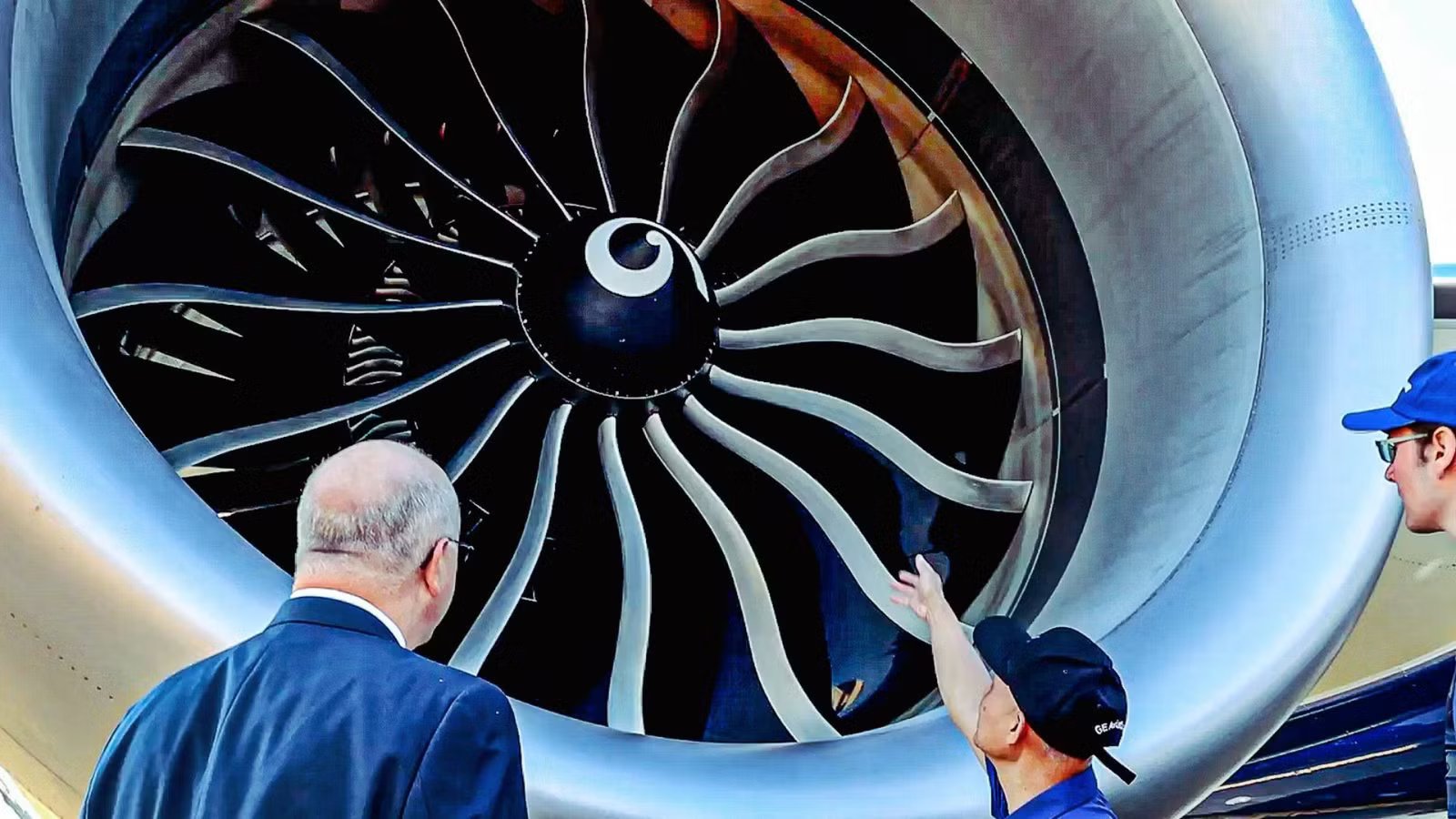
When  Boeing launched the 777X program in November 2013, the aircraft was intended to become the most efficient twin-engine widebody ever built. Powered exclusively by the GE9X, the jet promised a 10% reduction in fuel burn compared to the Boeing 777-300ER while carrying up to 426 passengers in a two-class layout and flying more than 7,200 nautical miles (13,334 km). But more than a decade later, the aircraft remains uncertified, making the 777X one of the longest-delayed commercial aviation programs in Boeing’s modern history. Behind the aircraft is one of its most technologically ambitious components: an engine designed to operate under extraordinary temperatures and pressures.
The GE9X’s pursuit of greater thermal efficiency means components inside the engine must operate in an environment where temperatures can exceed 2,400 degrees Fahrenheit (1,315°C). The GE9X was engineered around extreme thermal efficiency, using advanced ceramic matrix composites, fourth-generation carbon-fiber fan blades, and a 134-inch (3.4-meter) fan, the largest ever fitted to a commercial aircraft. Its core temperatures approach the levels at which conventional nickel-based alloys begin to lose structural strength, forcing engineers to rely on complex cooling systems and thermal coatings to maintain reliability.
A recent durability issue involving an internal seal provides one example of just how demanding that operating environment can be. The engine manufacturer has said the midseal issue is not impacting 777X certification or entry into service.
The GE9X Was Built To Push Commercial Engine Limits

The GE9X was developed as the successor to the GE90, an engine family that powered the Boeing 777 for nearly three decades and accumulated more than 100 million flight hours. To justify replacing such a successful platform, GE Aerospace needed dramatic efficiency gains rather than incremental improvements. The engine holds the title as the most powerful commercial aircraft engine ever developed, with a certified thrust rating of 110,000 pounds-force (490 kN). During test campaigns, the engine surpassed that figure dramatically, reaching 134,300 pounds-force (597 kN), a performance strong enough to earn a Guinness World Record. The bypass ratio increased to roughly 10:1, compared to about 8.5:1 on the GE90, allowing the engine to move significantly more air around the core instead of through it.
A major contributor to the engine’s efficiency was its high-pressure compressor, which achieved a pressure ratio near 27:1, among the highest in commercial aviation. Combined with an overall pressure ratio approaching 60:1, the GE9X extracted more energy from combustion than earlier widebody engines. However, achieving those figures required running the core at far higher temperatures and pressures, dramatically increasing stress on internal components. Even minor variations in airflow or cooling efficiency could influence component life inside the turbine section.
The engine also introduced extensive use of ceramic matrix composite materials. These components are roughly one-third the weight of traditional aerospace alloys and can tolerate temperatures several hundred degrees hotter than conventional metals. GE incorporated CMCs into combustor liners, turbine shrouds, and hot-section structures to reduce cooling requirements and improve efficiency. Yet the same technologies that reduced weight and improved thermal performance also make long-term durability validation particularly important in such an extreme operating environment.

The GE9X’s thermal environment is fundamentally different from earlier commercial turbofans. During operation, temperatures within the combustor and high-pressure turbine sections can exceed 2,400 degrees Fahrenheit (1,315 °C), surpassing the melting point of many structural metals used in aerospace manufacturing. To prevent catastrophic material degradation, the engine depends on a network of microscopic cooling passages that route compressed air through turbine blades and surrounding structures. These systems create thin insulating layers of cooler air between engine hardware and combustion gases.
One durability issue identified in the GE9X involved a seal system operating within this demanding engine environment. Internal seals perform a critical role inside high-bypass turbofans because they regulate pressure distribution and maintain precise airflow paths through the engine core. If seals wear unevenly or deform under thermal stress, airflow balance changes throughout the turbine section. That can reduce efficiency, increase vibration, accelerate fatigue, and alter thermal loading across adjacent components.
Modern engines operate with far tighter tolerances than earlier generations, leaving little room for unexpected expansion or wear. On older engines, designers often incorporated larger mechanical margins that sacrificed some efficiency for long-term robustness. The GE9X was optimized far more aggressively because airlines demanded lower operating costs and reduced emissions. That makes understanding and managing wear particularly important as the engine accumulates operating cycles.
The seal-related durability concern surfacedagainst the backdrop of the wider 777X flight-test program . The 777X first flew in January 2020, but FAAoversight intensified after the Boeing 737 MAX crisis led regulators to adopt far stricter certification procedures across all Boeing programs. Additional delays followed after a 2019 decompression event during structural testing forced Boeing to redesign portions of the aircraft’s fuselage and inspection procedures.
By early 2026, Boeing had accumulated thousands of flight-test hours across multiple aircraft as the wider 777X certification campaign continued. In parallel, work continued on the GE9X durability issue as engineers addressed the demands of maintaining reliability and acceptable maintenance intervals in such an extreme operating environment.
Industry analysts viewed the timing as particularly damaging because airlines had already adjusted fleet strategies around repeated 777X delays. Emirates alone ordered more than 200 aircraft from the 777X family, making it the program’s largest customer. Several carriers extended older widebody fleets or retained Airbus A380 aircraft longer than planned while waiting for the 777-9 to enter service. The wider delays have carried financial implications not only for Boeing and its suppliers but also for airlines that built long-term network planning around the aircraft’s arrival
Fixing The Seal Required Far More Than A Replacement Part

Although the issue involved a relatively small internal component, resolving it proved exceptionally complicated because of how interconnected modern turbofan systems have become. Changes to seal geometry can alter airflow behavior across multiple turbine stages, influencing thermal expansion rates, vibration harmonics, and cooling efficiency throughout the engine core. Engineers, therefore, needed to ensure that any redesign corrected the original wear issue without unintentionally creating new stress concentrations elsewhere in the engine.
GE Aerospace reportedly implemented revised tooling, updated inspection procedures, and modified production processes as part of the corrective effort. That required validating not only the redesigned hardware itself, but also the manufacturing consistency of the updated configuration. In high-pressure turbine environments, microscopic variations in surface finish or dimensional tolerances can significantly influence durability outcomes over thousands of thermal cycles.
The engine manufacturer also had to demonstrate that the revised design would maintain acceptable maintenance intervals over long-term airline operations. Commercial carriers evaluate engines largely on lifecycle economics, including time on wing, overhaul frequency, and unscheduled maintenance risk. Even if an issue poses no immediate safety hazard, premature wear can erase fuel-efficiency advantages by increasing maintenance costs and reducing aircraft availability.
The GE9X Reflects The Future Of Commercial Aviation Engineering

The difficulties surrounding the GE9X highlight a wider trend affecting the entire aerospace industry. Modern commercial engines are approaching thermodynamic and material limits that were once considered impractical for large-scale airline operations. Because aerodynamic improvements now produce smaller gains than in previous decades, manufacturers increasingly rely on hotter cores, higher pressure ratios, lighter materials, and tighter tolerances to improve fuel efficiency.
This strategy has delivered major environmental and economic benefits. According to GE, the 777-9 is expected to reduce fuel consumption and carbon emissions by approximately 20% compared to the aircraft it replaces. However, those gains come at the cost of greater engineering complexity. Modern engines contain more advanced materials, more sensitive thermal systems, and narrower performance margins than earlier generations, making development programs more vulnerable to unexpected durability issues.
The GE9X represents more than an extraordinarily powerful commercial engine. It illustrates how next-generation aerospace engineering increasingly depends on mastering long-term survivability. In previous decades, performance breakthroughs often depended on making engines larger or more powerful. Today, the decisive challenge is ensuring highly optimized engines can endure years of airline service while operating close to the edge of material science itself.

![British Airways Launches New US Route From Heathrow In Just 2 Months [Map]](https://dailynewsnblog.com/wp-content/uploads/2026/08/british-airways-boeing-787-10-on-stand.jpg)