dailynewsnblog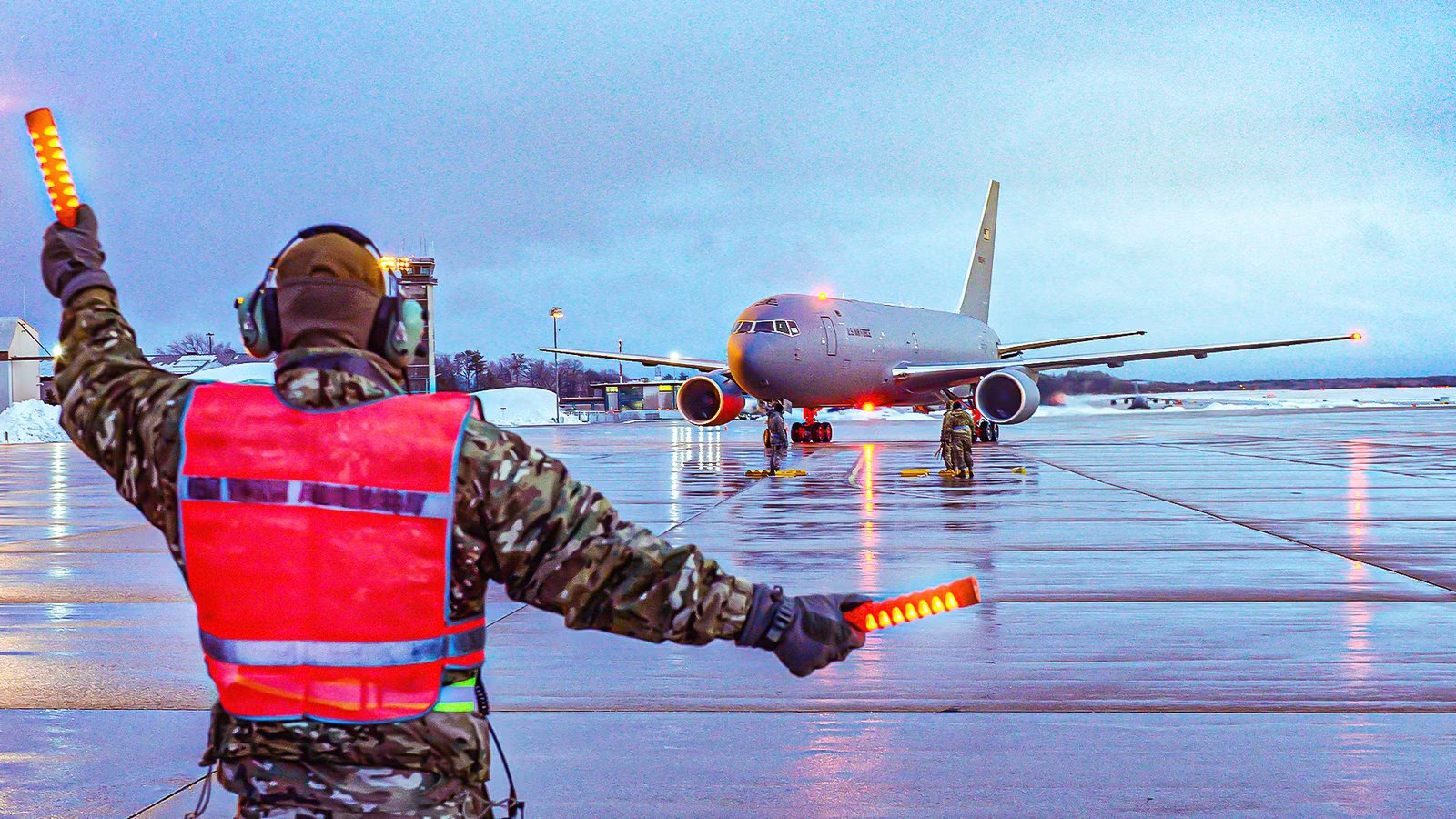
The Boeing 767’s rise as the United States Air Force’s primary tanker is one of the hardest-fought comebacks in modern aviation. By December 2025, the USAF had accepted 100 KC-46 Pegasus aircraft into service, marking a major step in replacing the KC-135 Stratotanker fleet that has been flying since the late 1950s. According to Boeing and US Air Force fact sheets, the KC-46A carries up to 212,000 pounds of fuel, uses Pratt & Whitney PW4062 engines, and integrates elements from a 787 cockpit, bringing a Cold War mission into the digital age.
This transformation did not happen easily or quickly. According to Boeing’s official program data, USAF, and other sources, the 767’s military story is defined by scandal, political battles, engineering setbacks, and eventual operational success. This analysis follows the program’s key phases: the collapse of the original KC-767 deal, the fierce KC-X competition, the transformation into the KC-46A, the aircraft’s troubled entry into service, its role replacing legacy tankers, and its emerging position as a bridge to the next generation of aerial refueling platforms.
From Scandal To Second Chance: The Collapse Of The First KC-767 Deal

The Boeing 767’s tanker journey began as a seemingly straightforward modernization plan. In the early 2000s, the US Air Force urgently needed to replace its aging KC-135 fleet. Many of those aircraft had been in continuous service for decades, and while upgrades had extended their lifespan, concerns about corrosion, maintenance costs, and operational reliability were growing. Boeing proposed a solution based on the popular 767, offering a tanker that leveraged an existing commercial airframe. The idea was simple: reduce development risk by adapting a proven platform rather than designing a new aircraft from scratch.
Initially, the Air Force supported a controversial leasing arrangement that would allow it to quickly field new tankers without a massive upfront procurement cost. However, the deal quickly unraveled. As reported by Army Recognition, the program collapsed in 2004 following a major procurement scandal involving improper conduct between Boeing executives and senior Pentagon officials. Investigations revealed conflicts of interest and unethical negotiations, leading to criminal convictions and widespread political backlash.
The fallout was immediate and severe. The Air Force canceled the lease agreement, and Boeing’s tanker ambitions were effectively reset to zero. Beyond the company itself, the scandal reshaped how defense procurement would be conducted, increasing scrutiny on major contracts and delaying the replacement of the KC-135 fleet by years. What had been a straightforward acquisition became one of the most contentious defense programs of its era.
The Tanker War: How Boeing Lost, And Then Won The Contract

With the original deal scrapped, the Pentagon launched a new competition under the KC-X program. This time, Boeing faced a formidable rival: a partnership between Northrop Grumman and EADS, offering a tanker based on the Airbus A330 MRTT. Unlike Boeing’s 767-based proposal, the A330 tanker was larger, with greater fuel capacity and cargo volume.
In 2008, the Air Force selected the Northrop/EADS team as the winner. For Boeing, this represented a stunning defeat, not just commercially, but strategically, as it risked losing a major US defense program to a European-backed competitor. The decision sparked intense political debate, particularly in the United States, where domestic industrial interests were closely tied to defense contracts.
Boeing responded by filing a formal protest. In a rare and consequential ruling, the Government Accountability Office upheld Boeing’s complaint, identifying flaws in how the Air Force evaluated the bids. According to Army Recognition, this forced the Pentagon to reopen the competition entirely, effectively resetting the process once again.
When the revised competition concluded in 2011, Boeing emerged victorious. The company secured a contract for 179 aircraft under a fixed-price agreement. This structure was intended to protect the government from cost overruns, but it also transferred significant financial risk to Boeing. At the time, the win marked a dramatic turnaround, but it also set the stage for years of financial strain as the program encountered technical challenges.

7 Reasons Why The US Air Force Still Operates The B-52
From nuclear deterrence to missile truck missions, the B-52 Stratofortress remains essential to US airpower even in 2026.
Reinventing The 767: Inside The KC-46A Pegasus Design

Winning the contract was only the beginning. Transforming the Boeing 767 into the KC-46A Pegasus required extensive redesign work, pushing the airframe far beyond its commercial origins. While the aircraft is based on the 767-200ER, it draws heavily from the 767 Freighter configuration, combining structural reinforcement with mission-specific systems.
According to Air & Space Forces Magazine, one of the most significant upgrades is the cockpit. Borrowing heavily from the Boeing 787, the KC-46A features a modern glass cockpit with advanced avionics, replacing the analog and early digital systems of older tankers. This not only improves situational awareness for pilots but also aligns the aircraft with contemporary training and operational standards.
The refueling system itself represents a major technological leap. The KC-46A uses a fly-by-wire boom, allowing operators to control fuel transfer with greater precision. It also includes a probe-and-drogue system, enabling it to refuel a broader range of aircraft, including those operated by the US Navy and allied forces. This dual capability reflects the increasing importance of interoperability in coalition operations.
Beyond refueling, the aircraft is designed for survivability. It includes defensive systems capable of detecting and countering threats, and it is hardened against nuclear, chemical, and biological environments. These features, highlighted in both Air & Space Forces Magazine and US Air Force fact sheets, mark a significant departure from legacy tankers, which were not designed for contested environments.
Boeing’s own program data emphasizes the KC-46A’s flexibility. The aircraft can carry up to 212,000 pounds of fuel and can be reconfigured within approximately two hours to transport cargo, passengers, or medical patients. This multirole capability allows the Air Force to use the same platform across a wide range of missions, from combat support to humanitarian operations.
A Difficult Entry Into Service: Delays, Fixes, And Milestones

Despite its advanced design, the KC-46A program faced a challenging path to operational service. Development issues emerged early, particularly with the Remote Vision System (RVS), which allows boom operators to control refueling from a station inside the aircraft rather than visually from the rear. Problems with image clarity and depth perception raised concerns about safety and effectiveness.
Additional issues with the refueling boom itself, including stiffness that made it difficult to service certain aircraft, further complicated the program. These technical challenges delayed full operational capability and required extensive redesign efforts. Under the fixed-price contract, Boeing absorbed billions of dollars in cost overruns, underscoring the financial risks of the 2011 agreement.
Nevertheless, progress continued. The US Air Force, the air force with the biggest number of tankers in the world, accepted its first two KC-46A aircraft in January 2019 at McConnell Air Force Base, marking the official start of the program’s operational phase. From that point, deliveries gradually increased, even as fixes and upgrades were implemented.
By December 2025, the fleet reached a significant milestone: 100 aircraft delivered. This achievement was marked at Travis Air Force Base, highlighting the program’s transition from development to sustained production and deployment. However, the journey remained uneven.
According to Army Recognition, deliveries were temporarily halted in 2025 to address quality concerns before resuming, which is a reminder that even mature programs can encounter setbacks. These challenges have not derailed the program but have shaped its evolution. The KC-46A is being continuously upgraded, with improvements to the Remote Vision System and other components expected to enhance its long-term performance.

From KC-97 To KC-46: A Brief History Of US Air Force Tankers
The first tanker was propeller-driven and today they are based on airliners (the Boeing 707 and 767), but this is soon set to change.
Replacing A Legend: How The KC-46 Compares To Legacy Tankers

Replacing the KC-135 Stratotanker is one of the most significant transitions in US Air Force history. Introduced in the 1950s, the KC-135 has been a cornerstone of American airpower, supporting everything from nuclear deterrence missions to modern combat operations. Its longevity is remarkable, but it also reflects the difficulty of replacing such a critical capability.
The KC-46A represents a generational shift. One of its most important advantages is its dual refueling capability. While the KC-135 primarily uses a flying boom, the KC-46A can also deploy a probe-and-drogue system. This allows it to refuel a wider range of aircraft, including those used by the US Navy and allied air forces, enhancing its role in joint and coalition operations.
The Pegasus also brings significant improvements in avionics and survivability. Its 787-derived cockpit provides modern digital systems that improve situational awareness and reduce pilot workload. At the same time, its defensive suite allows it to operate in environments where older tankers would be at risk. Air & Space Forces Magazine highlights these features as essential for future conflicts, where tankers may need to operate closer to contested areas.
Efficiency and flexibility are also key advantages. The KC-46A’s ability to switch between missions such as refueling, cargo transport, passenger movement, and aeromedical evacuation gives it a versatility that older platforms lack. This reflects a broader shift toward multirole aircraft that can maximize operational value across diverse mission sets.
The Future Tanker Bridge: Why The 767 Still Matters

Even as the KC-46A becomes more established, the US Air Force is already looking toward the future of aerial refueling. Next-generation tanker concepts may include stealth features, advanced networking capabilities, and the ability to operate in highly contested environments alongside fifth- and sixth-generation aircraft.
However, those systems are still in development. In the interim, the KC-46A is expected to play a critical role as a bridge between legacy tankers and future platforms. According to Air & Space Forces Magazine, the Air Force is considering an upgraded version of the KC-46 as part of a potential 75-aircraft bridge fleet, ensuring that aging KC-135s can be retired without creating a capability gap.
This positions the Boeing 767 at the center of the US aerial refueling strategy for decades to come. What began as a troubled program has evolved into the backbone of tanker modernization. The aircraft’s adaptability, which is combined with ongoing upgrades, ensures that it will remain relevant even as new technologies emerge.
The story of the KC-46A is one of persistence. From scandal and cancellation to competition and technical setbacks, the Boeing 767 has undergone a remarkable transformation. Today, it stands not only as a replacement for the KC-135 but as a platform that bridges the past and future of aerial refueling, by ensuring that US airpower can continue to operate globally, efficiently, and effectively in an increasingly complex strategic environment.