dailynewsnblog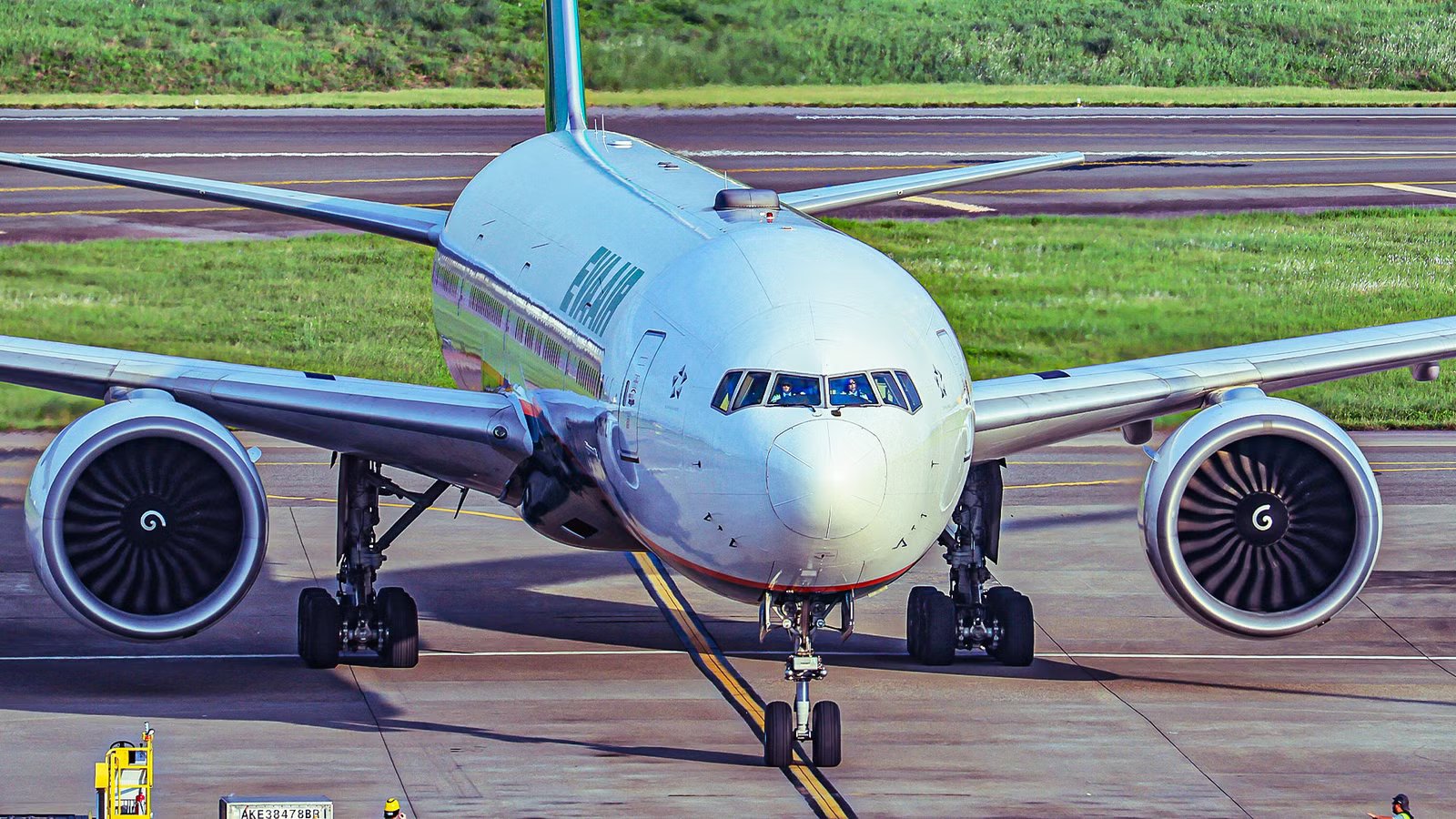
Widebodies are only getting bigger engines as the likes of  Boeing and Airbus work to develop aircraft that cannot just carry more, but also fly further and more efficiently than those that came before them. Take the 777X, currently in the final stages of the regulatory certification process. The massive jetliner boasts the largest jet engines ever produced for a commercial aircraft and is indeed set to boast incredible efficiency against predecessors.
Given models of the 777X carry larger engines than its counterparts, one might expect it will also be able to fly faster, right? Well, there is an element of truth in that, thanks to the huge levels of thrust the aircraft’s General Electric GE9X engines can offer. But, opting for physically larger engines risks a large trade-off in terms of available top speed due to the massive amounts of drag such hefty power units cause.
Yes… Sort Of

As such, a short answer to the question of whether larger engines are actually counterintuitive and can slow an aircraft’s top speed is yes. Drag eats into performance, and while an aircraft fuselage is built for aerodynamics, its engines are an exception to a degree.
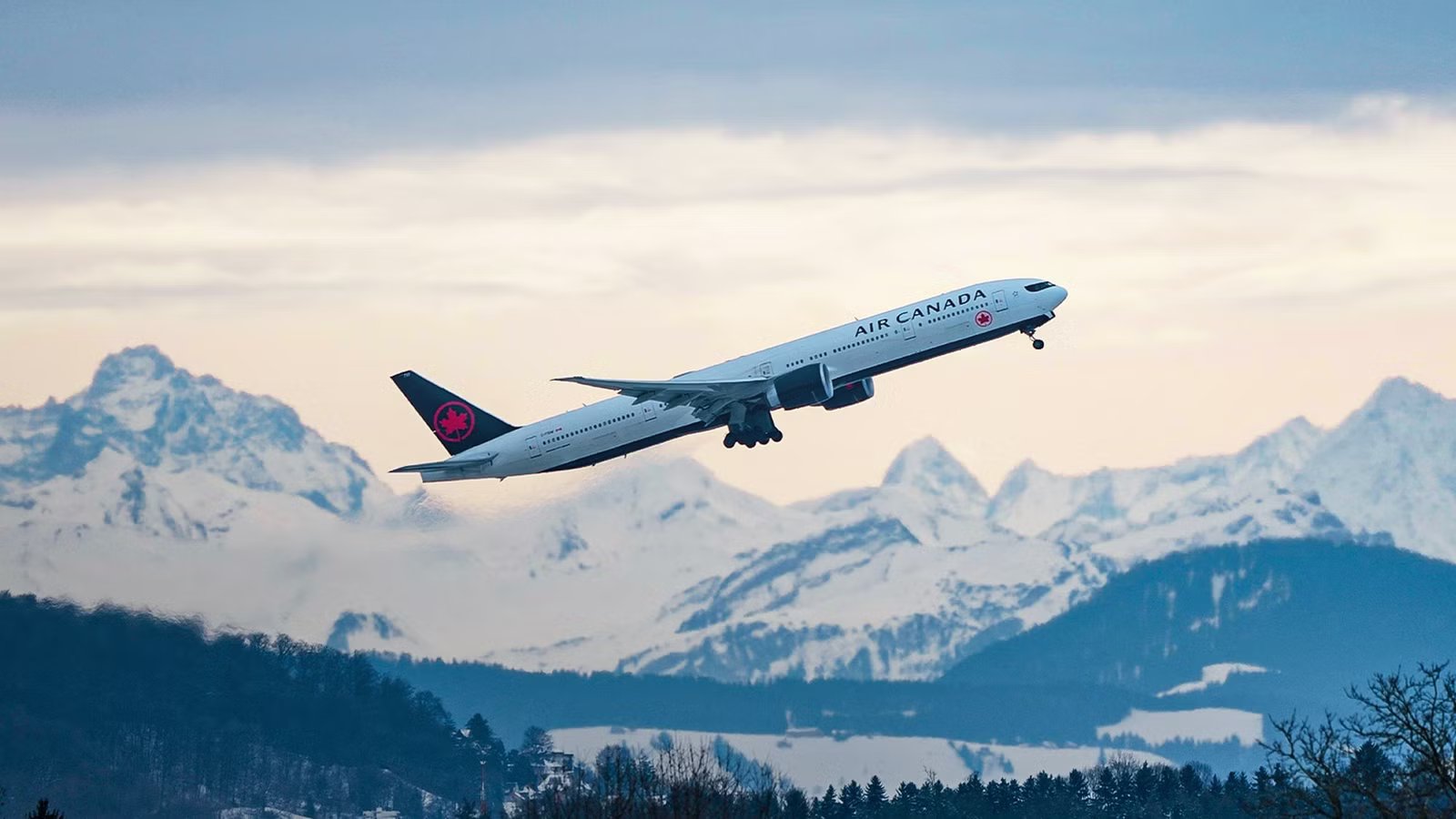
This balance between thrust and drag is really the basis for how quickly an aircraft’s engines will allow it to fly. Take the Boeing 777-300ER as an example. Two GE90-115B engines offer a combined 230,000 lb of thrust. This is 23 times more than an F-5 Tiger, for instance. However, the 777’s top speed of around Mach 0.91 is obviously far lower than the Tiger’s roughly Mach 1.64 ceiling, given the aerodynamic drag of the airliner is well over 23 times that of the fighter jet.
Indeed, the GE90 engine’s fan diameter measures 3.25 meters (10.7 feet) alone, so despite powering the 777, the bulky systems also somewhat work against the aircraft when cutting through the air. The specific name for this is nacelle drag.
Nacelle Drag

Nacelle drag, naturally, refers to the engine enclosure, and relates to the relationship between both an engine’s thrust, but also the penalty incurred based on its size and weight. Among manufacturers, this trade-off has been mulled since the invention of the jet engine.
While an engine with a larger fan does in fact increase propulsive efficiency, it also increases engine weight and the nacelle’s physical diameter. All told, this means the larger an engine, the more its own efficiency, but also a simultaneous decrease in an aircraft’s overall aerodynamic efficiency.
Boeing 777-300ER nacelle drag over flight cycle:
|
Flight phase |
Speed |
Nacelle drag (% of total) |
Approx. nacelle drag |
Importance |
|
Takeoff |
155-186 mph (250-300 km/h) |
3-5% |
4-7 kN |
Low |
|
Climb |
249-497 mph (400-800 km/h) |
5-8% |
8-16 kN |
Moderate |
|
Cruise |
~559 mph (~900 km/h) |
5-10% |
9-22 kN |
High |
|
Descent |
373-497 mph (600-800 km/h) |
5-7% |
6-11 kN |
Moderate |
|
Landing |
155-174 mph (250-280 km/h) |
2-4% |
3-7 kN |
Low |
That, at least, is the crux of it and represents the core reasoning behind how a larger engine can actually make for a worse-off performance in terms of top speed. There, too, though, there are a host of other factors manufacturers must consider.

Rolls-Royce Trent XWB Vs. General Electric GE9X? Which Engine Is More Powerful?
The GE9X is more powerful than the Trent XWB, although there is more than thrust that makes a good engine.
It Boils Down To Speed

Ultimately, each aircraft is designed for a specific purpose, and in the case of widebody jetliners, a hefty engine that offers enough thrust to move such massive weights is necessary. This means what ultimately matters to manufacturers is the net gain of an engine across the entire airplane system, rather than the drag impact determined by its size.
Luckily, in commercial space at least, the drag penalty is most severe at high speeds, and so high bypass ratio turbofans still offer an incredibly efficient option for passenger aircraft. This is a key reason why the commercial industry has thus far pretty much shelved any attempts at coming up with a successor to Concorde. While supersonic flight is part and parcel with military operations, and the reason the fastest fighter jets use low-bypass or turbojet engines, for commercial flight, subsonic speeds of around the Mach 0.8 mark are, realistically, fast enough. The headache of attempting to offer faster services is simply not worth it when the likes of cost management are factored in.
Types of drag aircraft experience:
|
Type |
Main Cause |
When most significant |
Example |
|
Nacelle Drag |
Engine housing and its interaction with airflow |
All flight phases |
Engine pods on a Boeing 777 |
|
Form Drag |
Shape of aircraft components |
Increases with speed |
Bulky fuselage |
|
Skin Friction Drag |
Surface roughness |
Increases with speed |
Dirty or rough surfaces |
|
Interference Drag |
Interaction of airflow at component junctions |
All speeds |
Wing-fuselage junction |
|
Induced Drag |
Production of lift |
Low speeds |
Takeoff and landing |
|
Wave Drag |
Shock waves near the speed of sound |
Transonic/supersonic speeds |
Concorde |
The nacelle is also just one of a number of parts of an aircraft that induce drag, so it realistically plays a relatively small part in overall performance. An aircraft’s shape and surface roughness are also hugely important, and determine form and skin friction drag, respectively. Interference, induced, and wave are other examples of drag that an aircraft experiences, with these based on airflow around component junctions, production of lift, and shock waves caused by flying near the speed of sound.
Concorde Again?

For the sake of argument, it is worth delving into Concorde and whether another supersonic passenger aircraft might be viable in the future. On the surface, the example of Concorde itself has likely only worked to put manufacturers off any real attempts at a repeat.
The Concorde program met an untimely end in 2003, due in no small part to the fact that it was just not profitable. Following the Air France Flight 4590 crash in 2000 and a subsequent year-plus-long break in flights, passengers essentially made up their minds that a couple of extra hours to reach a destination was worth it. Why commercial airlines use the planes they do now at the expense of shorter journeys is in part down to this appetite, or lack of it, among passengers for such flights.
Concorde Specifications:
|
Capacity |
92-120 passengers (128 in high-density layout) |
|
Crew |
(2 pilots and 1 flight engineer) |
|
Range |
3,900.0 nmi (7,222.8 km) |
|
Service ceiling |
60,000 ft (18,288 meters) |
|
Maximum speed |
Mach 2.04, (2,179 km/h), temperature limited |
|
Runway requirement |
11,800 ft (3,596.6 m) with maximum load |
|
Maximum takeoff weight |
408,010 lb (185,070.2 kg) |
|
Length |
202 ft 4 in (61.7 m) |
|
Wingspan |
84 ft 0 in (25.6 m) |
|
Height |
40 ft 0 in (12.2 m) |
|
Powerplant |
4x Rolls-Royce/Snecma Olympus 593 Mk 610 turbojets with reheat 31,000 lbf (140 kN) thrust each dry, 38,050 lbf (169.3 kN) with afterburner |
Back to the point at hand, and Concorde itself used four Rolls-Royce Snecma Olympus 593 engines. Note, the drag penalty is really only a major problem at high speeds, as mentioned above, and so the Olympus 593 turbojet engine design provided a solution. These were attached directly to the underside of Concorde’s wings without struts and boasted significantly more streamlined nacelles than conventional commercial aircraft, with each of these housing two of the engines. While ideal as a show of technological superiority amidst the Cold War, modern-day flight has a new focus. Rather than a need or want to test the boundaries historically, and why the idea behind Concorde came about, nowadays, efficiency is the name of the game.

Why Don’t Planes Fly Faster?
It’s more complicated than you may think.
Speed Is Secondary To Efficiency

Airlines and manufacturers alike now appear set on conveying to passengers that the plane they are flying on is X times more efficient than a rival option. Add in the use of other tools that attempt to paint the industry in a greener light, and the frenzy in this age of flight seems centered on its environmental cost.
All told, among the best ways of ensuring efficient flight is speed. Up to a point, aircraft become more fuel efficient the faster they go. It is as simple as increasing the lift produced by wings to allow for a less aggressive angle of attack, in turn allowing drag to be reduced with the pulling back of flaps and a rise to higher altitudes. Of course, drag also grows with speed, but it is counteracted by these factors. In its simplest form, this is why aircraft with huge wingspans and engines, like the Airbus A350 and 777X, have emerged in recent years. But this only ensures efficiency so far, and is why commercial airlines like to sit just beneath the sound barrier. This itself is the point where wave drag drastically increases, and so thrust needs to be significantly increased at the expense of far more fuel.
Within this massive realm of transonic travel, larger engines have proven a real solution. Plainly put, high-bypass engines, with bigger fans, can move more air at lower speeds. This, in turn, offers more thrust for the amount of fuel burned. Though nacelle drag increases with a larger surface area of an engine, the alternative is to more forcefully accelerate smaller amounts of air by using more fuel.
Two Larger Engines Better Than Four

In all, then, larger engines can eat into an aircraft’s top speed. But, for the purpose of moving greater numbers of people or goods further, the benefits of their use far outweigh the effects of the additional drag bigger and bulkier engines incur. Speed, however important, is simply overshadowed by efficiency in today’s aviation industry.
The development of larger and more efficient engines has also effectively ended the commercial quad-jet era. Realistically, it does not take a rocket scientist (or an aeronautical engineer in this case) to work out that two engines, even if they themselves are larger, will cause less drag on an aircraft.