dailynewsnblog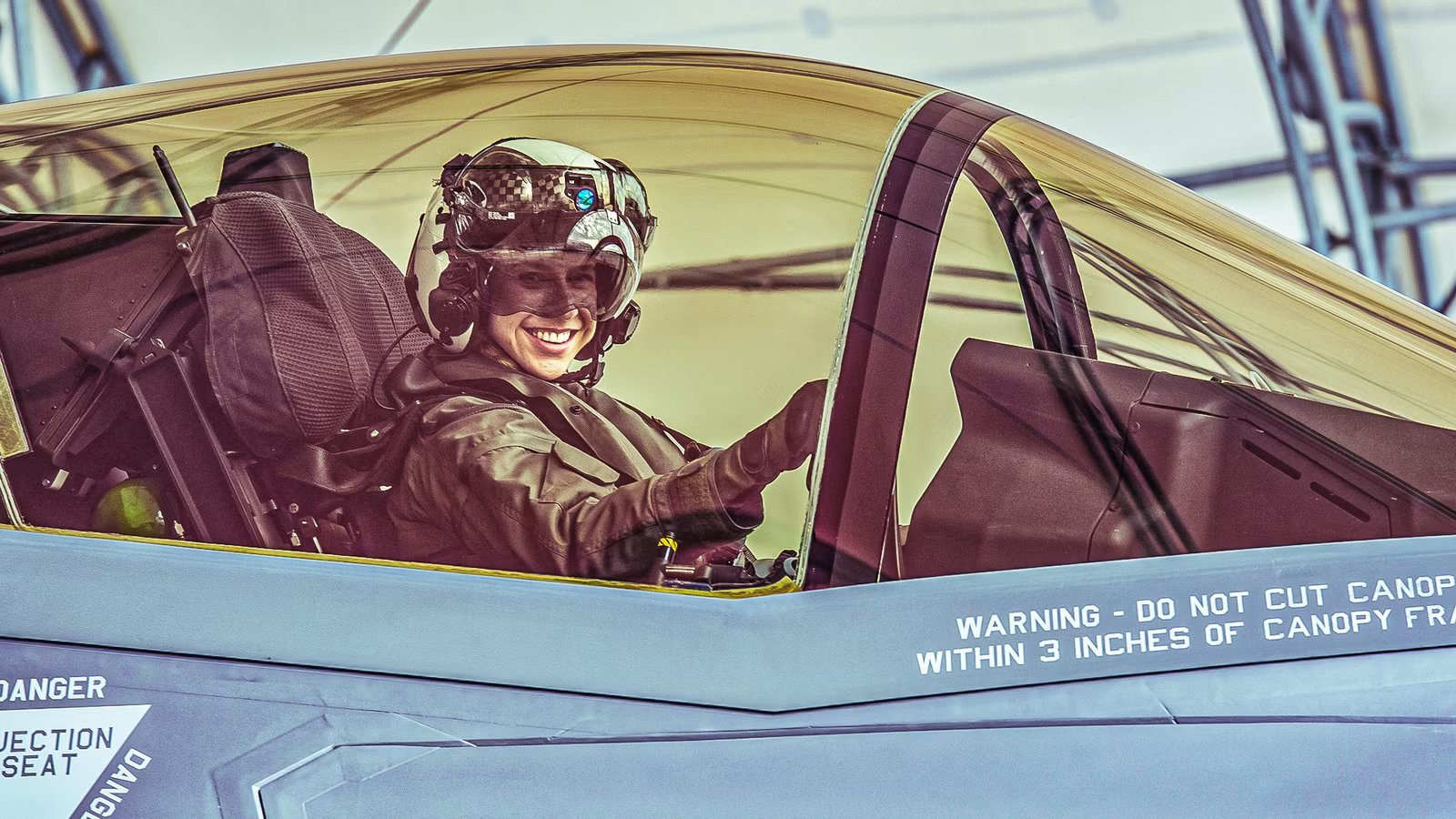
The United States Marine Corps has one of the most unique career paths in the world for fighter pilots. The specialized role of aviation units in the USMC translates to a flying experience unlike any other uniformed service in the US or abroad. The entire service, regardless of job specialty, follows the same doctrine, focused on function as a highly mobile, amphibious infantry force.
The aviation branch is not an independent entity; it exists strictly to act as highly responsive, organic air support for the Marines fighting on the ground. While a Marine pilot’s role looks very similar to an Air Force or Navy pilot from the outside, the operational culture, aircraft capabilities, and command structures differ radically. On the other hand, pay is virtually identical, but the career path is also very different from other services.
What It Pays To Be A Flying Devil Dog

Flying in the Marines offers a career in one of the unique and challenging aviation branches of any military in the world. But if you ask the average Marine, or any other member of the US Armed Forces, most of them will tell you that you shouldn’t join for the pay. It’s especially true for the aviation community that parallel career paths in the private sector are far more lucrative. However, allowances and specialized aviation bonuses significantly boost their actual take-home income.
The base pay for a military pilot is identical across all branches of the US Armed Forces, determined by federal pay charts governed by the Defense Finance and Accounting Service. Below is a breakdown of the typical compensation paid to officer ranks most commonly assigned to flying duties and fighter squadrons:
|
Pay Grade |
US Marine Corps Rank |
Average Annual Base Salary |
|---|---|---|
|
O-1 |
Second Lieutenant |
$56,220 |
|
O-2 |
First Lieutenant |
$68,400 |
|
O-3 |
Captain |
$87,000 |
|
O-4 |
Major |
$101,400 |
|
O-5 |
Lieutenant Colonel |
$121,200 |
|
O-6 |
Colonel |
$144,600 |
Fighter pilots receive Aviation Career Incentive Pay, known as Flight Pay. This supplemental pay bonus is on a scale that ranges from $150 to $1,000 per month based on years of aviation service. Active duty pilots living off-base receive a Basic Allowance for Housing, (BAH). That can add $20,000 to $40,000 annually, depending on the cost of living at their duty station. Even with these extra pay bumps, civilian airline pilots bring home as much as twice the annual income.
First Things First: Every Marine A Rifleman

Another reason why a fighter pilot in the Marines would not recommend joining for the paycheck is that the Corps has a unique approach to aviation officer training and duties. Unlike any other tactical air service on the globe, US Marine officers can be assigned to lead infantry before they get into the cockpit, although it is uncommon. It is not unheard of for a new second lieutenant in the Marines to be sent on a deployment with ground forces before ever setting foot in flight school.
Similarly, whether an officer is destined to sit in the cockpit of a stealth fighter or work in the logistics office, they are trained to fight with the boots on the ground first. This is because, unlike other militaries where the air force and army must negotiate for joint cooperation, the Marine Corps operates under a self-contained ecosystem called the Marine Air-Ground Task Force. MAGTF fighter jets do not prioritize independent strategic bombing campaigns. They function directly as ‘flying artillery’ for their fellow Marines.
At the Basic School, all newly commissioned officers undergo the exact same ground combat training. Located in Quantico, Virginia, TBS trains every future USMC aviator to the standard of a Rifle Platoon Commander so they can lead those infantrymen; the underlying ethos remains that they are riflemen themselves, deeply understanding the ground combat reality. Even once they are assigned to a fighter squadron, a Marine pilot’s career promotions and fitness reports heavily weigh how well they lead their troops on the ground, rather than just their hours logged in the sky.
How The Boeing F/A-18 Super Hornet Stacks Up Against The F-35C In 2026
The US Navy’s strike fighters go head-to-head.
The Corps’ Air Warfare Strategy

Marine pilots flying the Lockheed Martin F-35C Lightning II undergo the exact same rigorous carrier qualification process as Navy pilots to land high-performance jets on aircraft carriers at sea. However, they specialize heavily in Expeditionary Advanced Base Operations. These land-based ops dictate that they operate out of austere, hidden, dirt strips or hastily improvised airfields close to enemy lines. Meanwhile, many fly the F-35B ‘jump jet’ capable of short takeoff and vertical landing from small fields or Navy amphibious assault carriers.
The F-35B uses a massive lift-fan engine system to hover and land vertically like a helicopter. Because it does not require a long runway or arresting wires, it is the primary aircraft used for Forward Bases and Amphibious Assault Ships. The F-35C variant features larger wings, heavier landing gear, and a tailhook designed to withstand the violent catapult launches and arrested landings. The Corps integrates several of these squadrons into USN Carrier Air Wings on Nimitz and Ford-class supercarriers.
|
Specification |
F-35B |
F-35C |
|---|---|---|
|
Prime Contractor |
Lockheed Martin |
“ |
|
Power Plant |
One Pratt & Whitney F135-PW-600 turbofan engine |
F135-PW-100 |
|
Thrust |
38,000 lb (40,500 lb Vertical) |
43,000 lb |
|
Wingspan |
35 feet (10.7 meters) |
43 feet (13.1 meters) |
|
Length |
51.2 feet (15.1 meters) |
51.5 feet (15.7 meters) |
|
Height |
14 feet (4.38 meters) |
“ |
|
Payload |
15,000 lb (6,800 kg) |
18,000 lb (8,160 kg) |
|
Maximum Takeoff Weight |
70,000 lb (31,751 kg) |
“ |
|
Speed |
Mach 1.6 |
“ |
|
Range |
More than 1,350 miles (2,172 km) with internal fuel, unlimited with aerial refueling |
“ |
|
Ceiling |
Above 50,000 feet (15,000 meters) |
“ |
|
Armament |
Internal and external capability. Munitions carried vary based on mission requirements. |
“ |
|
Crew |
One |
“ |
The service maintains a fixed program of record of 420 total F-35 aircraft, organized into 20 active-duty and reserve tactical squadrons. The 12 squadrons of F-35B jump jets have inherited the EABO mission from the McDonnell Douglas AV-8 B Harrier II. Between land-based ops and assault carrier tours, they account for the majority of active fighter deployments at any given time. Meanwhile, the eight F-35C squadrons are slated to expand as the Corps updated its aviation plan to actively double its target number of carrier-based variants from 67 to 140 F-35C jets.

Here’s Why The Marines Corps Is Scattering F-35Bs Across Tiny Pacific Islands In 2026
Going back to Raider ops for the pivot to the Pacific.
USMC Deployment: On The Pointy End Of The Spear

A Marine Corps fighter pilot’s deployment experience, mission set, and daily life vary drastically depending on whether they are stationed at an airbase or on a ship at sea. Fighter pilots often deploy from helicopter bases and small fields near the front line for critical close-air support for troops under fire. This is the core mission of USMC aviation overall and is therefore the most important role for any Marine fighter pilot. These jets can also refuel and rearm from temporary sites like an island airstrip built out of interlocking aluminum AM2 matting, a strip of highway, or simply a patch of packed dirt.
Marine F-35B pilots also frequently deploy aboard Navy amphibious ships, or ‘Big Decks,’ like the USS America. These ships look like smaller aircraft carriers but are designed to transport a Marine Expeditionary Unit with hundreds of ground infantry troops, vehicles, and helicopters. The ship is packed to capacity with ground combat gear, meaning pilots live shoulder-to-shoulder with the infantry officers they support.
Meanwhile, the ‘Boat,’ holds over 5,000 personnel. The Navy’s eleven nuclear-powered aircraft carriers are so massive that the living conditions, food options, and medical facilities are significantly better than on amphibious ships or at a forward airfield. While aboard, Marine F-35C pilots operate just like Navy fighter pilots to support the air wing’s overall mission and the carrier strike group’s strategic goals.
US Navy Pilots In Training Will Now Make Their 1st Carrier Landing In An F/A-18 Or F-35
No tailhook required to earn wings of gold?
The Roadmap To Join The Jarheads

Just like the job of being a fighter pilot in the Marines, the path to joining the service is varied, with multiple avenues open to aspiring aviators seeking the uniquely challenging experience that USMC aviation offers. The Marine Corps is unique because you can secure a guaranteed aviation slot before you ever attend officer training or flight school. Candidates must complete a bachelor’s degree before going to TBS, and there is always the chance of being deployed with the infantry before flight training begins.
One way to reach the cockpit is by applying for Naval Reserve Officers Training Corps Marine Option Scholarships. Unlike Navy-bound students who are assigned their jobs late in college, Marine Option midshipmen must compete for an Air Contract during their junior year of college based on their grades, fitness scores, and flight test results. This route pays for your full college tuition and fees.
If you do not get an NROTC scholarship, you can attend any normal four-year university and walk into a local Marine Corps Officer Selection Office as a freshman or sophomore. There, candidates can apply for the PLC-Air program. This is an “off-the-street” civilian contract. Instead of military training during the school year, you attend Officer Candidates School. This is in Quantico and held during two 6-week summer breaks. The rest of the year, you are a normal college student.
Regardless of the college route, after TBS, you report to Pensacola, Florida, for Naval Aviation training. This pipeline takes roughly two to three years. Everyone flies the T-6B Texan II turboprop to learn basic flying and aerobatics. Only the top-performing pilots are selected for the ‘Jet Track.’ Upon earning your ‘Wings of Gold,’ you are assigned to a Fleet Replacement Squadron to learn how to fly the F-35B or F-35C.