dailynewsnblog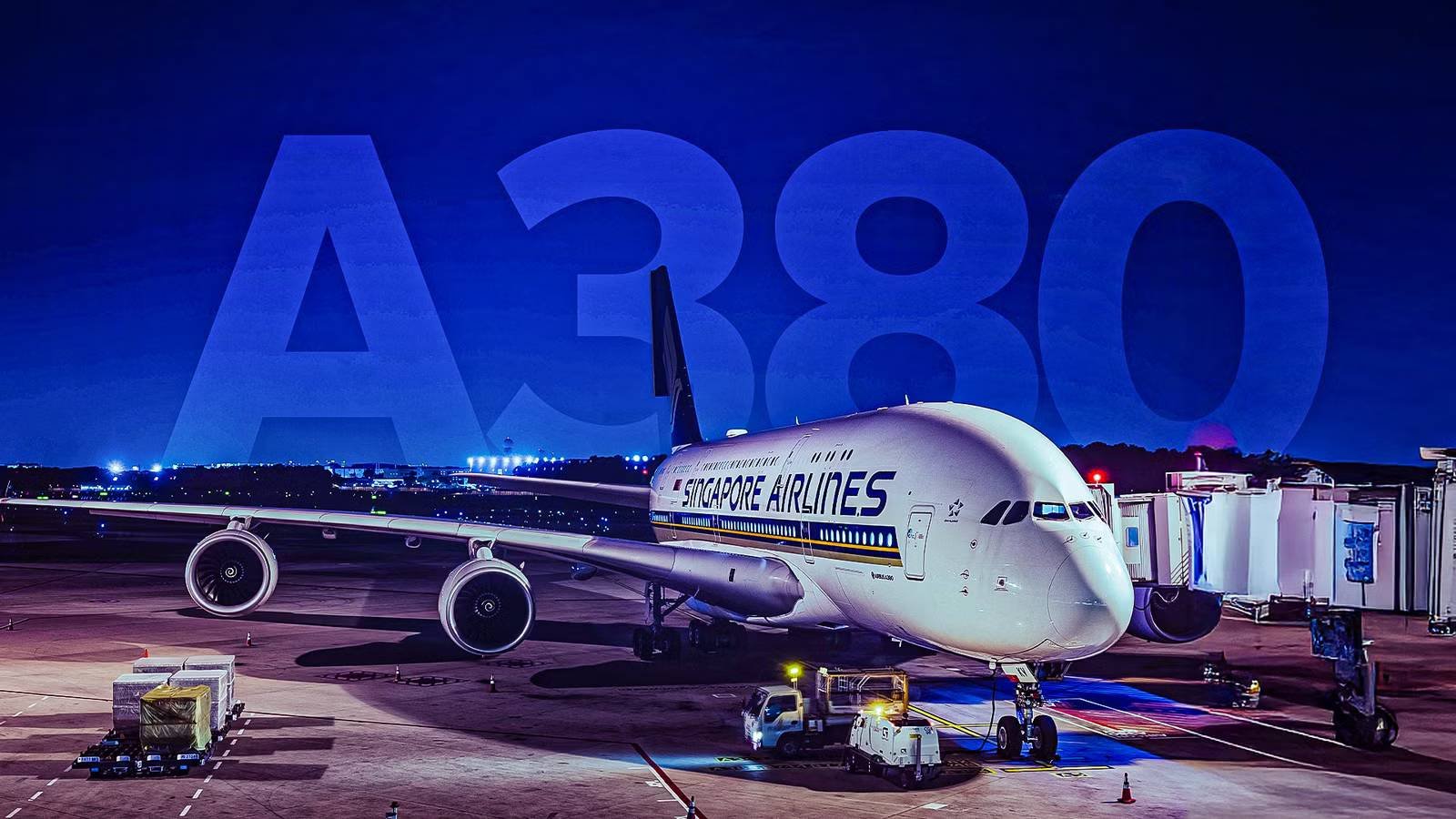
The Airbus A380 burns approximately 4,600 gallons (17,400 L) of fuel per hour. The Airbus A320 burns approximately 750 gallons (3,000 L). Framed as raw fuel consumption, the A380 uses roughly six times as much fuel as the A320, which is not a surprising difference, given that one is a 1,268,000-pound (575,000 kg), four-engine, double-deck widebody and the other is a 172,000-pound (78,000 kg), twin-engine narrowbody. The comparison becomes more interesting when the calculation accounts for how many passengers each aircraft carries per unit of fuel it burns.
Per-passenger fuel efficiency is where the numbers shift, and where factors like seating configuration, load factor, and mission profile start to matter more than total fuel burn. An A380 carrying 615 passengers produces a very different per-passenger figure than one carrying 400 in a premium-heavy layout, and both look different from an A320 flying a two-hour domestic hop versus a four-hour cross-country route.
How Much Fuel Each Aircraft Burns Per Hour

The Airbus A380 burns approximately 4,600 gallons (17,400 L) per hour during cruise, powered by four Rolls-Royce Trent 900 or Engine Alliance GP7200 engines. At 10 gallons per nautical mile, it consumes more fuel per hour than any other commercial aircraft in service. The A380 carries up to 82,000 gallons (310,000 L) of fuel in its wing and fuselage tanks, enough to sustain flights of up to 8,000 nautical miles (14,800 km) at a cruise speed of Mach 0.85.
The Airbus A320ceo burns approximately 750 gallons (2,840 L) per hour in cruise, powered by two CFM56 or IAE V2500 engines. The A320neo, equipped with CFM LEAP-1A or Pratt & Whitney GTF engines, reduces that figure to approximately 676 gallons (2,560 L) per hour, a 15-20% improvement over the older variant. The A320 carries approximately 6,300 gallons (24,200 L) of fuel, enough for its typical mission profile of 2-4 hour flights covering up to 3,300 nautical miles (6,100 km).
The A380 burns roughly six times as much fuel per hour as an A320. That ratio reflects the difference in aircraft size, engine count, and mission. The A380’s maximum takeoff weight is 1,268,000 pounds (575,000 kg). The A320’s is approximately 172,000 pounds (78,000 kg). The A380 carries between 400 and 615 passengers depending on configuration. The A320 carries between 150 and 180. The raw fuel burn comparison is not useful on its own without accounting for how many passengers each aircraft carries on the fuel it consumes.
What The Numbers Look Like Per Passenger

Dividing each aircraft’s fuel burn by its passenger count produces a comparison that looks very different from the raw hourly figures. The math is straightforward. The A380 burns approximately 8.2 gallons per statute mile at cruise. In a typical three-class configuration carrying 525 passengers, that works out to roughly 64 passenger-miles per gallon. In Emirates’ higher-density 615-seat layout, the figure improves to approximately 75 passenger-miles per gallon.
The A320ceo burns approximately 1.45 gallons per statute mile at cruise. With 170 passengers on board, that produces roughly 117 passenger-miles per gallon. With 180 passengers in a higher-density layout, the figure rises to approximately 124. The A320neo, burning roughly 1.3 gallons per mile, pushes the number higher still, reaching approximately 130-138 passenger-miles per gallon depending on configuration.
The A320 is the more fuel-efficient aircraft per passenger, and by a significant margin. A typical A320ceo delivers roughly 117 passenger miles per gallon compared to approximately 64-75 for the A380. The A320neo widens the gap further. The result may seem counterintuitive given the A380’s scale, but the A320 benefits from having only two engines, a lighter airframe relative to its passenger count, and a more modern aerodynamic design in the NEO variant. The A380 spreads its fuel burn across more passengers than any other aircraft in service, but not enough to close the efficiency gap with a modern narrowbody.
How Many Miles Per Gallon Does A Boeing 747-8 Get?
The newest version of the jumbo jet gets through a lot of fuel, but its high capacity means that the consumption is spread across more passengers.
How Configuration And Load Factor Change The Math

The per-passenger figures in the previous section assume every seat is occupied. In practice, no commercial flight operates at 100% load factor. The global average for international flights hovers around 82-85%, and individual flights vary widely depending on route, day of week, time of year, and market conditions. Load factor directly affects the per-passenger efficiency calculation because the aircraft burns the same amount of fuel regardless of how many seats are filled.
An A380 configured with 525 seats at 85% load factor carries approximately 446 passengers. Its per-passenger efficiency drops from 64 passenger-miles per gallon to roughly 54. At a 70% load factor and carrying 368 passengers, the figure falls to approximately 45. Emirates operates its A380 fleet at consistently high load factors, often above 80%, which is part of why the aircraft remains economically viable for the airline. An operator running the same aircraft at a 65% load factor on a less-popular route would see per-passenger fuel efficiency deteriorate to levels that make the economics difficult to justify relative to a smaller widebody.
The A320 follows the same math but starts from a higher baseline. At 85% load factor with 170 seats, the A320ceo carries 145 passengers and delivers roughly 100 passenger-miles per gallon. At 70%, carrying 119 passengers, the figure drops to approximately 82. Configuration matters independently of load factor. An A380 with a premium-heavy cabin carrying 400 passengers at full capacity produces worse per-passenger efficiency than the same aircraft configured with 615 economy seats at 80% load factor.
Why Comparing A Long-Haul Widebody To A Short-Haul Narrowbody Has Limits

The A380 and A320 operate on fundamentally different mission profiles, which affects how their fuel efficiency should be interpreted. Every flight includes a takeoff and climb phase that burns significantly more fuel per minute than cruise. On a two-hour A320 domestic flight, the takeoff and climb can account for 20-25% of the total fuel consumed. On a 14-hour A380 long-haul sector, the same phase represents a much smaller percentage of total burn because the aircraft spends the majority of its flight time at cruise altitude where fuel consumption per mile is lowest.
This means the A320’s per-passenger efficiency on a short domestic sector is worse than its cruise-phase numbers suggest, while the A380’s efficiency on a long-haul flight benefits from spending most of the mission at its most efficient operating point. A 90-minute A320 shuttle flight from New York to Washington burns more fuel per passenger-mile than the same aircraft flying a four-hour cross-country route, simply because the fuel-intensive takeoff and climb phase represents a larger share of the shorter mission. The A380 flying Dubai to London at 14 hours is operating almost entirely in cruise, where its per-passenger numbers are at their best.
The two aircraft also serve different economic functions, making a direct efficiency comparison of limited practical value. Airlines do not choose between an A380 and an A320 for the same route. The A380 exists to move 500-plus passengers between major international hubs where demand justifies the capacity. The A320 is designed to carry 150-180 passengers on domestic and short-haul international routes where frequency matters more than size. Comparing their fuel efficiency is useful for understanding how aircraft size, engine count, and mission profile affect per-passenger consumption, but it does not represent a choice any airline actually faces.
How Many Miles Per Gallon Does A Boeing 747 Get?
The 747 uses vast quantities of fuel, burning through 3,800 gallons every hour. This high fuel burn is equivalent to 0.19 mpg
How Both Compare To Newer Aircraft

Both the A380 and the A320ceo are older-generation aircraft when measured against what is now available. The A350, which Airbus positions as the A380’s effective successor on long-haul routes, achieves approximately 100 passenger-miles per gallon in a typical three-class configuration. That represents a roughly 30-50% improvement over the A380, depending on configuration and load factor, achieved through two engines instead of four, extensive composite construction, and Rolls-Royce Trent XWB engines that are a full generation newer than those that power the A380. The Boeing 787 delivers similar per-passenger efficiency gains over the four-engine widebodies it was designed to replace.
The A320neo improves on the A320ceo by 15-20% on a per-seat basis through its LEAP-1A or GTF engines and aerodynamic refinements, including sharklets. At approximately 130-138 passenger-miles per gallon, the A320neo is the most fuel-efficient narrowbody in its class. The A321neo and A321XLR push the family’s efficiency further on longer routes where cruise represents a larger share of total fuel burn. The 737 MAX family offers comparable improvements over the 737NG generation.
The generational gap between the A380 and the aircraft replacing it is larger than the gap between the A320ceo and the A320neo. The A380 is being overtaken by aircraft that carry fewer passengers but burn so much less fuel per seat that the total operating economics favor the smaller aircraft on all but the highest-demand routes. The A320ceo is being replaced by a direct successor that does the same job more efficiently on the same routes.