dailynewsnblog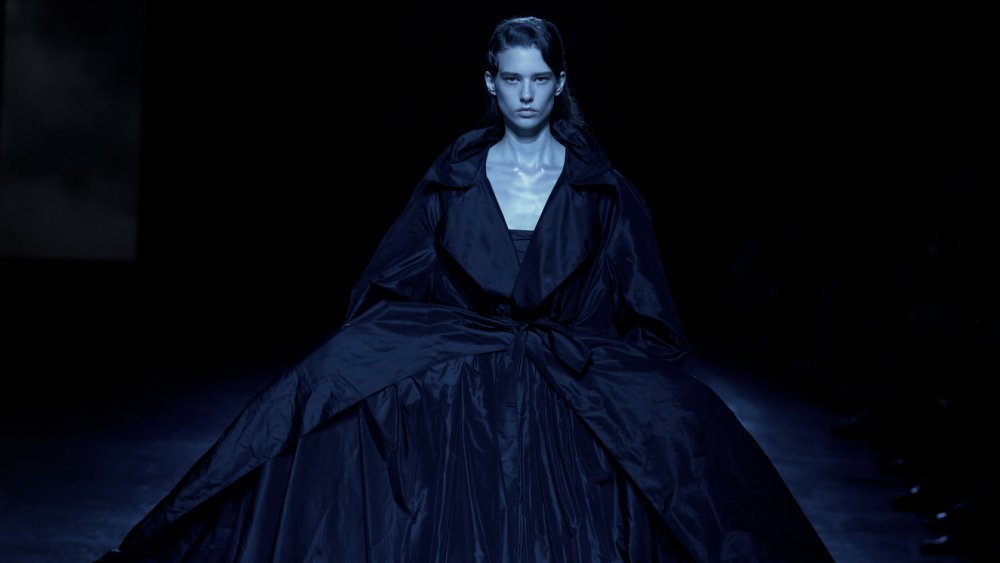
Olivier Theyskens’ new project Boloria, backed by the company behind Tomorrowland electronic music festivals, made its debut on the eve of Paris Couture Week, and it impressed.
The Belgian designer set out to create a new brand that feels like it could have been around for a century or more. He didn’t choose the name — Tomorrowland’s parent We Are One World did — but he was enchanted by its backstory, Boloria being the term ascribed to a subspecies of brush-footed butterflies first identified by entomologists in 1899.
Theyskens said he’s been working on the project for two years, allowing him to fiddle with every small detail, from the way the squared-off outsole of a women’s pump juts out just a tad, to the short, uneven, almost imperceptible rows of beads dangling from the hem of a lace skirt.
Even the serif font on the clothing label was carefully studied, given such academic airs you might expect it to be etched in stone outside a library or museum.
During a preview appointment on Saturday, the designer showed a visitor his original sketches, to which he attached technical drawings and tiny fabric swatches — gorgeous compositions of satins, tweeds, silks, Korean air fabric and lace, mostly in tawny shades, or black and white.
As very rough shorthand, one could describe the look as The Row meets Rimbaud, for these luxurious clothes are for true connoisseurs, but with melancholia and romance — two Theyskens signatures — baked right in.
“I always felt there there is room and space for Belgian luxury,” the designer said, ascribing it such attributes as humility, refinement, soul and depth.
The designer opened his show with dark, bulging gowns, the dramatic styles that caught Madonna’s attention and catapulted him to fame in the late ’90s, though he characterized these as allegories of dreams, a “surrealist moment” which yielded to young male models draped in fabrics — as if they had dragged their bedsheets with them.
He built the collection on tailoring that deftly balanced structure and slouch, adding jaunty styling touches like upturned cuffs, rolled-up pants and metallic pocket squares. The menswear had a retro feeling, but fresh in its light, lustrous or papery fabrics.
The womenswear pinged between androgynous suiting and gorgeous siren gowns in satin or bias-cut silk. The darkened space, appointed with black boxes roiling with fog, added drama, suggesting inner turmoil.
He said he imagined “what is the everyday life of these Boloria people that might have been from the 1920s, 1940s, 1960s, 1970s. I thought about this mixture of clothes that are part of the past — and how I express them now.”
Before Boloria came to be, Theyskens confessed to cursory prior knowledge of Tomorrowland, which he stumbled upon when visiting his parents in northern Belgium, surprised to hear techno pouring out from a television channel that broadcast its festivals.
But he had a mind-meld when he ultimately met up with its founding brothers Michiel and Manu Beers, whose obsessions with creativity, storytelling, authenticity and craftsmanship synced up with his. “For them, sound is a craft, lighting is a craft,” he enthused.
Theyskens said he’s been energized to work out of We Are One World’s headquarters in Antwerp as its hundreds of employees organize events, build music and media platforms, and design lifestyle products and leisure concepts.
Boloria fashions — dignified and ultra refined — are worlds away from the festival merch it plies, and proves what dreamers the Beers truly are.