dailynewsnblog
 Air Canada has launched two new transatlantic routes in 24 hours, further expanding its European network ahead of the peak summer season. On June 17, the Canadian flag carrier launched nonstop service between Montréal–Trudeau International Airport (YUL) and Palma De Mallorca Airport (PMI), followed by the inauguration of Halifax / Stanfield International Airport (YHZ) – Brussels Airport (BRU) flights on June 18. Both routes are seasonal and are designed to capitalize on strong leisure and visiting-friends-and-relatives (VFR) demand between Canada and Europe.
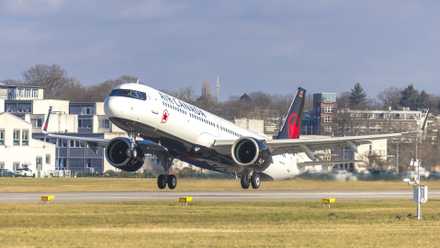
The launches represent another step in Air Canada’s broader European growth strategy, which has seen the airline add several new destinations in recent years. While Palma de Mallorca becomes a completely new destination on Air Canada’s route map, Brussels returns as a direct link from Atlantic Canada, giving passengers in Nova Scotia a new nonstop option to continental Europe. The two routes also highlight how the airline is adapting its fleet strategy in response to significant Airbus A321XLR delivery delays.
Air Canada Adds Palma & Brussels To Its European Network

Air Canada’s newest European destination is Palma de Mallorca, the capital of Spain’s Balearic Islands and one of the Mediterranean’s most popular leisure destinations. The route launched on June 17 and operates three times weekly between Montreal and Palma. According to Air Canada, the service is scheduled to run throughout the summer season, connecting the island directly with Canada for the first time.
The following day, Air Canada inaugurated a new seasonal route linking Halifax with Brussels. The service also operates three times per week and provides Atlantic Canada with its first nonstop connection to Belgium. Brussels also offers extensive onward connections throughout Europe via fellow Star Alliance carriers, making the route attractive for both local travelers and connecting passengers.
Route | Start Date | Frequency | Aircraft | Notes |
Montreal (YUL) – Palma de Mallorca (PMI) | June 17, 2026 | 3x weekly | Boeing 787-8 Dreamliner | First nonstop Canada–Mallorca service, initially planned for Airbus A321XLR operations 4x weekly |
Halifax (YHZ) – Brussels (BRU) | June 18, 2026 | 3x weekly | Boeing 737 MAX 8 | First nonstop Halifax–Belgium route |
Catch what other flight trackers miss
Emergency squawks, holds, NOTAMs — live signals, no signup.
Open tracker
Catch what other flight trackers miss
Emergency squawks, holds, NOTAMs — live signals, no signup.
Open tracker
Air Canada says both routes are intended to strengthen Canada’s links with Europe while providing new tourism opportunities on both sides of the Atlantic. The airline has identified strong demand for direct services to leisure-focused destinations that previously required one or more connections.
Why These Two New Routes Matter For Air Canada

Mallorca has become one of Europe’s most sought-after vacation destinations, attracting millions of visitors each year thanks to its beaches, resorts, and Mediterranean climate. Prior to Air Canada’s launch, Canadian travelers typically had to connect through Madrid, Barcelona, Frankfurt, London, or other European hubs to reach the island. The new nonstop flight significantly reduces travel times while opening a completely new market for the carrier.

The Brussels service serves a different purpose. Halifax has emerged as one of Air Canada’s most important transatlantic gateways outside Montreal and Toronto, with its location enabling efficient narrowbody service to Europe. The route gives travelers in Atlantic Canada easier access to Belgium and creates additional connectivity opportunities across Europe through Brussels Airlines’ network.
These launches also demonstrate how airlines are increasingly targeting underserved markets rather than competing solely on major trunk routes. By focusing on destinations with strong seasonal demand and limited nonstop competition, Air Canada can strengthen its presence in Europe while diversifying its network.
5 New Transatlantic Routes In 7 Days: Where Air Canada, Air Transat & WestJet Fly Now [Map]
Air Canada, Air Transat and WestJet launched five transatlantic routes in seven days, including new Azores, Iceland and Agadir services.
The Aircraft Behind The Launches

Although both routes launched during the same week, they use very different aircraft. The Montreal–Palma de Mallorca service is operated by the Boeing 787 Dreamliner, one of Air Canada’s flagship long-haul aircraft. The Dreamliner provides significantly more capacity than the aircraft originally planned for the route and offers passengers the airline’s Signature Class cabin, Premium Economy, and Economy seating.
Meanwhile, the Halifax–Brussels route is operated by the Boeing 737 MAX 8. The aircraft has become a key part of Air Canada’s transatlantic strategy, allowing the carrier to profitably serve smaller European markets that do not require widebody capacity. Its lower operating costs and long-range capabilities make it ideal for routes from Atlantic Canada to Western Europe.
One of the most interesting aspects of the Palma launch is that the route was not operated by the aircraft Air Canada originally intended to use. The airline had planned to deploy the Airbus A321XLR, the long-range narrowbody expected to transform transatlantic flying by enabling airlines to serve thinner routes more efficiently. However, nearly two years of Airbus A321XLR delivery delays forced Air Canada to repeatedly revise its network plans. Rather than waiting for additional aircraft to arrive, the airline elected to launch the route using a larger Boeing 787 Dreamliner. This also led to a reduction in weekly service, from the initial four days per week to three, to maximize capacity, as can be seen on Air Connection.
The aircraft substitution increased available seat and cargo capacity, allowing Air Canada to accommodate strong travel demand between Canada and Spain. This development was appreciated by Canadian cyclists who bring their bicycles to explore the Balearic Islands sustainably, a practice promoted across the islands, as noted by Forbes Spain. While the A321XLR remains central to the airline’s future growth strategy, the Palma launch demonstrates how fleet delays can reshape route planning across an entire network.