dailynewsnblog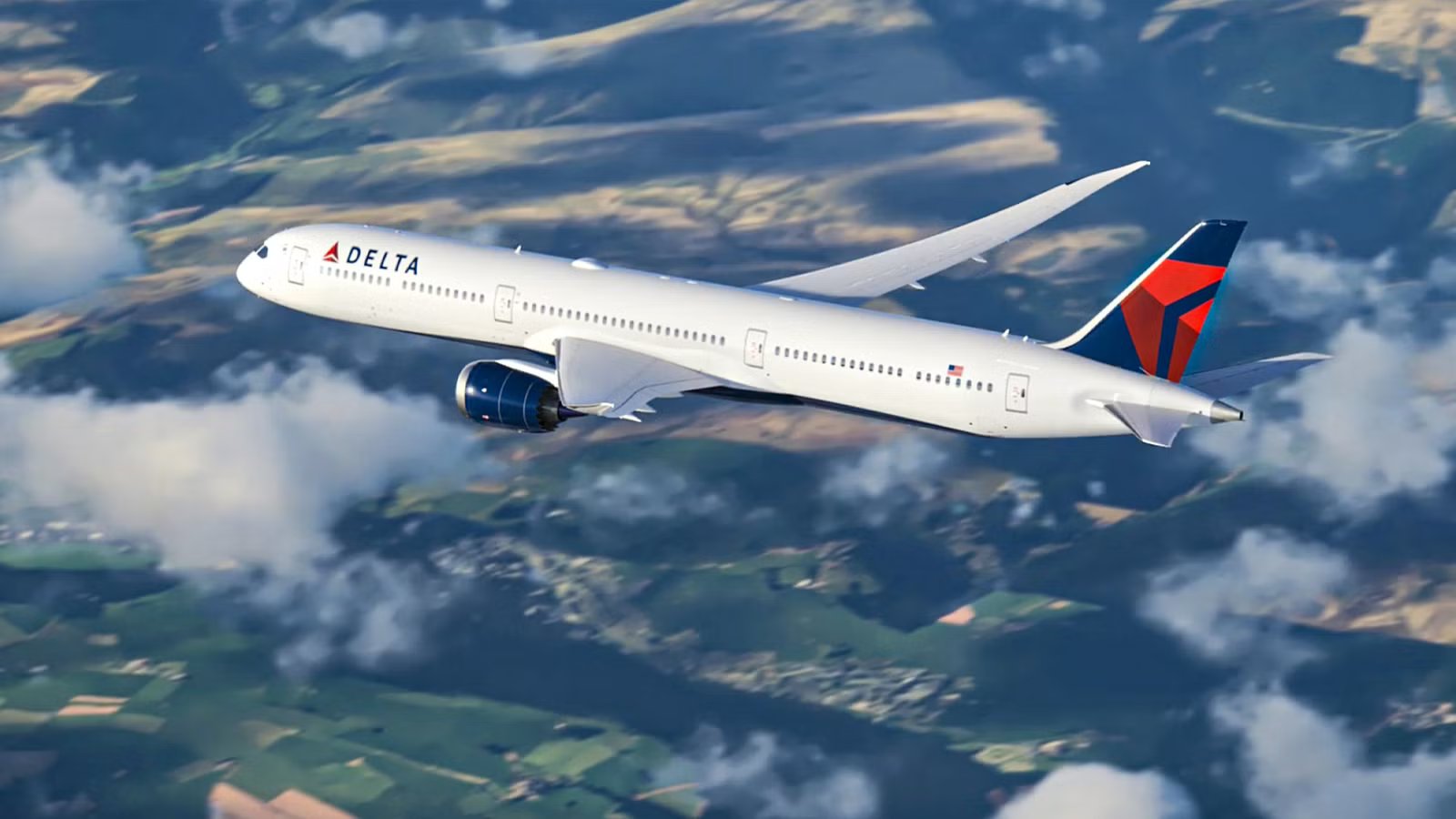
 Delta Air Lines sent shockwaves across the commercial aviation sector earlier this year by announcing a firm order for 30 Boeing 787-10 Dreamliners aircraft, accompanied by options for up to 30 more. The order brings with it the carrier’s first direct procurement of the modern widebody family, ending an era of single-source twin-aisle orders that had long favored its European rival.
The decision to diversify its fleet shows a major pivot in capital expenditure strategy for the Atlanta-based carrier. For nearly ten years, Airbus had enjoyed a monopoly on Delta’s new widebody orders, supplying highly efficient twin-engine jets to power the airline’s global expansion. Reintroducing  Boeing to its long-haul lineup not only mitigates supply chain risks but also provides Delta with a highly tailored, high-capacity solution to dominate premium transatlantic markets.
Strategic & Filled With Purpose

Delta’s commitment to up to 60 Boeing 787-10 aircraft is a landmark acquisition for the airline, as well as for the manufacturer. This strategic deal, finalized on January 13, 2026, provides the airline with a vital counterbalance to its existing long-haul fleet structure, now splitting its future twin-aisle acquisitions between the world’s two dominant aerospace manufacturers. The balanced procurement approach will help safeguard the carrier’s growth plans against sudden production delays and regulatory hurdles.
For nearly ten years, Delta had banked all of its widebody investments directly on Airbus, accumulating an impressive fleet of Airbus A330-900 and Airbus A350-900 jets. The operational concentration on Airbus was driven by highly competitive pricing, favorable maintenance packages, and the administrative simplicity of managing fewer flight-deck types. Concentrating on the European manufacturer allowed Delta to streamline its pilot training pipelines and optimize spare parts inventories across its major maintenance hubs. However, this absolute reliance on a single manufacturer exposed the airline to escalating European assembly tariffs and aerospace supply chain delays.
The decision to select the Dreamliner is a real full-circle turn for Delta’s long-term planning department, returning once more to the manufacturer that still features heavily across the fleet. Back in late 2016, the airline canceled an inherited order for 18 smaller Boeing 787-8 aircraft that it had acquired during its landmark merger with Northwest Airlines. At that point, executives determined that focusing exclusively on Airbus widebodies would deliver greater structural simplicity and superior profit margins. Returning to the Boeing widebody family ten years later demonstrates how dynamic market conditions, capacity pressures, and rapid international growth can redefine even the most established fleet strategies.
Bringing The Boeing Fleet Up To Date

The operational objective of the newly ordered 787-10 fleet is to replace Delta’s aging Boeing 767-300ER and Boeing 767-400ER fleets. These older twin-aisle aircraft have served as the absolute backbone of Delta’s transatlantic and South American networks for over two decades. However, with many of these aircraft approaching or exceeding their 30th anniversaries, rising maintenance expenses and outdated passenger cabins have made retirement essential. Phasing out these older airframes will significantly modernize Delta’s long-haul operations, making way for the new Boeing platform.
Opting for the largest variant of the Dreamliner family, Delta is embracing a high-gauge strategy that maximizes capacity on its densest international routes. The 787-10 provides a substantial passenger capacity increase over the older 767 models while offering double the available under-floor cargo volume. This massive cargo increase enables the carrier to capture high-yield freight opportunities on key transatlantic corridors, boosting overall route profitability. Instead of operating multiple smaller flights, the airline can use the Dreamliner’s superior economics to run fewer, more lucrative frequencies.
Deliveries of the 30 firm 787-10s are scheduled to begin in 2031, establishing a clear timeline for the final phase-out of the 767 fleet. According to manufacturer specifications, the Dreamliner will deliver a spectacular 20% reduction in fuel burn per seat compared to the older twin-aisle jets it is scheduled to replace. For Delta, this is a massive operational victory that directly supports the long-term cost-reduction and sustainability targets. Curbing fuel consumption on long-haul sectors, Delta can cover its operating margins from volatile oil markets.
Why The 787 Is Perfect For Delta

Delta is planning to outfit its incoming 787-10s with an exceptionally aggressive, premium-heavy cabin configuration designed to maximize long-term passenger yields. This layout strategy reflects the carrier’s ongoing effort to capture high-margin luxury travel, which has grown rapidly as a key driver of airline profitability. Rather than focusing on maximum passenger density, the Atlanta-based carrier is choosing to allocate significant cabin real estate to high-end seating.
The financial strategy underpinning this cabin configuration was highlighted by Delta’s Chief Commercial Officer, Joe Esposito, during an earnings call in July of this year. He confirmed that over 50% of the seats on the new 787-10s will consist of premium products, including Delta One Suites, Delta Premium Select, and Delta Comfort. It is an enormous shift from the outgoing 767 fleets, where premium seats typically account for only 30% of the total cabin capacity.
In addition to expanding the premium seat footprint, the Dreamliner’s advanced carbon-fiber composite fuselage will offer passengers a fundamentally improved physiological experience. The aircraft is pressurized at a lower cabin altitude of 6,000 feet (1,828 meters) and maintains higher interior humidity levels compared to traditional aluminum airplanes. These structural improvements significantly mitigate the symptoms of jet lag, dry skin, and fatigue on ultra-long-haul routes. When combined with larger, electronically dimmable passenger windows and a quieter cabin acoustic profile, the 787-10 will deliver a world-class environment that reinforces Delta’s premium brand identity.
The Power Of The GEnx

A critical element of Delta’s 787-10 procurement strategy is its engine selection. Alongside the airframe order, the carrier announced it had selected GEnx-1B engines from GE Aerospace to power the new widebody fleet. This propulsion choice is a major operational development for Delta, adding high-efficiency engines backed by a comprehensive long-term maintenance and services agreement. What has become clear is that Delta is leveraging a mature engine program with more than 70 million flight hours of operational data across global airlines to go all out on proven reliability.
The GEnx-1B engine is widely recognized for introducing cutting-edge materials and aerodynamic designs to commercial aviation. It is the first commercial engine to utilize both a carbon-fiber composite front fan case and composite fan blades. Reducing the overall fan blade count from 22 to 18, GE Aerospace succeeded in cutting substantial engine weight while improving resistance to corrosion. Additionally, the low-pressure turbine incorporates titanium aluminide blades in its final stages, shaving off approximately 300 pounds (136 kilograms) compared to conventional designs and significantly boosting fuel efficiency.
These weight-saving technologies translate directly to lower operating overhead for Delta’s long-haul network. The GEnx engine delivers a notable reduction in fuel consumption and carbon dioxide emissions compared to older propulsion systems. Furthermore, its advanced combustor system decreases nitrogen oxide emissions, helping Delta meet increasingly strict international environmental guidelines, making the GEnx an ideal match for Delta’s future sustainability goals.
Catch what other flight trackers miss
Emergency squawks, holds, NOTAMs — live signals, no signup.
Open tracker
Catch what other flight trackers miss
Emergency squawks, holds, NOTAMs — live signals, no signup.
Open tracker
The Deciding Factor

The high-capacity 787-10 is expected to serve as Delta’s premium workhorse across high-demand transatlantic corridors and dense South American routes, taking over from the 767. There are, of course, plenty of other aircraft that could fit the bill, and as discussed, there are plenty of reasons why Delta eventually opted for the Dreamliner. There is, however, one key point that is often overlooked that could reveal the pivotal deciding factor.
In early 2026, the Federal Aviation Administration (FAA) officially certified an increased maximum takeoff weight (iMTOW) for the 787-10 variant. This upgrade raises the structural weight capacity of the aircraft by 14,219 pounds (6,450 kilograms), offering operators a highly lucrative choice between range and payload. For Delta, this additional structural weight capability translates to roughly 400 nautical miles (740 kilometers) of additional flight range or five metric tons (11,023 pounds) of extra cargo capacity. The added performance envelope allows the airline to operate deep into Eastern Europe and South America with heavy passenger and freight loads, greater than what its predecessors were capable of.
The performance upgrade directly expands Delta’s network options from its primary hubs in Atlanta, New York, and Minneapolis. The carrier can confidently schedule the 787-10 on long-range routes that were previously best suited to the Airbus A350-900s. Rather than being restricted to shorter transatlantic hops, the upgraded Dreamliner can easily fly deep into South American cities or premium Western European capitals while maximizing belly cargo revenue.
Balancing The Top Manufacturers

From a corporate finance perspective, the 787-10 order is designed to drive significant margin expansion across Delta’s international network. By replacing older, less efficient twin-aisle jets with a platform that burns 25% less fuel per seat, the airline is introducing a structural cost reduction that will pay dividends for decades. In an industry where fuel remains one of the largest and most volatile operating expenses, this dramatic leap in efficiency provides a vital hedge against future energy price spikes.
The financial logic extends far beyond simple fuel savings. Delta has successfully established a dual-source widebody strategy that keeps both manufacturers highly competitive, keeping both Airbus and Boeing on their toes. This balanced fleet makeup prevents Delta from becoming captive to a single supplier’s pricing power or assembly bottlenecks. It also ensures that the airline can pivot its future capital commitments to whichever manufacturer offers the most favorable pricing and delivery timelines.
Ultimately, this blockbuster procurement program marks the final step in Delta’s multi-year effort to simplify and modernize its global operations. When combined with its existing orders for Airbus A350-1000s and Boeing 737 MAX 10 aircraft, the incoming 787-10 Dreamliners will give Delta one of the youngest, most efficient, and most premium-heavy long-haul fleets in the world.