dailynewsnblog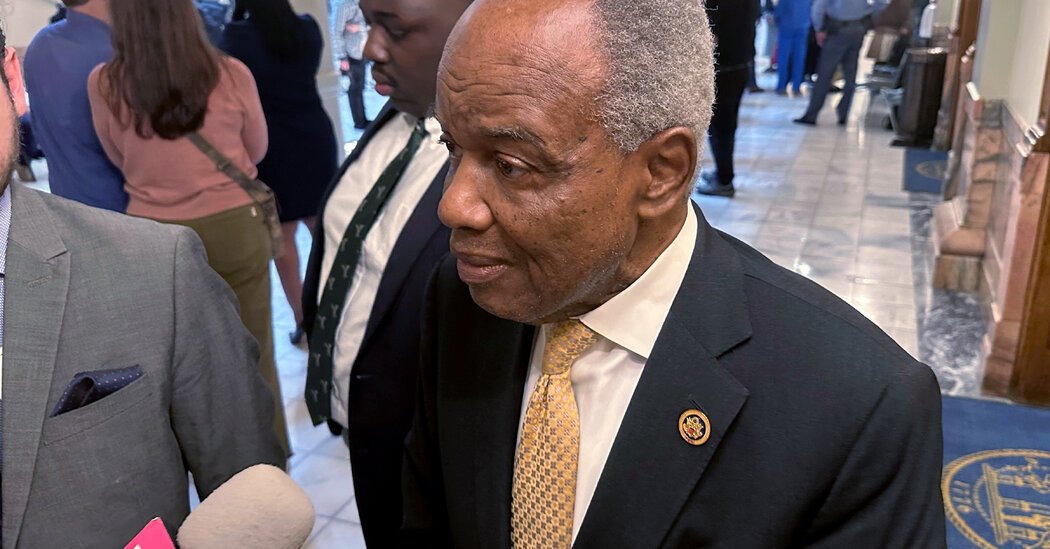
Representative David Scott, a Georgia Democrat who served nearly three decades in the state’s legislature before being elected to Congress, has died, his office announced on Wednesday. He was 80.
Mr. Scott represented Georgia’s 13th Congressional District for more than 20 years. During his time in Washington, he established himself as an advocate for Black communities, prioritizing urban and rural issues vital to a district composed of the southwest Atlanta suburbs and less populous counties.
“He will be remembered not only for his leadership but for his kindness, compassion and enduring impact on those around him,” his office said in a statement on Wednesday, adding that Mr. Scott’s death was “unexpected.”
Mr. Scott was the first Black lawmaker to lead the House Agriculture Committee, and used that perch to focus attention on farming communities in the South that had been reeling from years of natural disasters and economic crises.
In recent years, he drew more scrutiny for his refusal to exit politics amid a series of health problems that had noticeably slowed his pace, prompting members of his own party to vote him out of a leadership position on the committee he had once helmed. His age and declining influence in the party placed him in a class of Black Democrats who faced intense scrutiny for their reluctance to retire, as their critics pushed for a younger generation of public servants to run for office.
Mr. Scott made headlines last month when he appeared at the Georgia State Capitol to file paperwork to seek a 13th term in office. Among the first in line to register for the May primary, he was wheeled into the building by an aide, and ignored questions from reporters about his health and ability to meet the demands of the job.
Mr. Scott was casting votes at the Capitol as recently as Tuesday.
The new vacancy alters the balance in the House in favor of Republicans, who now have a slightly larger margin following a string of resignations.
Mr. Scott, who was born on his grandparents’ farm in Aynor, S.C., was raised in Pennsylvania, New York and Florida before settling in Georgia in the 1970s as Atlanta was recovering from the Jim Crow era and entering a period of economic growth and opportunity for Black Americans. With his wife, Alfredia, he established an advertising company focused on billboards.
The connections he established as a young business owner operating in the affluent circles of Black Atlanta — where civil rights activists sought to build on the momentum from the 1960s to advance life for Southern minorities — set the stage for his entry into politics.
He ultimately ran for local office in 1974 at the urging of Coretta Scott King, the widow of the Rev. Dr. Martin Luther King Jr.
“The opportunity came for me to step into the political arena in a bid for the State House of Representatives,” Mr. Scott recalled during a speech in the House chamber in 2006, days after the death of Mrs. King. “I am very pleased to be able to stand here in the United States Congress and say that I am here because Coretta Scott King touched my life.”
He was elected the same year Atlanta chose its first Black mayor, Maynard Jackson.
At 29 years old, he was among the youngest members elected to the state legislature. He went on to serve nearly three decades in the Georgia House and Senate before being elected to Congress in 2002.
When he arrived in Washington, he quickly established himself as a moderate Democrat working on legislation in the Financial Services and Foreign Affairs Committees. But it was the Agriculture Committee, a panel he served on throughout his congressional career, that was the venue for his most enduring impact. During his early years on the committee, he focused on agricultural issues affecting Georgia, including commodity exchanges, energy and livestock.
His support for the farming communities of his district formed the basis of a strong working relationship with Senator Saxby Chambliss, a now-retired Georgia Republican who served on the Agriculture Committee.
In 2020, when Mr. Scott was elected by members of his party to lead the Agriculture Committee, he said that the gavel would provide him the opportunity to “represent the values of our entire caucus and advance our priorities for trade, disaster aid, climate change, sustainable agriculture, SNAP, crop insurance, small family farms, specialty crops and rural broadband.”
As the first Black lawmaker to wield the gavel of the committee, Mr. Scott acknowledged the historic nature of his ascension. But he called attention to the divisions among farmers in his state, saying at the time that “the fault lines dividing our rural and urban communities are running deep.” It was a theme he repeated during his two years leading the panel through turmoil related to the pandemic, and through a series of natural disasters that cost farmers across the country billions in losses and damages.
Support from his party began to wane as Mr. Scott struggled to negotiate a major farm bill and showed signs of aging. In his final year as the top Democrat on the panel, he began using a wheelchair, and his speeches during hearings were condensed as he struggled to read prepared remarks and question witnesses. In 2024, he was replaced by Representative Angie Craig of Minnesota, a Democrat 26 years younger.
Mr. Scott’s removal from an influential leadership position made him part of an intraparty push for a new generation of elected officials. Yet in May 2024, despite criticism over his age and health, and after undergoing a competitive primary, Mr. Scott maintained enough support to secure a 12th term.
Since then, the calls for him to step aside had only grown. Before his death, Mr. Scott faced a crowd of primary challengers, all of whom pointed to his declining health and more infrequent public presence.
“Part of the reason he would have faced a robust challenge in this coming election cycle was because the rumors surrounding his health were just spinning too fast,” said Andra Gillespie, an associate professor of political science at Emory University who specializes in Black politics. “And I think for the young, ambitious politicians in the district, they saw an opportunity to pounce.”
Mr. Scott is the fifth member of Congress to die in office this term, and the fourth Democrat.