dailynewsnblog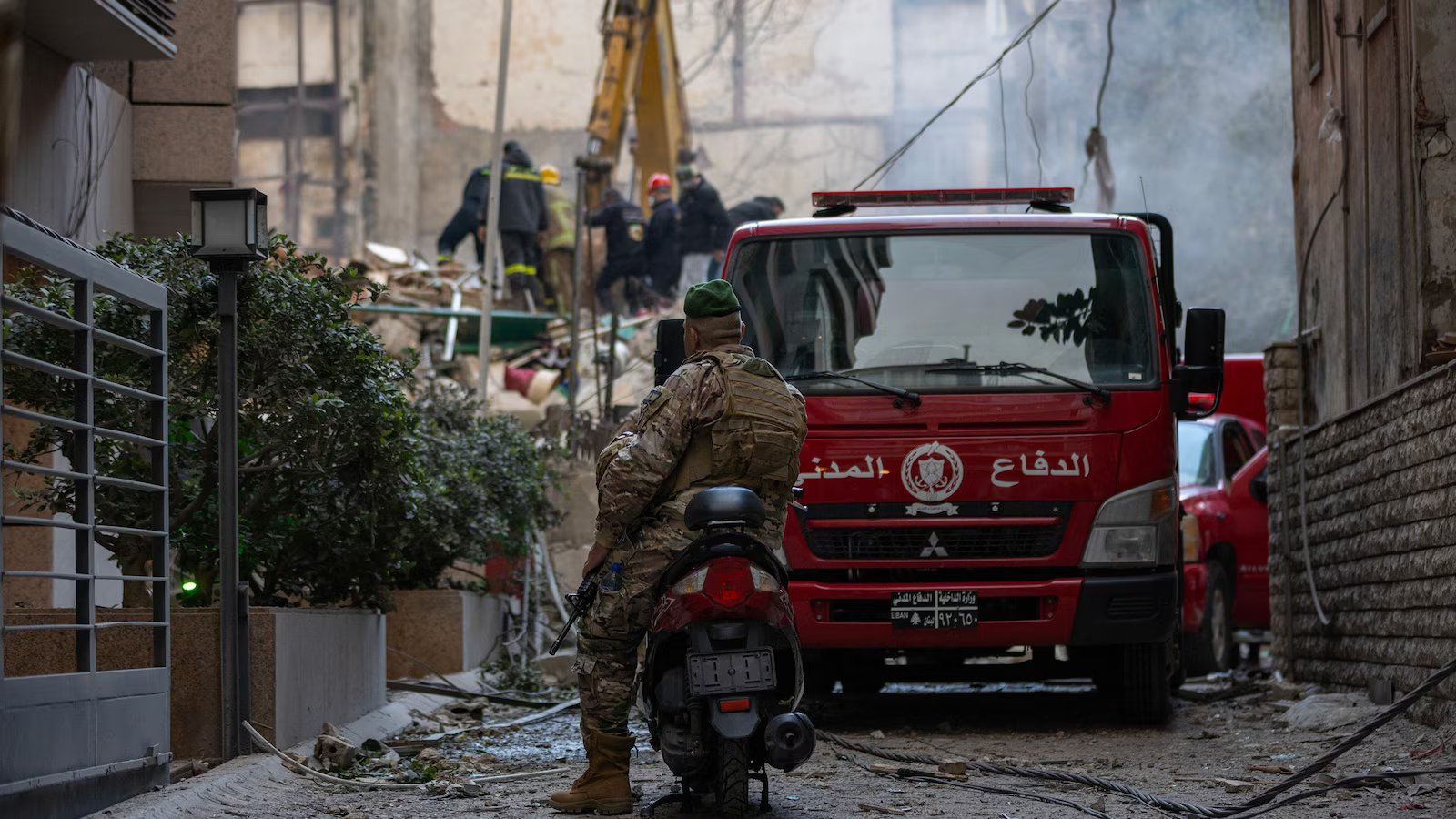
LONDON — Israeli and Lebanese ambassadors are expected to convene again at the State Department on Thursday for a second round of meetings amid the latest conflagration in the Middle East.
The first direct negotiations between the two states since 1993 are intended as preparatory meetings to shape future talks on a deal to normalize ties between the countries.
Thursday’s meeting is expected to focus on extending a shaky ceasefire that has halted fighting between Israel and the Iran-backed Hezbollah militia, long considered by experts as a “state within a state” wielding enormous influence over Lebanon’s political, economic and security spheres.
The technocratic government in Beirut, which came to power in 2025, is juggling dual pressure campaigns — sustained Israeli attacks and seizure of Lebanese territory on one hand and the internal threat of Hezbollah and its Iranian backers on the other.
Lebanese President Joseph Aoun said on Tuesday that the goal of the negotiations was to “stop hostilities, end the Israeli occupation of southern regions and deploy the [Lebanese] army all the way to the internationally recognized southern borders.”

Secretary of State Marco Rubio (C) meets with Israeli Ambassador to the U.S. Yechiel Leiter (L) and Lebanese Ambassador to the U.S. Nada Hamadeh Moawad (R) at the State Department in Washington, D.C., on April 14, 2026.
Jacquelyn Martin/AP
“We negotiate for ourselves,” Aoun said. “We are no longer a pawn in anyone’s game, nor an arena for anyone’s wars. And we never will be again.”
Paul Salem, a senior fellow at the Middle East Institute think tank, told ABC News from Beirut that Thursday’s talks are “historically significant in what they might eventually lead to,” but framed the meetings as the first steps on a long and difficult road.
The government in Beirut is facing “a prolonged conundrum,” Salem said. “Iran is insisting on maintaining its presence and backing Hezbollah in Lebanon. Hezbollah seems to be happy to continue to play their role with Iran.”
And in southern Lebanon, Israel seems intent on a devastating campaign and seizure of land which its Defense Minister Israel Katz has repeatedly said will be modeled on the destruction of Gaza.
“The Lebanese state needs to be able to bolster its credibility by not allowing a long-term Israeli occupation,” Salem said.

A general view shows demolished homes and structures destroyed by the Israeli army in the southern Lebanese village of Beit Lif, in the Bint Jbeil district on April 22, 2026.
Kawnat Haju/AFP via Getty Images
On Wednesday, a spokesperson for Israeli Prime Minister Benjamin Netanyahu’s office told ABC News of the talks that there is “one obstacle: Hezbollah the Iranian proxy holding Lebanon hostage and threatening Israel. Peace through strength: remove Hezbollah and peace becomes possible.”
President Donald Trump’s administration pushed for a ceasefire in Lebanon earlier this month, as the White House sought a pause in the joint U.S.-Israeli campaign against Iran. Trump announced a 10-day ceasefire between Hezbollah and Israel following the first round of talks on April 14 — a ceasefire Netanyahu seemingly had no choice but to support.
But Trump and his top officials have also made clear that Hezbollah cannot be allowed to retain its pre-war clout within the country, nor continue to pose a military threat to Israel.
“We will make Lebanon great again. It’s about time we did so,” Trump said over the weekend.
Ahead of Thursday’s talks, a State Department official told ABC News, “The United States welcomes the productive engagement that began on April 14.”
“We will continue to facilitate direct, good-faith discussions between the two governments,” the spokesperson added.

Mourners hold up portraits of slain Hezbollah fighters during a mass funeral procession in the southern Lebanese village of Kfar Sir on April 21, 2026.
Anwar Amro/AFP via Getty Images
A tentative ceasefire
Thursday’s talks in Washington will resume amid a tentative U.S.-backed ceasefire, under which Israeli strikes against alleged Hezbollah targets continue in eastern and southern Lebanon.
Under the U.S.-backed deal, Israel retains the right to fire on what it deems an “imminent threat” to its troops. The IDF has fired several times on Hezbollah targets since the ceasefire began on April 17. On Tuesday, Hezbollah said it fired rockets and drones at Israeli forces for the first time since a 10-day truce took effect.
Israeli ground forces are still operating in southern Lebanon, with the goal, according to Israeli officials, of establishing a demilitarized “buffer zone” between the Israeli border and the Litani River, around 18 miles to the north.
The IDF says it is holding approximately 15 positions about six miles deep into southern Lebanon, which it says includes about 50 Lebanese villages. Israeli officials have blamed the Lebanese government for being unable or unwilling to keep Hezbollah away from Israel’s northern border — a responsibility set out in the U.S.-brokered November ceasefire.
The campaign includes the razing of dozens of Lebanese towns and villages, plus the forced — and, at least for some, permanent — displacement of hundreds of thousands of people.

Diggers remove the rubble of buildings destroyed in Israeli strikes as they look for survivors buried underneath in the southern Lebanese coastal city of Tyre on April 21, 2026.
Afp Contributor#afp/AFP via Getty Images
Human Rights Watch said this month that more than a million people across the country have been forced to flee their homes — nearly one-fifth of the entire population of the country. The Israeli evacuation orders have included all of southern Beirut, the suburbs of which are traditionally considered a Hezbollah stronghold.
Israeli action has killed at least 2,294 people and wounded another 7,544 people since March 2, Lebanon’s Health Ministry said last week. The strikes included a barrage of more than 100 strikes within 10 minutes on April 8, killing at least 357 people across the country, Lebanese authorities said.
Israeli health officials say Hezbollah gunfire, rockets and drones have killed 20 Israelis since March 2 and injured hundreds of others.
On March 2, Hezbollah joined Iran in its response to the U.S.-Israeli military campaign launched against Iran on Feb. 28. With those strikes, Hezbollah broke a U.S.-backed cross-border ceasefire that had been in place since November 2024. Hezbollah said the attacks were retaliation for alleged Israeli violations of the same ceasefire.
Hezbollah defied assessments it had been substantially weakened by its two-year involvement in the war in Gaza, firing more than 6,500 munitions toward Israel in the first five weeks of renewed fighting, according to the IDF.

An Israeli artillery unit fires toward Lebanon on April 9, 2026 in northern Israel.
Amir Levy/Getty Images
Hezbollah fighters have also inflicted significant casualties on invading Israeli forces. Sixteen Israel Defense Forces troops had been killed in the current round of fighting in Lebanon as of Wednesday. The IDF says it has killed more than 1,800 Hezbollah operatives since March 2.
“Hezbollah is back in business,” Salem said. Israel’s operation “enables Hezbollah to resume its resistance narrative. And it certainly suits Iran to keep the Lebanon front open and active, to keep Israel distracted and to drain some of its resources and attention.”
Dual threats
Within Lebanon, Aoun and Prime Minister Nawaf Salam have faced veiled threats from Hezbollah and Tehran.
After the first round of talks in Washington, Hezbollah leader Naim Qassem said Aoun’s government was “subjecting Lebanon to these humiliations by negotiating directly with the Israeli enemy and listening to its dictates.”
Hezbollah is not a party to the U.S.-brokered ceasefire between Israel and Lebanon, which seeks to sideline the Iranian-backed militant group.
Hassan Fadlallah, a Hezbollah member of parliament, has called on Aoun to pull out of the talks. “We will reject and confront any attempt to impose political costs on Lebanon through concessions made to this Israeli enemy,” Fadlallah told AFP this week, though said the group wants “the ceasefire to continue” along with an Israeli withdrawal.
A potential clash between Beirut and Hezbollah has been brewing since the Aoun-Salam government took power last year.

A photograph released by the Lebanese presidency on April 17, 2026, shows Lebanon’s President Joseph Aoun delivering a televised address from the Baabda Presidential Palace, east of the capital Beirut.
-/Lebanese Presidency/AFP via Gett
In an unprecedented step, The Lebanese cabinet has repeatedly asserted its ambition for Hezbollah to disarm and has declared all military activity by the group to be illegal. Earlier this month, the cabinet ordered security forces to restrict weapons in Beirut exclusively to state institutions
The state’s all-volunteer Lebanese Armed Forces (LAF) is widely considered to be outgunned by Hezbollah, though it has around 80,000 personnel. Polls suggest the LAF is broadly popular among Lebanese people, but its multi-sectarian character has raised questions as to whether it would prove dependable in the event of renewed communal fighting.
But despite Hezbollah’s mauling in the last round of fighting with Israel and the loss of a key neighboring partner with the fall of Syrian President Bashar Assad in 2024, observers say the group — which is part of the Lebanese government and holds more than a dozen seats in parliament — retains extensive military and political power, particularly in parts of the capital Beirut and in its southern and eastern heartlands.
Before the outbreak of its latest war with Israel in 2023, estimates of Hezbollah’s military strength ranged from 30,000 to more than 50,000 operatives.
Israeli leaders have committed to an open-ended seizure of parts of southern Lebanon and demanded Beirut’s assistance in the total disarmament of Hezbollah, raising fears that Lebanon’s confessional power-sharing system could fracture and the country slide back into the kind of civil war that killed more than 100,000 people between 1975 and 1990.

Lebanese soldiers secure a location as rescue workers search the rubble for people buried after an Israeli attack targeted residential building near the Corniche Ain Mreisse neighborhood on April 8, 2026 in Beirut, Lebanon.
Daniel Carde/Getty Images
Israeli leaders have been clear that they will not tolerate Hezbollah’s presence in southern Lebanon, vowing to keep troops there until the militant group is disarmed.
Risking such a calamity on behalf of Israel — a country which has invaded Lebanon six times since 1978, which is now again occupying parts of the south and which Lebanese authorities say has killed thousands of Lebanese civilians in three and a half years of war with Hezbollah — may be deeply unpopular.
LAF chief Gen. Rodolphe Haykal said on Tuesday that Lebanon “will reclaim every inch of its land under Israeli occupation,” according to a readout posted to the LAF’s X page.
Meanwhile, Hezbollah’s patrons in Iran — specifically the Islamic Revolutionary Guard Corps — appear unwilling to give up their Lebanese ally, which for decades has been perhaps the most potent proxy within of Tehran’s “forward defense” strategy by which Iran has sought to deter and punish U.S.-Israeli action against it.
Prominent Iranian leaders who survived the initial U.S.-Israeli onslaught demanded that Lebanon be included in the two-week ceasefire announced on April 8. “For years, Hezbollah has been fighting with the Zionist regime, but in the recent war, Hezbollah fought for the Islamic Republic,” parliament speaker and lead Iranian negotiator Mohammad Bagher Ghalibaf said.

Mourners carry the coffins of civilians who were killed in the war between Hezbollah and Israel during a mass funeral in Bazouriyeh village, south Lebanon, on April 20, 2026.
Mohammed Zaatari/AP
Others have hinted at costs for Beirut if the government tries to defang Hezbollah. Ali Akbar Velayati — an adviser to Iran’s new Supreme Leader Mojtaba Khamanei — for example, said in a post to X this month that Salam “should know that ignoring the unique role of the resistance and the heroic Hezbollah will expose Lebanon to irreparable security risks.”
“Lebanon’s stability rests exclusively on cohesion between the government and the resistance,” Velayati said.
For many Lebanese — Shiites among them — the return to war between Israel, Hezbollah and Iran means more turmoil piled atop years of cascading economic and political crises.
Last month, Salam expressed his own frustration. “This war was imposed upon us,” the Lebanese prime minister said, adding that Beirut “could have avoided it” if Hezbollah had not resumed attacks on Israel.
ABC News’ Chris Boccia and Jordana Miller contributed to this report