dailynewsnblog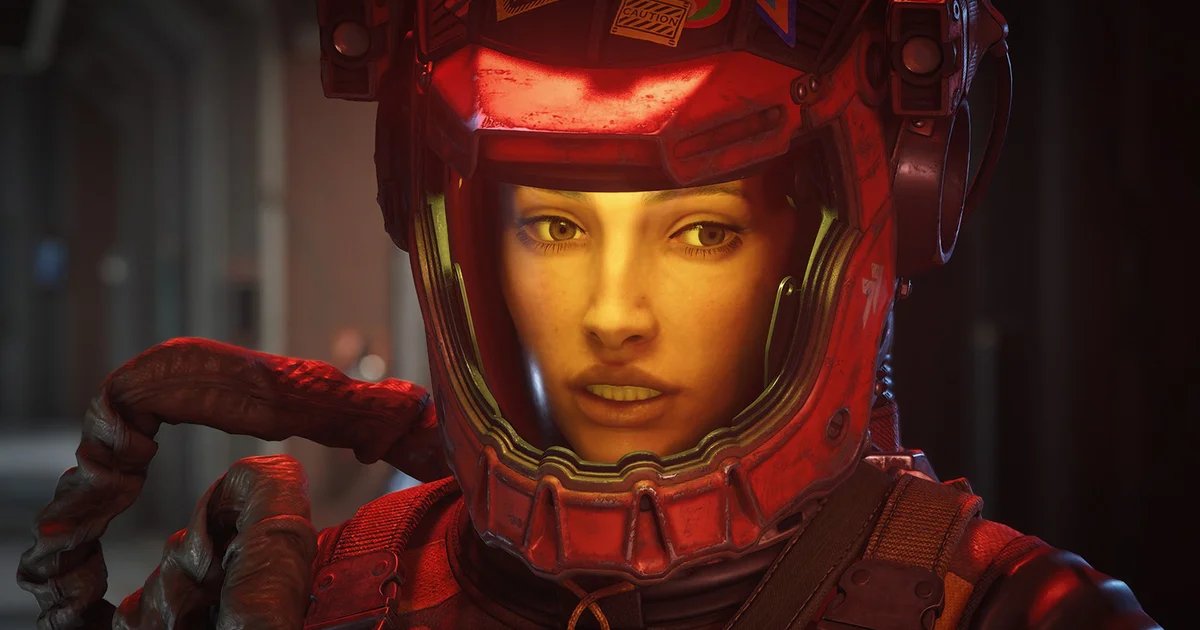
The Expanse: Osiris Reborn caused a commotion when it was announced. That’s in part because it looked like a modern Mass Effect, which always tends to be taken as a good thing, and because it’s an adaptation of a well-known and well-liked science-fiction property in The Expanse. What’s more, it comes from a studio with role-playing pedigree, Owlcat Games, the creator of the Pathfinder CRPGs and, more recently, Warhammer 40K: Rogue Trader, a delightfully crunchy and dense CRPG.
The Expanse: Osiris Reborn takes that experience and pushes it into cinematic role-playing territory with Unreal Engine 5. All very exciting. But the excitement was dampened recently when Owlcat confirmed it was using generative-AI tools to help during development of The Expanse: Osiris Reborn. The studio assured us “everything in the final version will definitely 100 percent be human made”, but the revelation was enough to plant a nagging question in the back of my mind.
It’s a shame, because I’ve played The Expanse: Osiris Reborn now and, put simply, it’s good. The one-level 90-minute demo I played, which you’ll be able to play today if you’ve pre-purchased the game, offers a convincing glimpse at The Expanse: Osiris Reborn’s major parts. Frankly, I didn’t expect it to look this good, to be this engaging, or to feel as weighty and satisfying in combat as it did, and with pleasingly sticky role-playing glue to hold it together. There’s a lot more to The Expanse: Osiris Reborn than we’re seeing here, of course, but this small slice is confident.
The demo is the second level of the game, and it follows you and your twin as you escape a bad situation somewhere and flee to a space station called Pinkwater 4. Fans of The Expanse books or television show will recognise the name (though I’m yet to read it or watch more than an episode of it, so please forgive my ignorance). Whether your twin is male or female depends – for the moment at least – on the gender you choose for your main character; there’s no character creation here but there will be in the full game. I chose a female officer ‘belter’. Officer is my class and belter is my background; it means I was raised on the asteroid belt or outer planets, though I wasn’t any taller than an ‘earther’, which I think the fiction declares I should be. You can also play as an earther hacker.
A quick conversation in a docking bay introduces me to The Expanse: Osiris Reborn’s dialogue system, which is neat and tidy and occasionally offers skill-related choices linked with abilities such as persuasion – social skills you can improve when you level up. It also showcases the game’s impressive lip-synching – something I usually don’t notice unless it’s especially good or bad, the former being true here. There’s impressive close-up detail on the characters’ faces and on the equipment they wear. The female twins are particularly eye-catching – their male counterparts are more drably dressed for some reason – with striking faces and detailed armour which is a hodge-podge of tubes and other space-faring odds and ends, that’s entirely in-keeping with where we are.
This encouraging introduction continues as you pass the docking bay and enter into Pinkwater 4 proper, and see bystanders milling around the space station, and where you can chat to a vendor lady who can sell you guns or tell you her life story. It’s far from the packed melting pot of people and races that The Expanse TV series begins with, it’s far more clinical in its presentation and personality, though there’s enjoyable sass from the vendor when she talks. Generally, the actors’ performances are believable and listenable, although again, I preferred the female twins here to the male twins. However, while The Expanse: Osiris Reborn’s performance is mostly smooth, it can be inexplicably choppy at the start of some dialogues, though it usually sorts itself out. Also, these are early days, so it should be addressed before the game’s full release. Soon we’re in O’Connell’s office, a straight-talking Irish man and the head of the space station, and crisis strikes. The station is under attack and we need to escape.

A selection of screenshots from the closed beta, showing the differnet playable characers, combat, dialogue, level-up screens and equipment upgrades. It’s a good montage, if I don’t say so myself.
Combat here is like in Mass Effect: over-the-shoulder and cover-based, meaning you press a button near crates and walls to duck behind them or sidle up against them. You can aim from cover or blind-fire, or press a button to slow time to a near-stop while you order your companions around – or companion in this case (there will be two per mission in the full game). You can have them attack a specific target or a specific piece of scenery, which sets off a special kind of destructive attack. I’ve had J – my twin – pull down chunks of air vents and explode some pipes which, if timed correctly, deal with clusters of enemies effectively. Activating companion powers also interacts with certain abilities and bestows buffs on you, so being bossy and ordering is a good and encouraged thing to do.
Destruction is a big part of combat as well, as crates or thin pieces of wall you’re using for cover can be blown away under heavy fire, meaning you’ll have to move around rather than stick in one spot. Enemies also make a concerted and aggressive attempt to flank you and close you down, further pressuring you to move. Even with a health regeneration system in play, whereby if you don’t get hit for a while you regain health, and with health-pack heals, I found myself in tense situations and was downed a couple of times before being revived by my twin. That was on normal difficulty; there’s a hard option if you want more.

As for combat abilities, there’s no space magic here – this is slightly more grounded science-fiction than Mass Effect – so the abilities are tied to technology. As an officer, I had a grenade and incendiary ammo, which sounds boring but they were effective, and as a hacker I had a swarm of small drones and something called Pandemic Algorithm; I’m not entirely sure what it did beyond hurt people. However, abilities are of limited use as they’re on cooldown timers. Taken altogether with weapon-choice, companion orders, cover-consideration and environment manipulation, though, there’s plenty to think about as you fight. It’s a little clumsy in the way cover-shooters sometimes are, in how you sometimes interact with scenery when you don’t want to, or vice versa, but I generally enjoyed it, especially the destruction wrought on environments during and afterwards. It really felt like a firefight had occurred.
Some of the demo’s most spectacular moments occurred outside, though, on the exterior of the space station, in the fresh nothingness of space. Out here, you cling magnetically to the metallic surface using your mag boots and because there’s no gravity, it means whichever side of the space station you’re walking on becomes your grounding axis. So as you venture around the broadly circular space station, your point of view changes, making for some incredible perspective variation during gunfights. There’s also a section here where you’re suit-boosting along the side (or top, or bottom, or – it’s hard to keep track) of the space station, dodging debris from a nearby explosion. It’s thrilling and shows Owlcat has a good instinct for varying the action and keeping your heartbeat up, and as the space station loops back upon itself for the final confrontation, and you find yourself back where you started, it shows a knack for clever level design.

This isn’t a broad enough slice of The Expanse: Osiris to really get a sense of the game beyond this, to get a sense of how wide the game will be and how much choice and consequence we’ll be offered, and how much freedom we’ll have, because this demo is linear. The second playthrough I dabbled in, picking a different class and background and making different choices, played out exactly as the first. The demo dips into the game’s crafting system, whereby you interact with a workbench and see whether you’ve collected enough crafting resources to upgrade something, and there appears to be depth here: equipment has multiple tiers of upgrades, each offering a one-of-three choice. And there’s a brief look at character-based levelling as you spend points in four skill-trees with roughly a dozen options in each, plus a couple of much smaller social and exploration skill trees. So the components for an exciting and satisfying Mass Effect-like adventure are here.
If this slice is to represent what Owlcat is aiming for in The Expanse: Osiris Reborn, which of course it is supposed to, then we can expect a strong showing from the full game. Bear in mind that public feedback to the closed beta should help smooth the rough edges and that we’re a year from release, and that there’s a team of 200 people working on this.
The signs are all good. Except then there’s that nagging question in the back of my mind again. How much does it matter that the studio is using gen-AI tools during the game’s development? This is the question for our current technological era, and much would be helped here by transparency. The studio has said it’s using the technology to iterate faster, to do things like trying out a 2D image in 3D. “But we don’t use it to write, we don’t use AI voice actors, so everything that will be in the final version will definitely 100 percent be human made,” Owlcat told me at the time of the above interview.
But how far is the door allowed to open for AI tool use, and is there any leeway? I’ve used an AI transcription service called Otter for years to produce rough interview drafts, that I go back and listen to properly if I’m going to use them. Is that okay? It saves me a lot of time. Where’s the line here? Does it stop at AI-created content in games or does it stretch to include any use of AI whatsoever? What model is Owlcat using, what potentially copyrighted data is it trained on, how much energy goes into its use? We don’t know. Which is why I don’t know how to feel about The Expanse: Osiris Reborn myself – and perhaps that alone is a sign.