dailynewsnblog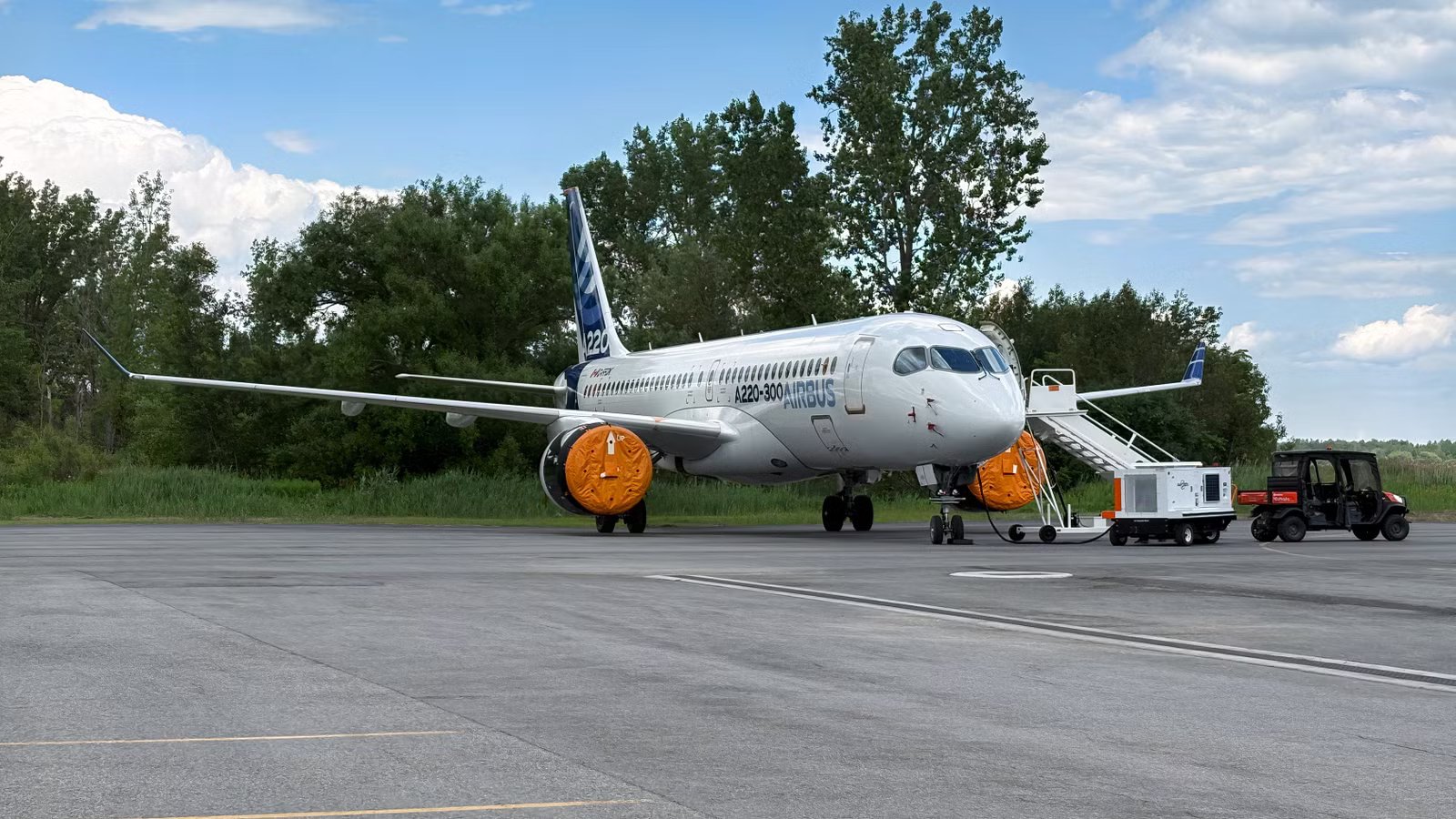
While it doesn’t happen often, the first flight of a new aircraft type, such as the Airbus A220-300, is always a momentous occasion. These test vehicles are always heavily modified from the finished product, due to the different mission profiles that they have. After all, the focus is on collecting data as opposed to moving passengers.
Typically, these aircraft live behind closed doors, with most people never getting to see them flying, let alone getting to step foot on board one. As part of a recent A220 milestone celebration in Canada, Airbus invited Simple Flying to explore the first Airbus A220-300 to fly, giving us behind-the-scenes access to the test aircraft.
About C-FFDK

C-FFDK was the first Airbus A220-300 to fly, though its first flight took place under its old designation of the Bombardier CS-300. The aircraft made its first flight from Montreal–Mirabel International Airport (YMX) on February 27, 2015, according to ch-aviation data.
The Bombardier C-Series was only renamed to be the Airbus A220 in July 2018. However, registration data shows that the aircraft’s owner was changed from Bombardier to Airbus Canada on June 23, 2016. The aircraft has also changed from its original C-Series livery to the current Airbus house livery.
How The Bombardier C-Series Program Transitioned To The Airbus A220 Family
Within days of the control transfer to Airbus, the Bombardier CSeries was rebranded as the Airbus A220 family.
Starting Outside

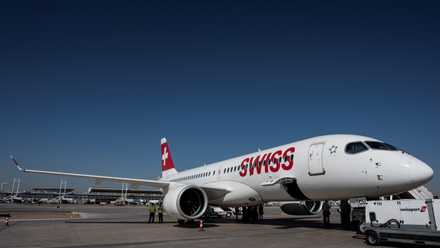
We started our tour of Delta Kilo from outside on the ramp. It’s immediately clear that this is not a normal aircraft from the number of orange appendages the plane has. Our guide, Nicolas Ranque, explained that anything orange is not present on the production aircraft.
So what were all of these orange parts for? These are the testing equipment that are necessary to evaluate the flight characteristics of the aircraft. Examples included external high-speed cameras on key components such as the engines and landing gear, additional sensors in the engine, and airflow sensors such as the cone that drags behind the aircraft’s tail.
For me, the most interesting was the non-production doors where the aircraft’s cargo doors would typically be. More on that later… After exploring the outside, it was time to enter the aircraft’s cabin.
Inside The Airbus A220-300 Test Cabin

A quick look at the outside of the A220, and it looks like any other A220. It’s only when you look harder and notice the additional sensors that it stands out. This is not the case inside the aircraft. One foot inside the test aircraft and you can instantly tell it’s not an ordinary A220. The most obvious difference is that there is no commercial cabin. This aircraft will never carry normal passengers, so it doesn’t need the seats. Instead, the passenger area is occupied by a vast array of testing equipment.
The biggest single system is the tanks distributed throughout the system. These can be filled with a mixture of water and glycol. Firstly, this simulates the weight of passengers and baggage that the aircraft would carry. However, it can also be moved between tanks during flight to simulate shifts in the center of mass.
Only Carrying A Limited Number Of Occupants

While the aircraft isn’t kitted out with a full cabin, it does contain some seats. There are, of course, the expected seats for the pilot in the cockpit. As there are no passengers, there is no need to seal the cockpit. Instead, a third seat is installed where somebody can sit and monitor pilot operations.
As you move deeper into the cabin, there are several workstations where engineers can sit throughout the flight and monitor all of the variables coming from the additional sensors in the aircraft. Some have a single seat, while others have a pair of seats. In addition, there are also handrails absolutely everywhere to gain support.

Finally, at the very rear of the cabin, you will find a giant wheel. This is not used for landing the aircraft, unlike the wheels outside. Instead, this is a huge drum. During some flight test operations, a cone is dragged from the top of the tail to take additional measurements. This is wound around the drum, extending out behind the aircraft as the spool is unwound.
Let’s Talk About The Emergency Exits

The A220-300 test aircraft is equipped with all of the typical exits found on the production aircraft. That is to say, two at the front of the plane, two at the rear of the plane, and two over-wing exits. These accompany the production standard pilot roof exit.
However, two more exits are of use. Remember, we mentioned that the aircraft has some interesting cargo doors? These don’t lead to the cargo deck. Instead, each is connected to a large tube running up to the main deck. These are hopefully never needed, but could be used during the primary testing.
If the pilots ever lose control of the aircraft or realize that they are unable to safely land it, those onboard would open the hatches and parachute out to safety. Ranque explained that nowadays, because the aircraft’s flight profile is so well understood, there is typically no need to carry parachutes. Before the first flight takes off, however, there is no knowing how well it will fly.