dailynewsnblog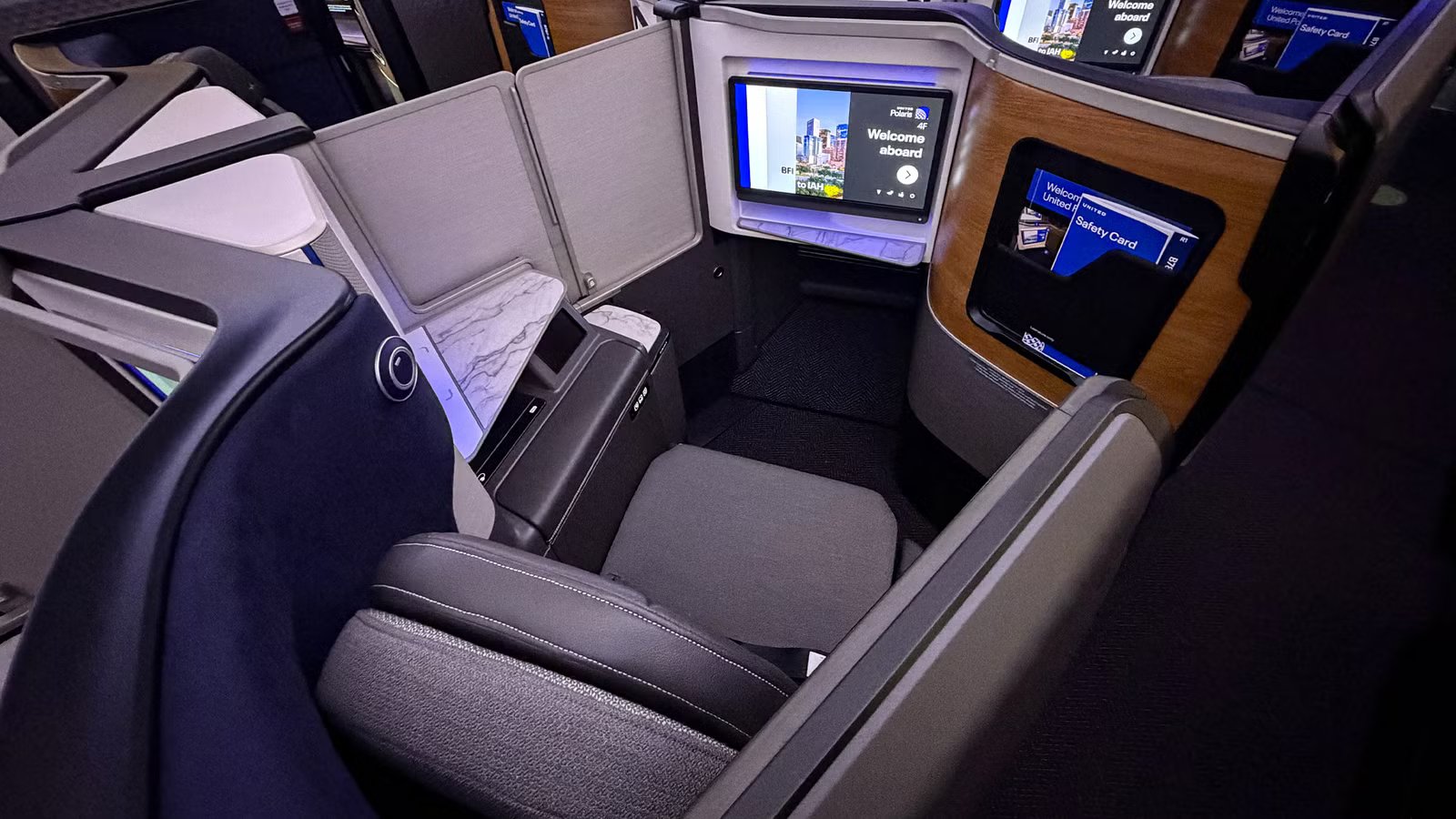
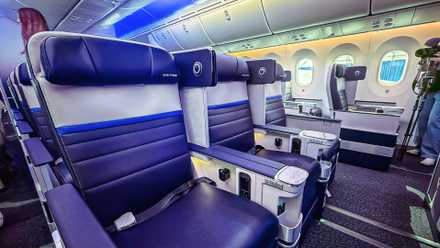
On one side of the United States airline market,  United Airlines is aggressively engineering the most advanced cabins in the sky, headlined by the new elevated Boeing 787-9 featuring Starlink-connected cloud entertainment and massive 27-inch (68.6 cm) OLED displays. On the other,
  Delta Air Lines continues to reach top-tier industry rankings by leaning heavily into the quiet, unglamorous metrics of reliability and consistency. Even as Delta leads the way over its rival, United Airlines is no longer just chasing the lead but actually starting to build superior aircraft. The carrier currently finds itself in the runner-up spot not because of a failure of innovation, but because of something that could be so easily fixed: baggage handling.
The airline industry often feels like a choice between the thrill of the new and the comfort of the predictable. Delta has mastered the latter, maintaining its top position through an operational shield built on zero involuntary bumps and industry-leading performance in handling sensitive equipment like wheelchairs and mobility devices. Yet the gap has narrowed to the slimmest margin in the ranking’s ten-year history. This is not a coincidence, as United’s rapid, product-first transformation is beginning to show in the passenger experience, suggesting that while Delta currently holds the crown, the competition is entering a new stage that favors United’s aggressive reinvestment in the cabin environment.
The Focus Is On The Onboard Product

Based on the 2026 The Points Guy (TPG) rankings, a clear picture emerges of why United remains the perennial runner-up. The data is indisputable as United Airlines finished a razor-thin second to Delta in the 10th annual report, losing the top spot by the smallest margin in the survey’s decade-long history. When industry analysts at TPG looked for the deciding factor, they did not point to the quality of the onboard experience, the reliability of the loyalty program, or even the age of the fleet; instead, they pointed to the tarmac. United’s industry-leading rate of mishandled baggage was the sole statistical point that kept the carrier from the number one position.
For a carrier that has invested billions in high-tech cabin overhauls and cutting-edge software, this operational failure is remarkably incongruous. Unlike fleet-wide manufacturing delays or complex regulatory hurdles, baggage handling is a logistical process entirely within the carrier’s sphere of control. United seems too busy rewriting the rules of in-flight entertainment with cloud-native systems, and the persistent struggle to ensure a passenger’s suitcase arrives at the same destination as their seat is a noticeable friction point that is far simpler to fix. TPG explicitly stated that had United matched industry-standard baggage performance, the scoring gap would have closed entirely, likely handing the carrier the top spot.
Delta’s brand identity is built on the principle of operational consistency, characterized by a near-perfect record in involuntary bumps and mobility-device care, which has kept it free from the competitive pressure of United’s flashy hard-product upgrades. United, conversely, is currently having to catch up on the ground while leading the league in the air. The irony is that United’s elevated interior, with its 45% premium-seat ratio and 27-inch (68.6 cm) 4K OLED screens, is designed to attract the exact high-value, business-frequent traveler who values seamless baggage delivery as much as they value caviar service.
Building A Brand On Reputation

If United is making such strides and is only lacking in a relatively small area, then why is Delta still managing to come out on top? Delta’s eight-year reign is led by a philosophy that prioritizes steady-state performance over rapid prototyping. Focusing on metrics like zero involuntary bumps and the lowest rate of mishandled wheelchairs, Delta has cemented its position as the safest bet in the US market. The reputation also acts as a powerful revenue driver, as in 2026, Delta managed to generate 20% more revenue per seat than its competitors, a testament to how well reliability as a brand translates into premium pricing power.
For United, the challenge is shifting the narrative from a company that promises the future to one that delivers the present. United’s 787-9 elevated aircraft, with its 99 premium seats out of 222 total, is undoubtedly the most sophisticated cabin environment currently on offer in the US market, but the recurring mechanical and baggage issues are creating a drag on the brand’s perceived value.
Delta’s success demonstrates that the most important in-flight feature for the modern traveler is still the guarantee of an uneventful, predictable journey. United has already won the battle for the best hardware. However, the battle for the best airline will be won the moment they solve these persistent, fixable ground-level inefficiencies.
World’s Largest Airline: United Proves Scale & Reliability Can Mix
Looking at United’s operational improvements for 2025, and how this benefits the airline.
A Block In The Road To Progression

Currently, even with all the advancements that United has made, cracks are beginning to show, which could give Delta even more of the upper hand. The saga of United’s 787-9, registered N61101, serves as a sobering cautionary tale for any airline racing toward a premium-heavy, tech-integrated future. As United pushed its first elevated aircraft into international service, the dream of a seamless, high-tech passenger experience collided with the harsh reality of mechanical fragility.
By June 2026, the situation reached a breaking point. After a series of diversions, most notably following reports of an electrical odor shortly after takeoff on international routes, and four non-revenue ferry flights in under 3 months, the aircraft was pulled from service entirely. It was eventually sent to Boeing’s facility in Moses Lake, Washington, for a factory-level teardown.
What is most worrying is that sending a newly delivered widebody back to the manufacturer for remedial work indicates faults that exceed the capabilities of routine line maintenance. This could well mean that United’s elevated concept may have fundamental issues that need a complete rethink before it can be truly integrated into its fleet. Extreme complexity is the enemy of reliability, and until the elevated 787 fleet matures, these teething pains will continue to tether United’s progress.
Speed Or Caution?

Another key point of friction is that United’s most modern cabin is not yet standardized across its entire fleet and is currently available on only a select few aircraft. It creates a significant ripple effect throughout the entire network, linking cabin innovation to the broader challenge of operational maturity. Passengers who book specifically for the elevated experience, the Polaris Studio suites, the 27-inch (68.6 cm) screens, and the Starlink connectivity may be subject to last-minute equipment swaps when these aircraft require unscheduled maintenance.
When the most advanced cabin in the sky is unavailable, it results in a mismatch between passenger expectations and the reality of their travel, which can erode the very loyalty United is trying to build. As this is a new product, potential customers will look for reviews to determine whether it is worth the cost. If cabins do not meet expectations, public perception will turn to caution.
Compared to a competitor like Delta, which uses a more conservative and battle-tested rollout strategy for its cabin hardware, United’s quick approach to the 787-9 is high-risk, high-reward. Delta’s strategy favors internal stability, whereas United is betting on its ability to iterate rapidly and fix these complex bugs as they arise. However, the data suggests that every day a flagship aircraft sits in a Washington hangar is a day it isn’t delivering on its premium promise. Achieving best-in-class status requires United to move past this troubled phase and ensure that its hardware innovations are supported by a bulletproof maintenance schedule.
United Airlines’ New Premium Plus Vs. The World’s Most Superior Premium Economy Cabins In 2026
The airline has ramped up its premium economy offering, but is it better than the rest?
The Potential Is There

Moving to an app-driven, serverless cabin is a massive task and takes plenty of time to design and test before it can be suitable for use onboard. The current technical hurdles with the elevated 787-9 and the baggage-handling statistics in the 2026 TPG report demonstrate that hardware innovation only delivers value if the underlying operational machine is firing on all cylinders, and for United, that is not yet the case.
United’s success will come from how quickly it can stabilize its production-line deliveries. The elevated product has incredible promise, and if it reaches its potential, then it will easily be outperforming many of the global airlines United competes with. By resolving the baggage-handling logistics that cost them the top ranking this year and stabilizing the mechanical teething issues of the new Dreamliner fleet, United is positioned for a major 2027 comeback. If the carrier can turn its current operational friction into a streamlined, mature process, the crown of the ‘Best US Carrier’ is effectively theirs to take.
United is looking further afield for its success, however, seeking to use the elevated product to outperform competitors outside the US. While major players like Delta and United dominate the US market, they fall short of airlines like Singapore Airlines and Qatar, with no US airline appearing in the top 20 of Skytrax’s 2025 airline rankings. United’s elevated experience could easily take the airline into this sphere, but for now, it remains a dream.
A Theoretical Advantage

The race for the top spot in the US airline industry has reached a point where innovation is no longer enough to secure the win. United Airlines has succeeded in building a product that is, on many levels, objectively superior to anything currently flying in the domestic market. However, the 2026 TPG report demonstrates that, in the eyes of the modern traveler, a 27-inch (68.6 cm) screen is secondary to the baseline expectation that an airline will perform its most fundamental duty: delivering passengers and their luggage to their destination on time and intact.
United is the most exciting airline to watch, but it is not yet the most reliable to book. The carrier’s trajectory for 2027 is one of needing to push its revenue-per-seat advantage to close the ground-level logistical gaps that currently keep it in second place. With what is a relatively small issue to fix, United is on a good course to challenge for the lead. There are, however, new issues arising, and so United needs to keep them under control or risk falling even further down the rankings.
Once the elevated fleet is stabilized and the baggage handling inefficiencies are resolved, United will have a legitimate path to ending Delta’s eight-year reign. Until those ground-level operational logistics catch up to the cutting-edge cabin design, the industry remains in a fascinating state of best-in-class potential versus “best-in-class” reality.