dailynewsnblog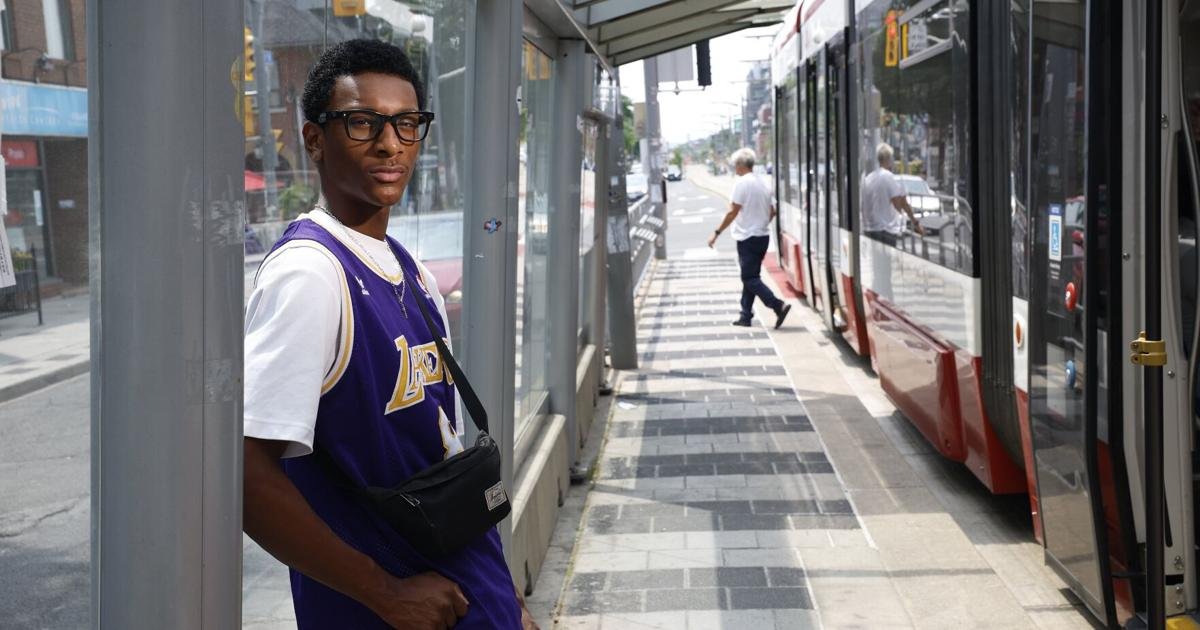
Music echoed between storefronts as thousands of people danced in the summer heat, some weaving between food vendors while others laughed together in the middle of St. Clair Avenue West.
It was exactly the kind of summer night Etay Beaton and his friends had hoped for when they chose Salsa on St. Clair to celebrate a friend’s birthday. Beaton was keeping a soccer ball aloft with strangers and recording videos when the crowd around him shifted, surging in one direction as people ran, their faces tight with fear.
Someone shouted there had been a shooting.
The 19-year-old said he thought festivalgoers might’ve been confused by firecrackers, so he kept heading toward a large circle that was forming as police officers sprinted past him.

Residents and councillors are rethinking how Toronto handles its street festivals in the wake of
“When I made it to the front, I saw a man . . . bleeding out,” Beaton remembers. “I had never seen a dead body before, and as I watched the officers trying to resuscitate him, I was thinking ‘This can’t be real.’”
Hours earlier, the festival had felt defined by music, dancing and spontaneous moments between strangers. By the end of the night, two men were dead, five others had been shot and thousands of festivalgoers had scattered through surrounding neighbourhood streets, as investigators say an exchange of gunfire unfolded near St. Clair Avenue West and Arlington Avenue on July 11.
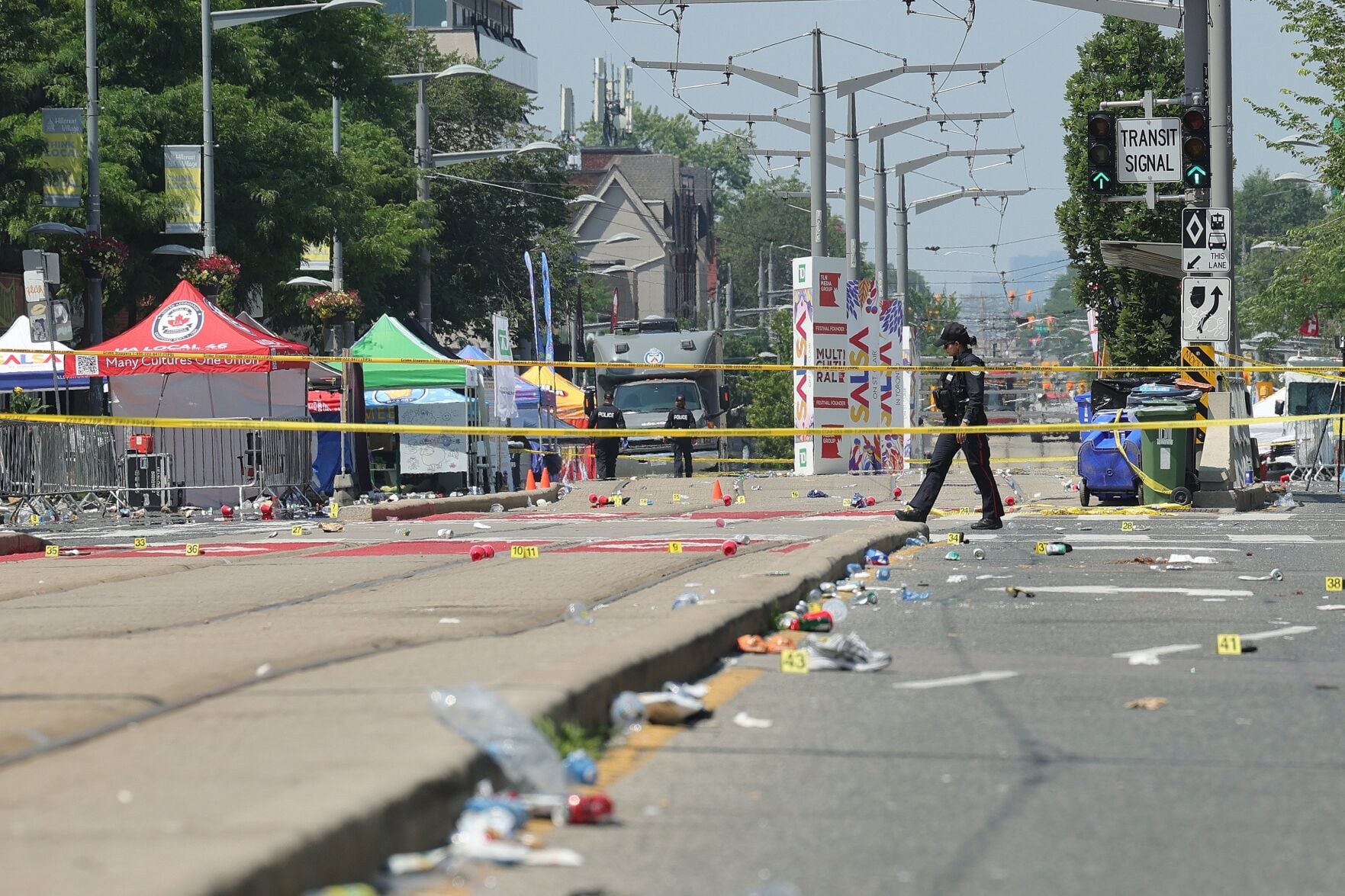
Police investigate the following day after a deadly shooting at the Salsa on St. Clair festival.
R.J. Johnston/Toronto Star
As police piece together what happened across the crime scenes at Salsa on St. Clair, attendees are grappling with how to return to a sense of normalcy after watching a celebration dissolve into chaos. Through the views of a witness, resident and trauma specialist, a picture emerges of how one night of violence can compound old wounds, alter people’s sense of safety and leave an invisible toll on the communities forced to live through them.
In a city where shootings are statistically declining, those psychological scars reveal another measure of violence that can’t be counted in police data alone. Some who fled had already lived through shootings, lost loved ones to gun violence or carried earlier trauma into what was meant to be a summer celebration.
‘I was just filled with fear’
Beaton and his friends initially decided to stay together a little longer, reluctant to let the night end with the image of a man being shot. But as word spread that there had been another shooting and police had sent an active shooter alert, panic took hold. Thousands surged through the surrounding streets, and Beaton found himself swept up in the rush.
“I was just filled with fear. I’ve never been so scared before in my life. I was running but you could barely move in the streets,” Beaton said.
Speaking to reporters at the scene hours later, Deputy Chief Frank Barredo said police rescinded the active shooter after determining the shooting was an exchange of gunfire between two groups.
At a news conference on Monday, police Chief Myron Demkiw acknowledged a brazen shooting in a crowded public setting shakes people’s sense of safety.
“For those that have lost loved ones or are irreparably injured,” he said, “at that moment the statistics don’t mean that much.”

Toronto police Deputy Chief Frank Barredo, alongside Mayor Olivia Chow, left, and Councillor Josh Matlow, right, addresses the media after a shooting at the Salsa on St. Clair event on Saturday.
Keito Newman/The Canadian Press
Nearly a week after the shooting, police have released relatively few details about the investigation beyond identifying the two men who were killed, Shaquan Quashie, 25, and Cesar Vernaza, 20. Investigators haven’t identified any suspects or alleged who fired the shots.
Demkiw said shootings in Toronto are down roughly 26 per cent compared to the same point last year, but acknowledged that a brazen attack at a crowded community festival reverberates far beyond crime data. “A weekend like this shakes our city,” he said.
Hours after Demkiw spoke at the press conference, Pastor Miguel Rojas addressed roughly 100 people gathered outside St. Matthew’s United Church for a vigil close to the scene of the shooting.
“Gun violence destroys life and leaves wounds that can’t always be seen, but tonight we are not gathered only to remember tragedy. Pain will not have the final word,” he said.
“As members of this community, we pray for peace and healing that this may never again happen on our street.”
A gap between statistical safety — and perception
For the estimated 13,000 people at Canada’s largest Latin street festival, the shooting lasted only minutes. Its psychological impact may last far longer.
“Witnessing a shooting can be psychologically traumatic, even when a person is not physically injured,” said Dr. Katy Kamkar, a clinical psychologist at the Centre for Addiction and Mental Health (CAMH) who specializes in trauma and police psychology.
“Seeing someone being harmed, hearing gunshots, running for safety, becoming separated from loved ones or believing you may be killed can all activate the brain and body’s survival response.”

Toronto experienced a sharp drop in crime numbers in 2025, and those trends are continuing for
In the hours and days that follow, people may replay what happened through intrusive memories, avoid crowds or public events, become hypervigilant or startle easily at loud noises, she said. Others experience guilt, difficulty sleeping or an enduring sense that nowhere feels completely safe.
Kamkar explained a single, highly public shooting can have an outsized emotional impact because it unfolds in places people associate with celebration and community, challenging assumptions about where they are safe, and creating a gap between statistical safety and a person’s sense of safety.

Toronto police collect evidence at the scene of a deadly shooting at the Salsa on St. Clair festival on Saturday night.
R.J. Johnston/Toronto Star
“The suddenness and unpredictability of gunfire can produce a profound loss of control,” she said.
Kamkar says experiences like these can change how people move through the world. Crowded festivals, public transit, restaurants or neighbourhood streets can suddenly feel unpredictable and fraught. For people with previous exposure to violence, experts say, a new traumatic event can reactivate earlier experiences, making the emotional impact even more acute, Kamkar added.
Shattering a sense of ‘home’
According to longtime St. Clair West resident Isabella Logozzo, the shooting has altered the way her neighbours think about the community they call home.
Logozzo, who has lived in the area since childhood, said while she believes violence has become more visible since the COVID-19 pandemic, she said the mass shooting felt like a turning point.
“Everybody would say hi to each other. You could walk down the street at night and nothing would happen,” she said. “That sense of security and community was something so special about this place. Now we’ve totally lost that.”

Toronto police investigate St. Clair Avenue West following a deadly shooting.
R.J. Johnston/Toronto Star
In the days after the shooting, Logozzo launched an online petition calling on governments to take stronger action to address gun violence and invest in supports for young people. She said the goal is less about one festival than restoring people’s confidence that they can gather safely in their own neighbourhoods.
She has heard from neighbours who are reconsidering whether to attend upcoming summer events.
“They’re scared,” she said. “All people want to do was enjoy the summer, and the fact that we can’t while feeling safe is a very traumatizing thing.”

Mayor Olivia Chow during the vigil Monday at St. Matthew’s United Church near the site of where a deadly shooting broke out on St. Clair.
Sophie Bouquillon/Toronto Star
Despite the shooting, city leaders say they do not want violence to redefine Toronto’s summer festivals. Mayor Olivia Chow has vowed the city “will not let reckless criminals stop Toronto’s tradition of outdoor street festivals,” while event safety experts caution against reacting with measures that could fundamentally change the open, welcoming character of neighbourhood celebrations before investigators determine exactly what happened.
“One thing about Torontonians is we’re a resilient, we stand together, we work together,” Chow said about the aftermath of the shooting at an unrelated press conference Friday.
Compounding old wounds
For Beaton, the shooting at Salsa on St. Clair has become another entry in a growing catalogue of violence that has marked his late teens.
When he was in high school, one of his friends was fatally shot. Last summer, he was at Brampton’s Jambana festival when three teenage boys were shot in a nearby park. Weeks earlier, he had been at Leslieville’s AfroFest when a 14-year-old boy was fatally stabbed inside a nearby McDonald’s.

“I was planning to go to AfroFest, Jambana, Caribana — everything — but this one was my last straw,” Etay Beaton told the Star.
R.J. Johnston/Toronto Star
“I saw the stabbing. I saw the kid and I was very heartbroken, because the kid was very young,” Beaton said. “I know what it feels like to lose a brother to violence and it’s a horrible feeling.”
He said he has always gone to community festivals to connect with people, celebrating the diversity and joy they represent. But after Saturday night, he isn’t sure he’ll return.
“There’s no way that people are out here, trying to enjoy their time and getting shot for it,” he said. “I was planning to go to AfroFest, Jambana, Caribana — everything — but this one was my last straw.”
“This is something that’s going to stick with me for quite a long time.”