dailynewsnblog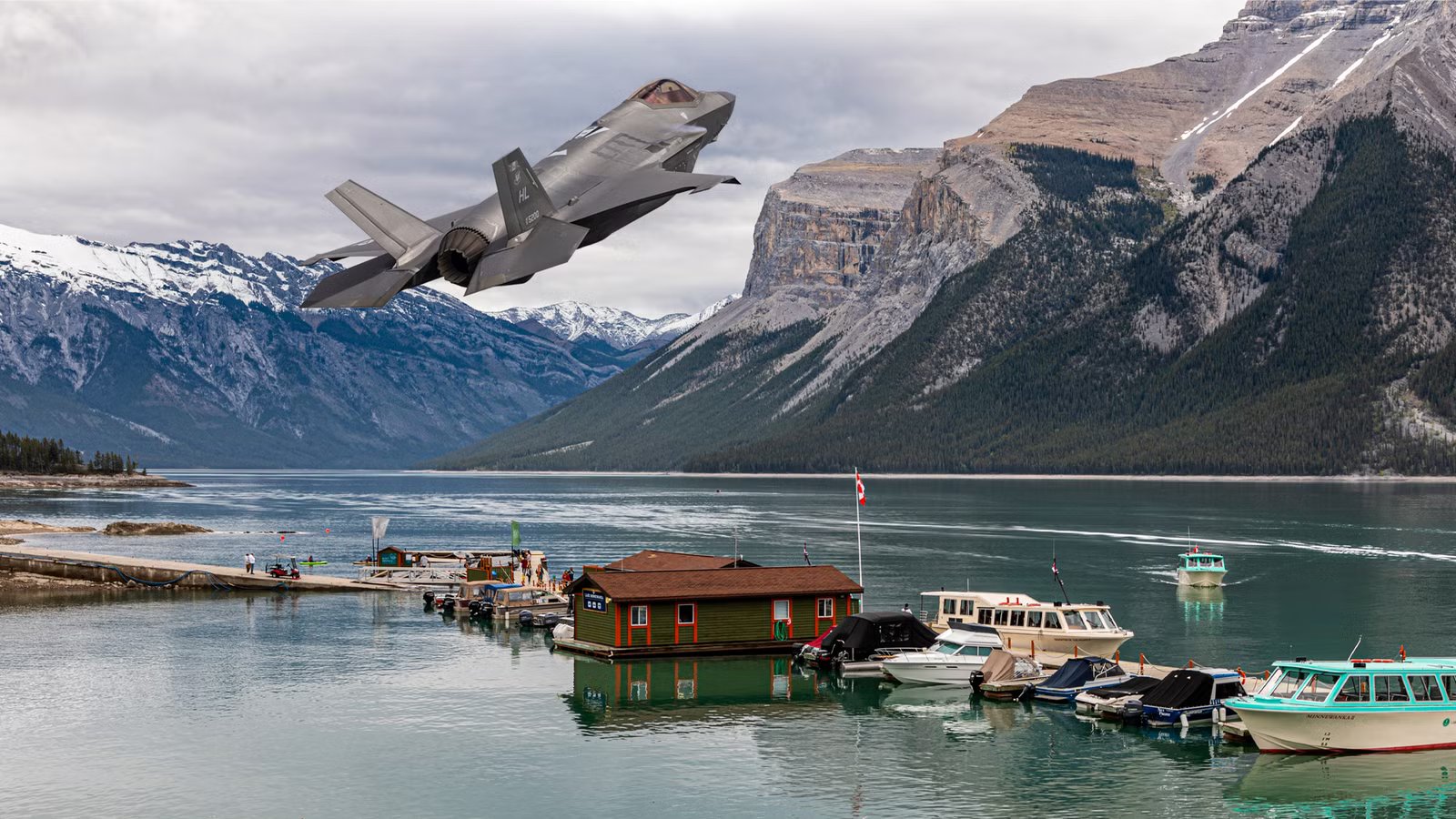
The reelection of the Trump administration, with the ensuing geopolitical spat (including threats to tear up the 1908 treaty delineating their borders), shook Canada’s trust that the United States would always remain a fully reliable ally. In response, Canada is increasing its defense spending and looking to diversify its military procurement. It wants to draw down its reliance on US weapons, although this does not mean eliminating them. There is no realistic way for Canada to fully cut out purchasing US weapons in the short and medium term.
While it is not accurate to say that Canada values the Saab Gripen more than the F-35, Canada is moving forward with a balancing strategy. Canada has already purchased 16 F-35As and has begun training on them. It is reported to be making payments for the next batch of fourteen F-35As (per CBC), and it intends the F-35 to be the backbone of its future fighter jet capability. However, it is also pursuing the Gripen as a quasi-sovereign secondary fighter jet capability.
The Messy Business Of Fighter Jet Purchases

Fighter jet purchases are incredibly high-profile, geopolitical, and complicated. While many articles may focus on fighter jet capabilities and an air force’s requirements, politics and financing are arguably of similar importance (although financing is less important for Canada). Fighter jet contracts are analogous to marriage contracts between nation-states for decades. There are ongoing contractual obligations for updates (including software), maintenance, training, and more.
Geopolitical realities make Russian and Chinese fighter jets not an option for Canada. At the same time, countries are often pressured and incentivized to bring as much of the industrial workshare home as possible and slap a “made in our country” sticker on it. This is a key part of India selecting the French Dassault and Brazil selecting the Swedish Gripen. For Canada, this is also one of the most attractive aspects in purchasing the Saab Gripen and GlobalEye. The fact that Saab GlobalEye uses a Canadian Bombardier Global 6000/6500 business jet makes it extra attractive for Canada.
Saab set up a production line in Brazil with Embraer, allowing for some measure of technological transfer and worksharing. It is negotiating something similar with Canada with its Gripens. Saab has proposed full technology transfer, source code access to the Gripen’s mission systems, sovereign data control, and independent upgrade/maintenance rights. By contrast, while Canada participates in the F-35 program and produces some components of every jet built, there is no realistic chance of having an assembly line set up (as in Italy and Japan) or having access to the source code.
Canada’s Fighter Jet Dilemma

Currently, Canada faces a dilemma. Canada is part of NORAD, NATO, and its military is deeply intertwined with the United States. It has significant obligations with NORAD that must be filled; otherwise, the US would feel insecure that Canada is a backdoor to its security from missile attack and other northern threats. However, to fully participate in NORAD, fighter jets need special data links (beyond Link 16), and this is controlled by the United States, although Canada also participates.
NORAD includes classified US/Canadian command-and-control networks, secure voice systems, Identification Friend or Foe systems, NORAD air defense command architecture, various classified gateways, and data links. Some of these are not public. At the same time, Canada’s fleet of CF-18 legacy Hornets is being pushed to the limit of their operational lives and is in desperate need of replacement.
Canada’s future fighter jets (per CBC News) | F-35A | Gripen E/F |
|---|---|---|
Number officially ordered | 16 | |
Number of long-lead components quietly paid for | 14 | |
Proposed eventual fleet size | Minimum 30, Possibly 72-88 | Negotiating, reportedly 60-72 |
This means Canada doesn’t have time to delay its fighter jet acquisition. Canada has already purchased 25 of Australia’s retired F/A-18 legacy Hornets as Australia transitioned to its F-35As, complemented by Super Hornets and Growlers. Initially, Canada only intended for these old Aussie jets to be used for parts, but it has pressed some airframes into service. These are a stopgap measure to bridge the gap until the F-35 enters service.
Just Two Realistic Options: F-35A & Saab Gripen

Canada’s former program to find a replacement attracted interest from Dassault (Rafale), the Eurofighter Consortium, Boeing (Super Hornet), Lockheed Martin (F-35), and Saab (Gripen). The Super Hornet was eliminated for not being sufficient for Canada’s needs early on. Dassault and the Eurofighter Consortium also backed out.
They withdrew, saying they believed the classified US security requirements—including Five Eyes and NORAD integration—made compliance impractical. Saab persisted, saying it would allow technology transfer and would find a way to make its jets compatible with NORAD in some undefined way. It is worth noting that Saab can say whatever it likes; at the end of the day, it’s the United States that chooses which foreign systems it integrates into relevant NORAD links and integrated networks.
After a competition between the F-35 (which is fully NORAD compliant) and the Saab Gripen paired with the GlobalEye AEW&C aircraft, Canada found the F-35 won easily. Per a leaked Radio Canada report, the F-35 achieved a near-perfect score of 95% while the Gripen only scored 33%. There is simply no way for Canada to ignore the F-35’s capabilities.
The F-35A Meets Canada’s Requirements

The F-35A also has superior range and is a significantly heavier, larger, more connected, and capable fighter jet than the Gripen. While the Gripen is advertised as being able to carry out dispersed operations, this is not especially useful for Canada. Canada’s geography instead places a greater premium on range, endurance, and long-distance deployments. Dispersed operations are useful to countries like Sweden and Finland, which are geographically close to Russia and expect to fight from a disadvantage.
The F-35A is also capable of dispersed operations, with Finland opting to purchase the aircraft over the Gripen, even though Finland has a similar requirement to Sweden. Both jets can operate in the challenging Arctic conditions, with F-35s operating in Alaska, Norway, and Finland. The F-35’s capabilities are far greater than those of the Gripen, and it allows Canada to fulfill its NORAD obligations.
But after Canada’s faith in the US being a long-term trustworthy partner was shaken, it became uneasy about being fully reliant on the United States for its fighter jet capability. Faced with this dilemma, it appears Canada is opting to hedge its bets and purchase two parallel fleets. Its likely fleet of Saab GlobalEyes and Gripens may sit largely outside of NORAD. In this arrangement, Canada will get the capability of the F-35 (and placate the US) and have a more sovereign secondary fighter jet solution.
Canada Is Home To A Large Aerospace Sector

Canada had planned to purchase a fleet of 88 F-35 jets. Now it appears to be making payments for the first 30 and possibly still planning to eventually purchase 72-88 F-35As. At the same time, it is considering purchasing 60–72 Gripens. For Saab, this is a massive order and would give Canada considerable negotiating leverage, especially when combined with purchasing six GlobalEyes. Brazil is currently the largest export customer and has ordered 38 examples with plans for 20 more.
Even the Swedish Air Force only has around 70 units in service, with plans to purchase 60 updated Gripen E variants. Saab claims its proposed deal with Canada will create around 12,600 jobs in Canada. This includes 9,000 jobs for the Gripen and 3,600 for the GlobalEye. It should also be noted that while Canada has not fully designed and built a modern fighter jet, it is not a slouch in the aerospace sector. The memory of developing the canceled Avro Arrow remains resonant as a source of national pride and disappointment.
Canada also developed the Airbus A220 (Bombardier CSeries) and a range of business and regional jets. Pratt & Whitney Canada is one of the world’s leading manufacturers of small gas turbine engines for turboprop, turbofan, and turboshaft aircraft. 19fortyfive writes, “Saab plans production centers in Ontario and Quebec anchored by a pan-Canadian supplier network that includes IMP Aerospace, GE Aviation, CAE, and Arcfield Canada… backed by a commitment to 100 percent industrial offsets, meaning every dollar Canada spends would be matched by work placed in the country.“
Saab’s Limited Ability To Provide Worksharing

In all this discussion, there is something ironic about the choice of the Gripen as a diversified sovereign aircraft from the US. The Gripen is not so much a Swedish fighter jet as it is an Anglo-American Swedish fighter jet with Saab control. Put another way, the Gripen E is best viewed as a Swedish-led multinational program. While counting methods vary, about a third of it is built in the United Kingdom (the BBC put it at 38% for the E), and around a third in the United States.
The US’ share has increased with the new Gripen E’s F414 engine having even less input from Volvo, which had a greater input into the older Volvo RM12 engine. This means that Canada’s “sovereign” Gripen will remain firmly subject to British and American export restrictions. At the same time, it means there is less technology transfer that Saab is able to share. It can’t share the engine; that’s GE Aerospace.
Saab also cannot freely transfer intellectual property or manufacturing know-how for subsystems developed and owned by foreign suppliers, including the various radar, sensor, and avionics technologies. The greatest opportunities for Canadian industrial participation would likely lie in final assembly, airframe manufacture, integration work, and long-term sustainment, rather than unrestricted access to the aircraft’s most sensitive propulsion, radar, and mission-system technologies.