dailynewsnblog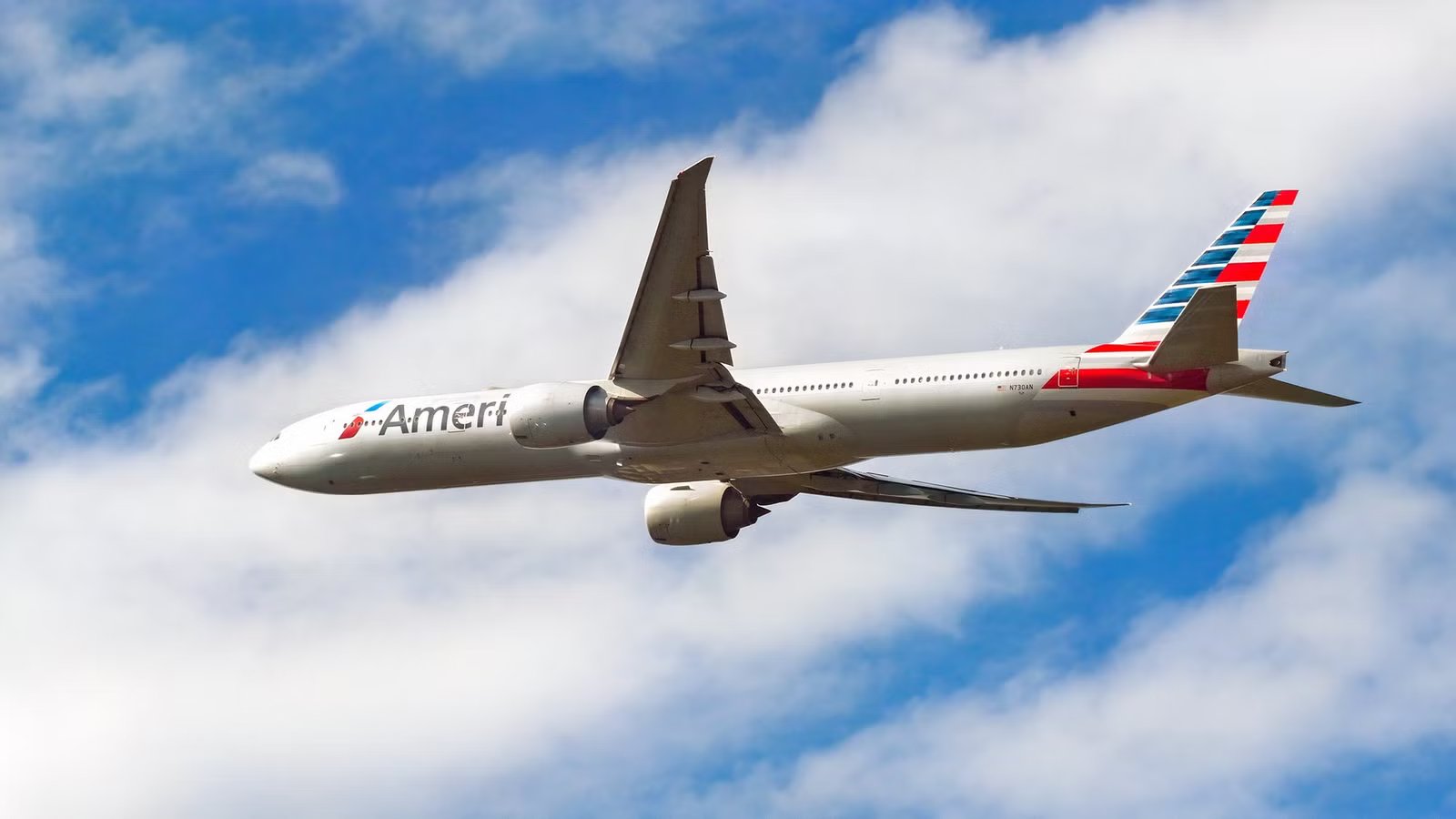
 American Airlines’ first retrofitted Boeing 777-300ER appears to be nearing the end of its long stay in Hong Kong, with aviation watcher JonNYC reporting that the aircraft could depart before the middle of July and ideally enter passenger service in early or mid-August. If that timing holds, it would mark the long-awaited debut of one of American’s most important premium cabin upgrades in years.
The aircraft (N718AN), was sent to Hong Kong in early December 2025 for an extensive cabin retrofit. This is not just a refresh of seat covers and finishes. American is removing international First Class, adding a much larger Business Class cabin, expanding Premium Economy, and giving its flagship 777-300ER fleet a product designed to compete more directly with the other legacy US carriers.
American’s First Retrofitted 777-300ER Is Nearly Ready

The 777-300ER retrofit is part of American’s broader Project Olympus cabin program, which is designed to bring its long-haul premium product closer to the standard now expected on major international routes, according to AeroLOPA. American said in 2022 that the 20 examples of its 777-300ERs would be refreshed with new interiors, including 70 Flagship Suite seats and 44 Premium Economy seats. The 777-200ER fleet is set to be upgraded later in the decade. Julie Rath, American’s Vice President of Customer Experience, commented on the planned interior upgrades.
“The arrival of new long-haul aircraft and the customized seat design of the Flagship Suite seats will offer our customers a truly private premium experience on our long-haul fleet.”
The work is being carried out in Hong Kong by HAECO, which has the widebody maintenance and cabin-modification capability needed for a first-of-type reconfiguration of this scale. The program has taken far longer than American originally hoped. It announced the retrofit in 2022 and said installations would begin in late 2024, but the first aircraft did not enter conversion in Hong Kong until late 2025. Reuters reported that the retrofit plan was behind schedule because of shortages of seats and interior components, and American has given no indication of when it expects the full 777-300ER fleet to be completed, given the delay.
American has also not publicly confirmed the first route for the retrofitted aircraft. However,  London Heathrow Airport (LHR) is the obvious early market, and the route from
  Dallas/Fort Worth International Airport (DFW) the strongest candidate, given that it’s American’s home hub and has three daily 777-300ER flights to London.
  John F. Kennedy International Airport (JFK) is another plausible option, given the premium competition on the route.
What American Is Changing On The 777-300ER

The biggest change in the retrofit is the removal of Flagship First on the airframes. Today, American’s 777-300ER has eight Flagship First suites, 52 Flagship Business seats, 28 Premium Economy seats and 216 economy seats. But that is all about to change, with the new layout increasing the total seat count to 330, and the removal of Flagship First (and three lavatories) allowing for 34 additional premium seats.
Cabin | Current 777-300ER | Retrofitted 777-300ER | Change | What It Means |
|---|---|---|---|---|
Flagship First | 8 | -8 | American removes its true long-haul First Class cabin | |
Flagship Business | 52 | 70 | +18 | New suite-style business class with privacy doors |
Premium Economy | 28 | 44 | +16 | Major increase in high-yield intermediate seating |
Main Cabin Extra / Economy | 216 | 216 | – | Total economy seat count is unchanged |
Total Seats | 304 | 330 | +26 | Aircraft becomes denser and more premium-heavy |
The reconfiguration also includes a complete swap-out of the seats. The current 777-300ER layout comes with Safran first class suites, the Safran Cirrus II reverse herringbone seat for Flagship Business, the Collins MiQ for premium economy, and the Safran 5751 for economy. The new Olympus 777-300ERs will feature the Adient Ascent reverse herringbone seats with doors for Flagship Suites, the Safran Z535i for Premium Economy, and the Collins Aspire for Economy.
The reality is that the current models are still competent, but ultimately outdated and increasingly lagging competitors, and the refurbishments represent a significant upgrade to the passenger experience. Screen sizes will be enlarged in all three cabins, and Premium Economy will now feature privacy wings. Meanwhile, Flagship Business will now feature privacy doors (and will be rebranded to Flagship Suites), while the aircraft will also feature eight front-row Flagship Preferred suites with more space.
American Airlines Keeps Retrofitting More Premium Seats On Its Oldest A319s & A320s, But Is It Really An “Upgrade”?
American is adding premium seats to aging Airbus jets, but the upgrade has limits.
How It Compares With United And Delta

A key driver of the retrofit is for American to catch back up to its most direct US competitors, which have had the jump on it in both long-haul routes and premium aircraft configurations since the pandemic.
 United Airlines is approaching the premium race from a different starting point. It has already completed its first-generation Polaris rollout across the long-haul fleet, so its next move is more about incremental upgrades. United’s “Elevated” Boeing 787-9 introduces new Polaris suites and larger Polaris Studio suites with privacy doors, a front-row premium concept, larger screens and a denser premium cabin. However, this is currently focused on new-delivery aircraft rather than a retrofit program.
 Delta Air Lines is the more direct comparison because it is also retrofitting older widebodies. The airline has announced that its Airbus A330-200 and A330-300 fleets will receive Delta One suites with privacy doors as part of a nose-to-tail refresh. Delta also plans to debut its next-generation Delta One suite on the A350-1000 later this year, and says it expects 90% of Delta One seats to have sliding privacy doors by 2030.
American has trailed United and Delta for years in the consistency and competitiveness of its long-haul premium offering. Project Olympus is designed to close that gap, with a 70-seat Flagship Suite cabin, a larger Premium Economy section, and a much more modern passenger experience. When the first retrofitted 777-300ER takes to the air with passengers next month, the industry will start to see whether American Airlines is finally turning its premium catch-up plan into reality.