dailynewsnblog
In the Armed Forces of the United States of America, there are many jobs and ranks assigned to aviation missions. Except for the Space Force, all six service branches have their own pilot corps, including the Army and the Coast Guard. While the US Air Force, Navy, and Marines are better known for their fixed-wing tactical aviation, including many fighter jets, the Army has an enormous number of helicopters. As a core component of the US Army’s modern strategy, its thousands of rotary-wing platforms are flown by both non-commissioned and commissioned officers.
The fact that Warrant Officers can be pilots in the Army is very different from the other three service branches that engage in conventional military operations. These pilots are promoted from the enlisted ranks after extensive training and field experience. Although the US Air Force pays its pilots higher than any other branch, Army helicopter pilots can still earn a strong salary, including incentives and bonuses.
Warrant Officers have a lower base pay for the Defense Finance and Accounting compensation scales, although with years of experience, the difference may not be as big as some imagine compared to commissioned officers. Some non-coms can earn more than junior and mid-level officers, including housing allowances, hazardous duty pay, and other incentives. The main difference is that the USAF offers its pilots as much as $50,000 per year with a maximum earning potential of $600,000 in retention bonuses. The Army pays about half that amount.

The pay difference between a US Army Warrant Officer pilot and a US Air Force pilot stems from how each branch structures its career tracks and defines leadership roles. An Army Warrant Officer’s primary duty is to fly, maintain tactical proficiency, and master a specific aircraft, such as an Apache or Black Hawk helicopter, leaving the high-level desk work and politics to others. The Air Force strictly puts commissioned officers who hold a four-year college degree in the cockpit. These pilots are groomed from day one to eventually take on far-reaching administrative burdens and command.
The pay difference between these two tracks is baked right into the military pay tables. An Air Force pilot is a commissioned officer, starting at O-1 and moving up to O-6. An Army pilot is a Warrant Officer, starting at WO1 and topping out at CW5. Because the O-grade pay scale sits higher than the W-grade pay scale, the Air Force pilot makes more money at two years, 10 years, and 20 years of service. While both roles include incentive pay from flying military aircraft, there are a number of other variables that determine total compensation.
Because commissioned officer ranks are inherently higher on the military ladder than Warrant Officer ranks, Air Force pilots earn more money at every single stage of their careers. A military paycheck consists of base pay, tax-free allowances for housing and food, and monthly incentive flight pay. Flight pay is the only thing that is identical between the branches because it is set by Congress based strictly on years of aviation service. It starts at $150 a month, goes up to $700 a month after six years, and tops out at $1,000 a month after 14 years.
How Much Do F-35 Pilots Earn Compared To F-22 Pilots In 2026?
Why 5th-generation fighter jet pilots earn the same base pay as every other officer of the same rank and years of service.
Salary: By The Numbers

When you look at the actual career timeline, the digits show a clear gap from the start. During the initial years of flight service, an Army Warrant Officer 1 or Chief Warrant Officer 2 focuses purely on learning their aircraft and building flight hours. In the first 4 years, a junior Army Warrant Officer brings home between $65,000 and $85,000 annually. A junior Air Force Officer in that same window makes $75,000 to $95,000.
Housing allowances are tied directly to rank; an Air Force Major (O-4) gets a much larger tax-free housing check than an Army Chief Warrant Officer 3 (CW3), even if they live in the same neighborhood. By mid-career, around year eight, the Army pilot is a CW3 focusing entirely on technical flight duties and earning $100,000 to $130,000. The Air Force pilot at year eight is usually a Captain or Major running a squadron’s daily operations, pulling in $115,000 to $150,000.
Rank Code | US Army | US Air Force | Monthly Base Salary |
|---|---|---|---|
W-1 / O-1 | Warrant Officer 1 (WO1) | Second Lieutenant (O-1) | $3,900 |
W-2 / O-2 | Chief Warrant Officer 2 (CW2) | First Lieutenant (O-2) | $5,100 |
W-3 / O-3 | Chief Warrant Officer 3 (CW3) | Captain (O-3) | $6,600 |
W-4 / O-4 | Chief Warrant Officer 4 (CW4) | Major (O-4) | $7,900 |
W-5 / O-5 | Chief Warrant Officer 5 (CW5) | Lieutenant Colonel (O-5) | $9,300 |
N/A / O-6 | Not Applicable (No W-6 equivalent) | Colonel (O-6) | $11,200 |
The peak of a pilot’s career highlights the fundamental difference between the technical track of the Army and the executive pipeline in the Air Force. In the Army, senior Aviators climb to Chief Warrant Officer 4 (CW4) and Chief Warrant Officer 5 (CW5). This milestone represents pure flight master status. A CW5 is a highly respected technical advisor who serves as a subject matter expert for senior commanders. They do not run bases or manage large units of personnel, and they are rarely pulled out of the cockpit for desk jobs.
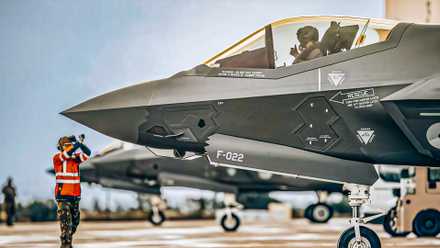
Is It True That US Air Force Pilots With The Highest Ranks Earn Less Than Commercial Pilots?
This is certainly a fascinating financial question.
Catch what other flight trackers miss
Emergency squawks, holds, NOTAMs — live signals, no signup.
Open tracker
Catch what other flight trackers miss
Emergency squawks, holds, NOTAMs — live signals, no signup.
Open tracker
Post-service Career Options

Transitioning to a major commercial airline is a primary goal for many military aviators, but the ease of this transition depends heavily on the type of aircraft flown. Air Force pilots fly fixed-wing heavy cargo planes, tankers, or jets. This gives them a massive advantage because they easily accumulate the multi-engine, heavy fixed-wing flight hours that major commercial airlines require for direct entry. The biggest hurdle for pilots from both branches is the strict civilian airline seniority system.
Army Warrant Officers primarily fly rotary-wing helicopters. To work for a major airline, helicopter pilots must utilize specialized “Rotor-to-Airline” transition programs to build necessary fixed-wing hours on their own or through regional partnerships. In commercial aviation, your pay, schedule, base location, and aircraft assignments are dictated entirely by your date of hire. A pilot who leaves the military at 10 years of service starts building airline seniority much earlier than a pilot who stays for a full 20-year military retirement.
That airline system means that staying in the military for senior ranks or spending more time on post-service transition training can actually cost a pilot millions in long-term lifetime earnings. The retention bonus structures illustrate how aggressively each branch fights to compete with civilian airlines. In the Air Force, the Aviation Bonus Program contracts offer up to $50,000 per year, maxing out at a potential total cap of $600,000 depending on the aircraft type.
The Army utilizes an auction-style bidding system for senior Warrant Officer retention bonuses. Rather than receiving a standard payout, Warrant Officers must submit confidential bids. The Army then reviews these bids, accepting the lowest ones to save budget while letting pilots who bid too high lose out entirely. Even when these bonuses are approved, they will max out at no more than $25,000 per year.
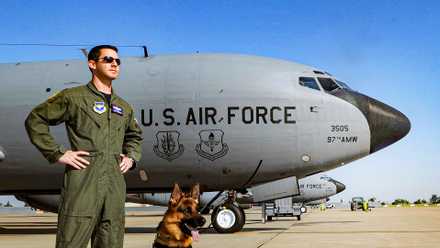
The Top 5 Highest Paid US Air Force Pilot Ranks & Their Average 2026 Salaries
Air Force pilots are paid based on their rank and years of service, although even the highest ranks typically earn less than commercial pilots.
Difference In Pension Plans

Both branches operate under the same modern military retirement frameworks: the legacy High-3 system or the current Blended Retirement System. Most pilots retiring today fall under the BRS. For anyone serving 20 active years, the pension is calculated as a fixed percentage of your final base pay. Because the base pay charts favor the commissioned officer ranks over Warrant Officer ranks, the retirement payout gap is substantial.
Under BRS, reaching 20 years yields a lifelong pension equal to 40% of the average of your highest 36 months of base pay. An Air Force Lieutenant Colonel (O-5) retiring with 20 years of service will draw a monthly pension based on a much higher salary cap than an Army CW4 or CW5 retiring at that same 20-year mark. Over a lifetime, that gap adds up to hundreds of thousands of dollars in retirement pay, even though both retirees spent 20 years operating advanced military aircraft.
Here’s a snapshot of some of the most in-demand platforms for pilots that each service pays out the most incentives to retain air crew over their career:
US Army | US Air Force |
|---|---|
AH-64 Apache | F-35 Lightning II |
UH-60 Black Hawk | F-22 Raptor |
CH-47 Chinook | F-15 Strike Eagle |
MH-60 Black Hawk | F-16 Fighting Falcon |
MH-47 Chinook | A-10 Thunderbolt II |
C-12 Huron | C-17 Globemaster III |
Right out of the gate on day one of retirement, the Air Force pilot makes $960 more per month, which is more than $11,000 every single year, just for having held a commissioned rank instead of a Warrant Officer rank. Taking the long view and considering that military pensions are updated annually for inflation to the cost-of-living adjustment, the average retirement gap between the two most common ranks held by retirees will be roughly $350,000. That figure is based on the projection that a retired Army CW4 will be paid out approximately $1.26 million in lifetime pension funds compared to about $1.61 million in retirement payments to a USAF O-5.


![5,100 Miles: Inside The USA’s 11 New Longest Nonstop Domestic Flights [List & Map]](https://dailynewsnblog.com/wp-content/uploads/2026/09/united-airlines-boeing-767-400er.jpg)