dailynewsnblog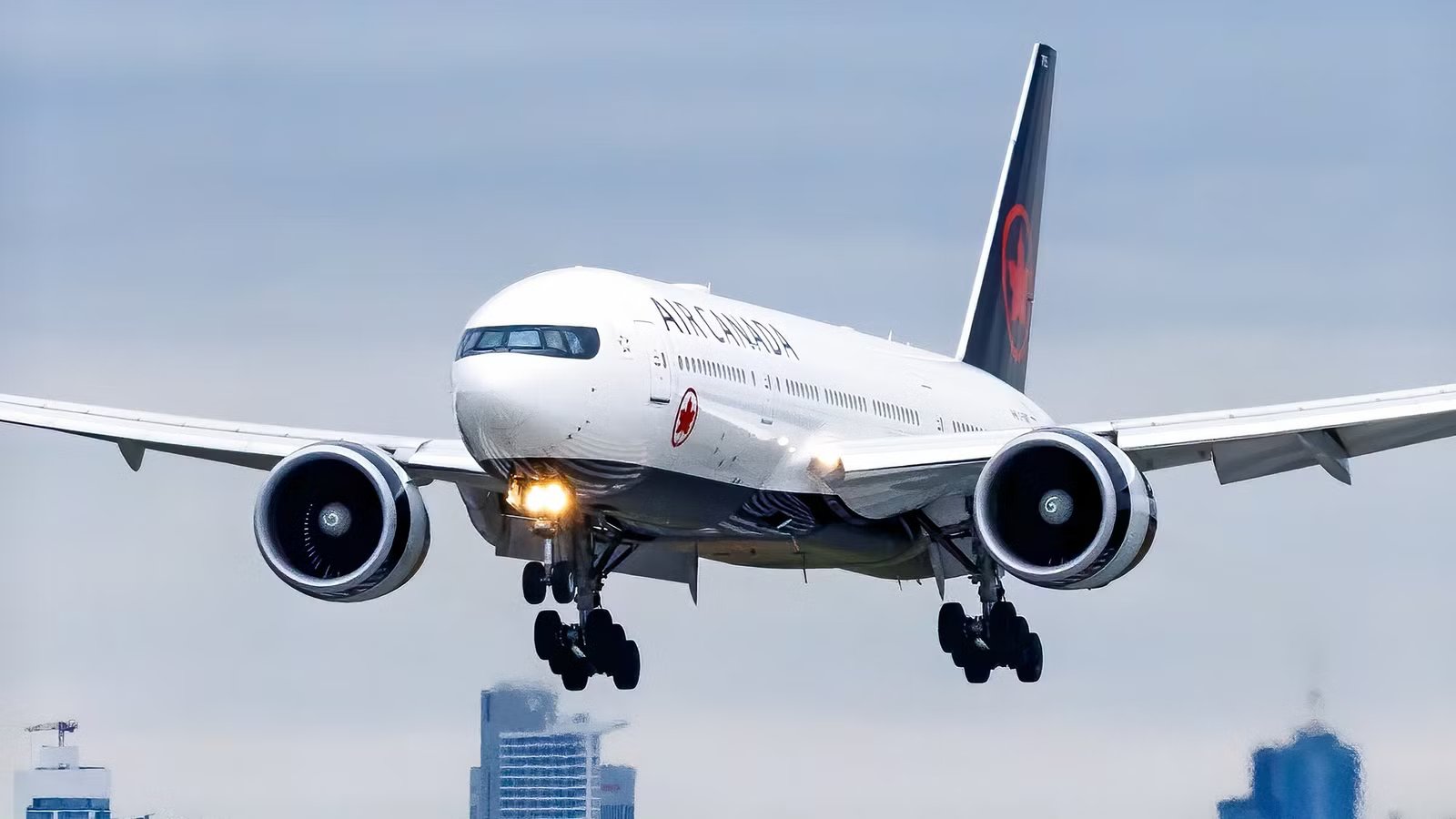
A former  Air Canada captain has been arrested and charged after allegedly flying more than 900 domestic and international flights without the required pilot’s license. Peel Regional Police in Ontario say 59-year-old Geoffrey Wall, of Barrie, Ontario, operated as an Air Canada captain between 2009 and 2025 despite not holding the Airline Transport Pilot License required to command large commercial aircraft.
The case was discovered after Transport Canada initiated a regulatory review into the pilot’s licensing credentials, which later became a criminal investigation known as Project Icarus. Air Canada says the pilot was removed from active duty once the issue was discovered and is no longer employed by the airline.
While the story is startling, it also requires an important distinction. This was not allegedly a person with no pilot credentials sitting in the cockpit of an airliner. Air Canada says the pilot held a valid Commercial Pilot License and completed recurrent training, while police allege he did not hold the higher-level license required to operate as a captain. That distinction makes the case less of a Hollywood-style impostor story, and more a troubling failure of document verification inside one of North America’s largest airlines.
Former Air Canada Captain Faces Fraud Charges

According to the Associated Press, the investigation began after Transport Canada launched a regulatory review into the licensing credentials and conduct of a commercial airline captain. Peel Regional Police allege that Wall used fraudulent pilot licenses during his career and misrepresented his qualifications to both Air Canada and Transport Canada.
Investigators say he was assigned to more than 900 domestic and international flights between 2009 and 2025, flying as a captain across Air Canada’s Boeing 767, Boeing 777, and Boeing 787 fleets. During that period, he allegedly earned more than $2.9 million while operating as an Air Canada captain.
According to police, Wall held a Commercial Pilot License, known as a CPL-A, but did not hold the required Airline Transport Pilot License, or ATPL-A, needed to operate aircraft such as a Boeing 777 as captain. He was arrested on June 1 and charged with fraud over C$5,000, two counts of forged documents, three counts of possession of a counterfeit mark, and public mischief. The public mischief charge relates to an allegation that he filed a false police report about stolen pilot documentation.
Air Canada says it voluntarily reported the matter to Transport Canada after the issue was identified. Deputy police chief Nick Milinovich had the following to say:
“[Wall] has been flying for years, misrepresenting himself and his credentials to his employer and regulatory officials using fraudulent licensing documents. This is similar to a doctor that is licensed to practice family medicine, but is doing brain surgery in their office.”
How A Licensing Gap Could Matter Even If Training Was Completed

The key issue is the difference between a Commercial Pilot License and an Airline Transport Pilot License. A CPL allows a pilot to be paid to fly, but an ATPL is the top-level license required to command large commercial passenger aircraft. In simple terms, the allegation is not that Wall was not a pilot at all, but that he did not hold the specific license required to act as captain in airline operations. That distinction is important because it explains how Air Canada can say the pilot completed training while police still allege a serious licensing violation.
License / Requirement | What It Means | Why It Matters In This Case |
|---|---|---|
Commercial Pilot License | Allows a pilot to be paid to fly aircraft. | Air Canada says the pilot held a valid Commercial Pilot License. |
Airline Transport Pilot License | Higher-level license required to serve as captain of large commercial aircraft. | Police allege Wall did not hold the required ATPL while acting as captain. |
Recurrent Training | Regular airline training and competency checks. | Air Canada says the pilot completed required recurrent training. |
License Verification | Administrative and regulatory confirmation that a pilot holds the correct credentials. | This is the layer that appears to have failed or been bypassed. |
Despite going undetected for over 16 years, Air Canada has said that safety was not compromised because its pilots undergo mandatory recurrent training every six months to validate flying competency, including an annual flight check with a certified Transport Canada check pilot. The airline also said the pilot successfully met or exceeded recurrent training standards and demonstrated competency to safely operate large aircraft. But recurrent training and licensing are not the same thing. Training checks show whether a pilot can operate the aircraft competently, while licensing confirms whether that pilot is legally qualified to hold the position in the first place.
Air Canada says it has audited its pilot group and found no other instances of non-compliance. The airline also says it has reinforced administrative practices around physically verifying licenses, including original documents issued by Transport Canada. For its part, Transport Canada has imposed a monetary penalty on the former pilot for not holding the correct license to be an aircraft captain. Canada’s transport minister has also said that the federal government will review the case and ensure improvements are made if needed.

The Pilot Shortage In 2026: Is It Still Real, And What Is Actually Being Done About It?
The relatively low mandatory retirement age for pilots means that thousands leave the role every year, and airlines are in a race to replace them.
Other Pilot Fraud Cases Show This Is Rare, But Not Unprecedented

As unusual as the Air Canada case appears, it is not the first time an airline pilot has been accused of credential fraud. The closest comparison may be South African Airways pilot William Chandler, who reportedly flew for the airline for around two decades while claiming to hold an Airline Transport Pilot License. South African Airways later said Chandler held a Commercial Pilot License but not the ATPL required for his role, with the issue emerging after an investigation into an Airbus A340-600 incident over the Swiss Alps.
There are multiple other cases that have involved pilots using altered licenses, fake credentials, or fraudulent exam practices.
Year Discovered | Airline / Operator | Details Of The Incident |
|---|---|---|
2002 | Reliance Aviation | Marvin Jacobs used an altered FAA commercial pilot license to gain employment with Reliance Aviation, an air-taxi operator at |
2010 | Corendon Airlines | Thomas Salme, a Swedish pilot, flew passenger jets in Europe for more than a decade without the required license. He was arrested at |
2018 | South African Airways | William Chandler allegedly flew for SAA for around 20 years while claiming to hold an ATPL, though he reportedly only held a Commercial Pilot License. The issue emerged after an A340-600 incident investigation. |
2020 | Pakistan International Airlines / Pakistani Aviation Sector | Pakistan grounded hundreds of pilots after authorities alleged that many licenses were “dubious” or obtained through fraudulent exam practices, triggering international concern over aviation oversight. |
 Fort Lauderdale-Hollywood International Airport
 Amsterdam Schiphol Airport
The Thomas Salme case is probably the most dramatic example of the fake-airline-pilot archetype. Salme flew passenger jets in Europe for years before being arrested in 2010 at Amsterdam Schiphol while preparing to operate a Corendon Airlines Boeing 737 to Ankara. The Pakistan case was different again, because it involved systemic allegations over licensing and exam fraud rather than a single pilot at one airline.
The Air Canada case stands out because of the airline involved, the alleged duration, and the role that Wall allegedly held. This was not a small charter company or a lightly known operator, but a senior widebody pilot at Canada’s flag carrier and one of North America’s largest airlines. If the allegations are proven, the uncomfortable question will not only be how one pilot allegedly misrepresented his credentials, but how a licensing gap survived inside a heavily regulated airline system for so long.