dailynewsnblog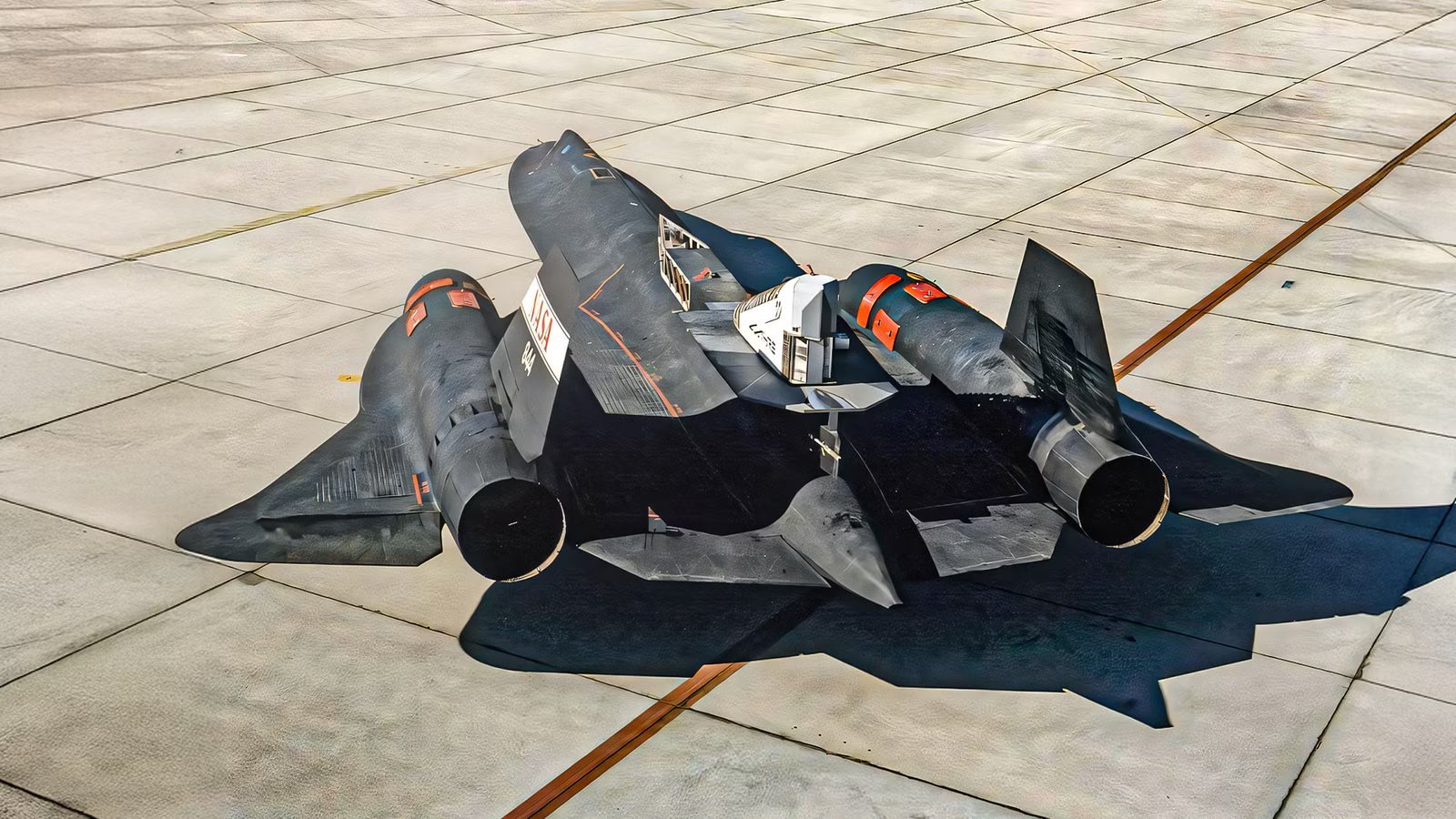
Conceived for the Central Intelligence Agency (CIA) under the name A-12 Oxcart, the Lockheed SR-71 Blackbird was the first production plane to achieve Mach 3. Since aluminum loses its strength at Mach 3 speeds, the plane was built using more than 90% titanium. That led to a bizarre twist of fate, where the US had to use CIA shell companies to covertly buy the raw titanium from the Soviet Union, the very country the plane was meant to spy on.
Working directly under the genius aerospace engineer Kelly Johnson, the Skunk Works team had to essentially invent a new branch of metallurgy to make the Blackbird possible. The USSR was the largest supplier of the titanium they needed at the time. To bypass export restrictions and keep the project secret, the CIA orchestrated a massive clandestine operation. To justify the massive quantities of titanium being ordered, one famous cover story used by these shell companies was that the metal was needed to build thousands of commercial pizza ovens.
The Pipeline To Plant 42: Crafting Soviet Titanium In Palmdale, California

To move thousands of tons of titanium across enemy lines, the CIA had to craft a lie that matched the exact metallurgical requirements of the metal without triggering military suspicion. The CIA established numerous dummy corporations across the globe that operated as seemingly harmless commercial operations with low-profile business histories. To mask the ultimate destination, the CIA routed the transactions through obscure third-world countries and European intermediaries. The USSR readily sold the material on the open market, believing it was catering to standard global commercial trade.
Titanium is highly prized in heavy industry for its resistance to extreme heat, chemical corrosion, and acid. According to records and memoirs from Blackbird pilots like Colonel Rich Graham, the Soviet export bureaucrats readily fell for the cover story due to their own ideological bias. Soviets were said to believe that Americans were simply too lazy to cook for themselves and were building massive fast food networks. The Aviation Geek Club recounted his remarks:
“Back when they were building the airplane, the United States didn’t have the ore supplies – an ore called rutile ore. It’s a very sandy soil and it’s only found in very few parts of the world. Working through Third World countries and bogus operations, they were able to get the rutile ore shipped to the United States to build the SR-71.”
Other dummy corporations claimed they were buying the metal to manufacture textile machinery, agricultural storage silos, and chemical processing pipes. The CIA created at least five primary shell corporations. These companies continuously transferred ownership of the shipments while the cargo ships were still out at sea. A shipment of titanium might change legal ownership four times between leaving a Soviet port and arriving at its destination. By splitting the purchases between different industrial purposes, the CIA avoided raising red flags about the massive, centralized stockpiling of a strategic military asset.
Globalization Props Up Uncle Sam’s Supply Chain

To break the paper trail, a CIA front company in a neutral country, like Sweden, for example, would place an order. Once the Soviet shipping vessel departed, the Swedish company would sell the cargo mid-transit to another front company in a second country, perhaps Switzerland. By the time the ship docked, the cargo manifest had changed hands so many times that tracking the ultimate destination back to the U.S. government was nearly impossible. Once the smuggled titanium arrived in the United States, the secrecy did not stop. The CIA and Lockheed had to launder the metal again to hide it from domestic observers and Soviet spies operating inside the US.
The operation succeeded entirely because of the Soviet Union’s desperate need for foreign Western currency during the economic stagnation of the 1960s. The Soviet government was so eager to inject hard cash into its economy that it fast-tracked raw material exports without conducting rigorous background checks on the buyers. The Soviet economy operated on rigid production targets. As a result, Soviet factories worked around the clock to refine the raw metals that would eventually be molded into the airframe of the Blackbird.
Titanium was a strictly controlled strategic material for military use. However, dual-use rules allowed it to be exported if it was used for civilian food safety or chemical manufacturing. If a Soviet mining operation in places like the Zaporizhzhia region mined more rutile ore than required, the managers were highly incentivized to sell the surplus on the global open market to secure Western cash. The CIA designed its buying patterns to match these surplus fluctuations so they never looked like a sudden, suspicious military surge.
Because titanium prevents food contamination and withstands extreme heat, using it for high-volume commercial baking equipment was a technically plausible, completely legal loophole that Soviet trade inspectors cleared without a second thought. Ultimately, the CIA managed to buy over several years what amounted to thousands of tons of high-grade material. This material was used to build the A-12 Oxcart as well as all 32 SR-71 Blackbirds.
The UK’s SR-71 Blackbird: Why Was The Avro 730 Never Built?
The aircraft has a fascinating backstory.

The incredible heat of air friction generated by the Lockheed SR-71 Blackbird caused the temperature of the plane to rise to more than 600°F (300°C), which is far from comfortable for any human pilot. To cool down the inside of the jet enough to make it habitable for flight, the special Skunk Works division of Lockheed developed a sophisticated thermal management system with the plane’s titanium skin as the primary element. Its high-strength beta alloy was known as Ti-13V-11Cr-3Al because it contained 13% vanadium, 11% chromium, and 3% aluminum.
While the exotic B-120 alloy was the most crucial single ingredient in the cooling recipe for the Blackbird, the titanium skin alone could not keep the cockpit safe. Its iconic black paint scheme was less to enhance its stealthiness but truly to serve as a heat conductor. The SR-71 also used its unique JP-7 fuel as a coolant, which was famous for having such a high flash point that you could throw a lit match in a bucket and it would not ignite. Finally, pilots wore full-pressure suits similar to astronaut gear.
The SR-71 Blackbird was constructed from three different titanium alloys, but the vast majority of its skin and primary structure was made from beta alloy. Titanium also provided the strength of steel but at roughly 50% of the weight, which was vital for a plane that needed to carry massive amounts of fuel. Chromium and aluminum stopped the metal from becoming brittle at high temperatures.
Skunk Works used different alloys for some specialized parts. The ‘turkey feathers’ that acted as exhaust nozzles for the Pratt & Whitney J58 engines were made of Ti-5Al-2.5Sn. This titanium alloy was selected for superior weldability and stability at high heat. Meanwhile, a more common aerospace alloy, Ti-6Al-4V, was used for various structural reinforcements and the landing gear. Notably, the landing gear contained some of the largest pieces of titanium ever forged.
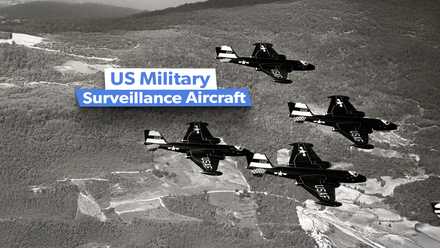
Top 5 US Military Surveillance Aircraft That Made History
The legacy of the US military developing some of the world’s most iconic and successful surveillance aircraft looks set to continue into the future.
Pioneering Speed And Stealth With Skunk Works

Although its design clearly emphasized speed as the highest priority, the SR-71 was also the world’s first aircraft to incorporate a reduced radar cross-section design from inception. This form of low-radar-observability technology has since evolved to create the modern fifth- and even sixth-generation warplanes of today, like the LM F-22 Raptor, F-35 Lightning II, and Northrop Grumman B-21 Raider.
Modern stealth aircraft use computer-aided design, but the Blackbird used early geometric principles and new materials. These innovative measures cut its radar signature down by 90% as opposed to comparable aircraft of the era, according to Aviation Week. One of the key features was the ‘Chines’ or sharp, blade-like edges that extend from the nose and along the sides of the fuselage. The Chines were originally meant as an aerodynamic feature that improves stability, but were found to deflect radar waves away from the rest of the airframe.
The Blackbird used a specialized ‘iron ball’ paint with iron ferrite. This coating converted incoming radar energy into heat, dissipating it before it could reflect. The two vertical stabilizers were also tilted inward at 15 degrees. This prevented them from acting as corner reflectors, which would otherwise bounce radar signals directly back to enemy receivers.

The SR-71 Blackbird’s Final Flight Set 4 Speed Records In Just 64 Minutes
The final day that the legendary jet streaked through America’s skies.
The Mastermind Behind The Blackbird: Kelly Johnson

The leaders of Lockheed remarked that Kelly Johnson could see the air. His mind was so acutely honed towards the science of Aerospace that he could make complex calculations of mass and aerodynamic performance nearly instantaneously. He was also famous, or notorious, for hating bureaucracy. He insisted on working outside Lockheed’s normal reporting lines, often starting projects on a mere handshake to avoid delays with official submittals.
The Skunk Works division was governed by his personal 14 rules of management and essentially worked outside the lines of typical defense contracting. Johnson’s very first mass production design was the legendary P38 Lightning of WWII, which is one of the most effective and most mass-produced fighters of the entire conflict. It was even the only top fighter design to be in serial production before and after the beginning and end of hostilities.
Johnson was said to echo the maxim ‘KISS’ to his team as he pushed them to find pragmatic solutions: Keep It Simple, Stupid. Johnson’s devotion to his work was so absolute that he turned down the presidency of Lockheed three times so he could remain at the helm of Skunk Works. Johnson was famously ‘imperious’ and demanding, reputed to deliver a swift kick to the pants as often as a compliment.