dailynewsnblog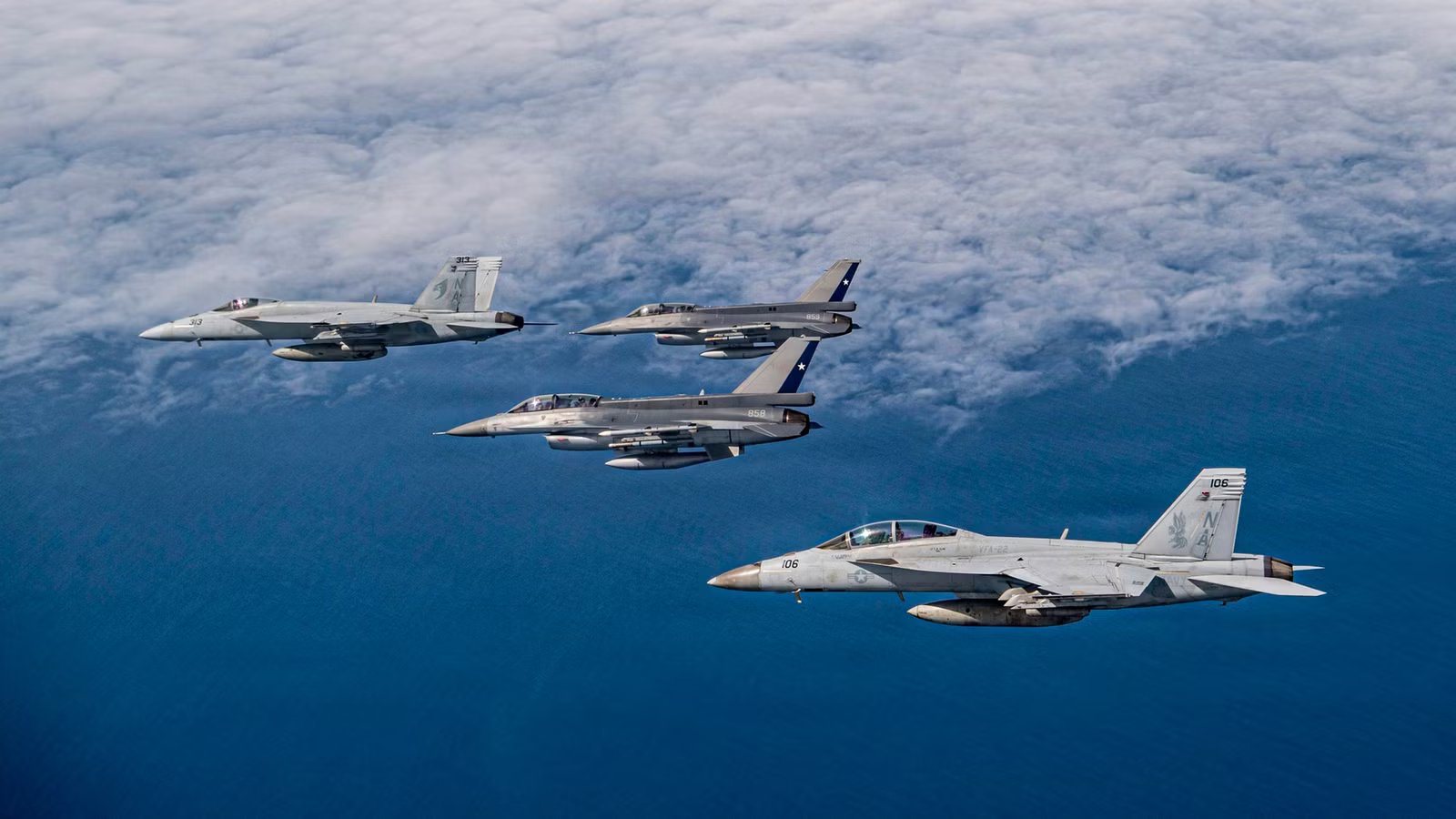
Like other service branches, the United States Navy/Marines is struggling with the retention of its qualified pilots and is struggling to meet its mandated strength. Even so, it is estimated to have almost 10,000 pilots, suggesting have a similar number of pilots as the Russian and Chinese air forces combined.
The Navy/Marines runs the risk of falling into the trap of having a bigger shortage of pilots, which increases the workload, which encourages more pilots to leave, which creates a bigger shortage. To address the problem, the Navy and Marines are working to boost their retention bonuses and work on other ways to entice aviators to extend their contracts.
Pilots Are Paid By Rank

Pilots in the US Air Force, Marines, Navy, Army, and Coast Guard are all paid based on rank and years of service. This is common with other professional Western air forces, such as the RAF. A pilot’s base pay is the same as that of any other officer of the same rank and years of service, regardless of their role. Additionally, all fighter pilots in the Navy and Air Force are required to be commissioned officers.
The exception in the US military is the US Army, where helicopter pilots can be warrant officers. There are many justifiable reasons for the officer pay uniformity, but it also creates problems of its own. One issue is that commercial pilots can earn considerably more than military pilots, and while airlines are free to offer higher base pay to attract pilots, the military is significantly hamstrung. To increase the basic pay of military pilots, it would have to boost the pay of all officers across all service branches.
The partial workaround is to offer generous retention bonuses to pilots willing to extend their contracts. Congress is also able to boost pilot-specific compensation like Aviation Incentive Pay, continuation pay program, and other aviation bonuses. It is important to note that in the US, the total compensation of both military and commercial pilots is complicated and generally includes pension pay, healthcare, allowances, and housing allowances (in the military).
Navy/Marine Corps Pilot Pay By Rank

The Marine Corps/Navy pilots’ ranks include O-1 (Second Lieutenant/Ensign, O-2 (First Lieutenant/Lieutenant Junior Grade), O-3 (Captain/Lieutenant), O-4 (Major/Lieutenant Commander), O-5 (Lieutenant Colonel/Commander), and O-6 (Colonel/Captain). Ranks above Colonel exist, but they generally no longer take part in combat flying operations.
An O-1 Ensign (Second Lieutenant) can expect to earn around $50,000-$63,000 annually in base pay, rising to $80,000 to $105,000 with total compensation (adding BAH, BAS, and other incentives). O-2 First Lieutenant/Lieutenant Junior Grade pilots typically have two to four years of service and receive a base annual pay of $58,000 to $75,000 and $90,000 to $120,000 in total compensation.
Rank (per US Navy) | Navy rank | Marine Corps rank | Base pay | Total compensation |
|---|---|---|---|---|
O-1 | Ensign | Second Lieutenant | $50,000 to $63,000 | $80,000 to $105,000 |
O-2 | Lieutenant Junior Grade | First Lieutenant | $58,000 to $75,000 | $90,000 to $120,000 |
O-3 | Lieutenant | Captain | $70,000 to $105,000 | $110,000 to $155,000 |
O-4 | Lieutenant Commander | Major | $95,000 to $125,000 | $130,000 to $175,000 |
O-5 | Commander | Lieutenant Colonel | $110,000 to $150,000 | $160,000 to $210,000+ |
O-6 | Captain | Colonel | $130,000 to $170,000+ | $180,000 to $230,000+ |
The rank of O-3 Captain/Lieutenant (typically four to ten years of service) is seen as the high-water mark of a pilot’s flying career, and these officers carry out a large share of combat missions. They earn $70,000 to $105,000 in base pay and $110,000 to $155,000 in full compensation. O-4 Major/Lieutenant Commander earns $95,000 to $125,000 in base pay and $130,000 to $175,000 with inclusions.
O-5 Lieutenant Colonels/Commanders have a basic pay starting at around $110,000, rising to around $150,000 with service, and the total pay being around $160,000 to over $210,000 with bonuses. Colonel/Captain (O-6) is the final rank where pilots may still fly in combat on occasion: they earn $130,000 to over $170,000 in base pay and $180,000 to over $230,000 with additions. Higher ranks still fly, but typically not on combat missions.
The Top 5 Highest Paid US Navy Pilot Ranks & Their Average 2026 Salaries
Discover the 5 highest-paid US Navy pilot ranks in 2026, from Commanders to Admirals, and how aviation careers reach $225,000 salaries.
How Do These Figures Compare To Pay At Commercial Airlines?

Entry-level Navy and Marine Corps pilots earn $80,000 to $105,000 in total pay. By mid-career (eight -12 years), they earn around $130,000 to $175,000, and senior pilots (15–20+ years) earn $180,000 to $230,000. This places their pay similar to what commercial regional airline pilots can expect to earn. However, in the commercial sector, regional airlines and regional aircraft are seen as a stepping stone to gaining experience.
Pilots often fly regionally before progressing up to narrowbody airliners and eventually widebody airliners as senior pilots, especially with major airlines. A senior pilot with 15–20+ years of experience with a major airline (e.g., Delta, United, American) can expect to earn $350,000 to over $550,000 in total compensation. They may also fly widebody aircraft. In the commercial sector, pilots bid for the larger aircraft based on their seniority and experience.
It is also worth noting that Navy/Marine Corps pilots typically earn more in total compensation compared with their Air Force counterparts, even though base pay is identical. The nature of the Navy and Marines is that there is more frequent sea duty pay and carrier options (and expeditionary operations for Marines). This can boost aviation bonuses, with the total compensation for some Marine Corps aviators to $320,000 in specific scenarios.
The US Military Is Offering Generous Retention Bonuses

The US military is looking for ways to entice aviators to renew their contracts. In April 2026, the Air Force stated that “Significant changes to the FY26 program include offering increased compensation for shorter contract lengths, particularly in fighter, bomber, and U-2 communities. Contracts are offered for a minimum of three years and a maximum of 12 years, with rates up to $50,000 per year, depending on the aviator’s career field and experience level.”
The Air and Space Forces Magazine reported that this could mean some Air Force aviators could earn up to $600,000, although exactly how that figure is calculated remains unclear. The publication also notes that in 2022 “the Air Force offered experience bonuses for fighter, bomber, special operations, mobility, reconnaissance, and helicopter rescue pilots worth between $105,000 and $420,000 depending on the length of their commitment.“
The US Navy has similar retention bonus schemes. The Navy detailed these retention bonuses for its aviators in its Fiscal Year 2024 Aviation Department Head Retention Bonus Program Information. The Navy’s Fiscal 2026 Aviation Department Head Retention Bonus is targeted at officers selected or under consideration for Aviation Department Head (O-4 level).
The rates vary by community, with a focus on high-demand platforms such as tactical jets, F-35s, and helicopters. TACAIR community pilots with 96-month contracts can earn $300,000 in total bonuses.
The Top 5 Highest Paid US Air Force Pilot Ranks & Their Average 2026 Salaries
Air Force pilots are paid based on their rank and years of service, although even the highest ranks typically earn less than commercial pilots.
Fewer Aviators & A Vicious Cycle

However, pay bonuses are not a silver bullet to the Navy’s pilot shortage. In January 2024, the Peninsula Press reported Commander Kristen Hansen (the commanding officer of VFA-122, a squadron) as saying that “they ask for more every year with fewer and fewer people.” She pointed out the quality of life aspect, saying that
“After you’ve given a decade plus to the Navy, at some point, you and your family have to come first too. (…) You can totally say ‘for God & Country,’ but that goes only so far when you have, you know, people at home that are constantly having to watch you go away.”
As an example, the USS Gerald R. Ford aircraft carrier returned to Naval Station Norfolk in mid-May 2026. It had completed a record-breaking 11-month deployment that lasted 326 days. This was the longest continuous US carrier deployment since the Vietnam War. It saw its mission repeatedly extended, including to the Caribbean to take part in the missions that led to the capture of Venezuela’s Maduro and then back to the Middle East to take part in Operation Epic Fury against Iran.
During the ship’s deployment, it launched over 12,200 flights and recoveries. While the deployment was a testament to the servicepeople, it presents a major headache for the shipyards maintaining the carrier. However, perhaps more importantly, it is placing enormous strain on those service personnel. With aviators, there is a risk that no matter how much more pay the Navy offers, those aviators may choose not to renew their contracts and retire to civilian life to be closer to their families.
The Navy/Marines Has The Second-Most Pilots Of Any Air Force

The United States has by far the most pilots of any military in the world. The Air Force is estimated to have around 13,000 qualified pilots. While out of date now, in 2006, the USAF said it had “13,689 pilots, 4,501 navigators, 1,344 air battle managers, and 36,035 non-rated line officers in the grades of lieutenant colonel and below.” Meanwhile, the Department of the Navy is estimated to have around 9,800 pilots, split between around 6,300 for the Navy and 3,500 for the Marines.
The Army is widely reported to have around 14,000 pilots (mostly helicopter pilots), although Task & Purpose reported it had 7,300 active-duty pilots in December 2025. All of these services are struggling with pilot shortages. The Chinese and Russian Air Forces are thought to have around 4,000-5,000 pilots, the Indian Air Force disclosed it had 3,834 pilots in 2021, and the Royal Air Force has around 1,500 pilots. This is in addition to their respective navies.
With that being said, their navy aviation branches are small compared with the US Navy/Marines. The US Navy/Marine Corps has around 1,100+ carrier-based fighter jets, the Chinese PLANAF has around 100+, the Royal Navy has 47, the French Navy has 41, the Indian Navy has up to 40, and the Russian Navy no longer has an aircraft carrier.