dailynewsnblog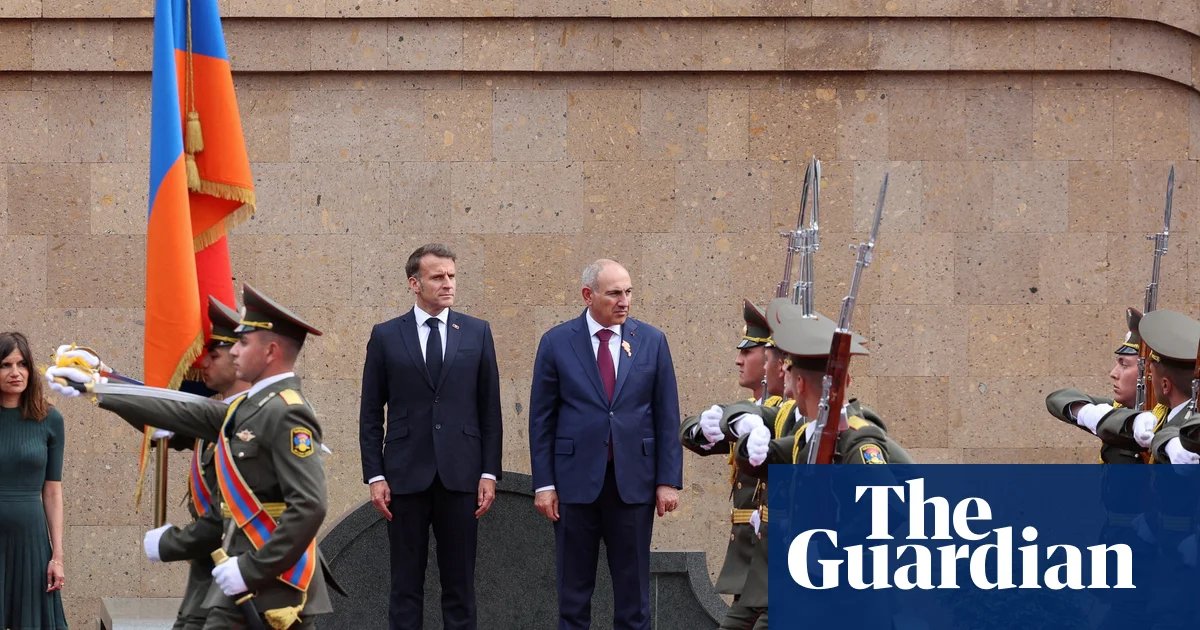
To describe Yerevan, a charming city of liberal values encased in imposing Soviet architecture, as the centre of the world is a stretch, but Armenia’s claim that it can become the strategic crossroads of the landmass of Eurasia is becoming less and less fanciful. As the former Soviet Republic goes to the polls on 7 June for national elections, it finds itself in a five-way tug of war between Russia, the US, Turkey, Europe and Azerbaijan.
The interest has in part been sparked by the possibility of an end to Armenia’s conflict with its neighbour Azerbaijan – and the chance this represents for Armenia to end its physical isolation and become part of the middle corridor, a vital trade route linking western China and Europe, bypassing both Russia’s northern corridor and the Suez canal.
The opening of its borders with Turkey and Azerbaijan could transform not just Armenia but the South Caucasus, Armenia’s prime minister, Nikol Pashinyan, has claimed. Once these borders were open and peace secured, he said, it would be as if the geographical position of Armenia itself had changed. The shortest route between east and west, he said, goes through Armenia.
Ararat Mirzoyan, the foreign minister, said the government’s aim was to turn Armenia’s geography into a strategic asset. “The challenge after decades is how to become a bridge rather than an obstacle. So this is what we are now trying to do in Armenia. Somehow we have come to understand that we can connect Europe with Central Asia, with the far east, with India, China, and this, in turn, can not only be a way to save our existence, our sovereignty, but also guarantee our further peaceful prosperity.”
The so-called Trump Route for International Peace and Prosperity (Tripp) linking Europe and Asia and built across Armenian territory as part of a peace deal with Baku would only be one part of this new connectivity jigsaw.
This geopolitical vision – the heart of what Pashinyan is offering for his third consecutive term – is also in part about Armenia’s future identity. It turns the election into a decision on whether to back Pashinyan’s call to support what he calls Real Armenia, as opposed to a historical Armenia obsessed with lost lands and historical grievances.
The Real Armenia doctrine requires making a painful peace with neighbouring Azerbaijan, and a pivot away from Russia towards the EU – something Pashinyan’s Civil Contract party describes as a “more diversified foreign policy”. But it also involves controversy, such as sacking the director of the Armenian genocide museum for giving JD Vance a book on Azerbaijan massacres, or removing from Armenia’s passport stamps the image of Mount Ararat, a national symbol although it lies within present-day Turkey.
Early polls show Civil Contract may be on course to win, a remarkable achievement for a party that oversaw two successive humiliating military disasters at the hands of Azerbaijan in 2020 and 2023. The second defeat involved the overnight forced displacement of 100,000 Armenians from the enclave of Nagorno-Karabakh. The displaced refugees live in Yerevan and fear for their heritage. Nineteen prisoners from that war remain captive in Baku, including the region’s first minister, Ruben Vardanyan, who claims Pashinyan has abandoned their cause.
The election campaign promises to be wild.
With his near permanent Facebook presence and up-at-5am energy, Pashinyan pours out video content ranging from eating pastries to listening impassively to the Russian rock star Zemfira. He also has a tendency to become embroiled in volcanic rows with voters, accusing opposition leaders of being brainless foreign spies, and threatening to eliminate them.
Pashinyan is facing at least three pro-Russian nationalist parties, including Stronger Armenia, led by a Russian Armenian multi-billionaire, Samvel Karapetyan, the founder of the Tashir Group – a conglomerate with interests in Russia and ownership of Armenia’s electricity network. Last week Karapetyan accused Pashinyan of trying hallucinogenic mushrooms in China and enjoying them so much he imported a ton of them, which he has been consuming before government meetings. Pashinyan says he will sue over the claims.
Karapetyan has also promised a Ministry of Sex to address demographic decline. In a sign of how business and politics mix, he is fighting against the terms of the nationalisation of his electricity network.
Karapetyan was arrested last June after remarks that were interpreted as supporting a coup mounted by the Armenian church. As a result, he is now running his campaign from what might be described as house – or mansion – arrest. He is barred from becoming an MP due to owning Cypriot and Russian passports. Other members of Stronger Armenia have been arrested for allegedly offering bribes.
Human rights activists, such as Kenneth Roth, the former executive director of Human Rights Watch, have suggested Pashinyan’s populism borders on authoritarianism, and questioned whether European leaders such as the French president, Emmanuel Macron, should be showering him with so much support.
Karapetayan, meanwhile, accuses Pashinyan of betrayal by conceding so much to Azerbaijan, and has warned that if the prime minister is re-elected, “we will not become a province of Russia, but a province of Azerbaijan”. His model is clearly Georgian Dream, the pro-Russian group that has held power in Tbilisi since 2012.
Pashinyan’s allies, such as Maria Karapetyan, a member of the standing committee on foreign relations, argue that the pro-Russian nationalist opponents have no agenda to match Real Armenia.
She said: “They still entertain the idea that the Armenians of Nagorno-Karabakh might have a viable option of returning. They propose keeping the issue open on the Armenian foreign policy agenda. But this is a recipe only for returning to the dynamic of conflict. If you do not have a plan, that just means having an issue, and that means there will be a price to pay – and usually that price is Armenia’s sovereignty.”
The final hurdle to the ratification of the peace agreement initialled in the White House last August is Azerbaijan’s demand that Armenia remove a reference in its constitution to the country’s declaration of independence – a document that includes a call for unification with Nagorno-Karabakh. Armenia says it has already renounced any territorial claims in the initialled peace treaty.
Knowing that this is Baku’s big red line, Civil Contract says it will rewrite the constitution, but insists this is not being done under duress. The aim is to put this to a referendum by the end of the year. That requires winning a constitutional majority of two-thirds of the parliament’s seats – a tall order. Asked if there is a plan B to secure a referendum, Pashinyan says: “We will not give up. Peace and open borders are the right path for Armenia and the whole region.”
Civil Contract’s chances would be improved if Azerbaijan were to make concessions to Armenia ahead of polling day. Yerevan has also been waiting for months for Turkey to reopen its border with Armenia, which has been closed since 1993. It has not yet done so. The release of some of the 19 Armenian prisoners held in Baku would also affirm Pashinyan’s quiet diplomacy
Tigran Grigoryan from the Regional Center for Democracy and Security in Yerevan said: “It is very possible they cannot deliver the new constitution and then we have a period of ‘no peace, no war’ for a long time. At the same time, Armenian politics will have become more polarised between a pro-Russian opposition and increasingly authoritarian government.”
Grigoryan questions how far a weakened Pashinyan could pivot away from Moscow towards Europe without provoking Russian retaliation.
Vladimir Putin recently suggested that Armenia stage a referendum on whether it wants to be a member of the EU or the Russian-led Eurasian Union. The Russian president is raising this issue before the elections – knowing EU membership is still deeply theoretical – to inject a polarising topic to the benefit of the pro-Russian candidates.
So far, Russia has toyed with only subtle signals of its disapproval of Armenia’s pro-European track, such as banning imports of Jermuk, Armenian mineral water. Grigoryan says a more structural threat to Moscow’s leverage in Armenia and a possible red line would be nationalising the debt-ridden Russian-owned railways.
Once less distracted by Ukraine, Putin could for instance end subsidies on cheap Russian gas imports, or even as a last resort turn the taps off altogether.
Macron, who was in Armenia this month for a state visit and a meeting of the European Political Community, accused Russia of treachery not just in Ukraine.
Referring to Russia’s failure to come to Armenia’s help at the time of the Nagorno-Karabakh war, he said: “Russia was not there [for Armenia] – no more than it was for Venezuela, Syria or Iran.” Pashinyan even warmly shook the hands of Volodymyr Zelenskyy, and the two men spoke in English, not Russian, a quiet declaration of independence that infuriated Moscow.
Maria Karapetyan denies her party’s turn to Europe is a mirage that misleads the electorate. She said: “We are just exiting a paradigm when we were looking to Russia as our saviour. So we are not in a rush to enter a new dynamic thinking that the European Union is going to solve all our needs. My party thinks we do not look for saviours. It’s OK for us that no one wants to save us”.