dailynewsnblog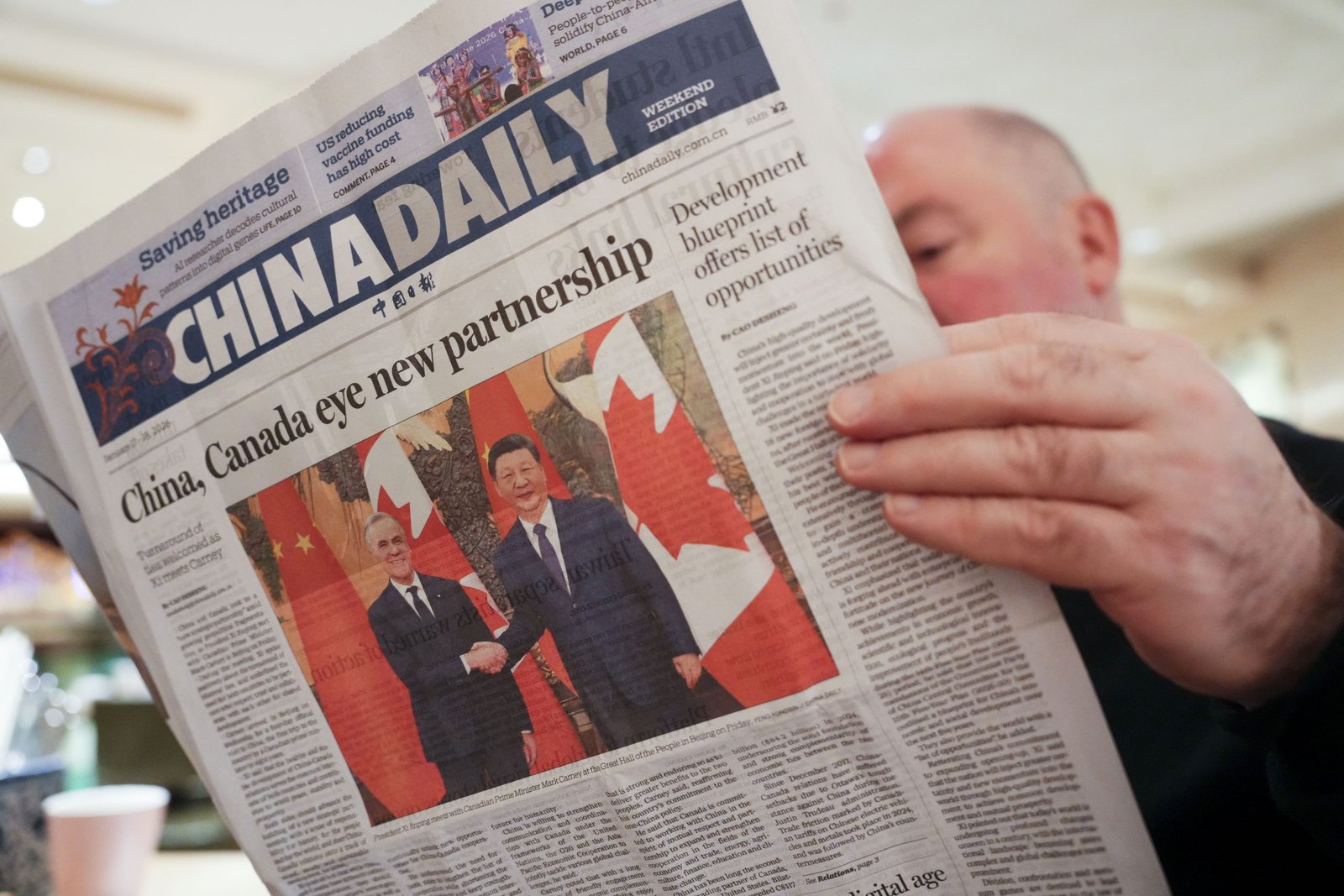
An expert on Canada-China relations is cautioning against turning renewed defence talks between Ottawa and Beijing into a partisan issue, while calling on the federal government to be more transparent about the purpose of the dialogue.
An expert on Canada-China relations is cautioning against turning renewed defence talks between Ottawa and Beijing into a partisan issue, while calling on the federal government to be more transparent about the purpose of the dialogue.
The comments come after the Conservatives criticized the Liberal government’s decision to resume defence co-ordination talks with China following an eight–year hiatus, arguing the move sends the wrong signal as Beijing continues to pose a threat to Canada’s national security.
Vina Nadjibulla, co-founder and CEO of Centre for Strategic Statecraft, told iPolitics reopening military-to-military dialogue should not be interpreted as a shift in Canada’s defence posture or its relationship with longstanding allies.
“We need to have a lot more clarity because Canada’s relationship with China is being recalibrated because we are deepening engagement on certain files, like economic and commercial relations,” Nadjibulla said.
“We have to be clear that guardrails that were guiding our relationship on defense, on AI, or on sensitive and critical technologies, that those are still all in place.”
Canadian and Chinese officials held a defence coordination dialogue on Sep. 4, as first reported by The Globe and Mail. The meeating was first publicly disclosed by Beijing.
In a statement sent to iPolitics, the Department of National Defence said the meeting was part of an “ongoing working-level dialogue” supporting military-to-military communications “at the functional level” and was consistent with Canada’s broader defence engagement in the Indo-Pacific.
“As the Prime Minister has consistently said, Canada’s renewed engagement with China will be guided by a series of guardrails. Under this framework, there are specific areas in which we will seek deeper cooperation with China and areas we will not, which includes on defence,” a DND spokesperson said.
Nadjibulla said the meeting should be understood within the prime minister’s broader effort to recalibrate Canada’s relationship with China, while maintaining clear limits on areas involving national security.
She pointed to the “strategic partnership” announced by Prime Minister Mark Carney during his January visit to Beijing, saying deeper defence cooperation was not part of that agenda.
“He explicitly made it clear that there will be certain sectors where Canada will not be engaging with China because we don’t have shared interests and don’t have shared values,” she said.
In an open letter Wednesday, Conservative defence critic James Bezan and foreign affairs critic Eric Duncan called on Carney to end the renewed dialogue, accusing his government of abandoning its previous characterization of China as Canada’s “biggest security threat” in favour of pursuing a “strategic partnership” with Beijing.
“We will not stand up for our sovereignty or our values by working with a government that has kidnapped our people, interfered with our elections, dropped surveillance buoys in our Arctic waters, and set up secret police stations on Canadian soil,” the MPs wrote.
Nadjibulla, however, cautioned against reading the reopening of a communication channel as evidence Canada is moving toward deeper defence cooperation with China, noting that several of Canada’s allies including the United States, United Kingdom and Australia, maintain their own military-to-military dialogues with Beijing.
“Canada is not doing anything unusual, and in itself, the fact that there is now a channel of communication doesn’t mean that policies should change,” she said.