dailynewsnblog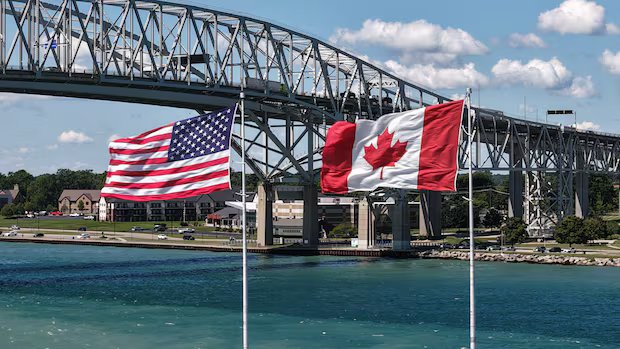
The White House fired another shot in the Canada-U.S. trade war this week, banning outright the imports of Canadian dairy, motorcycles and some alcohol products.
But how much will those bans, along with fresh 50 per cent tariffs on a slate of other products, actually impact the Canadian economy?
Not all that much, say economists who’ve run the numbers. But that doesn’t mean it won’t hurt certain industries — and it certainly won’t give business owners any peace of mind.
On Tuesday night, the White House retaliated against Canada’s counter-tariffs with the bans and the addition of 50 per cent tariffs to items including mattresses and some paper products. American officials also dropped tariffs on others, such as toilet paper, cement and sugar.
But according to one analysis from Derek Holt, vice president and head of capital markets economics at Scotiabank, the new tariffs will apply to an estimated $3 billion worth of Canadian goods, while the removed tariffs apply to about $2 billion worth — making the difference marginal, given Canada exported more than $527 billion worth of goods to the U.S. in 2025.
The bans on alcohol, dairy and motorcycles will also be negligible, Holt adds, as Canada sends very little dairy and few motorcycles south of the border. Alcohol exports are a bit higher than the other categories, with $550 million worth sent to the U.S. last year, according to his analysis, but the export bans would still only impact $700 million worth of Canadian exports to the U.S.
“These actions are face saving by the U.S. administration, not substantive in nature and that’s a positive,” Holt said in a note to investors on Wednesday.

U.S. President Donald Trump has hit Canada with a new round of trade measures, escalating the trade war. CBC’s Peter Armstrong says the scope of the trade war has grown, and as a result, regional disruptions could lead to job losses and the closure of small businesses.
He says the rising cost of oil — which soared past $100 for the first time since July on Wednesday due to escalating tensions in the Middle East — poses a greater economic risk than the new U.S. measures.
At BMO, chief economist Doug Porter agrees. His team puts the value of newly tariffed items and those taken off the list both at about $2 billion, putting the country “in the same spot” as it was before the announcement.
But where the tariffs do hit, in certain industries or parts of the country, they will still hurt business owners badly, Porter told CBC News.
- Just Asking wants to know: What questions do you have about shopping in the age of the Canada-U.S. trade dispute? Send us your questions before our Sept. 12 show.
“It’s extremely negative for the new industries and products that were selected, but of course, some pretty important ones were taken off the list,” he said.
“So there are going to be some relieved industries today and some horrified.”
50% tariffs already an effective ban
For makers of Canadian booze, further escalation isn’t a positive sign. Cal Bricker, CEO of Spirits Canada, says Canada exports much of the alcohol it makes to the U.S., making the continued targeting of his industry a concern.

About half of the $2 billion in spirits produced in Canada every year is sold to the U.S., says Cal Bricker, president and CEO of Spirits Canada. ‘We sell more Crown Royal in Texas than we do in all of Canada.’
But because many alcohol products already faced 50 per cent tariffs, upping the ante to a ban might not make a material difference to many booze producers.
Matt Johnston of craft brewer Collective Arts in Hamilton, Ont., says he wouldn’t have been able to send any more of his beer south at a 50 per cent rate anyway.
“The reality is that once you add 50 per cent tariffs, it becomes extremely difficult to try and sell on the market.”
He already sent months worth of product to the U.S. before the new tariffs came into effect a few weeks ago, in hopes a deal could be reached before supplies ran out. Now, the plan is to grow the business within Canada and other international markets to make up for the loss of U.S. sales, where a fifth of their business used to come from.

“The world’s a big place and we can look elsewhere,” Johnston said.
As with alcohol, many of the banned items were already facing 50 per cent tariffs, RBC economist Nathan Janzen points out, which would have effectively kept them out of the U.S. market, meaning the impact of the ban will be relatively small.
Real hit will be indirect
Even if the impact will be small by the numbers, Tu Nguyen, an economist at accounting firm RSM Canada, says the escalation is still very real in terms of the message it sends to business owners.
While the U.S. has historically increased the tariff percentages in order to turn up the heat on Canada, Nguyen says an all-out ban signals a departure from that strategy. She says the real hit from the escalating retaliation will be indirect — the tit for tat denting business confidence.
“A lot of these tariffs, they sound really big … but they don’t hit the economy nearly as badly as one would think,” Nguyen said.
“The bigger hit, I would say … comes from uncertainty.”
And unlike in the past, when the U.S. gave many weeks or months of lead time before tariffs went into effect, some of the newly announced measures will come into force as soon as next week. Nguyen says this gives businesses less time to prepare or pivot to new markets, and introduces another worry for business owners on both sides of the border.