dailynewsnblog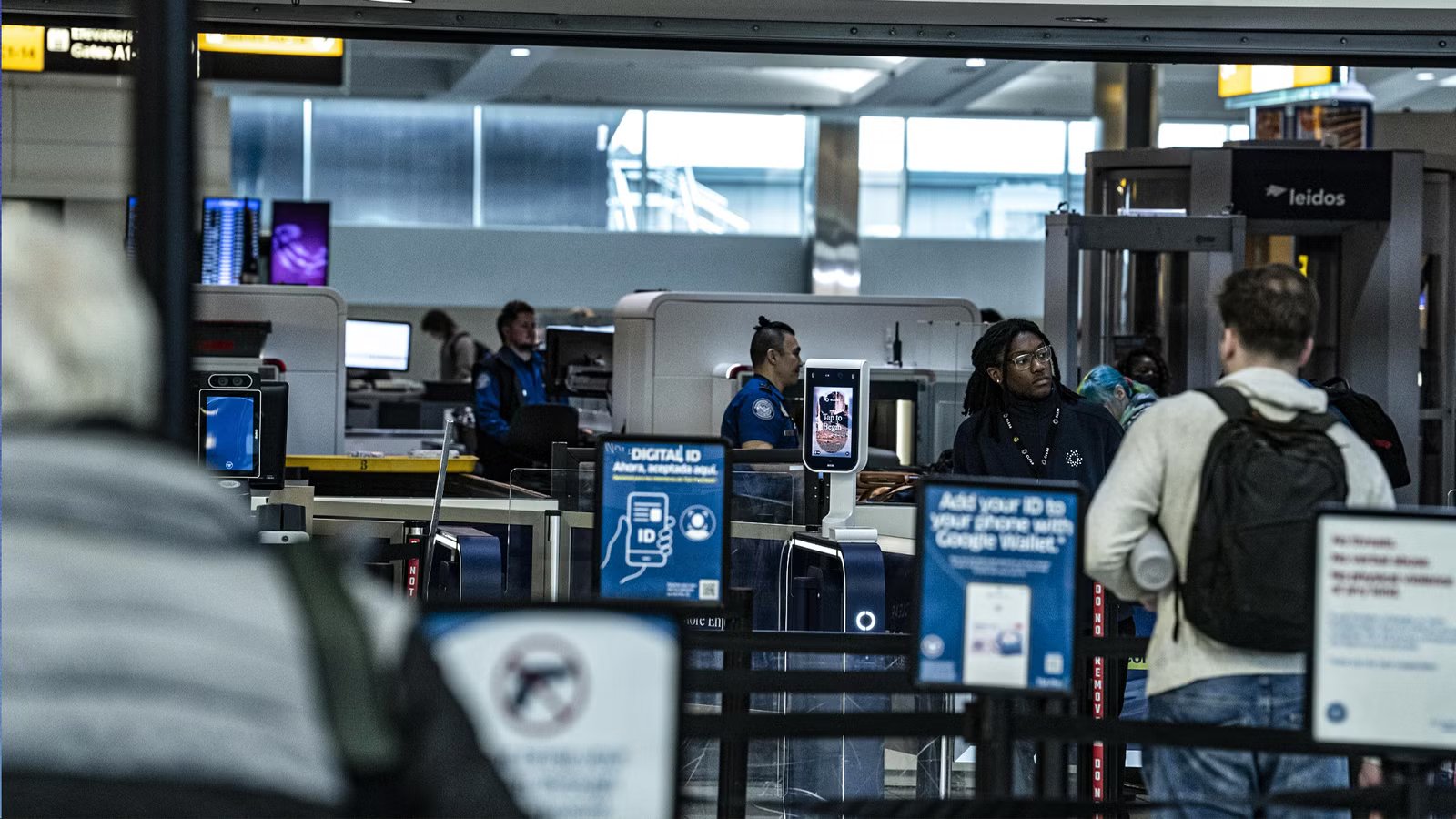
With $781.2 million spent retrofitting checkpoints at hundreds of airports, the last thing most travelers would expect to lose is room for their luggage. Yet that is exactly what has been happening. The new computed tomography (CT) scanners that let passengers leave laptops and travel-size liquids zipped inside their bags have a narrower tunnel opening than the X-ray machines they are replacing, and that narrower opening is quietly sending a growing number of ordinary rolling carry-on baggage back to the ticket counter. The airline’s size limit hasn’t changed; the machine has.
The timing matters. On August 24, 2026, newly confirmed TSA Administrator David P. Cummins marked the agency’s 25th anniversary by unveiling the ‘Horizon 25’ strategy, retiring the TSA Gold+ program in favor of an expanded and more privatized Screening Partnership Program (SPP). One change is mechanical, hidden inside a scanner’s housing. The other is administrative, decided in Washington. Both are reshaping the same checkpoint at the same time, and only one of them is getting a lot of attention.
The Half-Inch That’s Changing What Fits Through Security

The core issue is physical, not political. TSA’s new CT units scan bags through a tunnel opening of roughly 24.5 inches wide by 16.5 inches tall (62-2 by 41.9 cm) on many of the older X-ray machines they’re replacing. The difference of well under an inch, about 0.4 to 0.7 inches (1.0 to 1.8 cm) per side, sounds trivial, but at a checkpoint, it isn’t.
As of July 6, 2026, TSA had installed 1,162 CT units across 296 airports, a rollout that began with limited testing in 2018 and scaled up sharply after the agency awarded a $781.2 million contract for the technology in 2022. The upgrade is a genuine improvement for most travelers: the units generate rotatable, high-resolution 3D images that can be viewed for a thorough analysis, which is why laptops and permitted liquids no longer need to come out of the bag and why officers open fewer bags by hand. But a smaller entry tunnel is the trade-off for that better image, and it’s a trade-off nobody advertised.
The upgrade route itself has been gradual by design. TSA first piloted CT scanners at a handful of airports back in 2018, watched throughput and detection rates for several years, then committed hundreds of millions of dollars once the data supported a nationwide buy. That patience is part of why the tunnel-size issue caught so many travelers off guard: the agency spent years talking about faster screening and almost no time warning that faster would also mean narrower.
An inch of clearance sounds like a rounding error until you consider how close most rolling carry-ons already sit to the airline’s own size limit, which is exactly where the fitting problem starts.
Why A Bag That Meets Airline’s Size Limits Can Still Get Rejected

A standard airline carry-on allowance of about 22 by 14 by nine inches (56 by 36 by 23 cm) still clears the new CT tunnel with room to spare. The friction shows up with the larger, expandable “maximum-capacity” roller bags marketed as carry-on-compliant, models built right up against the outer edge of what airlines allow and prone to bulging further once packed full.
The problem is that expandable luggage can change shape when fully packed. A case that fits through an older X-ray tunnel with some clearance can become noticeably wider or taller once its expansion section is filled, leaving little margin for the CT scanner’s smaller opening.
That creates an awkward gap between two different measurements: the airline’s baggage allowance and the scanner’s physical opening. A bag may be marketed and accepted as carry-on luggage, yet its actual dimensions when packed can still prevent it from passing through a particular checkpoint machine.
What Actually Happens When Your Bag Doesn’t Fit The Tunnel

According to TSA’s own guidance, officers presented with an oversized bag can hand-inspect it, redirect it to a lane still running older equipment where one is available, or simply advise the traveler to check it with the airline. That last option is the one Simple Flying has reported is becoming the default outcome at many CT-equipped checkpoints, since the agency has been explicit that some larger carry-ons simply will not fit, full stop.
The costs of that outcome are more than symbolic. A bag turned away after clearing the security line often means walking back out to the ticket counter, paying a same-day checked-bag fee, and racing a boarding cutoff that keeps ticking regardless. There’s a parallel risk for a specific group of travelers: as Simple Flying has separately detailed, the same higher-powered imaging that lets electronics stay packed can fog or ruin undeveloped photographic film, including film still loaded inside analog cameras, unless the traveler specifically requests a hand inspection instead.
The practical fix is boring but effective: measure a packed bag against its actual dimensions rather than trusting the manufacturer’s tag, since a case rated as carry-on-compliant when empty can round out well beyond that once it’s full. Frequent flyers with hard-shell expandable cases, families traveling with one oversized shared bag instead of several smaller ones, and photographers carrying film cameras are the three groups most likely affected by this change, while the owner of a typical soft-sided 22-inch (56 cm) roller bag will rarely notice a difference at all.
That friction is arriving at exactly the moment TSA is handing more of the checkpoint itself to outside operators, which changes not just what happens when a bag doesn’t fit, but who is standing on the other side of the belt when it does.
Horizon 25 Hands More Of The Checkpoint To Private Contractors

Horizon 25 is built around three declared goals: modernizing checkpoints, elevating the passenger experience, and strengthening security across multiple transportation modes, all pitched by Cummins as parts of what TSA calls its “zero-fail mission”. Buried inside that framework is the retirement of TSA Gold+ in favor of an evolved Screening Partnership Program, which expands the role private contractors play in running checkpoints day to day.
The numbers show how limited that footprint still is. Only about 20 commercial airports, roughly 4.5% of the total, currently participate in SPP, and TSA’s own description of the program says participating airports use private screening contractors under federal oversight. TSA also has a statutory 60 days to approve or deny any airport’s application to join. Participation isn’t universal even among interested airports: according to reporting on the program, Tampa International Airport (TPA) recently opted to keep its checkpoints staffed by federal officers rather than switch to a contractor model.
A 4.5% adoption rate isn’t the profile of a program TSA would ordinarily be racing to expand, unless something had already demonstrated, in a very costly way, why relying entirely on federal staffing carries its own risk.
How A Government Shutdown Set The Stage For Privatization

That something was the partial government funding lapse between February and April 2026, during which more than 1,000 TSA officers resigned, according to DWU Consulting’s analysis of the disruption. Checkpoints staffed by federal officers absorbed the resulting delays directly. Airports already running the Screening Partnership Program, with contractor-employed screeners on payrolls separate from the federal budget standoff, were largely insulated from the same disruption.
That contrast is central to why Horizon 25 leans harder into contractor staffing rather than away from it. Cummins himself came to the role from the private sector, with a background managing transportation systems and vendor partnerships globally rather than climbing TSA’s own ranks, a resume that lines up neatly with a strategy betting that the next funding fight won’t stall a checkpoint the way the last one did. It also explains why Horizon 25 frames private-sector involvement as a resiliency measure rather than a cost-cutting one: an SPP airport simply has a second, non-federal payroll to fall back on the next time Washington’s budget process breaks down.
None of that guarantees SPP will expand quickly. Airports have to apply voluntarily, contractor staffing has its own hiring and training pipeline, and TSA still has to sign off on every application within that 60-day statutory window. Growth from 20 airports to a meaningfully larger share of the roughly 430 commercial airports Horizon 25 is meant to cover would take years, not months, even under an administrator pushing hard for it.
Which raises the harder question the strategy can’t yet answer: at any given airport, which change reaches a traveler first, a contractor-run checkpoint, or the next generation of scanner with an even narrower tunnel than this one?
What To Watch As Horizon 25 Rolls Out

None of this resolves into a single clean outcome yet, and that’s the honest state of play. Over the next year, expect the physical checkpoint and the administrative structure behind it to keep changing in parallel, and not at the same pace or in the same places.
The concrete marker worth watching is whether more airports follow Tampa’s example and decline to join SSP even as TSA courts them, or whether the pace of new SPP approvals picks up once Cummins convenes TSA leadership in September to set Horizon 25’s implementation priorities.
Either answer will say more about the strategy’s real trajectory than the anniversary press release did. For now, the one habit that protects a traveler regardless of which airport, which scanner, or which type of screener they encounter next is unglamorous: pack the bag, then measure the bag, not the tag it shipped with.
Do that once, and the CT rollout becomes a footnote instead of a gate-side surprise, no matter how Horizon 25’s bigger bet on private screening ultimately plays out.