dailynewsnblog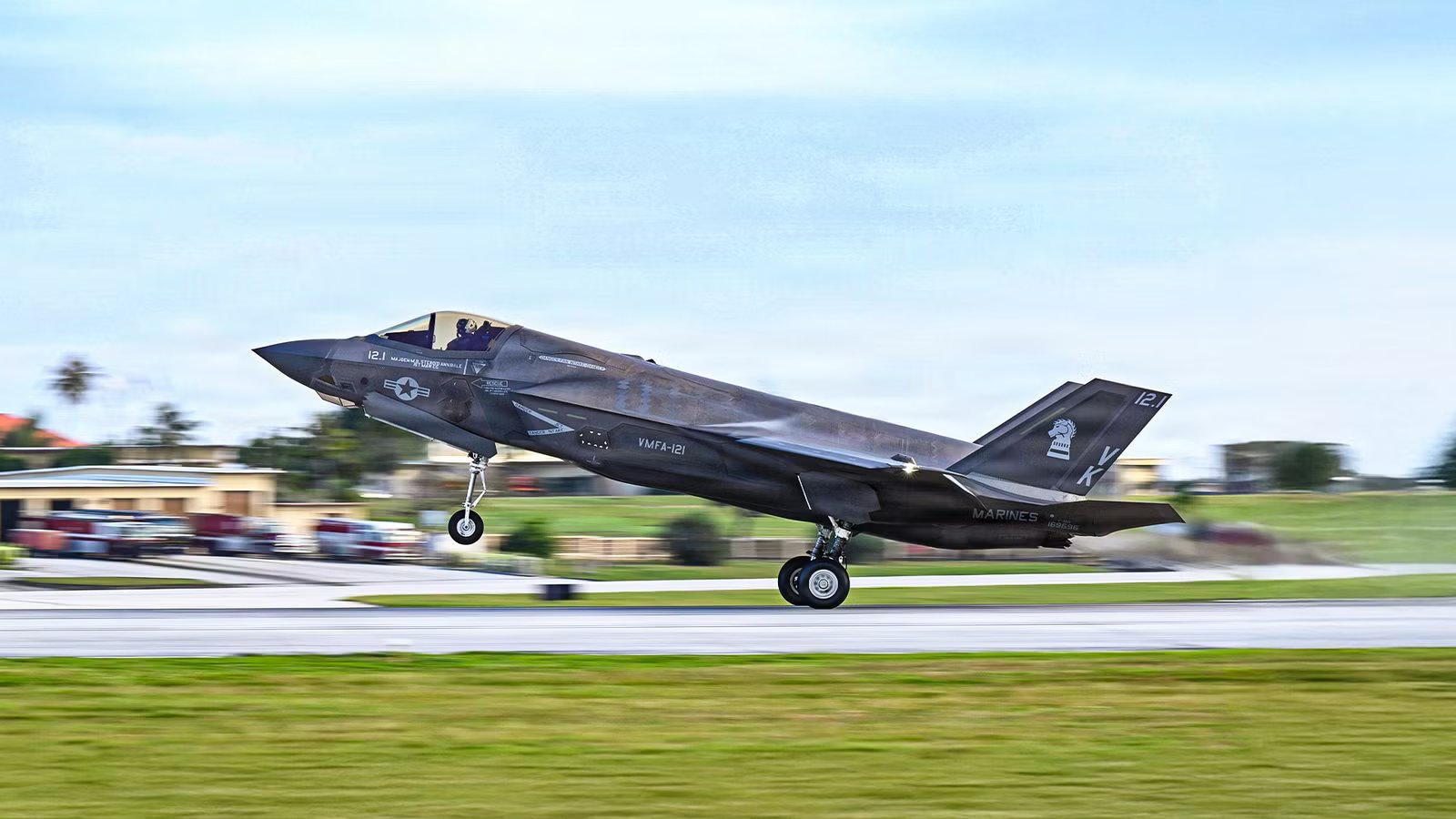
As the US Military is drawing down its force level in Europe, it is ramping up the concentration of air assets across the Pacific Theater. In order to provide effective deterrence and air policing across thousands of miles of open ocean and remote islands, air-to-air tankers are some of the most important platforms for the entire coalition. The US Air Force has a vast fleet of  Boeing KC-135 Stratotankers and KC-46 Pegasus Jets, but many of the airfields need upgrades to effectively maximize them under the Agile Combat Employment strategy.
In order to bolster the forces of the US and its regional partners, the Department of Defense is injecting billions of dollars in improvements to airfields across the Western Pacific over the next several years. From Japan to the Mariana Islands, acres of concrete are being poured as modern facilities are erected. The goal is to make all of these bases more resilient and mission-ready in the event of a modern, near-peer conflict with an adversary of advanced capabilities, such as the People’s Republic of China.
Cesar Basa Air Base, Pampanga, Philippines
Investments for new aircraft parking aprons and facilities

The Pentagon has allocated $66 million for improvements at this joint base that serves as one of the most crucial airfields in the Southeast Asian sector of the first island chain. The Philippines is an important Regional Ally which operates alongside US forces in land, sea, and air operations.
Among the chief improvements was a complete rehabilitation of the 8,000-foot runway (2,400 meters). This project alone used nearly half of the total funding for base improvements. Bringing the tarmac’s load capacity and surface up to present standards makes it a valuable site for quick turnarounds as tankers work the aerial refueling tracks over the South China Sea.
Thanks to the renovation of the runways at Basa Air Base, it can now support fully loaded KC-135 or KC-46 Jets when they come in for large force staging, hot pit refueling, or emergency landings.
Saipan International Airport, Northern Mariana Islands
Integration of expeditionary airfield support infrastructure

The Pentagon funded the expansion of equipment and infrastructure serving expeditionary air operations at this dual-use civilian airport in order to make a more suitable location for ACE operations. Saipan Airport’s (SPN) taxiways and 8,700-foot (2,500 meters) runway have been upgraded to handle the high max weight of American aerial tanker Jets.
In a contested scenario, large-body assets like the KC-46A Pegasus can disperse from Guam to Saipan’s reinforced civilian ramp space. The Commonwealth Ports Authority also secured a $9.7 million Federal Aviation Administration Airport Improvement Program. An additional $7.05 million FAA grant was allocated to replace over 26,000 linear feet of aging perimeter fencing.
Rather than funding a permanent garrison or heavy base infrastructure, Department of Defense investments in Saipan lean heavily on cooperative operational agreements and mobile ACE equipment. The new works will also facilitate greater use of airlift platforms like the Lockheed C-130 Hercules, which is a staple of the logistical support side of ACE doctrine.
The US Air Force is also pursuing upgrades of Rota International Airport (ROP) on a nearby island in the northern Marianas, as reported by Radio New Zealand. Residents of the island have had mixed reactions, as the Marianas press reported. There are environmental impact studies ongoing with a special focus on the noise pollution that will be brought by a higher military air traffic volume.
Yap International Airport, Micronesia
Marked for a $400 million runway extension

Lying halfway between Guam and Palau, Yap is one of the four states that make up the Federated States of Micronesia. The island is approximately 1,000 miles (1,609 km) southeast of the Chinese mainland, and now the USA airport is working towards transforming its civilian airport into a dual-use field with tarmac and facilities that can accommodate the ‘heavies.’
Project scope at Yap Airport (YAP) is one of the larger investments currently ongoing, with $400 million allocated to fund a 447-acre project that will build new infrastructure including: a new parking apron, parallel taxiway, fuel storage, and support buildings. This airport upgrade is part of a larger $2 billion Pentagon plan intended to build defense infrastructure across the archipelago.
Peleliu Airfield, Palau
Runway expansion for more ‘heavy’ platform support

Also known as Sledge Airfield, the USAF is undertaking a massive rehabilitation of another WWII-era strip at the modern-day Peleliu Airport (PTU). Joint engineering components, including the Marine Corps Engineer Detachment Palau, have been working alongside Navy Seabees to clear decades of thick jungle overgrowth. They have removed trees and flattened the old coral footprint to allow for its first round of new validation flights by C-130s.
This Airfield will not be suitable for the KC-135 or KC-46 even with the latest works. Instead, its value is as a forward arming and refueling point to support the KC-130J Super Hercules tanker. Although it has a smaller fuel capacity and more limited range than the larger Air Force tankers, it is a very valuable platform and still refuels fighters like the Lockheed Martin F-35 Lightning II and rotary-wing platforms like the Bell V-22 Osprey.
The project is funded through a comprehensive infrastructure expansion in Palau valued at over $7 billion for economic and defensive improvements. Complementary defense investments in Palau include an $118 million over-the-horizon tactical mobile radar installation. These will reduce the need for continuous dedicated airborne or naval surveillance patrols near the island chain. That radar is also valuable if F-35B stealth jump jets are posted here, as they could be under the new joint ACE doctrine and USMC Raider strategy.
Kadena Air Base, Okinawa, Japan
Express ground service to support larger expeditionary rotations

Kadena (DNA) is one of the most important bastions of American air power in the first island chain, and it supports joint operations from the US Navy, Marines, Japanese Self-Defense Forces, and other regional allies like Australia. To improve on the current tanker mission, the USAF is investing in infrastructure improvements that will maximize the sortie generation rates of the 909th Aerial Refueling Squadron.
Essentially, what that encompasses is enhancements to the hot pit refueling loops for the KC-135 and KC-46 jets to land, hook up, and refuel with the engines running. Building on work that began in 2022, the Air Force aims to reduce turnaround time by 68%. That would bring the current two-hour process down to about 45 minutes from touchdown to takeoff.
Tinian Airfield, Northern Mariana Islands
High-capacity parking aprons for tanker staging

The USAF is pursuing $800 million worth of upgrades on Tinian (TNI) to make WWII-era airstrips that had fallen into disuse ready for 21st Century Air Warfare. That includes pouring over one and a half square miles of new concrete aprons and taxiways one side reinforcements to the existing runway. As at Saipan, the expansion will not only make it a more suitable airfield for heavily loaded fuel tankers but also airlift planes like the C-130 or the Boeing C-17 Globemaster III.
The completion of the Airfield will bring its footprint up to 2% of the entire Island’s surface area, which has a population of around 3,500. The Indo-Pacific Defense Forum quoted these remarks from Northern Mariana Governor Arnold Palacios in his address to public concern over renewed militarization of the civilian Airport.
“The world is changing in the Indo-Pacific and we need to acknowledge that. We need to face reality. I think everybody in this world would like to see peace, but the best deterrent is to have a good defense and to be prepared.”
The Air Force has placed an emphasis on the Northern Mariana Islands of Rota, Saipan and Tinian because these strategic positions help support operations over the South and East China Seas as well as the Taiwan Strait. The Air Force began work here in 2022, with partial completion reached in 2025, as improvements to facilities are ongoing.
Andersen Air Force Base, Guam
Missile resilience upgrades and 20 acres of new tarmac parking

Andersen Air Force Base (GUM) represents one of the most important sites in the second island chain that supports the entire Indo-Pacific theater. Guam is the main Pacific launchpad for Continuous Bomber Presence missions. Its reinforced runways easily handle tankers as well as Boeing B-52 Stratofortresses, Rockwell B-1B Lancers, and B-2 Spirits. As such, the USAF is moving forward with a plan to pour 20 acres of concrete that will dramatically expand apron parking.
Guam is the crown jewel and most critical stronghold of the Second Island Chain. Unlike positions in Japan or the Philippines, which are in immediate range of short- and medium-range ballistic missiles, Guam provides a sovereign US territory located roughly 1,500 to 2,000 miles (2,414 to 3,218 km) from mainland Asia. This program was originally intended to be part of an expanded joint facility with the Republic of Singapore Air Force, but since it dropped out, the Pentagon has expanded its military construction pipeline on Guam to $10.5 billion through 2027.
Adding a huge amount of real estate to the airfield at Andersen will make it a far superior staging and launch point for operations into the first island chain. New fuel storage and refueling infrastructure will expand the capacity of the airfield as well as expedite hot pit refueling operations for higher ops tempo.
Additionally, almost $2 billion is going to be spent on significantly expanding the air and missile defense ‘dome’ over the island. The system will create a 360° multi-layer defensive shield through 16 new missile batteries, a Standoff Weapons Complex, and a defense system Command Center.