dailynewsnblog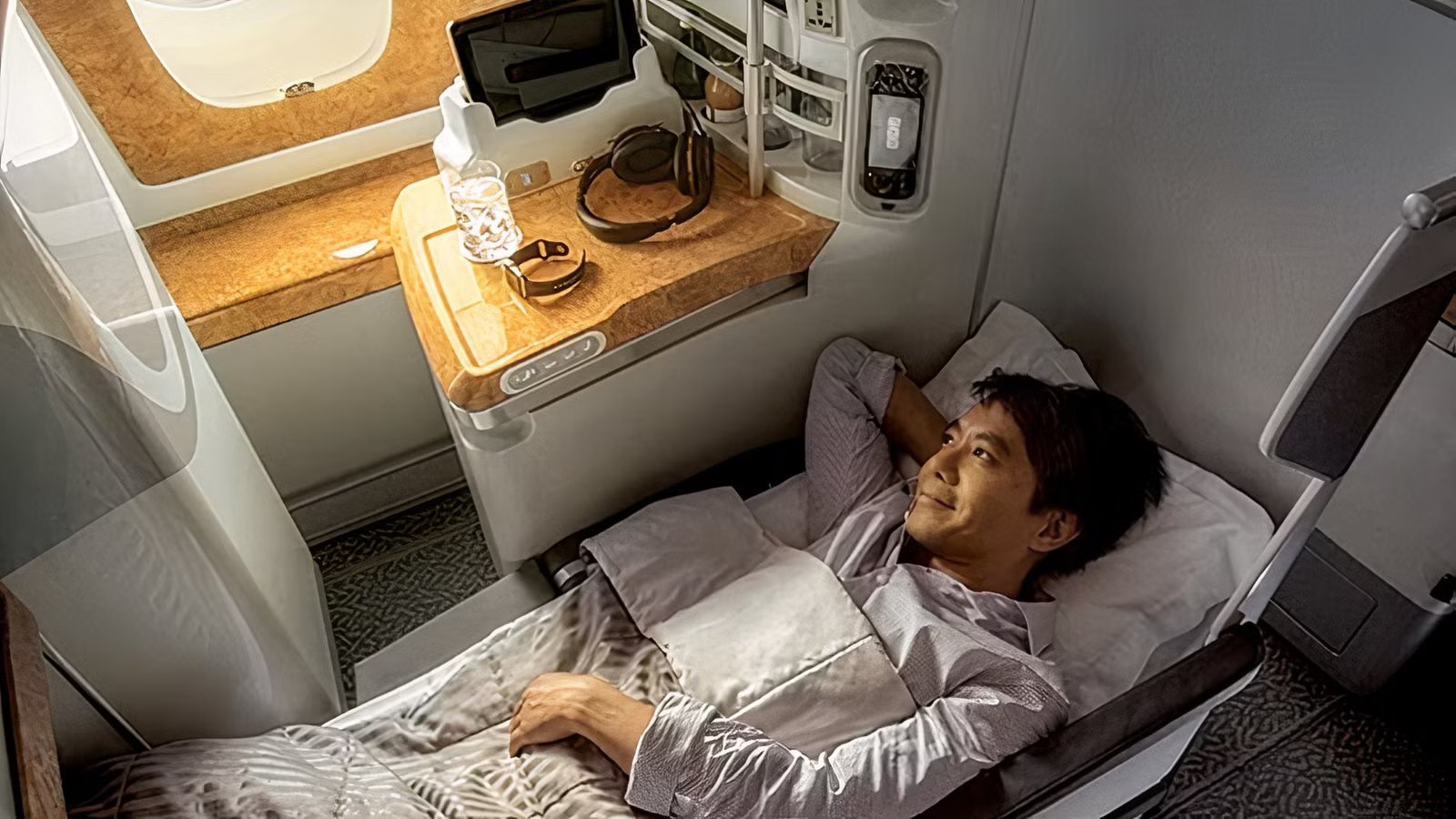
Relatively few airline experiences are as instantly recognizable or as aspirational as flying business class on an Emirates Airbus A380. From the onboard lounge to fully flat beds and high-end dining experiences, this is truly a one-of-a-kind product that has long set a benchmark for long-haul premium travel. Nonetheless, in 2026, as global travel demand remains strong and premium cabins continue to command outsized margins, one key question stands out. How much does this experience actually cost?
The answer is much more complex than a single headline fare. Ticket prices on the Airbus A380 vary dramatically depending on the route, timing, booking window, and demand cycle. A one-way business class seat from hubs like Dubai to London or New York can range from roughly $2,500 on discounted fares to well over $6,000 during peak periods. Round-trip tickets on flagship routes frequently climb into the $5,000-$10,000 range, especially when booked close to departure or during high-demand travel seasons.
At the same time, pricing is increasingly dynamic. Factors like loyalty program redemptions, upgrade availability, and fare sales can significantly shift the effective cost paid by passengers. In this article, we will break down what travelers can expect to pay for Emirates’ A380 business class in 2026, and why the price can fluctuate so widely across market types and booking strategies.
Where Does Business Class Fit Into The Emirates Premium Hierarchy?

The Emirates premium hierarchy is primarily built around a clear step-up structure across its dynamic cabin lineup. Currently, the airline offers four classes of service: economy, premium economy, business class, and first class. On the Airbus A380, that hierarchy is especially visible because the aircraft gives Emirates enough space to separate each product into a distinct overall travel experience rather than just offering wider seats or better meals.
Business class is a product that sits towards the top of this structure, above premium economy but below first class. It is the airline’s main long-haul premium cabin for corporate travelers, high-spending leisure passengers, Skywards members using miles, and travelers seeking comfort without paying the very highest first-class fares. On most Emirates A380s, business class is located on the upper deck, providing a more private and exclusive experience than the lower-deck economy cabin.
The product that has been made available to customers in this cabin is built around lie-flat seats. Direct aisle access, while the industry standard in many ways, is missing from some of the airline’s business-class layouts, but is present on all A380s. This cabin also offers elevated dining, premium drinks, chauffeur-driven service in select markets, and access to Emirates’ airport lounges. It also includes one of the A380’s signature features. The onboard bar is also a signature feature.
It is important to remember that first class remains  Emirates‘ most luxurious product, with private suites, shower spa access, and even more personalized service. That means that business class is not the absolute peak of the Emirates experience, but it is arguably the airline’s most important premium cabin. It is an aspirational, expensive, and broadly available product that passengers with the means to enjoy will certainly want to try.
What Different Aircraft Is This Product Offered On?

Emirates’ business-class product has been closely tied to its two flagship long-haul aircraft families. These include the Airbus A380 and the Boeing 777, with meaningful differences in both product and experience across the two. The cabin is located on the upper deck in a 1-2-1 layout, giving every passenger direct aisle access.
Seats convert into fully flat beds measuring roughly 78 inches (198 cm) long, with generous personal space, storage, and direct access to Emirates’ signature onboard lounge and bar at the rear of the upper deck. This makes the A380 business-class cabin feel more spacious, social, and distinctive than most long-haul products. The  Boeing 777 business-class experience is significantly less consistent in nature.
Many Emirates 777s still feature a 2-3-2 layout, meaning that some passengers do not have direct aisle access, and the cabin feels significantly denser than the A380. However, Emirates has also introduced refreshed 777 cabins on select aircraft, including newer 1-2-1 business-class layouts with improved privacy, updated finishes, and fully flat beds.
Across both of these aircraft families, passengers can expect lie-flat seating, large entertainment screens, elevated dining, premium beverages, and Emirates’ polished long-haul service. Nonetheless, the A380 remains the more aspirational version, especially because of its upper-deck setting and onboard lounge.
What It Costs To Fly First Class On The World’s 7 Longest Nonstop Airbus A380 Routes
Three airlines operate the world’s seven longest A380 routes, with first-class tickets typically costing between $8,000 and $10,000.
How Does Emirates Choose How It Prices Out Business Class Tickets?

Emirates prices its business-class cabins through a dynamic revenue-management model rather than a fixed route-by-route formula. In simple terms, the airline adjusts fares based on how much demand it expects, how many premium seats remain, and how close the flight is to departure. Individual route considerations are one of the first things that impact ticket prices.
High-demand business corridors like Dubai to London, New York, Paris, Sydney, and other major financial or luxury travel markets often command higher fares. This is because passengers are more willing to pay for comfort, schedule convenience, and nonstop connectivity. Seasonality also plays a major role here. Fares can rise sharply around holidays, school breaks, major events, and peak tourism periods.
Booking timing is another key factor. Cheaper business-class fare buckets are usually limited, so travelers booking early may see lower prices. As those seats sell, Emirates typically opens only more expensive fare classes. Last-minute tickets can be especially costly because they often target corporate travelers with significantly less flexibility.
Competition is also undoubtedly something that matters. On routes where Emirates faces strong rivals, like  Qatar Airways, Etihad Airways, Turkish Airlines, Singapore Airlines, or British Airways, it may have to price a bit more conservatively. Where Emirates has a stronger nonstop or one-stop advantage, the calculation can change further. Finally, Emirates balances cash fares with upgrades, corporate contracts, and partner demand, making business-class pricing highly fluid in nature.
What Are The Broad Price Ranges You Can Expect To Pay For This Cabin?

The price range for Emirates business class, especially on the Airbus A380, sits in a wide but fairly predictable band once you break it down by route type, timing, and booking strategy. At the lower end, discounted or promotional fares on long-haul routes can start at around $2,500-$3,500 one way, especially if booked well in advance or during fare sales. These are typically limited ‘saver’ fares, and they tend to disappear quickly as demand builds.
More commonly, intercontinental routes such as New York to Dubai price much closer to $4,000 to $6,000 one-way in standard fare classes. For round-trip tickets, a realistic current baseline is roughly $3,000-$6,000 on less competitive or sale-driven itineraries, though this can climb meaningfully depending on season and demand.
On flagship routes like Dubai to London, Sydney, or New York, round-trip fares frequently land in the $5,000-$10,000 range, especially when booked significantly closer to departure or during peak periods of travel. At the high end of the price spectrum, fully flexible or last-minute tickets can cost as high as $7,000-$8,000 one-way, especially for business-heavy routes where passengers are less price-sensitive.
Ultra-long-haul itineraries or multi-segment journeys can push totals even higher. The key takeaway is that Emirates business class pricing is not fixed. Rather, it exists on a spectrum. Most travelers will realistically pay somewhere in the mid-range, but with the right timing or strategy, the same seat can cost thousands more or less, depending on how it is booked.
The Cost Of Flying Premium Economy In 2026 Compared To Economy
The hidden truth about premium economy.
Can Passengers Book Emirates Business Class Through Partners?

When answering this question, it is important to begin by understanding that Emirates is not part of a major global alliance like Star Alliance or oneworld. Instead, it relies on a network of bilateral partnerships with individual airlines. This means that partner booking options exist, but that they are much more limited and less standardized than alliance-based carriers. The most straightforward way to book Emirates business class is still through its own Skywards program.
However, several partner frequent flyer programs, including Japan Airlines Mileage Bank or Air Canada Aeroplan, can also access Emirates award seats. These programs allow travelers to redeem miles for Emirates-operated flights, sometimes at favorable rates depending on distance and overall routing.
With that being said, availability is the key constraint. Emirates tightly controls how many premium seats it releases to partners, and business-class award space can be limited or inconsistent. In practice, this means you may not always find seats through partners even when they are available directly through Skywards.
The Bottom Line

At the end of the day, high-end business class products like Emirates’ will come along with a hefty price tag. That is, essentially, their entire purpose for existing. Emirates is no stranger to the world of premium travel, and fare analysts at the carrier work as diligently as possible to fetch the highest possible prices for their tickets.
There is also an incredible amount of heterogeneity in Emirates’ premium experience. On recently-renovated A380s, passengers will have incredibly lavish direct-aisle access seats with superior privacy. The same, however, cannot be said of those who book on the airline’s Boeing 777s, which offer a far less competitive product.
Nonetheless, Emirates’ business-class fares are not something exclusively decided by the carrier. The airline has to manage a handful of different competitive considerations when offering business-class service. If a rival like Etihad or Qatar Airways cuts its business class fares on certain routes, then Emirates will likely be forced to do the same.