dailynewsnblog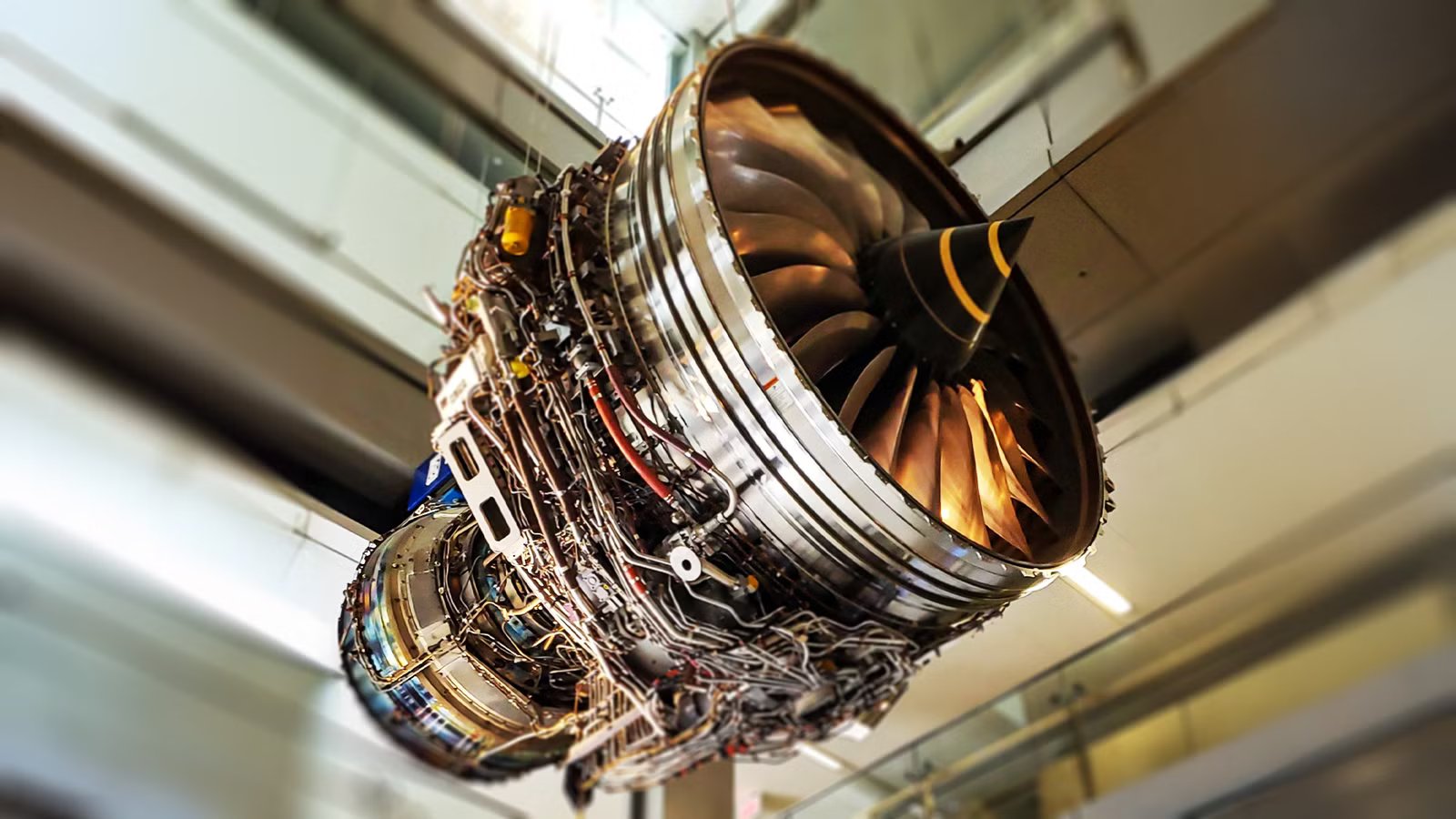
An engine family that defined widebody aviation’s most visible durability crisis over the past decade is quietly becoming a textbook model for operational recovery. Unscheduled maintenance visits, grounded aircraft, and costly disruptive removals once plagued long-haul airline fleets powered by Rolls-Royce powerplants. Today, those same engines are achieving double their previous operational lifespans between overhaul cycles. What was once a multi-billion-dollar operational liability has become a consistently reliable platform for global carriers.
How did Rolls-Royce turn around an engine program facing severe durability limits into one that actively saves airlines roughly $450,000 per aircraft annually in fuel costs alone? Under the leadership of Civil Aerospace President Rob Watson, the engine manufacturer executed a comprehensive £1 billion ($1.3 billion) durability initiative aimed directly at high-stress turbine components. What remains to be understood is how specific mechanical redesigns and thermodynamic upgrades across the Trent 1000 and Trent XWB lines delivered such dramatic operational shifts.
Investment Proving Worthwhile

Rolls-Royce answered its durability challenge by committing £1 billion ($1.3 billion) directly toward overhauling the thermal resilience and mechanical design of its modern Trent engine family. In July 2026, Civil Aerospace President Rob Watson confirmed that this sustained engineering investment successfully achieved a 100% improvement in time-on-wing across the fleet. The manufacturer managed to double the operational hours an engine remains installed on an aircraft wing between scheduled overhaul maintenance visits, stabilizing a long-haul network that had been battered by early component wear. In actuality, doubling on-wing endurance across an entire product line requires far more than routine maintenance tweaks.
For widebody airline operators, time-on-wing is the ultimate metric governing fleet profitability and schedule integrity. The effects of an unscheduled engine removal on a long-haul aircraft like the Boeing 787 Dreamliner or Airbus A350 are not limited to millions in off-wing repair costs. What comes next is immediate flight cancellations, lease engine substitutions, and severe network disruption. When high-pressure turbine components degrade prematurely, aircraft are pulled from lucrative transcontinental and intercontinental routes long before their planned maintenance windows. With this time-on-wing improvement, Rolls-Royce removed a major source of operational friction for international carriers, protecting revenue cycles and laying the groundwork for substantial aerodynamic and fuel burn gains.
The good news for airlines is that achieving a fleet-wide doubling of time-on-wing alters the baseline economics of widebody operations. For the manufacturer, getting to a place where it is now is quite a marvel considering the complexities of an airliner jet engine. How did Rolls-Royce physically re-engineer high-pressure turbine components inside its most problematic engine variant to withstand extreme thermal environments without sacrificing thrust output or fuel efficiency?
What Is Inside The Enhancement Package?

Rolls-Royce targeted the root cause of premature Trent 1000 degradation by re-engineering the thermodynamic environment inside the high-pressure turbine. The resulting Trent 1000 XE Durability Enhancement Package addresses the extreme thermal fatigue that previously led Boeing 787 operators to remove engines long before scheduled maintenance visits. Rather than relying on temporary operational limits or minor coating changes, engineers redesigned internal cooling paths to lower component stress while maintaining engine thrust.
The Phase 1 upgrade brought a major alteration to internal air circulation, delivering a 40% increase in cooling airflow across the high-pressure turbine blades, as per Aviation Week. The idea is to channel additional compressed air through intricate internal passages, lowering metal blade operating temperatures by 81°F (45°C). As a result, the rapid oxidation and micro-cracking that previously eroded blade tips is no longer a problem, doubling the time an engine can remain on-wing before requiring an overhaul.
Solving the immediate thermal problem through Phase 1 establishes the foundation for a secondary upgrade cycle. Phase 2 introduces lighter high-pressure turbine blades, advanced combustor tile coatings, and redesigned nozzle guide vanes aimed at unlocking an additional 30% gain in time-on-wing. However, translating these aerodynamic and material redesigns into global fleet reliability needs a massive industrial effort to make these changes effective. The operational focus, therefore, shifts from turbine thermodynamics to overhaul logistics.
How To Stay On Course

Rolls-Royce is meeting aggressive retrofit timelines by scaling manufacturing capacity at its Derby facility and coordinating maintenance visit schedules with global long-haul carriers. According to fleet progress updates via Rolls-Royce, around 50% of the active Trent 1000 TEN engine fleet has already been upgraded to the XE standard. German flag carrier  Lufthansa became the launch operator for the upgraded configuration in November 2025, taking delivery of the first Boeing 787-9 equipped with the Phase 1 package. Through embedding upgraded engine modules directly into standard overhaul cycles, the manufacturer is maintaining steady retrofit velocity without allowing extraordinary aircraft groundings to slip through.
Reporting from Aviation Week indicates that expanded assembly line capacity in Derby will support a continuous flow of engine retrofits through 2027. With this, long-haul carriers should receive durability enhancements without disrupting published flight schedules or incurring short-term capacity shortages.
Of course, doubling time-on-wing and streamlining overhaul logistics resolves a major maintenance bottleneck for 787 operators, but hardware longevity represents only half of the modern engine equation. Widebody airline executives evaluating fleet economics always balance overhaul frequencies against rising daily jet fuel expenses. This raises a crucial economic question: How does Rolls-Royce translate these core thermodynamic and aerodynamic refinements into direct fuel burn reductions on widebody aircraft?
Saving Airlines Plenty In The Long Run

The thermodynamic and aerodynamic refinements driving Rolls-Royce’s durability program directly alter the fuel burn characteristics of modern widebody airframes. Entering commercial service in May 2025 on the Airbus A350-900, the Trent XWB-84 EP (Enhanced Performance) variant is the key demonstration model for these efficiency gains. While earlier engine revisions focused primarily on protective thermal barrier coatings inside the hot section, the EP package integrates revised fan duct aerodynamics and optimized core air sealing to minimize parasitic drag and core energy loss.
In-service operational metrics demonstrate that these aerodynamic refinements are yielding fuel burn improvements well above initial design targets. As published by Rolls-Royce, the Trent XWB-84 EP was originally certified for a 1% fuel burn reduction but is delivering a 1.8% in-service reduction in daily airline operations. For long-haul carriers running high-utilization intercontinental routes, a 1.8% efficiency gain translates to roughly $450,000 in annual fuel savings per aircraft, a number that will get airlines truly excited. Furthermore, modified air bypass geometry reduces acoustic signature levels by two decibels, giving operators added flexibility at noise-restricted international gateways.
The combination of reduced fuel burn and lower noise emissions alters how airline finance teams project long-term widebody operating margins. When direct annual fuel savings of $450,000 per airframe are coupled with doubled time-on-wing intervals, the total cost of ownership framework shifts decisively in favor of the operator. However, turning these individual engine performance gains into a fleet-wide operational advantage depends on how widebody airlines actually adjust their broader fleet allocation and network strategies going forward.
Customers Are Already Coming Through

For airline fleet planners, doubling time-on-wing while guaranteeing fuel burn reductions makes a massive difference to widebody asset management, giving airlines the chance to stop making reactive risk mitigation decisions and have predictable long-haul expansion. Historically, long-haul carriers operating Trent-powered airframes had to maintain capital-intensive contingency lift and carry inflated spare engine ratios to buffer against unscheduled maintenance removals. Restoring engine endurance allows network planners to maximize daily aircraft utilization rates and lock in lower direct operating costs across intercontinental routes, as well as get new customers involved with using Rolls-Royce-manufactured powerplants, as per The Guardian.
The changes are particularly evident when contrasting past schedule deferrals with current fleet commitments. During some of the most profound durability disruptions, major operators like Virgin Atlantic paused select Boeing 787 flight schedules while managing rotational engine inspections and spare parts shortages, reported on by The Independent. Today, stabilized powerplant economics give airlines the operational confidence needed to commit to multi-year widebody growth. A prime example occurred at the Farnborough International Airshow 2026, where Philippine Airlines finalized an order for 18 Trent XWB-97 engines to power nine additional Airbus A350-1000s under long-term TotalCare maintenance coverage, as detailed by Aviation Business News.
Hardware enhancements and $450,000 in annual fuel savings per aircraft re-establish Rolls-Royce as a competitive force in widebody propulsion, but one critical variable remains to be fully proven. As newly retrofitted engines accumulate thousands of flight hours in high-temperature, sand, and dust environments across the Middle East and South Asia, will these high-pressure turbine cooling modifications maintain their durability margins over multi-year operational cycles?
Keeping On Top Of Targets

Rolls-Royce’s three-year civil aerospace turnaround shows exactly how long-standing engine durability problems can be resolved through targeted capital investment and thermal engineering. Committing £1 billion ($1.3 billion) to double time-on-wing across the Trent engine family, the manufacturer has shifted the widebody narrative from crisis response to operational efficiency.
The ultimate measure of this program’s success is going to be judged by Rolls-Royce meeting its end-of-2027 fleet retrofit deadline while maintaining production throughput at its Derby manufacturing hub. Keeping pace with scheduled airline maintenance while supporting new airframe deliveries will determine whether the engine maker can fully regain widebody market share on international programs like the 787.
As Civil Aerospace President Rob Watson emphasized, time-on-wing has permanently replaced raw thrust as widebody aviation’s defining operational metric. For airlines working with tight margins and expanding global networks, an engine fix that saves $450,000 per aircraft every year proves that durability on paper is valuable, but durability on the wing is what truly drives profitability.