dailynewsnblog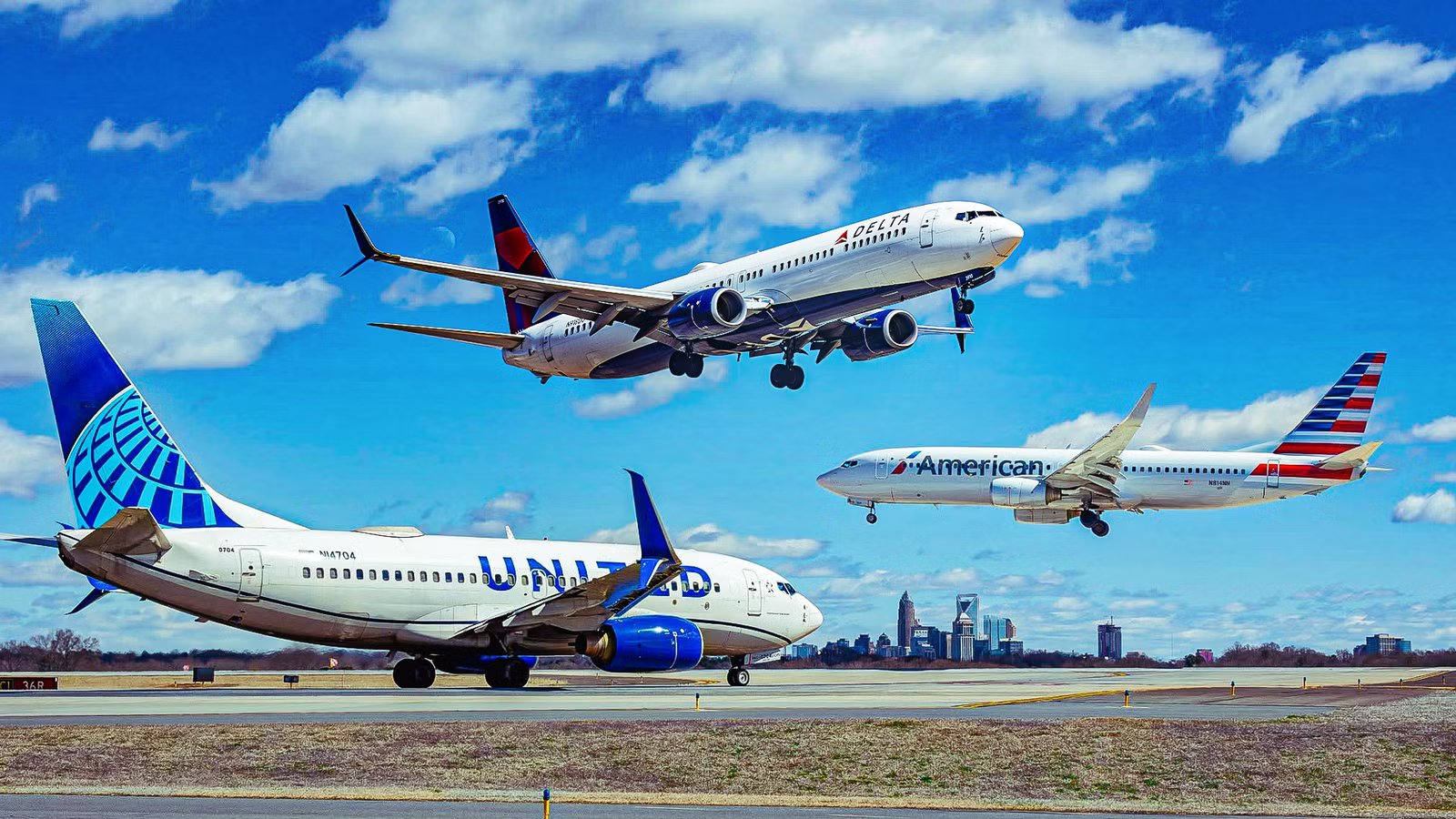
 American Airlines was founded in 1930 through a merger of 80 airlines. It wouldn’t be until 2013 that American as we know it today was born through a merger with US Airways. With over 223 million passengers carried in 2025, the
  oneworld carrier remains one of the world’s largest airlines alongside its largest competitors,
  Delta Air Lines and
  United Airlines. Despite this, American is lagging behind on one key metric: profitability. A gap the Dallas-based airline is desperately looking to close over the coming years.
American reported a record $54.6 billion in revenue last year, and its full-year net income was only $111 million, translating to a 0.2% net margin. For comparison, Delta achieved a 7.9% net margin resulting in a $5 billion profit, while United earned $3.4 billion on a 5.68% margin. While the airline was already the least profitable of the US big three before the pandemic began in 2019, its results were much healthier than they are today. This post-pandemic decline is largely due to several poor strategic decisions, which the airline is now looking to reverse.
Why Is American Airlines Lagging Behind Its Competitors?

Part of the reason American Airlines is trailing behind Delta and United is its decreased presence in long-haul markets, which have benefited in recent years from strong growth in premium demand. During the pandemic, the airline decided to retire a large part of its older long-range fleet, including its Boeing 757s, 767s, and Airbus A330s. When demand recovered faster than American had anticipated, there was only enough long-haul capacity left to serve strategic trunk routes to oneworld partner hubs such as  London Heathrow Airport (LHR) and
  Madrid Barajas Airport (MAD).
Delta and United, on the other hand, retained much of their older widebody fleet, often with lower ownership costs, as the jets are almost fully paid off and already depreciated. This has allowed them to quickly recover capacity on core routes while expanding into a wide range of secondary destinations in Europe with high premium leisure demand after corporate travel weakened during the pandemic.
US Big Three FY25 Comparison | |||||
|---|---|---|---|---|---|
Airline | Revenue | EBIT* | EBIT Margin | Net Income | Net Margin |
American Airlines | $54.63bn | $1.47bn | 2.7% | $0.11bn | 0.2% |
Delta Air Lines | $63.36bn | $5.82bn | 9.2% | $5.01bn | 7.9% |
United Airlines | $59.07bn | $4.71bn | 8.0% | $3.35bn | 5.7% |
Another crucial mistake American Airlines made was its decision in 2023 to attempt to force lucrative corporate travelers to book directly through the airline and avoid third-party sales. To achieve this, the airline reduced the size of its sales department, removed attractive fares from indirect distribution channels, and planned to limit mileage earnings on indirect bookings. As a direct result, many of the airline’s high-profile corporate accounts switched to competitors. In 2024, CEO Robert Isom said the following regarding the matter: “We moved faster than we should have, and we didn’t execute well.”
For American Airlines to catch up, it will therefore need to rebuild its long-haul network and find new markets where it can capture sufficient premium demand. At the same time, simply adding more premium seats will not be enough. The carrier also needs to win back the high-yield corporate travelers it pushed away, improve the wider passenger experience, and make its loyalty program a stronger reason for travelers to consistently choose American over its competitors.
Will American Airlines Be Able To Capture The Premium Passenger?

There are already signs that American’s strategy is starting to work, and the airline’s latest aircraft are significantly more premium-heavy than those they replace. Its newly configured Boeing 787-9, for example, has just 244 seats compared to 285 on the older configuration. However, the number of lie-flat business class seats has increased from 30 to 51, while Premium Economy has grown from 21 to 32 seats. In other words, American is deliberately sacrificing some lower-yield capacity to create significantly more space for passengers who generate substantially more revenue per seat.
Catch what other flight trackers miss
Emergency squawks, holds, NOTAMs — live signals, no signup.
Open tracker
Catch what other flight trackers miss
Emergency squawks, holds, NOTAMs — live signals, no signup.
Open tracker
This strategy is not limited to new aircraft either. American is retrofitting its Boeing 777-300ERs and 777-200ERs with more premium seating, while even its Airbus A319 and A320 fleets are receiving larger premium cabins. Combined with new Boeing 787-9 and Airbus A321XLR deliveries, the carrier expects the number of lie-flat seats across its international fleet to increase by more than 50% by the end of the decade.
However, premiumization is about more than installing an expensive seat at the front of an aircraft and opening new lounges at airports. Delta’s success in particular has been built on convincing passengers that the entire travel experience is worth paying more for, while United has combined an increasingly competitive premium product with one of the largest international networks operated by any US carrier. American will therefore need to invest in everything from connectivity and reliability to its AAdvantage loyalty ecosystem to create a product able to attract and retain high-yield passengers.
The US carrier also appears to be repairing the damage caused by its failed distribution strategy. By the end of 2025, the carrier said it had restored its historical share of revenue booked through indirect channels. In the second quarter of 2026, managed corporate revenue increased 26% year-over-year, marking the fifth consecutive quarter of double-digit growth. Premium passenger unit revenue simultaneously increased 13.4%, while AAdvantage enrollments grew by more than 30%.
Can American Grow Its Long-Haul Capacity?

Other than improving its product and loyalty proposition, growing long-haul capacity will be crucial if American wants to close the profit gap with its competitors. In the short term, however, this does not necessarily mean simply operating more flights. More important will be growing capacity where it matters most and ensuring a larger share of each aircraft is devoted to passengers willing to pay higher fares.
The new Boeing 787-9 is perhaps the clearest example of this premium capacity growth. Despite carrying 41 fewer passengers than American’s older 285-seat configuration, it offers 21 additional business class seats and 11 additional Premium Economy seats. On routes to destinations such as London Heathrow Airport (LHR), Zurich Airport (ZRH), and  Sydney Kingsford Smith Airport (SYD), where premium demand can be particularly strong, replacing an older aircraft with the new configuration could increase revenue potential without adding another frequency. American said in 2025 that it expected 30 additional aircraft from this 787-9 fleet family to arrive through 2029, giving the carrier considerably more opportunities to deploy premium-heavy capacity on its most important long-haul routes.
More interesting for actual network growth is the Airbus A321XLR, of which American was the first US carrier to operate the type when it entered service in December 2025. With only 155 seats, including 20 Flagship Suites and 12 Premium Economy seats, the aircraft gives American something it has largely lacked since retiring its Boeing 757 fleet: an aircraft capable of serving relatively thin long-haul markets without requiring enough demand to fill a 234-seat Boeing 787-8.
What Opportunities Does The A321XLR Unlock For American Airlines?

While American did decide to reduce the size of its order for the Airbus A321XLR earlier this year to avoid excess capacity, the narrowbody jet still creates ample new opportunities for the carrier. The first international example is  New York JFK Airport to Edinburgh (EDI), while American has already announced a route between
  Philadelphia International Airport(PHL) and Porto (OPO) for summer 2027.
According to the OneWorld member, the XLR can also be used to extend the season on existing routes and add frequencies where deploying another widebody would create too much capacity. This is particularly valuable from Philadelphia, where American is rebuilding the airport’s role as its main transatlantic connecting hub.
It could become even more interesting once American has enough XLRs to open genuinely new markets. The airline has already floated possible transatlantic destinations, including Bordeaux-Mérignac Airport (BOD),  Berlin Brandenburg Airport (BER), and, Palma De Mallorca Airport, or Córdoba Airport (COR) in Argentina from
  Miami International Airport (MIA).
According to American Airlines Senior Vice President of Network Planning, Brian Znotins:
“So, the XLR also introduces an ability for us to fly new markets like JFK to Edinburgh, across Europe, and then also South America. By having an airplane that’s properly sized for the demand of smaller markets, you’ll see us adding destinations in secondary cities in France, Spain, Italy, Germany, the UK, and also to Latin America.”
Looking further ahead, American is also evaluating another major widebody order as it prepares to eventually replace its aging Boeing 777 fleet. CEO Robert Isom confirmed in 2026 that the company had issued a request for proposals to both Airbus and Boeing, with deliveries likely needed from the early 2030s. Importantly, the order could go beyond simple replacement, giving American another opportunity to expand its long-haul fleet and add more premium capacity as it attempts to narrow the gap with Delta and United.
Can American Catch Up With Its Competitors?

Whether these changes will be enough to completely close the profitability gap is another question. American’s latest results show just how large that gap still is. In the second quarter of 2026, the airline generated a record $16.7 billion in revenue, while recording just $71 million in net income. During roughly the same period, Delta earned $1.60 billion and United $805 million, despite all three carriers facing significantly higher fuel expenses.
American therefore has a credible path toward becoming significantly more profitable, but catching Delta and United will likely take several years rather than several quarters. The carrier is rebuilding corporate relationships, adding more high-margin premium seats, strengthening its loyalty proposition, and regaining the aircraft needed to expand internationally. It will also need to grow its long-haul fleet, find markets where it can capture sufficient premium demand, and win back the high-yield corporate travelers it pushed away.
The important difference compared to the years immediately following the pandemic is that American now appears to have many of the right pieces in place. The question is whether it can execute them consistently enough to turn its enormous scale into equally large profits. In the short term, financial pressure will persist, and following weaker-than-expected travel demand in September, the airline offered over 1,200 flight attendants unpaid leave.