dailynewsnblog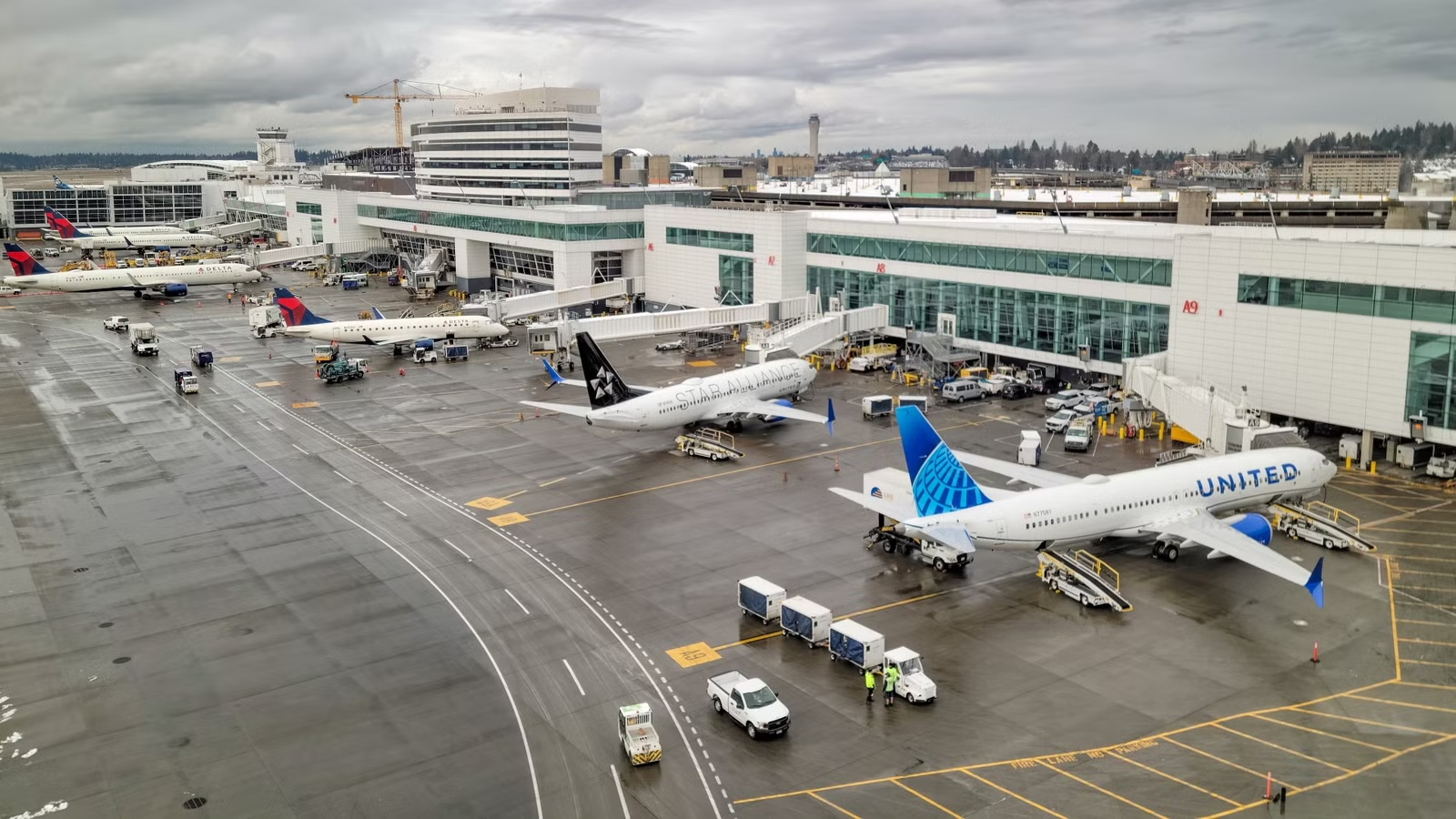
 United Airlines and
  Delta Air Lines have joined a growing list of carriers prohibiting passengers from transporting humanoid robots on their aircraft, extending restrictions to both cabin baggage and checked luggage. The policies come as airlines respond to the emergence of increasingly lifelike robots that present operational, safety, and handling challenges not addressed by traditional baggage rules.
The updated restrictions distinguish humanoid robots from conventional consumer electronics and small robotic devices. While toy robots and other electronic devices that meet existing battery requirements generally remain permitted, human-like robots are specifically prohibited regardless of their intended use. The move follows similar action by Southwest Airlines earlier this year after a highly publicized incident involving a humanoid robot traveling on a commercial flight.
United And Delta Expand Restrictions On Humanoid Robots

Wikimedia Commons | Simple Flying
United’s policy prohibits passengers from transporting humanoid robots on any flight, whether as carry-on baggage, checked luggage, or cargo. According to Live and Let’s Fly, the airline’s guidance specifically identifies humanoid robots as prohibited items, reflecting growing concern over how such devices should be classified and handled during air travel.
Delta has adopted a comparable approach. The airline’s prohibited and restricted items policy states that humanoid robots are not accepted as either carry-on or checked baggage, regardless of size or purpose. Delta continues to allow most conventional electronic devices provided they comply with existing Federal Aviation Administration (FAA) lithium battery regulations, but the restriction creates a separate category for robots designed to resemble humans. However, Delta does state the ban is “temporary,” leaving the door open for future reversal.
The policies do not affect ordinary consumer robotics such as robotic vacuum cleaners or small toys that satisfy battery and baggage requirements. Instead, they target increasingly sophisticated humanoid machines whose size, weight, mobility, and battery systems can create unique operational questions during boarding, storage, and emergency procedures.
“Delta has temporarily banned the transport of any robots designed to resemble or imitate a human or animal in appearance, size, movement or behavior, in the cabin or as checked baggage. These items are not considered assistive devices and do not fit the definition of a trained service animal (dog).”
Delta Air Lines
Safety And Operational Concerns Drive New Policies

The restrictions are intended to address practical challenges rather than respond to any known safety failure involving commercial flights. Unlike standard luggage or consumer electronics, humanoid robots can blur the line between baggage, cargo, and specialized equipment. Their articulated limbs, unconventional shapes, and large lithium-ion battery systems may complicate screening, loading, and emergency evacuation procedures. Airlines must also determine how such devices should be secured if transported and whether they comply with existing regulations governing cabin safety and dangerous goods.
The issue gained national attention after a humanoid robot traveled aboard a Southwest Airlines flight, prompting widespread discussion about how airline employees should classify the machine. According to published reports, the incident exposed uncertainty surrounding seating, battery handling, and transportation procedures, leading Southwest to prohibit both humanoid and animal-like robots from future flights. For airlines, creating a dedicated policy removes ambiguity for airport staff while establishing consistent procedures across their networks.
Airlines Are Adapting To Emerging Technologies

The growing number of airline restrictions highlights how aviation regulations continue evolving alongside advances in consumer technology. Over the past decade, carriers have introduced new rules governing smart luggage, hoverboards, lithium batteries, and other electronic devices as they become more common among travelers. Humanoid robots present a different challenge because they combine advanced electronics, high-capacity batteries, and physical characteristics unlike traditional baggage. Rather than attempting to evaluate each device individually, airlines including United, Delta, and Southwest have chosen to establish clear prohibitions that simplify enforcement and reduce operational uncertainty.
As robotics technology becomes more sophisticated and commercially available, other airlines may revisit their own baggage policies to determine whether similar restrictions are necessary. For now, passengers traveling with humanoid robots should expect them to be prohibited on United and Delta flights, while smaller robotic devices that comply with existing battery and baggage rules remain generally permissible under current policies.