dailynewsnblog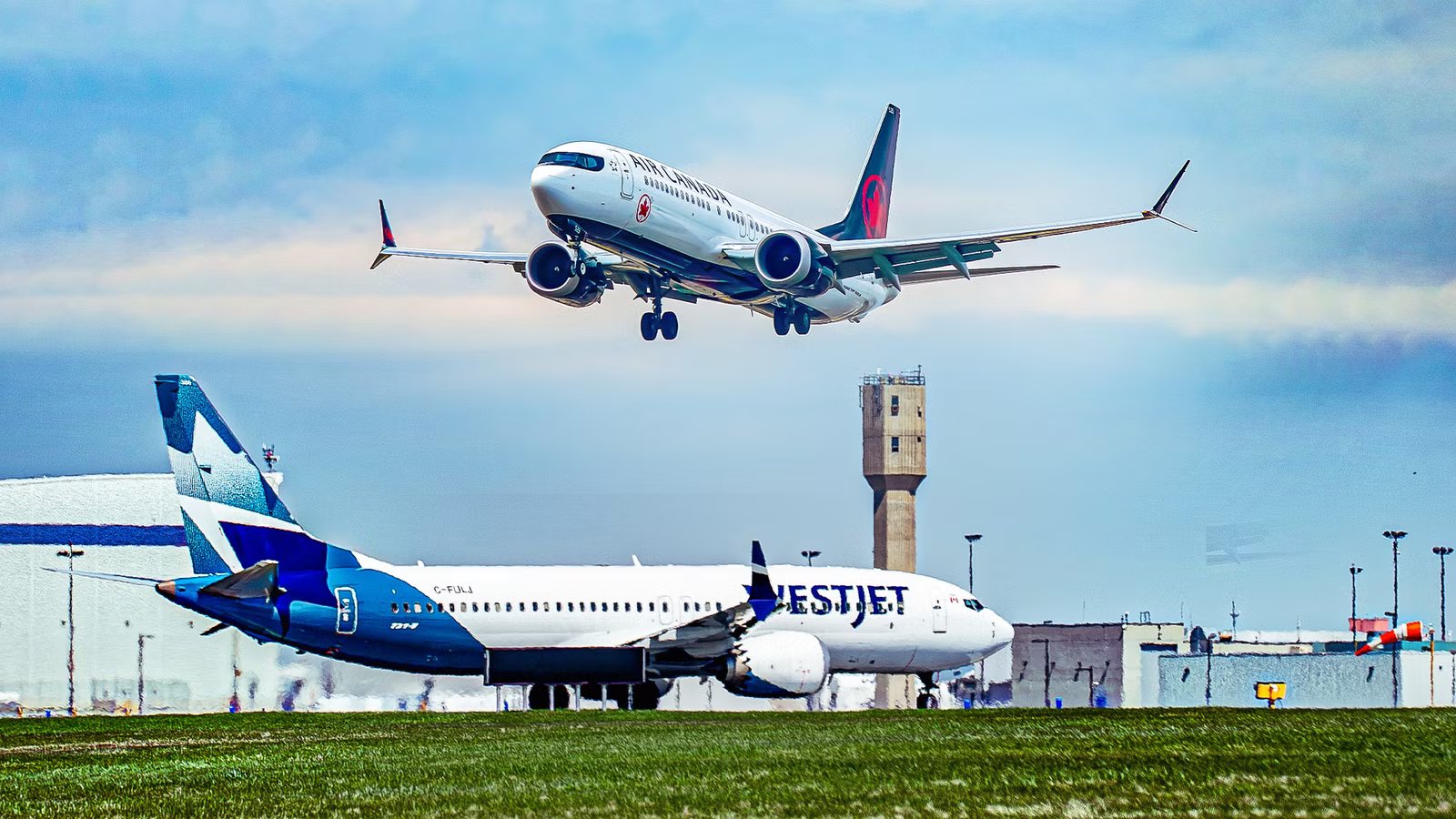
Commercial aviation operates on razor-thin margins where sudden spikes in operating expenses can completely destabilize corporate profitability overnight. The recent geopolitical friction in the Middle East has sent energy markets into a tailspin, prompting major airlines to reconsider how they shield their bottom lines from soaring operational costs. This guide breaks down why Canada’s two largest network carriers are rapidly moving away from flat-rate ancillary pricing models, transforming standard luggage processing into a dynamic defensive wall against volatile oil prices.
Jet fuel historically accounts for roughly 25% to 30% of a commercial airline’s total overhead expenses, making carriers highly sensitive to any shift in global energy logistics. When international supply chains contract and spot prices escalate, traditional fare adjustments often fail to keep pace with the real-time financial strain experienced with fuel. For  Air Canada and WestJet, adjusting the traditional ancillary revenue model was the best way to move forward.
Times Of Fuel Volatility

The sudden closure of key maritime shipping lanes earlier this spring triggered an immediate and severe supply contraction across the global energy landscape. Crude oil values spiked dramatically within a six-week window, dragging refined petroleum products upward along an identical trajectory. For commercial flight operations, the immediate result was a punishing surge in the cost of Jet A fuel, which quickly rose toward the $195 per barrel threshold, upending the quarterly financial forecasting models established by treasury departments across the entire aviation sector.
Airlines cannot easily absorb a sudden 28% jump in refined fuel costs without immediately adjusting their revenue generation pipelines. When baseline operating parameters change this drastically, legacy carriers are often in a tricky situation, choosing between inflating base ticket prices or extracting immediate capital through unbundled services. Shifting the financial burden onto optional add-ons allows network management teams to protect their core competitive schedules while also ensuring that travelers who utilize more physical operational resources cover the marginal cost increase. Therefore, it isolates the core flight ticket from the immediate brunt of the commodity shock, preserving baseline market demand during periods of extreme economic volatility.
The operational pressure is particularly acute for carriers managing extensive domestic and transborder route networks where flight frequencies are high, and segment margins are traditionally narrow. To put the energy crisis into perspective, spot prices across major North American fuel hubs rapidly climbed well above four dollars per gallon, a far cry from the stable pricing baselines enjoyed during previous fiscal quarters. Fuel burning scales directly with total aircraft weight, so heavy checked bags weighing up to 50 lbs (23 kg) or oversized items reaching 70 lbs (32 kg) now impose a direct and measurable penalty on flight efficiency.
Rolling Back Capacity

Faced with this unprecedented spike in energy overheads, Air Canada immediately realigned its operational footprint to mitigate systemic financial exposure. The carrier recognized that flying half-empty widebodies under a punitive fuel regime would realistically erode its cash reserves very quickly. So, by implementing aggressive network pullbacks alongside targeted pricing updates, the airline established a defensive perimeter designed to sustain high passenger load factors across its primary international corridors.
The centerpiece of this strategy involved a dramatic reduction in available system capacity, with the airline slashing its total seat capacity for US- bound flights by nearly 10%, according to OAG. Meanwhile, newer entrants like Flair are picking up the lost capacity in the Canadian market. This sweeping contraction was accompanied by an aggressive upward restructuring of baseline ancillary fees for travelers purchasing unbundled basic economy tickets. Domestic luggage fees crept upward to absorb rising airport handling costs; at the same time, secondary checked items on critical trans-Pacific routes were pushed as high as $112, penalizing excessive weight on fuel-intensive oceanic crossings.
By suppressing total seat supply and penalizing physical luggage volume, the airline introduces an artificial equilibrium that maximizes revenue generated per pound of aircraft takeoff weight. Capturing steep premiums at the check-in desk is an easy way to make baggage weight a self-funding line item, keeping the worst effects of global supply disruptions firmly out of sight.
How Much Do Jet Fuel Prices Vary Globally?
Fuel in the most expensive region currently costs around $12 more per barrel than in the least expensive.
A Moving Baggage Fee?

Calgary-based WestJet has adopted a distinctly different operational strategy by embedding fluid, multi-tiered pricing mechanisms directly into its lowest tier of service. The rollout of the UltraBasic fare category and subsequent maturation are the airline’s way of moving away from static ancillary pricing structures toward a model that reacts directly to ever-changing consumer behavior. WestJet recognized the inherent volatility of the market and opted to move with it.
Under this updated paradigm, checked luggage fees are no longer treated as fixed transaction metrics, but fluctuate based on when and where the transaction occurs. Travelers who pre-pay for their luggage online up to 24 hours before their scheduled departure lock in the lowest baseline rates, and those who wait until the airport counter face an immediate price penalty. The carrier introduced targeted baseline adjustments of five dollars and 10 dollars, simultaneously increasing oversized luggage penalties by up to $50 to aggressively discourage passengers from checking excessively heavy items.
The variable pricing architecture forces consumers to declare their baggage requirements early, giving network planners and fuel management teams highly accurate weight data well before flight dispatch. In an operational environment where Jet A prices can easily be $195 per barrel, knowing the exact weight configuration of the aircraft allows pilots to optimize fuel tankering strategies and minimize contingency fuel. Eliminating dead weight from the cargo hold directly reduces the absolute trip burn, allowing the airline to protect its operational margins on thin domestic sectors.
Textbook Operational Agility

Canada’s dominant air carriers are a perfect case study for a broader economic reality in modern fleet management. Unbundled ancillary structures insulate corporate margins far more effectively than broad-based fare increases. When a geopolitical crisis creates an abrupt energy shock, traditional ticketing systems are often too slow and rigid to capture the immediate cost variance. Applying a risk premium to baggage weight allows airlines to protect their core revenue engines without alienating price-sensitive passenger segments.
In actuality, artificially inflating base ticket prices across global distribution networks poses a significant commercial risk because modern search algorithms sort flights strictly by the lowest headline price. Air Canada and WestJet maintain their prominent positions on third-party booking platforms and travel comparison sites by keeping base fares low and unbundling the true cost of luggage. A key benefit is that it ensures corporate or leisure travelers flying light do not abandon the carrier, while passengers traveling with heavy baggage directly cover the increased fuel requirements of their journeys.
Using this approach, checked baggage fees actually become a highly flexible, real-time index of global commodity prices. Rather than navigating the prolonged regulatory delays associated with restructuring filed international fare tariffs, airlines can instantly tweak ancillary levers to counter sudden fuel spikes, with many major airlines adopting this strategy outside of Canada, as well. Baggage could provide incredible operational agility, and this use case can be a permanent evolution in how international carriers insulate themselves from geopolitical shocks, so that short-term profitability remains protected even when global oil supply chains are severely compromised.

Here To Stay?

After all of the current fuel spikes ease off and the market returns to a new normal, will these added fees still be hanging around? Historically, when aviation fuel shocks subside, carriers rarely drop ancillary fees back to their original baseline levels. Instead, these temporary fiscal defense mechanisms tend to solidify into permanent structural revenue streams long after the immediate crisis has passed.
The reluctance to lower baggage fees stems from the long-term capital investments required to modernize ground logistics and baggage sorting infrastructure, as outlined in a report by PWC. When fuel prices spike to nearly $195 per barrel, it forces airlines to run highly lean operations, but it also highlights the hidden structural costs of dragging physical weight across the skies. Even if fuel prices drop back to $90 per barrel, the efficiency gains realized from discouraging heavy luggage remain highly attractive to corporate planning departments.
Global Energy Shock Era | Initial Fuel Trigger | Pre-Crisis First Bag Fee | Post-Crisis First Bag Fee | Long-Term Operational Outcome |
2008 Financial and Oil Surge | Crude oil spikes near $140/barrel | Free / Included | $15 – $25 | Baseline unbundling becomes standard industry practice |
2022 Post-Pandemic Crunch | Refining capacity constraints | $25 – $30 | $30 – $35 | Fees structurally integrated into basic fare tiers |
2026 Hormuz Choke Point Crisis | Jet A surges to $195/barrel | $35 – $42 | $45 – $50+ | Baggage repositioned as a fluid, dynamic fuel hedge |
Baggage fees generate a highly stable form of cash flow that is completely separate from standard ticket tax regimes. Unlike base fares, which are often subject to heavy government infrastructure surcharges and airport improvement fees, ancillary revenues typically remain within the airline’s direct control. As a result, it is highly improbable that either carrier will voluntarily surrender these newly optimized margins when energy markets eventually calm down.

The evolutionary leap toward treating physical passenger luggage as a variable, fuel-indexed risk metric shows a profound change in how airlines approach environmental and operational sustainability. As global carbon offset mandates tighten and fleet modernization programs face severe manufacturer delivery backlogs, every saved pound translates directly into reduced carbon emissions. Managing the weight profile of the cargo hold has become just as critical as routing optimization or winglet retrofits.
Unbundled, weight-restricted travel is no longer a niche strategy reserved exclusively for ultra-low-cost operators. The new aviation landscape is one where traveling light is heavily incentivized by the core pricing architecture of legacy network carriers. Investing in high-efficiency, lightweight carry-on luggage and leveraging digital pre-payment systems are now essential steps to avoid paying steep premiums at the airport terminal.
The success of this tactical unbundling will likely inspire international network carriers across Europe and the Asia-Pacific region to adopt similar dynamic pricing structures. As geopolitical instability continues to expose vulnerable fuel supply networks, the traditional practice of offering flat-rate baggage allowances appears increasingly obsolete. The Canadian aviation sector has now established a new operational paradigm, demonstrating that in an era of extreme volatility, flexibility is the ultimate currency of survival.