dailynewsnblog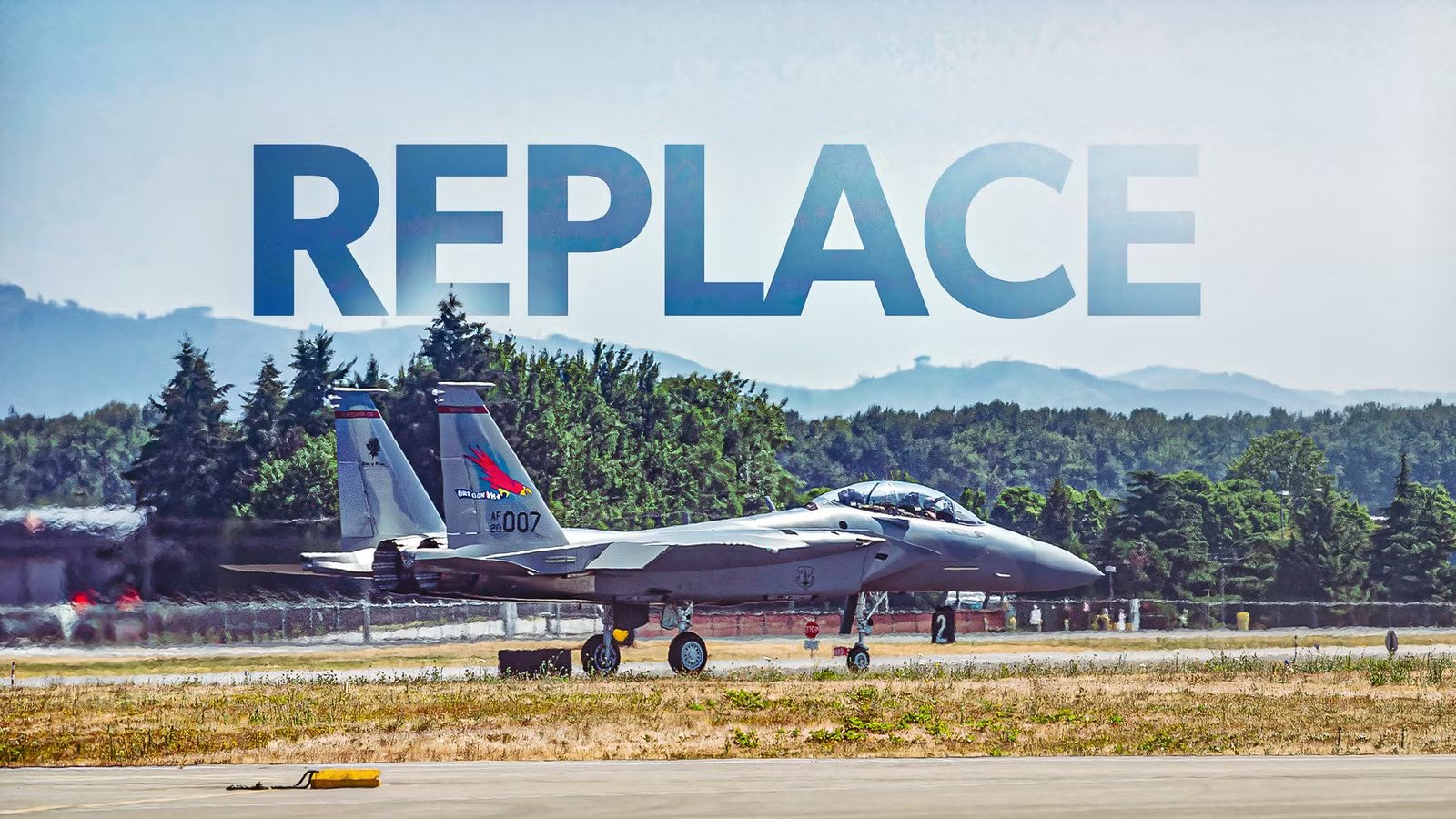
The United States Air Force’s decision to expand its planned  Boeing F-15EX Eagle II fleet from 129 to 267 aircraft in the FY2027 budget request marks one of the most significant fighter procurement shifts of the decade. Announced alongside a $3 billion request for 24 additional Eagle IIs and continued investment in the Lockheed Martin F-35A, the move reflects a broader rethink of how the Pentagon intends to balance stealth, payload, range, and long-term operating costs across future combat operations. While the F-35 remains central to penetrating high-threat environments, the F-15EX is increasingly being positioned as a high-capacity “missile truck” optimized for homeland defense, Indo-Pacific operations, and sustained large-scale air campaigns.
Taking into account recent reporting from AeroTime, Air & Space Forces Magazine, Military Times, DOT&E assessments, Boeing production data, and USAF budget briefings, this article examines the key factors behind the Eagle II’s growing role in American air power strategy: the operational need to replace aging F-15E Strike Eagles, the aircraft’s advanced electronic warfare and sensor capabilities, the evolving cost debate versus the F-35A, and the Air Force’s emerging three-tier fighter structure built around the F-15EX, F-35, and next-generation F-47. Rather than signaling a return to legacy airpower thinking, the expansion highlights how fourth-generation platforms are being adapted to support the realities of modern US military planning well into the 2040s.
The Big Strategic Pivot: From 129 Eagles To 267

In April 2026, the US Air Force’s Fiscal Year 2027 budget request confirmed what defense analysts had been speculating for months, per AeroTime. The service’s total planned F-15EX fleet would jump from 129 to 267 aircraft— an increase of 107 percent, more than doubling the prior commitment in a single budget cycle. The FY2027 request included $3 billion for 24 additional Eagle IIs alongside $7.4 billion for 38 F-35A Lightning IIs.
According to Air & Space Forces Magazine, the expansion is partly driven by the urgent need to replace the aging F-15E Strike Eagle. The Air Force currently operates around 215 Strike Eagles, many of which are approaching structural limits after decades of continuous combat deployments, with the FY2027 budget requesting the retirement of 20 of the oldest F-15Es. The F-15EX expansion is intended to provide a clear and politically palatable replacement path. As recently examined by Simple Flying, the F-15E remains a core combat aircraft in 2026, but its oldest airframes, some still powered by Pratt & Whitney F100-PW-220 engines are showing unmistakable signs of age.
An Air Force spokesperson confirmed the new direction to Military Times in terms that deserve to be read carefully. The service’s future fighter force, they said, “will be comprised of a mix of 4th, 5th, and next-gen fighters,” adding that “fighter readiness will be maintained by modernizing older, but still capable, F-16s, F-15s, and F-22s to the maximum extent possible within fiscal realities.” That is not the language of a service managing a reluctant legacy transition; it rather sounds like a formal declaration that the Eagle II is a permanent fixture in the Air Force’s future combat architecture, alongside the F-35, and eventually the sixth-generation F-47.
Inside The Eagle II: A Fourth-Gen Frame With A Fifth-Gen Brain

The most common criticism of the F-15EX is easy to articulate and hard to sustain once you actually examine the aircraft: it is an old design. The airframe’s lineage does trace back to the early 1970s, but what Boeing has wrapped around that structure represents a genuine technological transformation. The Eagle II is, in the most operationally meaningful respects, a very different machine from the aircraft it evolved from.
At its core sits the Advanced Display Core Processor II (ADCP II), capable of executing 87 billion operations per second — placing it in a different computational league from any other fourth-generation fighter in service. That processing power enables advanced sensor fusion, supports Open Mission Systems architecture for rapid software upgrades, and allows the F-15EX to function as a networked node within a broader kill chain. The AN/APG-82(V)1 Active Electronically Scanned Array (AESA) radar provides long-range detection and tracking, while the Eagle Passive/Active Warning and Survivability System (EPAWSS), developed by BAE Systems, completed Initial Operational Test & Evaluation in early 2024. EPAWSS delivers instantaneous full-spectrum electronic warfare: radar warning, geolocation, and active self-protection countermeasures, and it is standard equipment on every production F-15EX.
As we explored in our previous Simple Flying article about the speed comparison of the F-15 and F-35, the Eagle II’s Mach 2.5 (1,650 mph / 2,655 km/h) top speed is not its only tactical card, but in intercept, homeland defense, and time-critical missions, no other US fighter in service comes close.
A Pentagon assessment from the Director of Operational Test & Evaluation (DOT&E) offers the most consequential official endorsement of the Eagle II yet. According to the National Security Journal, the report found the F-15EX operationally effective in all its air superiority roles, including defensive and offensive counter-air against surrogate fifth-generation adversary aircraft, and confirmed the aircraft was able to detect, track, and engage all tested threats while surviving the scenarios it faced.
Many specific capabilities underpin that result:
- Operationally effective in all air superiority roles, including both defensive and offensive counter-air missions
- Demonstrated effectiveness against surrogate fifth-generation adversary aircraft in tested scenarios
- Successfully detected, tracked, and engaged all threats presented during evaluation
- Survived the threat environments it was tested against throughout the assessment.
That is the kind of operational validation that makes a procurement argument significantly easier to defend, particularly when critics argue that Eagle II cannot hold its own against modern threats.

6 Aircraft That Represent The Future Of Air Combat
Discover six aircraft redefining modern air warfare, from stealth fighters to missile trucks, shaping the balance of air power in 2026 and beyond.
The Cost Conundrum: When The “Affordable” Option Gets Expensive

One of the original arguments for the F-15EX was financial. When the program launched around 2020, the Eagle II was positioned partly as a cost-effective complement to an all-F-35 fleet. Lot 1 aircraft came in at $80.5 million per unit — broadly comparable to the F-35A at the time — and sufficient to make the unit-cost argument credible. That comparison has since deteriorated.
According to Breaking Defense, which confirmed the figures with an Air Force spokesperson, the F-15EX’s per-unit flyaway cost rose to approximately $90 million for Lot 2, climbed to $97 million for Lot 3, and dipped to $94 million for Lot 4. The cumulative value of those three lots reached $3.9 billion for 48 aircraft. Inflation, the retooling of Boeing’s St. Louis production line, and a nearly 15-week IAM machinists’ strike in late 2024 all contributed. As The National Interest has reported, the F-35A’s average flyaway cost for production lots 15 through 17 stood at $82.5 million — meaning the Eagle II has, at certain points in its production run, been the more expensive aircraft on a sticker-price basis.
Aircraft | Unit Cost | Cost Per Flight Hour | Max External Payload | Airframe Life |
F-15EX Eagle II (Lot 4) | ~$94M | ~$29,000/hr | 29,500 lb (13,381 kg) | 20,000 hrs |
F-35A Lightning II (Lots 15–17) | ~$82.5M | ~$30,000–35,000/hr | 18,000 lb (8,165 kg) | 8,000 hrs |
The operating cost and service life picture, however, shifts the calculus considerably. The War Zone reported in 2023 that the F-15EX costs approximately $29,000 per flight hour, compared with the F-35A’s $30,000 to $35,000 per flight hour, as estimated by the Government Accountability Office. The F-15EX is also rated for a 20,000-hour service life, versus the F-35’s 8,000-hour airframe limit — meaning roughly 2.5 Lightning IIs would need to be procured to equal the total flying hours of a single Eagle II. As previously noted in Simple Flying, the Lightning II’s true value is inseparable from its stealth and sensor fusion capabilities — and that strategic value is not captured in unit cost comparisons alone. But at a procurement scale, the lifetime cost of ownership has always mattered.
Two Fighters, One Fight: The Case For A Layered Force

The clearest way to understand why the Air Force is buying the F-35A and the F-15EX in parallel is to think about the phases of a high-intensity conflict rather than the threat environment of day one alone. Penetrating enemy air defenses, the mission the F-35 was built for, is the opening act. Sustaining the campaign afterward demands something different.
Air Force budget officials, speaking at a briefing on April 21, 2026, were explicit. According to AeroTime, the F-35 and F-15EX offer genuinely different capabilities, and the Eagle II is particularly well-suited to homeland defense, air defense operations, and the Indo-Pacific theater — where payload capacity and combat radius, rather than low observability, define the operational challenge. According to Army Recognition, the Air Force is now explicitly positioning the Eagle II as an aircraft designed to sustain firepower, maintain sortie generation rates, and absorb attrition losses over a prolonged campaign.
The third tier in this architecture is the F-47. Boeing’s sixth-generation platform, developed under the Next Generation Air Dominance (NGAD) program and awarded a contract in March 2025, is currently in early production at Boeing’s St. Louis facility. It is targeting first flight in 2028 and initial operational capability in the early 2030s, designed to replace the Lockheed Martin F-22 Raptor and lead the most contested penetrating missions.
The Air Force’s emerging combat air force increasingly resembles a deliberate three-tier stack: the F-15EX delivering missile mass and range in support and homeland defense roles; the F-35 providing stealth, sensor fusion, and networked targeting across a range of missions; and the F-47 leading the deepest penetration operations against the most capable adversary air defenses.
The 4 Largest Air Force Bases By Fighter Jet Squadron Presence
These four US Air Force bases host the largest concentrations of fighter squadrons, including F-35, F-16, and F-15E units.
Payload, Range, And The Indo-Pacific Equation

One of the most persistent questions about the F-15EX program is whether a non-stealthy aircraft has a meaningful offensive combat role against a peer adversary in 2026. The Air Force’s answer, backed by both the DOT&E assessment and the Indo-Pacific deployment record, is a qualified yes, provided the tactical problem is defined correctly.
The F-15EX has been tested carrying up to 12 AIM-120 AMRAAM missiles. Simultaneously, it holds the record for any US fighter, and has a maximum external stores capacity of 29,500 lbs (13,381 kg), the highest of any aircraft in the current US fighter inventory. As Simple Flying’s own analysis of the F-15EX versus F-35 for the US defense budget has noted, the Eagle II’s combination of extended range and heavy payload makes it specifically valuable for the Indo-Pacific theater, where distances are vast, sortie cycles are long, and the ability to bring large numbers of air-to-air missiles to a combat air patrol has direct deterrence value.
The F-15EX has already begun forward deployments to Kadena Air Base in Japan, with a permanent deployment planned for 2026, focused on air policing, deterrence, and large-force exercises alongside F-22 and F-35 units. The aircraft is also being integrated with the AIM-260 Joint Advanced Tactical Missile (JATM), designed to outrange and outmaneuver advanced adversary weapons, and the GBU-53/B Stormbreaker — a precision-guided weapon capable of tracking moving targets in all-weather conditions.
Another recent Simple Flying piece frames the kinematic gap between the F-35 and the Eagle family in terms that speak directly to what the F-15EX brings to this operational picture. Speed and payload, in missions that do not require low-observable penetration, remain genuine tactical multipliers — and no other aircraft in the US Air Force can match the Eagle II’s combination of both.
Fourth-Gen Fighters Were Supposed To Disappear, But They Didn’t

There is something worth sitting with in where American air power strategy has arrived in 2026. For much of the previous decade, the prevailing assumption in defense planning circles was that fourth-generation fighters were in managed decline. The F-22 would own the high-end fight, the F-35 would fill the mid-tier, and non-stealth platforms would be phased out at the first feasible opportunity. That vision did not survive contact with budget realities, industrial capacity limits, and the demands of operating across multiple theaters simultaneously. The F-15EX expansion is what modernization looks like when it has to function in the real world.
Boeing has historically built one F-15 per month at its St. Louis facility for roughly two decades. According to the St. Louis Business Journal, Boeing VP Mark Sears confirmed the rate is set to increase to two aircraft per month in early 2027, with deliveries beginning late 2027 or early 2028. The timeline slipped slightly from earlier projections due to the 2024 IAM machinists’ strike, but Boeing did not reduce its F-15EX workforce during the stoppage, and staffing on the program has since increased. If congressional funding supports it, further facility expansion and even higher production rates remain on the table. A bipartisan congressional bill has separately proposed pushing the total planned fleet even further — to 329 jets.
Whether Congress approves the 267-aircraft target in full remains to be seen. Procurement history for this program has already seen targets oscillate from 144 down to 80, back up through 104 and 129, and now to 267. But the underlying strategic logic appears more durable than any of those individual numbers. As outlined in Simple Flying, the Eagle’s structural margins, upgrade capacity, and large airframe have given it a longevity that no purely technological argument can fully explain — because the case for the F-15EX was never about technology alone. It was always about what the jet can carry, how far it can fly, and how many the Air Force can afford to operate at scale over time. If the current plan holds, the Eagle II will still be flying alongside the F-35 and the F-47 well into the 2040s — not despite the arrival of sixth-generation technology, but precisely because of the gaps that technology alone cannot fill.
Catch what other trackers miss
Emergency squawks, holds, NOTAMs — live signals, no signup.
Open tracker
Catch what other trackers miss
Emergency squawks, holds, NOTAMs — live signals, no signup.
Open tracker