dailynewsnblog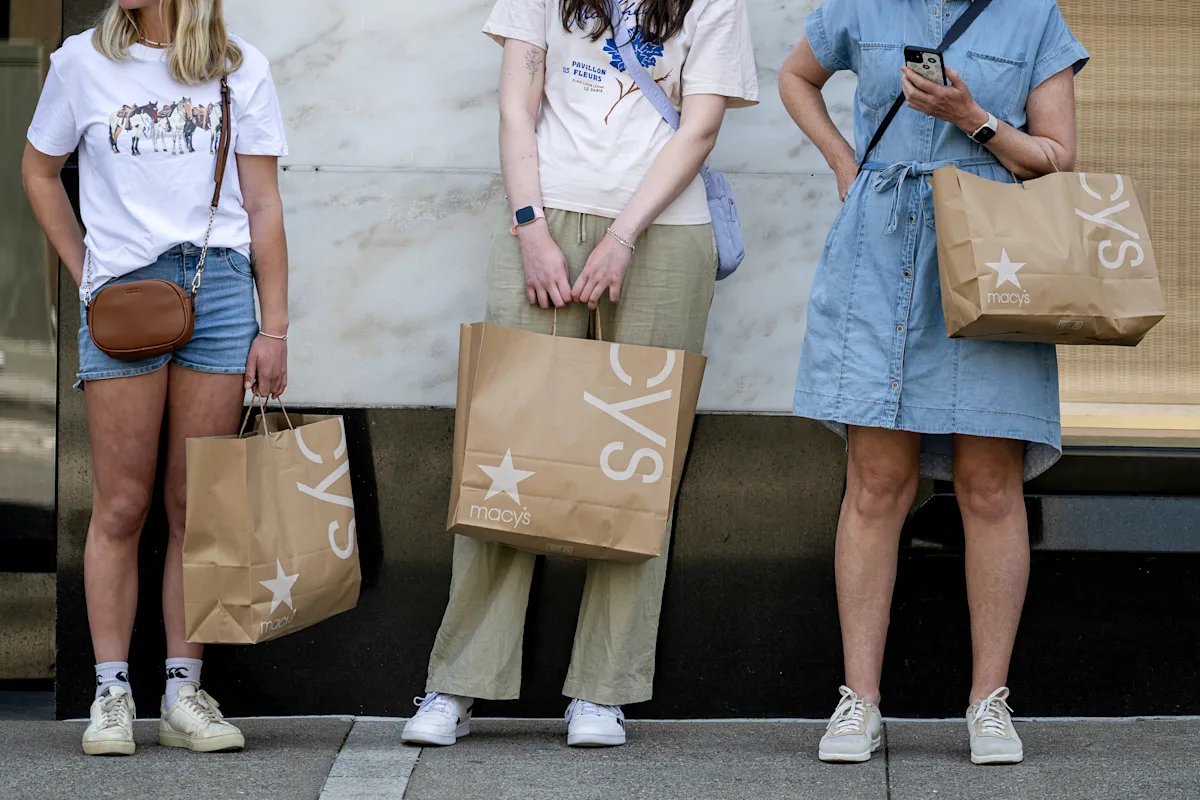
Macy’s (M) reported its best growth in four years in the first quarter and raised its 2026 outlook despite pressure on US consumers. The company benefited from its higher-income shoppers as economists point to a K-shaped economy that continues to divide US consumers.
Macy’s CEO Tony Spring told Yahoo Finance that the department store struck a balance in its portfolio between affluent Bloomingdale’s customers and middle-income Macy’s customers. The Macy’s customer tends to earn over $75,000 a year, while a majority of Bloomingdale’s customers earn over $100,000.
“Whether you like the K- or the E- [shaped economy], we still live within that economic environment where not all customers are equal,” Spring said. “Our teams are just really focused on making sure that we get our fair share of the business by executing on the categories that are most important, that are trending well, by making sure that we’re flowing a level of newness to both our physical and digital businesses.”

Macy’s overall same-store sales grew 3% in the first quarter. Bloomingdale’s was the standout with 10.2% same-store growth, while Macy’s posted its fourth consecutive quarter of same-store sales growth, up 1.6%, led by the 200 stores where Macy’s has invested in a reimagined assortment, customer service, visual displays, and even local events. Spring said the updated stores now make up a majority of its Macy’s portfolio.
The results come as consumer sentiment hit record lows in May, with Americans reporting feeling worse about the economy than during the COVID-19 pandemic, the financial crisis, and after the 9/11 attacks.
Gas prices that have remained well over $4 per gallon have weighed on sentiment as consumers worry that higher prices will spread beyond fuel costs to push overall inflation higher in the coming months.
That has exacerbated the K-shaped dynamics in the economy, where wealthier households continue to drive spending while lower- and middle-income households struggle to keep up. Retailers across the board have been updating their assortments to lean into value and premium offerings for their bifurcated clientele.
“I expected that we would see more pressure,” Spring said, “but the reality is the resilience of the consumer defies what they say in the commentary about confidence.”
For 2026, the company now expects same-store sales growth of 0.5% to 1.2%. Previously, sales growth was expected to range from a decline of 0.5% to a 0.5% increase.
Net sales are expected to come in between $21.5 billion and $21.75 billion, above the previous range of $21.4 billion to $21.65 billion, alongside an adjusted earnings per share forecast of $2.00 to $2.20, $0.10 above the previous range of $1.90 to $2.10.