dailynewsnblog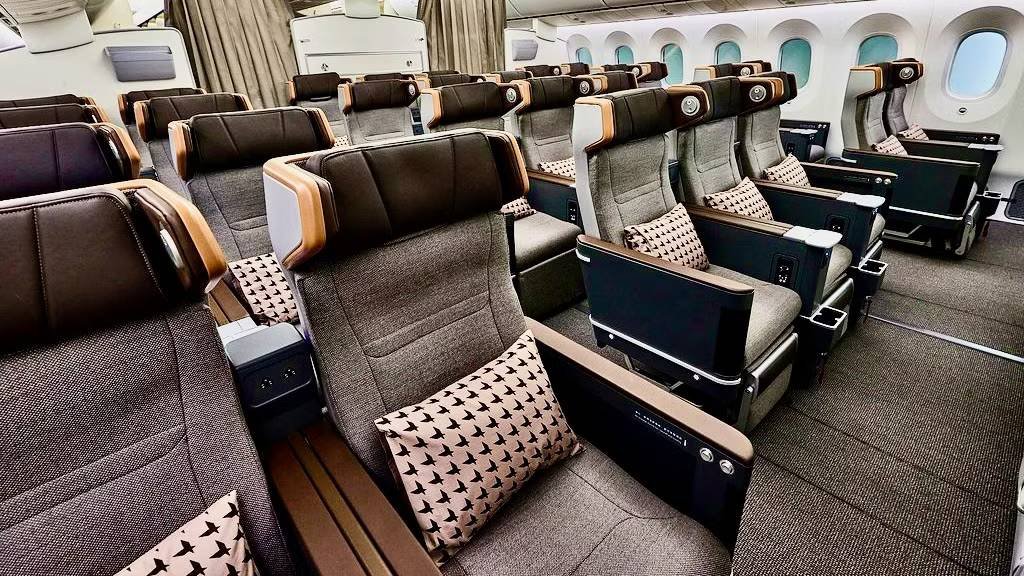
For more than three decades, Premium Economy has occupied one of the most important spaces in commercial aviation, bridging the widening gap between economy class and business class while offering passengers a more comfortable way to fly long-haul without paying the steep prices associated with lie-flat luxury cabins. While dozens of airlines now market increasingly sophisticated premium economy products, few passengers realize that the concept itself was pioneered by EVA Air, which fundamentally changed the airline industry when it introduced a brand-new cabin category in 1992.
More than thirty years later, the airline that created premium economy is still refining the concept it introduced to the world, combining larger seats, upgraded catering, stylish amenities, and increasingly business class-inspired cabin features in an effort to remain competitive in a market where premium leisure travel has become one of aviation’s fastest-growing sectors. While many carriers have only recently started investing heavily in premium economy, the  Star Alliance carrier continues evolving the product through new seat designs, enhanced privacy, and luxury-focused service upgrades that reflect changing passenger expectations.
The Airline That Created Premium Economy

When EVA Air launched its Evergreen Deluxe Class on the Boeing 747-400 in 1992, most airlines still separated cabins into only economy class and premium options like business or first class. Passengers either accepted cramped economy class seating or paid dramatically higher fares for luxury cabins, leaving little middle ground for passengers seeking additional comfort on long-haul flights. EVA Air identified a growing market of travelers willing to spend more for extra space and improved service without paying business class fares.
The original Evergreen Deluxe Class debuted on routes between Taipei Taoyuan International Airport (TPE) and  Los Angeles International Airport (LAX) with wider seats, increased legroom, upgraded meals, and personal television screens, which were still relatively uncommon in economy cabins during the early 1990s. The airline’s early premium economy cabin offered around 38 inches of pitch in a spacious 2-4-2 layout aboard the Boeing 747.
At a time when economy passengers often relied on shared overhead entertainment screens, EVA Air’s individual in-flight entertainment system represented a major improvement. The concept quickly attracted both business passengers restricted by corporate travel budgets and leisure passengers seeking a more comfortable transpacific journey. Within only a few years, other airlines began adopting similar cabin concepts, transforming premium economy from an experiment into one of the industry’s most influential innovations. What started as a niche EVA Air product eventually became a standard feature across global long-haul aviation.
42 Inches Of Pitch: Inside This Transpacific Airline’s Breathtaking Premium Economy Cabin
This Taiwan-based carrier operates a variety of routes across the Pacific.
Why Premium Economy Became So Important

EVA Air, Simple Flying
The success of EVA Air’s premium economy concept reflected broader changes occurring throughout the airline industry during the 1990s and 2000s. As airlines increased passenger density in economy cabins to improve profitability, travelers increasingly searched for ways to avoid the discomfort of ultra-long-haul flights without paying business class prices. What separated EVA Air from many competitors was its decision to treat premium economy as a genuinely distinct experience rather than simply extra-legroom seating.
While some airlines later introduced limited upgrades that only slightly improved economy class, the Taiwan-based carrier continued focusing on upgraded dining, enhanced service, and cabin exclusivity. The airline also recognized early that premium economy passengers valued emotional comfort as much as physical space, and features like premium tableware, better meal presentation, upgraded amenity kits, and quieter cabin environments helped create a product that felt significantly different from economy class.
That balance between affordability and comfort continues to define successful premium economy products today. Following the COVID-19 pandemic, airlines accelerated investments in premium economy as premium leisure travel expanded rapidly. The cabin category became especially attractive because it generates far higher revenues than economy class while occupying less aircraft space than business class, as seen above. EVA Air entered this new era with decades of experience already refining the concept.
EVA Air’s Fourth-Generation Premium Economy

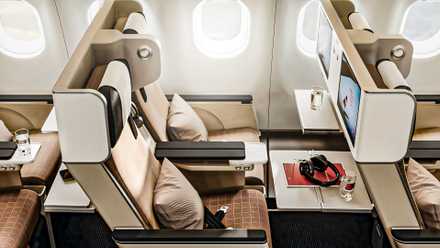
In 2025, EVA Air introduced its fourth-generation premium economy seat onboard the Boeing 787-9, representing the airline’s latest attempt to redefine the cabin category it originally created. The redesigned product reflects how premium economy has evolved from a simple comfort upgrade into an increasingly luxury-focused experience. One of the most notable changes is the cabin’s industry-leading 42-inch seat pitch, which exceeds many competitors and provides noticeably greater personal space on long-haul routes.
The seats are arranged in a 2-3-2 configuration and use a cradle-style recline system designed to improve passenger comfort without excessively reducing space for travelers seated behind. Privacy has also become a major focus of the redesign. EVA Air incorporated side privacy panels around the headrest area, integrated reading lights, additional storage compartments, and upgraded leather finishes that create a noticeably more upscale atmosphere.
Aircraft | Number In Fleet | Number On Order |
|---|---|---|
Airbus A321 | 17 | – |
Airbus A321neo | – | 18 |
Airbus A330-300 | 9 | – |
Airbus A350-1000 | – | 24 |
Boeing 777-300ER | 32 | – |
Boeing 787-9 | 8 | 9 |
Boeing 787-10 | 13 | 4 |
The overall design philosophy pushes premium economy closer toward a business class-inspired experience rather than merely enhanced economy seating. Technology upgrades play an equally important role in the cabin. Each seat includes a 15.6-inch entertainment screen, among the largest currently available in premium economy, alongside charging ports and upgraded entertainment controls that reflect modern passenger expectations for long-haul travel.
The introduction of the new premium economy product aboard the Boeing 787-9 also supports EVA Air’s broader fleet modernization plans, which include future Boeing 787 deliveries and incoming Airbus A350-1000 aircraft later this decade. The latest data from ch-aviation shows that EVA Air currently has a total of 78 passenger aircraft in its fleet, as outlined in the table above.
Luxury Service Beyond The Seat

EVA Air, Simple Flying
While seating remains central to premium economy competition, EVA Air has long understood that luxury service extends beyond physical dimensions. The airline continues investing heavily in soft-product upgrades designed to create a more refined long-haul experience. One of EVA Air’s newest partnerships involves British lifestyle brand HUNTER, which provides specially designed premium economy amenity kits for long-haul passengers departing Taipei Taoyuan International Airport.
Although amenity kits are common in business class, they remain less common in premium economy, allowing EVA Air to further distinguish its product from competitors. The airline has also upgraded bedding and dining elements, providing premium economy passengers with double-sided blankets, enhanced pillows, premium headphones, and upgraded tableware created in partnership with Italian design brand Guzzini.
EVA Air has additionally incorporated environmentally conscious products such as bamboo-fiber napkins and sustainable service items as part of its onboard experience. Catering remains another important part of the airline’s premium economy identity, and EVA Air has earned a strong reputation for meal quality in the cabin, helping reinforce the idea that premium economy should feel significantly more refined than standard economy class service rather than simply offering more legroom.
These details matter because modern premium economy passengers increasingly compare the experience not only against economy class, but also against business class cabins they may have flown previously. EVA Air’s continued attention to small details helps maintain the premium atmosphere that has defined the airline’s product for decades.
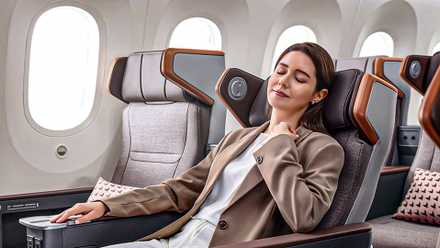
The Airlines With The World’s Most Spacious Premium Economy Cabins In 2026
These cabins are incredibly comfortable.
Awards And Increasing Competition

Emirates, Simple Flying
Maintaining leadership in premium economy has become more difficult as airlines worldwide aggressively invest in upgraded cabins. Carriers including  Singapore Airlines,
  Emirates, Virgin Atlantic, and Qantas now operate increasingly sophisticated premium economy products that rival earlier generations of business class seating. Despite this growing competition, EVA Air continues receiving strong recognition for its premium economy experience.
Indeed, the airline has earned multiple Skytrax awards related to premium economy seating, catering, and onboard service, helping preserve its reputation among international passengers. Part of EVA Air’s strength comes from consistency, as while some airlines frequently redesign premium economy products without establishing a clear identity, EVA Air has spent decades refining a cabin concept centered around comfort, understated luxury, and practical usability on long-haul flights.
The airline’s newest premium economy seats have also attracted strong reactions within aviation communities online, particularly for their generous pitch and upgraded privacy features. Many travelers now view EVA Air’s premium economy as comparable to older business class products operated by competing airlines. At the same time, competition continues to intensify rapidly as airlines recognize premium economy as one of the most profitable segments in long-haul aviation.
Why Do Airlines Still Invest In Premium Economy Instead Of Business Class?
It seems to be one of the use of space aboard aircraft for maximizing revenue.
Our Own Experience

We recently had the opportunity to see how the airline’s premium economy has held up. Following our trip from London Heathrow (LHR) to Taiwan Taoyuan International (TPE) via Bangkok Suvarnabhumi Airport (BKK) in business class last year, I was delighted to be a guest of the airline again this spring. EVA Air’s Boeing 777-300ER operates BR68 from London to Bangkok, then continues to Taiwan on the same flight number. This time, we only needed to fly on the first leg of the trip as we were visiting Thailand.

Even though the product on this flight wasn’t the recently-upgraded offering, the premium appeal in row 26 was not lost. In fact, the cabin competes with even the business class of several other major airlines across the globe. The 38-inch-long and 19.5-inch-wide seating space gives plenty of space, which was supported by the fact that there happened to be an empty seat next to us to allow us to really stretch out.

After a welcome refresher, we sat back to enjoy a few recent movies on the 11-inch LCD screen, including The Housemaid. However, it wasn’t long before the flight attendant recommended Choya Sarari, which was a plum yuzu, which helped send us to sleep. After all, the dim mood lighting and extremely soft EVA Air-branded blanket and slippers made us feel right at home.
The inflight menu was an excellent way to preview the fragrant flavors of East Asia. With Thai basil seafood rice, braised beef short rib, honey-glazed trout, and oolong tea on the tray, nothing was left to waste.
The amenity kits were formed in collaboration with British outdoor brand Hunter. The handy bag, which came with a small cross-body strap, consisted of body cream, lip balm, an eye mask, earplugs, and a dental kit.

However, the stand-out of the experience was the customer service. The cabin crew stopped and spoke to each passenger individually, frequently as if it were business class. They talked about the specifics of the meals and drinks, frequently asking if anyone wanted refills, and remembered certain customer requirements later on in the flight. All in all, this was the sweet spot for a comfortable, even tailored experience, without having to go all in.
The Future Of Premium Economy Luxury

EVA Air’s continued investment in premium economy reflects broader trends reshaping commercial aviation. The traditional divide between economy and premium cabins has become increasingly blurred as airlines introduce more layered seating products designed to attract different categories of passengers. Premium economy now occupies one of the most important positions within airline economics because it appeals to passengers willing to pay substantially more than economy class fares while avoiding the much higher prices associated with business class.
For airlines, the cabin also delivers strong profitability without requiring the large space allocations of lie-flat seating. For EVA Air, the challenge moving forward involves continuing to differentiate its product as competitors improve their own offerings, as larger seats alone are no longer enough to stand out. Airlines increasingly need to combine privacy, dining, technology, comfort, and branding into a cohesive luxury experience.
The airline’s future fleet plans suggest premium economy will remain central to its strategy. Upcoming Airbus A350-1000 aircraft and additional Boeing 787 deliveries will allow EVA Air to expand its newest premium economy cabins across more long-haul routes while continuing to refine the passenger experience.
More than thirty years after introducing Evergreen Deluxe Class, EVA Air remains closely associated with the premium economy concept it helped create. What began as a simple attempt to bridge the gap between economy class and business class ultimately transformed passenger expectations and reshaped aircraft cabin design throughout the global airline industry.