dailynewsnblog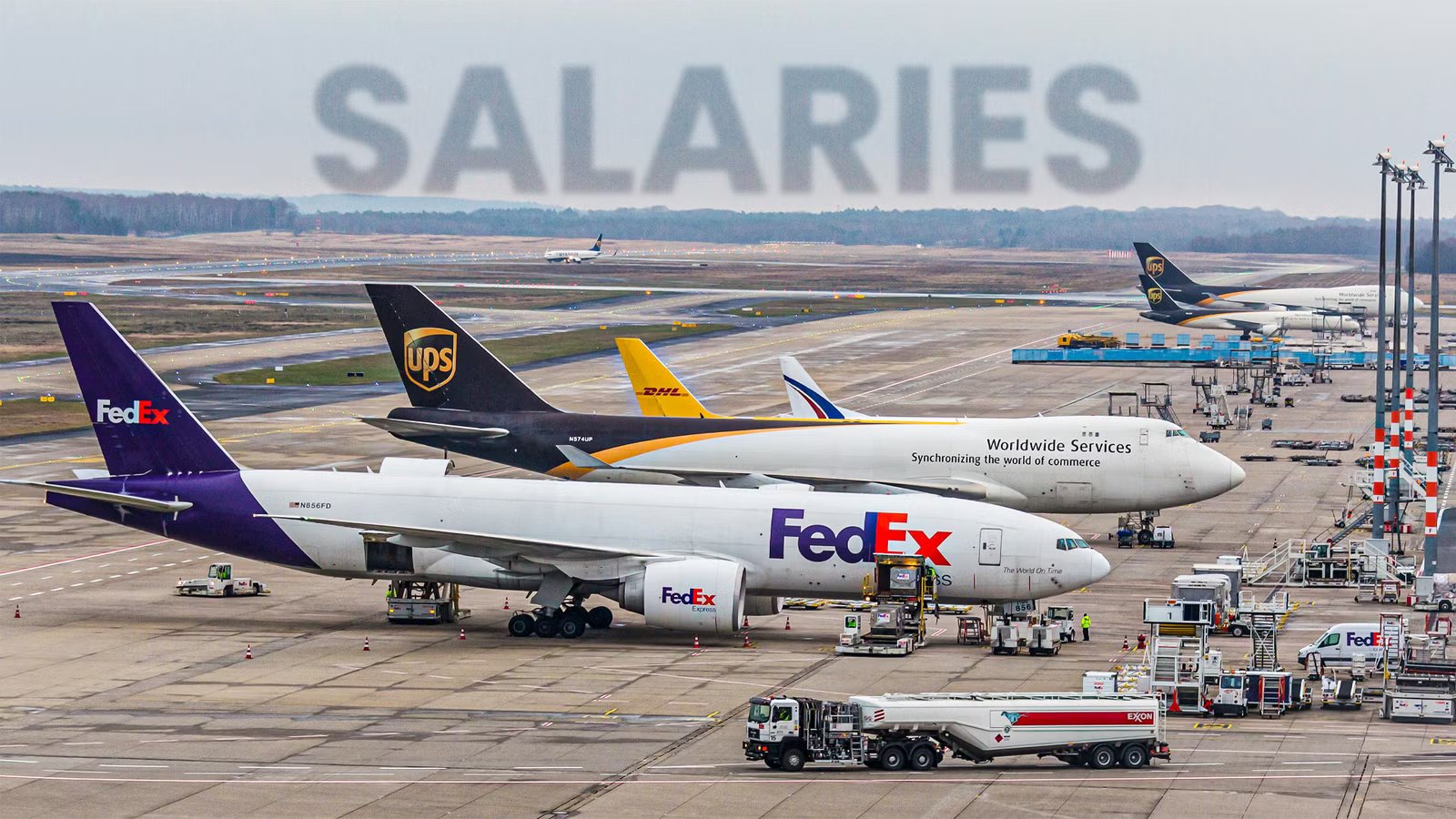
The global cargo aviation sector has evolved into one of the most financially rewarding corners of commercial flying, and by 2026, widebody cargo pilots sit firmly at the top of that hierarchy. While passenger airline pilots often dominate public perception, those flying freight across intercontinental routes frequently earn equal or higher compensation, particularly at the largest United States cargo operators. This trend reflects both the operational demands of long-haul cargo flying and the strategic importance of global logistics networks that run continuously, often overnight, and across multiple time zones.
Widebody cargo aircraft such as the Boeing 747-8F and Boeing 777F require highly experienced crews capable of managing complex international operations. These aircraft carry massive payloads, operate under tight schedules, and often fly routes that demand extended duty periods. Airlines compensate accordingly, offering high base pay, significant overtime opportunities, and robust retirement packages. The result is a compensation structure that places senior cargo pilots among the highest-paid professionals in aviation and, in some cases, across the broader workforce.
Understanding how these salaries are structured requires a closer look at the major cargo carriers, the progression from first officer to captain, and the unique factors that differentiate cargo pilot compensation from passenger airline pay. The following sections break down the salary landscape in 2026, highlighting key data points and industry trends that define this highly specialized career path.
Entry Level: First Officer Salary

The starting point for any widebody cargo pilot is the first officer position, which serves as both a training ground and a stepping stone to the captain’s seat. In 2026, first officers at major cargo airlines earn between $90,000 and $140,000 annually, depending on the carrier, aircraft type, and years of service. These figures place cargo first officers comfortably above many regional airline captains and on par with or slightly below early career pilots at major passenger airlines.
At companies like Fedex Express and  UPS Airlines, first officer pay scales are structured to increase steadily with seniority. Within a few years, earnings can approach the upper end of the range, particularly when factoring in per diem payments, overtime, and premium pay for international flying. These additional components can significantly boost total compensation beyond base salary figures. Cargo flying offers unique scheduling patterns that can also influence earnings. Many routes operate overnight or during off-peak hours, and pilots may receive additional compensation for working less desirable schedules. While this lifestyle is not for everyone, those who adapt to it often benefit from higher total income and more concentrated blocks of time off.
Another important factor is aircraft assignment. First officers flying larger widebody freighters typically earn more than those on smaller aircraft. As pilots gain experience and bid for more advanced equipment, their pay increases accordingly. This creates a clear financial incentive to progress quickly within the company. Overall, the first officer stage in cargo aviation provides a strong financial foundation, setting the stage for the substantial earnings that come with promotion to captain.
Captain Salaries At The Major Cargo Airlines

The most significant jump in compensation occurs when a pilot upgrades to captain. In 2026, widebody cargo captains at major carriers earn between $180,000 and $300,000 annually, with senior captains frequently exceeding $250,000 in total compensation. These figures reflect base pay alone and do not fully capture the additional earnings available through overtime and premium assignments. At the top tier of the industry, UPS and FedEx dominate the pay scale. A captain flying a 747-8F for UPS earns close to $34,000 per month, while a FedEx captain on similar equipment earns approximately $30,500 monthly. These monthly figures translate into annual base salaries well above $300,000 for experienced pilots.
Seniority plays a crucial role in determining exact earnings. At FedEx, a six-year captain averages around $287,566 annually, increasing to approximately $300,859 by year twelve. At UPS, the same progression yields even higher figures, with six-year captains earning about $358,789 and twelve-year captains reaching roughly $375,472. These numbers highlight the premium that UPS places on widebody captain experience, positioning it as one of the highest-paying pilot employers in the world.
|
Hourly Rate by Year for FedEx 777 Pilot |
||
|---|---|---|
|
Year |
First Officer ($/hr) |
Captain ($/hr) |
|
1 |
84 |
276 |
|
5 |
198 |
310 |
|
10 |
221 |
319 |
|
15+ |
237 |
335 |
Source: Airline Pilot Central
The gap between cargo and passenger airline captain salaries has narrowed significantly in recent years, and in many cases, cargo pilots now come out ahead. This is particularly true for those flying long-haul international routes on large freighters, where operational complexity and responsibility justify higher compensation. For pilots who reach and remain in the captain’s seat at these major carriers, the financial rewards are substantial and continue to grow with each additional year of service.

How Much Do Boeing 787 Dreamliner Pilots Make In 2026?
Discover the world of airline pilot salaries, where earnings are determined by factors like seniority, aircraft type, and annual flying hours.
Top End Earnings & Long Term Compensation

At the highest levels of the profession, widebody cargo pilots achieve earnings that rival or exceed those of senior executives in many industries. In 2026, top-earning captains at FedEx Express can surpass $450,000 per year in total compensation. This figure includes base salary, overtime, bonuses, and other incentives tied to international operations and seniority.
One of the defining features of cargo pilot compensation at this level is the strength of retirement benefits. FedEx, for example, offers a combination of 401(k) contributions and a defined benefit pension plan, a structure that has become increasingly rare in the aviation industry. This dual system provides both immediate and long-term financial security, significantly enhancing the overall value of the compensation package. In addition to retirement benefits, senior captains often have greater control over their schedules. This can lead to more efficient flying patterns, higher earning potential through strategic bidding, and improved work-life balance. The ability to optimize schedules becomes an important factor in maximizing income at the upper end of the pay scale.
Another element contributing to high earnings is international flying. Long-haul routes typically come with higher pay rates, additional allowances, and extended duty periods that increase total compensation. Widebody cargo pilots frequently operate these routes, further boosting their income relative to pilots flying shorter domestic segments. These factors combine to create a compensation profile that is not only high in absolute terms but also structured for long-term financial stability. For pilots who remain with a major cargo carrier throughout their careers, the cumulative earnings can be exceptionally strong.
Mid Tier Cargo Carriers Salary Differences

While the largest cargo airlines set the benchmark for pilot pay, other operators also offer competitive salaries, albeit at slightly lower levels. Companies such as Atlas Air and Kalitta Air play a significant role in the global cargo network and employ a substantial number of widebody pilots. At Atlas Air, captain salaries reach approximately $172,000 at higher seniority levels. Kalitta Air offers higher peak earnings, with captains making around $266,000 at the top of the scale. While these figures are lower than those at FedEx and UPS, they still represent strong compensation compared to many other segments of aviation.
The differences in pay can be attributed to several factors, including company size, route structure, and contract terms. Major integrators like FedEx and UPS operate highly integrated logistics networks with consistent demand, allowing them to offer higher and more stable compensation. Smaller or contract-based carriers may have more variable operations, which can influence pay scales and career progression.
|
Top 747-8F Operators Today |
|
|---|---|
|
Operator |
Total |
|
UPS |
30 |
|
Cargolux |
14 |
|
Cathay Pacific |
14 |
|
Atlas Air |
13 |
|
Nippon Cargo Airlines |
8 |
Despite these differences, mid-tier cargo carriers often provide valuable opportunities for pilots to gain widebody experience. Many pilots use these positions as stepping stones to larger airlines, building the flight hours and operational expertise needed to transition into higher-paying roles. In some cases, pilots may choose to remain with these carriers due to lifestyle preferences, scheduling flexibility, or specific route assignments. While the absolute pay may be lower, the overall career package can still be attractive depending on individual priorities.

How Much Do Cargo Pilots Make Compared To Passenger Airline Pilots?
Passenger airline pilots can earn more, but being a cargo pilot is also a lucrative career.
Upgrade Speed & Career Progression

One of the most compelling aspects of a cargo pilot career is the relatively fast path to the captain’s seat. In 2026, pilots at major cargo carriers such as FedEx and UPS can typically upgrade to captain within five to eight years. This is significantly faster than the ten to fifteen-year timeline commonly seen at legacy passenger airlines.
This accelerated progression has a direct impact on lifetime earnings. Since the most substantial pay increases occur at the captain level, reaching that position earlier allows pilots to spend more years earning top-tier salaries. Over the course of a career, this difference can amount to millions of dollars in additional income. Several factors contribute to faster upgrade times in the cargo sector. Strong demand for air freight, combined with fleet expansion and pilot retirements, creates consistent opportunities for advancement. Additionally, cargo airlines often operate with different scheduling models than passenger carriers, which can influence staffing needs and promotion timelines.
Faster upgrades also enhance job satisfaction for many pilots. Commanding a widebody aircraft brings increased responsibility, authority, and professional recognition. Achieving this milestone earlier in one’s career can be both financially and personally rewarding. However, rapid progression also comes with increased expectations. Captains must manage complex operations, lead crews, and make critical decisions under pressure. The higher pay reflects not only experience but also the level of responsibility associated with the role.
Advantageous Position

In 2026, widebody cargo pilots occupy a uniquely advantageous position within the aviation industry. Their compensation reflects the critical role they play in sustaining global supply chains, as well as the demanding nature of long-haul freight operations. From first officer salaries that already exceed many industry benchmarks to captain earnings that can surpass $450,000 annually, the financial trajectory of a cargo pilot career is both steep and sustained.
The dominance of major carriers like FedEx Express and UPS Airlines underscores how scale, network integration, and operational complexity drive higher pay. Perhaps the most defining advantage is the speed of advancement. With upgrade timelines significantly shorter than those at many passenger airlines, cargo pilots reach peak earning potential earlier and maintain it for longer periods. For pilots considering their long-term prospects, the widebody cargo sector offers a compelling combination of high earnings, rapid progression, and global flying opportunities.