dailynewsnblog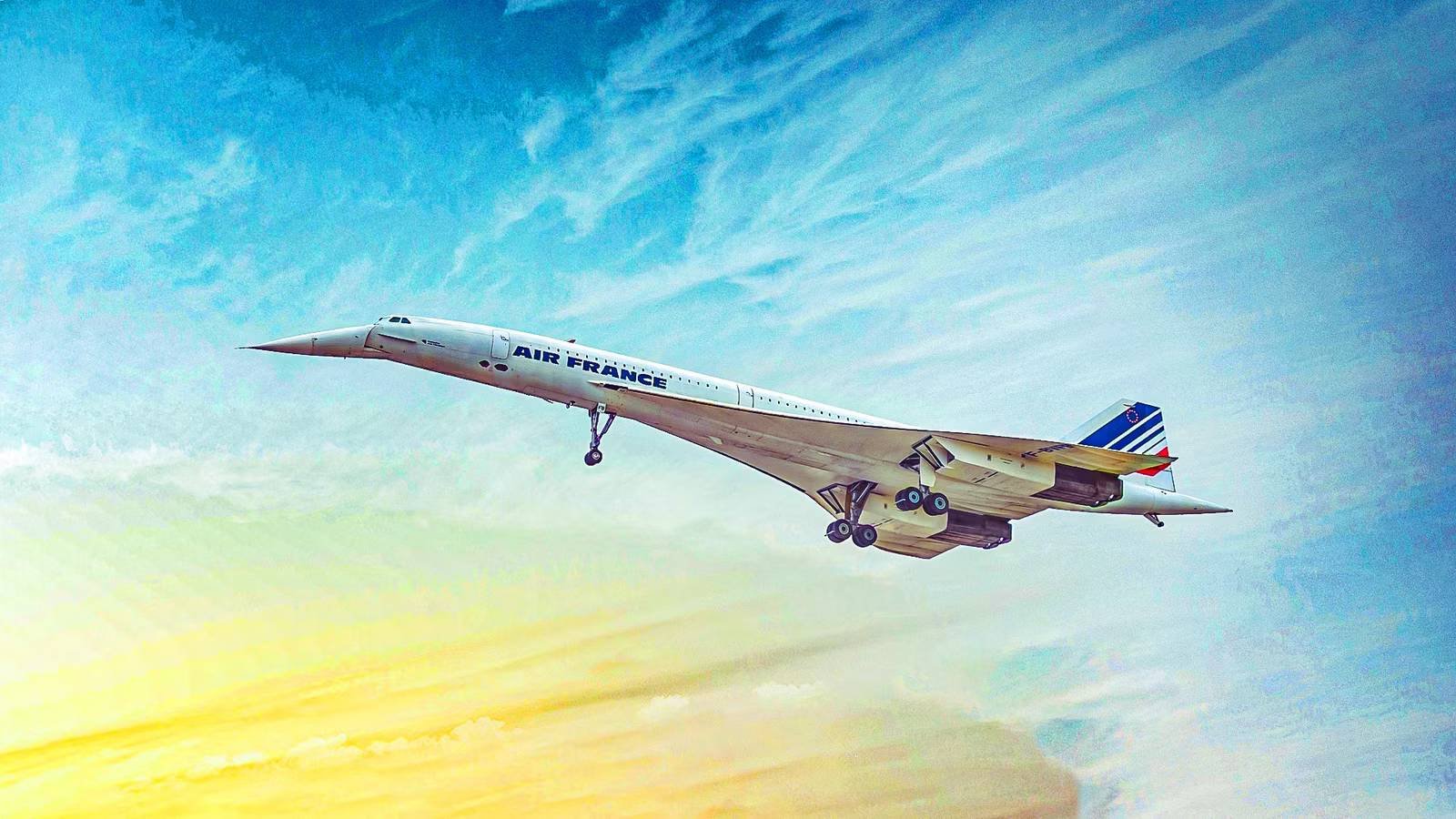
The aviation industry is often a battlefield of engineering and ruthless economic reality. Most commercial airliners are designed to serve for 25 to 30 years, but some of the most technologically impressive machines have met their end much sooner than their manufacturers or the public ever anticipated. These early exits are rarely the result of a single flaw, but rather a perfect storm of shifting fuel prices, changing passenger behaviors, and the relentless march of twin-engine efficiency.
This list examines the fascinating stories of aircraft that were retired earlier than expected, focusing on the technical and commercial reasons behind their premature departures. From quad-engine giants that couldn’t survive a spike in oil prices to specialized niche jets that were outpaced by general-purpose widebodies, these stories highlight the fragility of success in the modern sky.
Dassault Mercure
The short-range specialist that couldn’t go the distance

The Dassault Mercure was France’s ambitious attempt to disrupt the narrowbody market dominated by  Boeing and Douglas in the early 1970s. Built with the same sleek, high-performance DNA as Dassault’s famous fighter jets, the Mercure was designed specifically for high-capacity, short-haul routes. It was one of the first commercial aircraft to utilize a heads-up display for pilots, showcasing a level of cockpit sophistication that was years ahead of its American competitors.
Despite its technical brilliance, the Mercure suffered from a fatal design flaw: a lack of operational range. Optimized for short hops within Europe, the aircraft could only fly approximately 621 miles (1,000 kilometers) with a full payload. This made it virtually useless for any airline with a diverse network, as it lacked the flexibility to serve longer domestic legs or thin international routes. Consequently, Air Inter was the only airline to place a significant order, and only 12 airframes were ever produced.
|
Metric |
Specification Details |
|
Seating Capacity |
150 passengers |
|
Max Range (Full Payload) |
621 miles (1,000 kilometers) |
|
Engines |
Two Pratt & Whitney JT8D-15 |
|
Cruising Speed |
578 mph (930 km/h) |
|
Service Life |
Retired by 1995 after limited adoption |
The Mercure represents a pure engineering failure in market research. While it was a pilot’s favorite due to its responsive handling and advanced avionics, its specialized nature made it an evolutionary dead end. By the time the industry pivoted toward more versatile narrowbodies like the Boeing 737-200, the Mercure was already an orphan in the aviation world, destined for an early retirement as a museum piece rather than a global success.
McDonnell Douglas MD-90
The quiet worker lost to fleet uniformity
_(4352953409).jpg?q=49&fit=crop&w=500&dpr=2)
The McDonnell Douglas MD-90 was supposed to be the triumphant evolution of the Mad Dog lineage, featuring quieter, more efficient IAE V2500 engines and a stretched fuselage. It found a welcoming home in the East Asian market, particularly with Japan Air System (JAS), which appreciated the aircraft’s high-performance climb and improved cabin acoustics. For a time, it seemed the MD-90 would become the primary rival to the burgeoning Airbus A320 family across the Pacific.
However, the merger of McDonnell Douglas with Boeing in 1997 signaled the beginning of the end. Boeing, wanting to focus entirely on its own 737 Next Generation program, provided little support for the MD-90. In Japan, the merger of JAS into Japan Airlines (JAL) led to a swift retirement of the fleet as the new entity sought to simplify maintenance costs.  Delta Air Lines, the world’s largest operator, finally grounded its last units in June 2020, well before the airframes’ structural limits suggested.
The MD-90 was a victim of corporate consolidation rather than technical failure, an exceptionally quiet and comfortable aircraft that pilots enjoyed flying, yet it was orphaned by its own manufacturer. In the competitive East Asian market, where fleet uniformity is key to managing high-density regional networks, the MD-90 simply didn’t have the scale to survive against the Boeing-Airbus duopoly.

The Striking Differences Between The McDonnell Douglas DC-10 & MD-11
Discover how the DC-10 and MD-11 reshaped wide-body design, defined the trijet era, and why their legacy still lingers in today’s skies.
Boeing 747SP
Stubby giant that was too fast for its own good

The Boeing 747SP was a shortened, stubbier version of the iconic Jumbo Jet, designed specifically to fly longer and higher than any other airliner in the 1970s. By removing roughly 47 feet (14.3 m) of the fuselage, Boeing significantly reduced the weight, allowing the SP to carry enough fuel to bridge massive distances like New York to Tokyo or Sydney to San Francisco non-stop. For East Asian carriers like China Airlines and Korean Air, it was a vital tool for trans-Pacific expansion.
The 747SP’s reign was cut short not by a technical flaw, but by the rapid evolution of its own siblings. As Boeing developed more efficient engines and higher weight limits for the standard 747-200 and later the 747-400, the specialized SP became redundant. It burned almost as much fuel as a full-sized jumbo but carried roughly 100 fewer passengers. By the late 1980s, the very purpose for which it was built was being handled by larger, more profitable aircraft.
|
Feature |
747SP |
747-200 |
|
Fuselage Length |
184 ft 9 in (56.3 m) |
231 ft 10 in (70.7 m) |
|
Typical Seating |
276 |
366 |
|
Max Range |
5,830 nm (10,800 km) |
5,270 nm (9,800 km) |
|
Cruising Altitude |
45,100 ft (13,746 m) |
45,100 ft (13,746 m) |
|
Total Built |
45 |
393 |
The 747SP represents a niche that was filled too well by the generalists. It was a high-performance athlete in a world that suddenly valued good enough capacity over extreme range. While it remains a cult favorite among aviation geeks for its unusual proportions and record-breaking climbs, most were pulled from passenger service well before their structural sell-by date.
Airbus A340-500
Too thirsty for profitability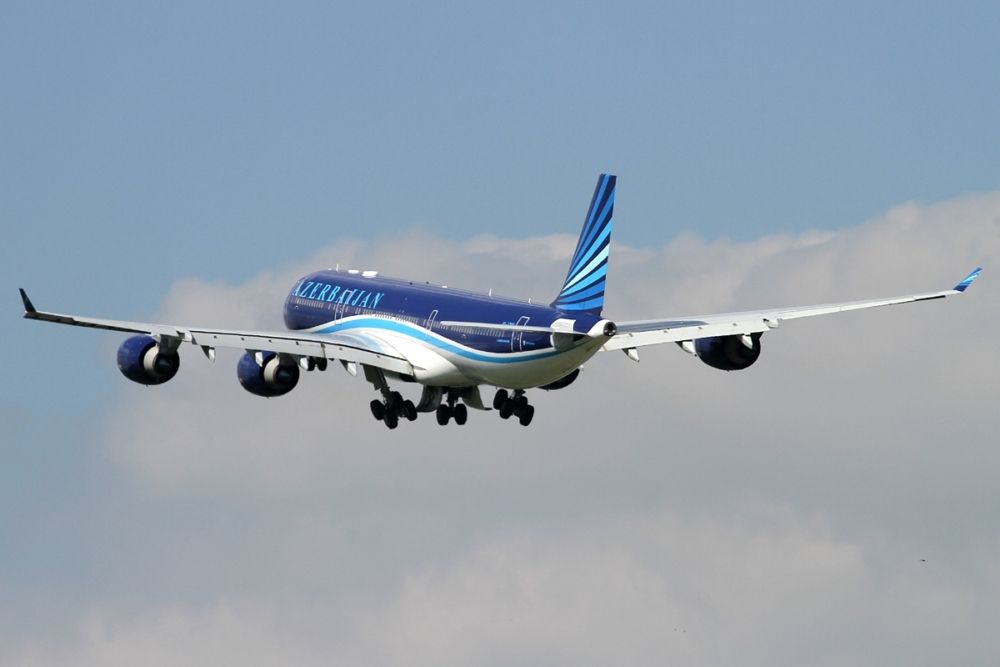
When the Airbus A340-500 debuted in the early 2000s, it was the king of distance. It allowed  Singapore Airlines to launch the world’s longest non-stop flights from Singapore to Newark and Los Angeles. To achieve this, the aircraft was a massive flying fuel tank, equipped with four engines to ensure safety over the vast stretches of the Pacific and Atlantic oceans. It was the pinnacle of hub-to-hub luxury, often configured with an all-business-class cabin for the ultra-elite traveler.
The downfall of the A340-500 was as swift as it was brutal. As oil prices soared in the mid-2000s, the economics of four engines became impossible to justify. The arrival of the Boeing 777-200LR, a twin-engine jet that could fly almost as far on significantly less fuel, rendered the A340-500 useless almost overnight. Singapore Airlines, once the champion of the type, retired its entire fleet after just 10 years of service, even though the planes were technically in their prime.
This aircraft tells a cautionary tale of how quickly a technical advantage can become a financial liability. It was a masterpiece of European engineering, yet it couldn’t survive the relentless march of twin-engine efficiency. Today, nearly all A340-500s have been scrapped or placed into long-term storage, replaced by lighter, more efficient twins that do the same job for a fraction of the cost.
McDonnell Douglas MD-11 (Passenger)
The triple-engine successor that fell short

The McDonnell Douglas MD-11 was designed to be the ultimate evolution of the DC-10, featuring a stretched fuselage, advanced winglets, and a digital flight deck that eliminated the need for a flight engineer. Launched with great fanfare in the late 1980s, it was intended to be the primary long-haul option for global giants like  American Airlines, Delta Air Lines, and Finnair. It promised a blend of high-capacity and transoceanic range that would bridge the gap between the smaller trijets and the massive Boeing 747.
However, the MD-11’s reputation was tarnished early on when it failed to meet its original range and fuel-burn targets. On long-haul routes, particularly across the Pacific, the aircraft consumed more fuel than promised, forcing some carriers to make unplanned technical stops. While McDonnell Douglas eventually corrected many of these performance shortfalls with aerodynamic packages, the damage had already been done. When the twin-engine Boeing 777 arrived just a few years later, offering better range and lower maintenance costs with one less engine, the MD-11’s fate was sealed.
The passenger version of the MD-11’s tenure in the premium long-haul market was remarkably short. American Airlines, for example, began retiring its fleet in 2002 after only 11 years of service. While the aircraft found a successful second career as a dedicated freighter, where its range issues were less of a deal-breaker than passenger comfort, it remains one of the few modern widebodies to be unceremoniously dumped by passenger airlines while still practically brand new.

Was The McDonnell Douglas MD-11 A Failure?
A look at whether the MD-11 failed, and, if so, for which airlines?
Sud Aviation/BAC Concorde
The supersonic marvel grounded by reality

Concorde was a symbol of national pride for Britain and France and a technological quantum leap that reduced the flight time from London to New York to under three and a half hours. Flying at twice the speed of sound at an altitude of 60,000 feet (18,288 m), it offered a truly peerless service journey. For decades, it was the preferred transport for the global elite, including royalty, rock stars, and high-powered executives who valued time over everything else.
The end for Concorde came sooner than many expected due to a tragic convergence of factors. Following the Air France Flight 4590 crash in 2000, the fleet was grounded for modifications, only to return to a world that had fundamentally changed. The post-9/11 downturn in aviation, combined with skyrocketing maintenance costs for the aging 1960s technology, made the aircraft a massive financial burden. In 2003,  British Airways and
  Air France made the heart-wrenching decision to retire the fleet, ending the era of supersonic commercial travel.
Concorde is arguably the most famous example of forced retirement. It was still structurally sound and could have technically flown for another decade, but the economic math simply no longer worked. The aircraft required a specialized maintenance program that was becoming increasingly difficult to source as suppliers moved on to newer technologies. When the final aircraft touched down in Filton in October 2003, it marked the first time in aviation history that the world took a collective step backward in speed.
Vickers VC10
The ‘royal’ jet that outpaced its own economy

The Vickers VC10 is often cited by pilots and enthusiasts alike as one of the most beautiful and powerful subsonic airliners ever built. Developed in the United Kingdom to serve the hot and high runways of the former British Empire, think Nairobi or Johannesburg, the VC10 featured a distinctive rear-mounted four-engine configuration and a massive T-tail. This design gave it a clean wing with incredible lift and takeoff performance second to none, allowing it to leap off short runways that would have grounded a contemporary Boeing 707.
Despite its graceful lines and immense power, the VC10 was an economic outlier from the moment it entered service with BOAC (now British Airways). The very design features that made it a hot and high specialist, the heavy rear structure and the fuel-thirsty nature of four Conway engines, made it significantly more expensive to operate than the more conventional American jets. While it held the record for the fastest sub-sonic transatlantic crossing for decades, airlines were quickly pivoting toward the more profitable seat-mile economics offered by Boeing.
The VC10 was the ultimate victim of a shifting aviation landscape. It was a hand-built masterpiece in an era that was moving toward mass production and standardized efficiency. Most commercial operators retired their VC10s by the late 1970s and early 1980s, well before the airframes were exhausted. While the Royal Air Force continued to fly them as tankers until 2013, its life as a passenger jet was tragically cut short, leaving us to wonder how long this aircraft might have lasted if fuel had remained cheap and style had stayed in fashion.