dailynewsnblog
Since its inception over two decades ago, the Boeing 777-300ER has dominated the commercial aviation industry due to its safety, fuel efficiency, and impressive range. First built alongside several other 777 variants, the -300ER has remained a staple in the long-haul tourism industry to this day.
As one of the best-selling widebody aircraft in aviation history, the -300ER fills an important niche in the global travel ecosystem. Combining both the increased capacity and longer range of its predecessors, this twinjet widebody has been a favorite of both international and domestic airlines such as  American Airlines,
  Air Canada, and
  Emirates.
The Boeing 777 Family

The first-generation 777 variants ushered in a new era of aviation during a time of rapidly expanding global tourism, enabling flights with greater range than ever before without sacrificing fuel efficiency or passenger capacity. After its first flight in 1994, the 777-200 quickly established dominance over its competitors. The widebody’s innovations in design, such as the high wing ratio and raked wingtips, allowed for much greater aerodynamic efficiency, while its highly optimized twin-engine configuration delivered a balance of power, reliability, and reduced operating costs.
The aircraft and all of its successors combined both efficiency and passenger comfort, quickly earning favor among the major North American Airlines that helped shape its development. As it stands in 2026, the Boeing 777 family operates approximately 1800 flights daily, serving as a critical backbone linking large domestic, transatlantic, and transpacific hubs. Its continued widespread use is a testament to the enduring strength of its original design and its ability to adapt to the evolving demands of modern aviation.
777-300ER Efficiency, Capacity, And Range

The outstanding launch of the original 777 model prompted further development at Boeing, with the 777-200ER further improving on fuel efficiency and the 777-200LR improving on range. The 300ER is the ideal mixture of both innovations, combining both extended range and improved capacity. The aircraft continues to offer a cost-effective and efficient option for modern airlines.
Given the strain on modern fuel resources, as well as a growing focus on sustainability, efficiency is key when it comes to aviation. For airlines, the focus on increasing capacity while limiting fuel consumption and extending range is of ever-growing importance, which is where the 300ER shines.
|
777-300ER |
777-200LR |
777-200ER |
|
|
Capacity |
396 Seats |
317 Seats |
313 Seats |
|
Range |
7,370 nautical miles (13,650 km) |
8,555 nautical miles (15,843 km) |
7,065 nautical miles (13,080 km) |
|
Wingspan |
212 feet, 7 inches (64.8 meters) |
209 feet, 1 inch (63.7 meters) |
199 feet, 11 inches (60.9 meters) |
|
Maximum Takeoff Weight |
775,000 lb (351,534 kg) |
766,000 lb (347,450 kg) |
766,000 lb (347,450 kg) |
While the 300ER has a slightly smaller range than the 200LR, its stat sheets far exceed most comparable aircraft targeting the lower-demand B-market in terms of average fuel burn and high capacity, allowing it to slot into a very valuable market niche. The widebody aircraft provides tremendous value to airlines with its efficiency, as it fulfills both international and long-haul domestic flights, where fuel inefficient Boeing 747s and Airbus A340s would make flights both expensive and unsustainable. The 300ER currently offers a great alternative so long as fuel prices remain a concern. Seat for seat, the economics offered by the 300ER are great, even while offering versatility in terms of range and cargo capacity.

The Story Of The Boeing 777-300ER’s Development
The Boeing 777-300ER entered service with Air France in April 2004.
Advanced, Durable, And Maintainable Materials

Wikimedia Commons, Simple Flying
Commercial airliners accumulate an enormous number of flight hours over their lifetime, all the while being exposed to environmental extremes, constant pressurization and depressurization cycles, and heavy component wear-and-tear from continuous use. As you can imagine, the demands on the aircraft structure and its components are immense, requiring rigorous and ongoing maintenance to preserve functionality. Both airlines and passengers expect aircraft to withstand these forces—for safety as well as economic reasons; neither wants a single corroded bolt to spell disaster for any flight.
This was a primary concern for Boeing as it designed and manufactured the 300ER—ensuring that the aircraft could endure such harsh and repetitive conditions was of vital importance, particularly because a single in-service aircraft can average approximately 700 flights per year. The fuselage skins and structural components are composed of advanced aluminum alloys engineered to resist corrosion and fatigue cracking, while critical interior and high-stress components incorporate titanium to reduce the likelihood of failure before, during, and after flight cycles. These material choices not only enhance durability but also reduce overall airframe weight, improving fuel efficiency and lowering operating costs for airlines over time.
Even as it approaches the 22nd anniversary of its first flight, very few 777-300ERs have been retired; the vast majority of all aircraft ever built remain in active service today. This longevity is a testament to both the robustness of its design and the effectiveness of modern maintenance programs. According to Boeing, the aircraft continues to achieve a schedule reliability of approximately 99.5%, rarely experiencing delays or cancellations due to mechanical issues—an impressive figure that reinforces its reputation as one of the most dependable long-haul aircraft ever produced.
Versatile Passenger Seating And Comfort

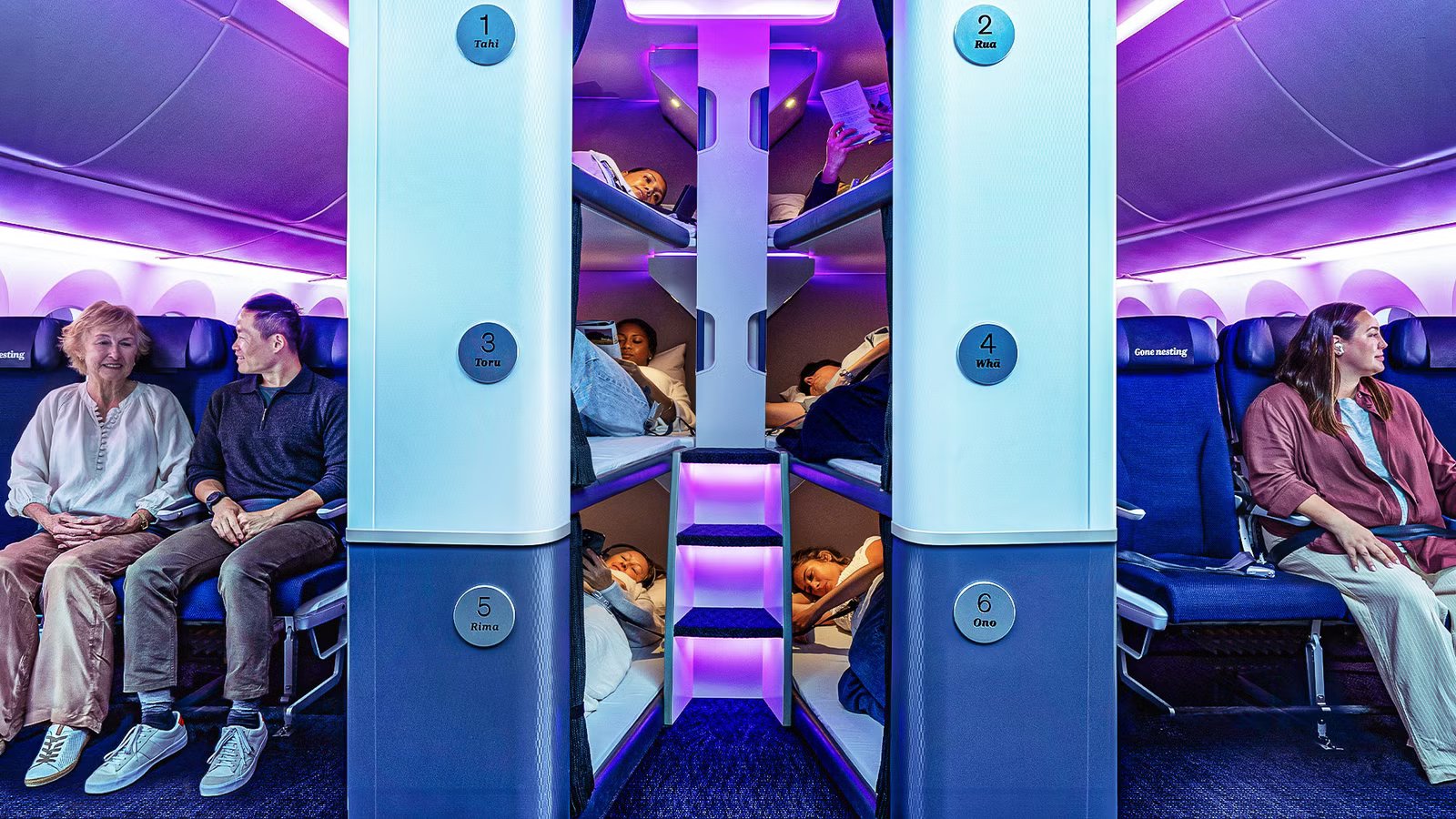
The high capacity of the 300ER allows for a very flexible interior that can be optimized for economics or comfort; in certain configurations, it is possible to install up to ten seats per row (or as few as four large seats per row for premium or first-class customers). For some airlines, the 300ER is the only aircraft in their fleet that offers first-class accommodations. Few other airframes offer the interior versatility of the 300ER, which certainly may be a contributing factor to its success. Airlines are able to tailor cabin layouts to specific routes, demand profiles, and branding strategies, allowing the same aircraft type to serve both high-density leisure markets and premium-heavy business routes with minimal structural changes.
The 777-300ER’s width has allowed many airlines to install premium business class suites that might not fit or require adjustment on smaller aircraft, such as American Airlines’ “Flagship Suites” and United Airlines’ “Polaris Suites.” The wider fuselage also enables more spacious aisles, larger overhead bins, and improved passenger circulation, all of which contribute to a more comfortable onboard experience during long-haul flights. Additionally, the aircraft’s size allows for expanded galleys and lavatory configurations, supporting better service flow and reducing congestion during peak periods. The capability to cater to customers of all economic strata on long-haul flights while maintaining efficiency for the airline likely contributes to the continued popularity of the aircraft.

Why The Boeing 777-300ER Is Preferred By Passengers
The 777-300ER is one of the most common widebody airliners currently in the skies.
Pilot Preference And Computerized Systems

Modern improvements made on the 777 make it popular among pilots. When released, the computerized interior of the cockpit had replaced old analog systems, and the implementation of fly-by-wire technology allowed for more responsive, easier-to-operate flight controls. Many pilots, first introduced to these amenities by the 777, still hold a preference for the aircraft; a great number of newer pilots are accustomed to these advancements and would struggle with the alternative.
Beyond basic handling improvements, the 777-300ER also integrates sophisticated flight management systems, electronic checklists, and real-time diagnostics that streamline pilot workload and enhance situational awareness. Large multifunction displays consolidate critical flight data into intuitive formats, reducing the need for constant cross-referencing and allowing pilots to focus more on decision-making rather than system monitoring. Automated protections built into the fly-by-wire architecture further help prevent unsafe inputs, adding another layer of safety without compromising pilot authority.
These technological advancements not only improve safety margins but also contribute to reduced fatigue on long-haul routes. As aviation continues to evolve toward increasingly digital cockpits, the aircraft stands as a benchmark for balancing human control with computer assistance, reinforcing its reputation as a pilot-friendly, forward-thinking airframe.
The Future Of The 777-300ER

In 2024, Boeing produced its final 300ER and began working towards the next iteration of the Boeing 777, the 777X. The 777X is sure to build on the capabilities of the 300ER. That said, given the long life of the aircraft, it is unlikely this mainstay of the global tourism industry will be phased out anytime soon, especially given its modularity and cheap operating costs.
Airlines across the world continue to rely heavily on the 777-300ER for long-haul routes, particularly in markets where demand remains strong but does not yet justify the transition to newer, more expensive aircraft. Its proven reliability, high passenger capacity, and favorable operating economics ensure that it remains a dependable workhorse within many fleets. In fact, many carriers have opted to refurbish cabins and upgrade onboard amenities rather than replace the aircraft outright, further extending its service life well into the coming decades.
As the 777X gradually enters service, it will likely complement rather than immediately replace the 300ER, with both aircraft operating side by side in many fleets. Over time, the 300ER may shift toward secondary long-haul routes or high-density operations, continuing to provide value in a changing aviation landscape. Much like its predecessors, the aircraft’s enduring design and adaptability will ensure that it remains a familiar sight in skies around the world for years to come.