dailynewsnblog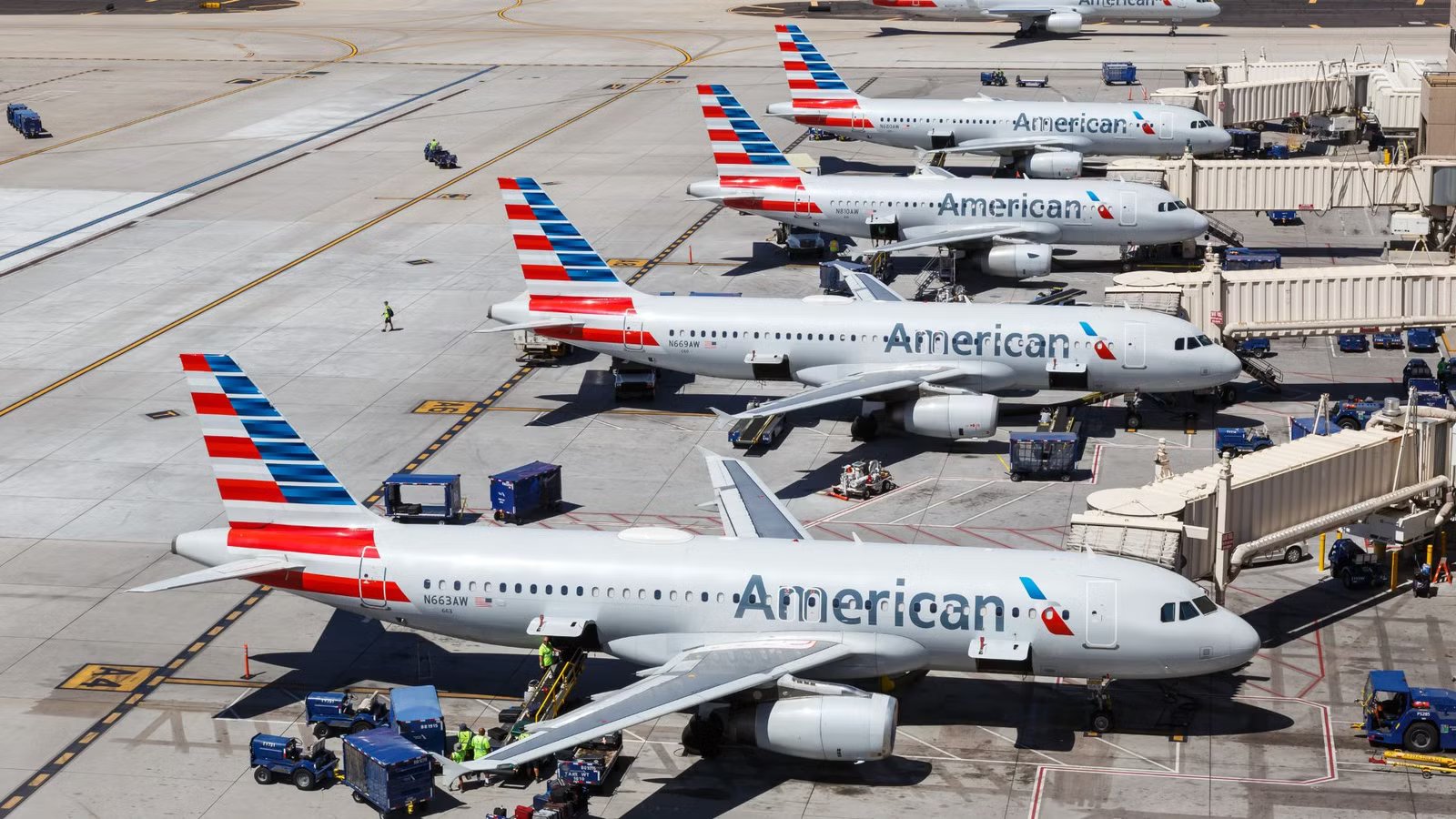
A Louisiana family has filed a lawsuit against  American Airlines after alleging they were unfairly singled out and removed from a flight while traveling to Walt Disney World. A report by People explains that the incident occurred on March 1, 2025, as the family attempted to depart from Lake Charles Regional Airport (LCH), Louisiana, for what they described as a “once-in-a-lifetime” holiday. According to court filings, airline staff informed them their flight was oversold and that one member of the group would have to be removed. The situation escalated when their four-year-old son was reportedly selected to be bumped from the flight.
The family, Coby and Emily Stewart, and their four children, claim the decision came shortly after disclosing that Emily is deaf and uses American Sign Language, and that Coby is a military veteran. They argue the airline failed to accommodate the mother’s disability and unnecessarily disrupted the family unit. The airline has not publicly detailed its reasoning, but the case has drawn widespread attention due to the seriousness of the allegations. The dispute raises broader questions about accessibility, airline discretion, and passenger rights.
Family Claims Discriminatory Removal Over Oversold Flight

Court documents state the family paid $5,187.58 for six round-trip tickets for the journey from Lake Charles to Orlando International Airport (MCO). They arrived at the airport nearly two hours before departure and checked in early, expecting a smooth start to their trip. Despite this, they were allegedly told almost immediately that the flight was oversold and that one person would need to be removed. The family claims they were the only passengers selected for removal, even though others had not yet checked in.
The situation intensified when airline staff allegedly chose the family’s youngest child, four-year-old Archer, to be bumped from the flight. The parents argued they could not be separated due to Emily’s disability and her need for assistance managing four young children. Instead, Coby Stewart volunteered to give up his own seat and attempted to reroute via another airport roughly 90 minutes away in Texas. He was initially offered a $1,200 travel voucher, but this was later withdrawn after he was told the flight was not actually oversold.
Simple Flying has reached out to American Airlines for a comment.
Disrupted Journey Leads To Separation And Financial Losses

The lawsuit alleges violations of disability protections, including a failure to accommodate Emily Stewart’s needs as a deaf passenger. According to the complaint, the family was effectively forced into a situation where they were split up, despite clearly explaining why that was not feasible. The filing also claims the airline’s actions caused financial losses, including additional travel costs, loss of seat value, and the loss of a revoked compensation voucher.
The travel disruption had significant logistical consequences, as Coby and his son attempted to reach an alternate departure point in another state. At the same time, the rest of the family continued their journey. They were not reunited as promised during a connection at Dallas Fort Worth International Airport and instead arrived separately at Walt Disney World later that day. The father was described as arriving “frazzled” after the ordeal, highlighting the stress involved.
More broadly, the case touches on the practice of involuntary denied boarding, which is regulated but still controversial. In the United States, compensation for bumped passengers can reach up to $1,075 for shorter delays and $2,150 for longer disruptions, depending on circumstances. The family, however, argues that standard compensation frameworks do not adequately address the alleged discrimination and emotional distress involved in this case.

I’m A Flight Attendant: This Is What Happens When A Flight Is Overbooked
The good and the bad news.
Legal Action Highlights Broader Airline Accessibility Concerns

The family is seeking damages exceeding $50,000, citing emotional distress, anxiety, and financial losses linked to the incident. Their complaint also references alleged breaches of the Americans with Disabilities Act, which requires airlines to provide appropriate accommodations for passengers with disabilities. The case was initially filed in the Louisiana state court in February 2025 before being moved to federal court in March.
The lawsuit emerges amid heightened scrutiny of airline treatment of passengers with disabilities. Notably, regulators have previously taken action against American Airlines, including a $50 million penalty issued by the US Department of Transportation for violations related to disability protections between 2019 and 2023. This broader regulatory backdrop adds further significance to the current case.
Ultimately, the incident underscores the complexities of airline operations, particularly when overbooking policies intersect with accessibility requirements. While the airline maintains broad authority over boarding decisions, cases like this highlight the potential consequences when those decisions are challenged in court.