dailynewsnblog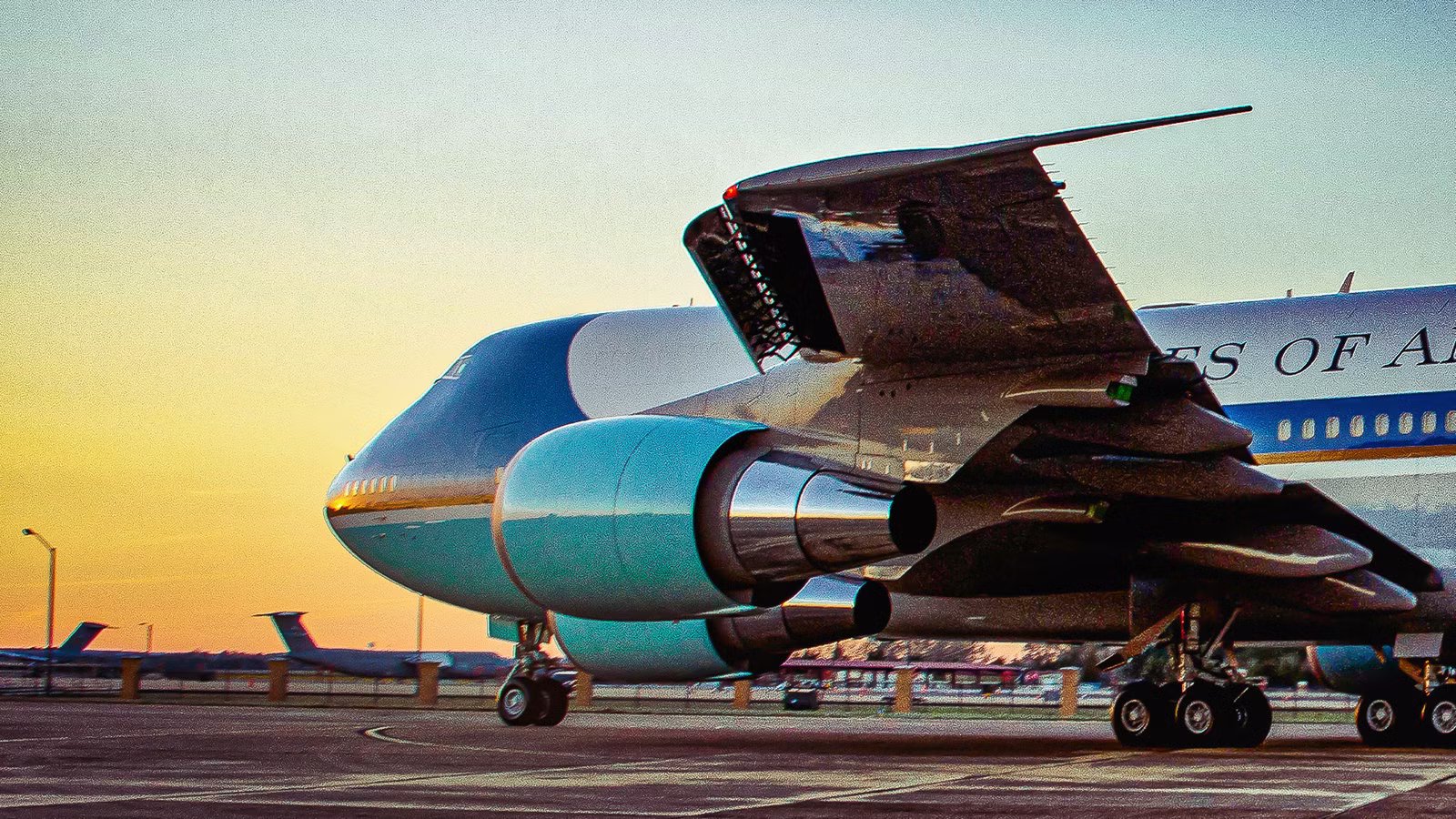
Flying slightly higher than a standard airliner, the aircraft known as Air Force One, or VC-25, is much more than a modified Boeing 747, even though they look almost identical from the outside. Inside, the VC-25 is a flying fortress, a command center, and one of the most secure environments on Earth. While much attention is often given to its communications systems and defensive capabilities, the engines that power the aircraft are equally critical to its mission. These engines are engineered to ensure survivability, endurance, and reliability under the most extreme circumstances imaginable.
From Cold War nuclear contingencies to the modern era of global instability, Air Force One has always been designed with one overriding goal: to keep the President of the United States safe and operational at all times. The story of its engines, including past, present, and future, reveals how commercial aviation technology has been adapted, hardened, and enhanced to meet the unique demands of presidential transport.
The CF6 — A Commercial Engine Turned Military Workhorse

The current VC-25A aircraft, which serve as Air Force One when the president is onboard, are powered by four General Electric CF6-80C2B1 turbofan engines. Each engine produces 56,700 pounds of thrust, enabling the aircraft to reach speeds of up to 630 miles per hour (Mach 0.92) and operate at altitudes as high as 45,100 feet, according to Military.com. These figures place Air Force One squarely within the performance envelope of modern long-haul commercial airliners, despite being over 35 years of age.
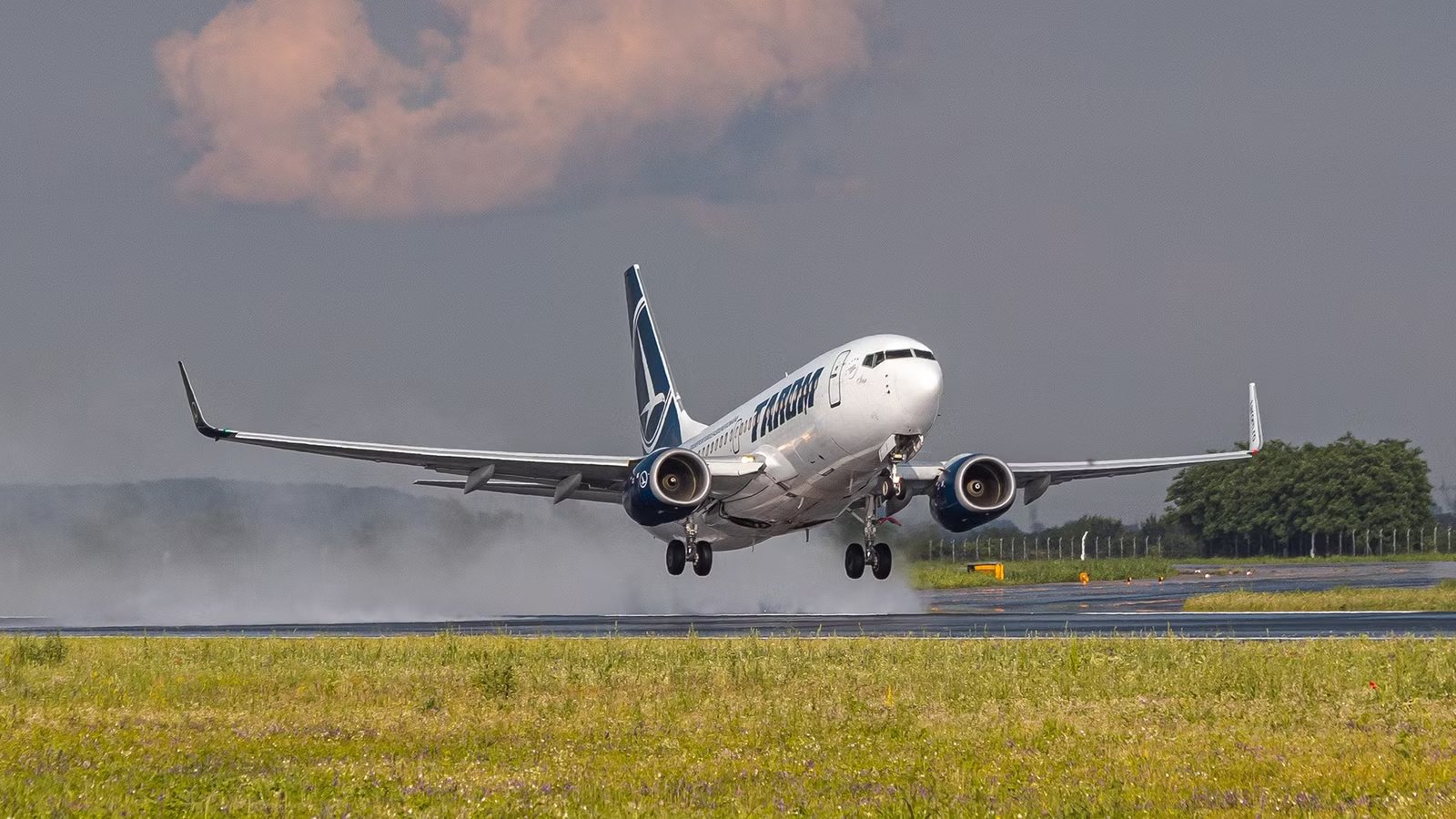
What makes the CF6 particularly remarkable is its widespread use across commercial aviation. Variants of this engine power aircraft such as the Boeing 747, Boeing 767, Airbus A300, and Airbus A310, making it one of the most extensively tested and proven turbofan families in history, as reported by SlashGear. To demonstrate their durability and reliability, these engines have collectively logged over 50 million flight hours.
However, the United States Air Force did not choose the CF6 solely for its commercial success. Unlike airlines, which prioritize fuel efficiency and cost savings, the USAF selected the Boeing 747-200B platform and its engines for their proven reliability and capability. The emphasis was on ensuring the aircraft could perform flawlessly under any conditions, rather than on maximizing operational efficiency, which is not a problem for the USAF.
What Makes These Engines Different From Those Of A Civilian 747?

At first glance, the engines on Air Force One may appear identical to those found on a standard Boeing 747-200. But beneath the surface lies a complex web of modifications that transform the aircraft into a military asset. The engines themselves are part of a larger network of hardened systems designed to ensure survivability in extreme scenarios.
One of the most critical differences is the integration of advanced avionics and communications systems. The VC-25A is equipped with secure, hardened electronics that allow it to function as a mobile command center, even in the event of a catastrophic attack on the United States, as outlined by the Military Aerospace. This means the engines must operate seamlessly alongside systems designed to withstand electromagnetic interference and maintain continuous communication.
Perhaps the most dramatic capability is aerial refueling. Unlike civilian 747s, Air Force One can be refueled midair, effectively granting it unlimited range as long as tanker support is available. This capability proved crucial during the events of September 11, 2001, when the aircraft remained airborne as President George W. Bush coordinated the national response from the sky.
Beyond endurance, Air Force One incorporates defensive systems that fundamentally change how its engines may be used in flight. In a civilian 747, engines are optimized for steady, efficient cruise. On Air Force One, however, they must also support evasive maneuvers and rapid changes in flight profile. So, the aircraft is equipped with countermeasures such as chaff to confuse radar-guided missiles and flares to divert heat-seeking threats. This transforms the role of the engines from simple propulsion units into critical enablers of survivability in hostile environments.

Why The E-4B Nightwatch & VC-25B Air Force One Are Critical To US National Security
Air Force One and the Doomsday aircraft are both designed as Presidential transports and command centers (for times of peace and emergencies).
EMP Hardening — Engineering For Nuclear Survival

One of the least visible but most critical aspects of Air Force One’s design is its ability to survive an electromagnetic pulse (EMP). This phenomenon, which can result from a high-altitude nuclear detonation or even solar activity, has the potential to disable electronic systems instantly.
Air Force One’s systems, including those supporting its engines, are specially hardened to resist such effects. This involves shielding critical electronics and ensuring that the aircraft can continue operating even if exposed to intense electromagnetic radiation, as reported by Interesting Engineering. Given that nearly every system onboard relies on electricity, this level of protection is essential to prevent catastrophic failure.
EMP Protection Features
|
Protection Element |
Function |
|
Shielded Wiring |
Prevents electrical surges |
|
Metal Reinforcement |
Blocks electromagnetic waves |
|
Window Mesh |
Stops radiation penetration |
|
Redundant Systems |
Ensures continued operation |
This level of protection is achieved through a layered approach. Shielded wiring helps prevent electrical surges from propagating through the aircraft’s systems, while extensive metal reinforcement within the airframe acts as a barrier against electromagnetic waves. Even the windows incorporate fine conductive mesh, preventing radiation from penetrating the cabin and affecting sensitive equipment. In addition, redundant systems ensure that if one component fails, another can immediately take over, maintaining continuous operation.
In the future, the next-generation VC-25B will incorporate even more advanced hardening techniques. Reports indicate that some analog instruments might be reintroduced as a backup to digital systems, ensuring that critical functions remain operational even in the most extreme scenarios. This blend of old and new technology highlights the seriousness of preparing for worst-case scenarios.
The Next Generation — GEnx-2B Engines On The VC-25B

As the current VC-25A fleet ages, attention has shifted to its replacement: the VC-25B, based on the Boeing 747-8 Intercontinental. This new aircraft will feature a significant upgrade in engine technology, replacing the CF6 with the more advanced GEnx-2B turbofans.
Each GEnx-2B engine produces approximately 66,500 pounds of thrust, offering improved performance and efficiency over its predecessor, as shown by the Air & Space Forces Magazine. The new aircraft is expected to reach speeds of up to 660 mph (1,062 km/h) and boast a range of around 8,900 miles (14,323 km), further enhancing its operational capabilities.
The differences between the CF6 and the GEnx engines represent a generational leap. The GEnx produces significantly more thrust, enabling better climb performance and higher cruise speeds, while simultaneously reducing fuel consumption by around 15 percent. This improvement is largely due to advanced materials, including lightweight carbon-fiber composite elements, which reduce overall engine weight while improving aerodynamic efficiency. The result is an engine that not only performs better but also operates more cleanly, with lower carbon emissions than its predecessor.
Interestingly, the VC-25B will not include aerial refueling capability. This decision reflects the significantly increased range of the 747-8 platform and the fact that midair refueling is almost never used on the VC-25A fleet. In effect, the improved efficiency and extended range of the new engines eliminate the need for one of the most distinguished features of the current aircraft.

Why Is Boeing’s Delayed 747-8 Air Force One Program $2 Billion Over Budget?
It will be more costly than expected due to a time-consuming modification process, supply disruptions, and other challenges.
The VC-25B Delay Crisis — And What It Means For The Aging Fleet

Despite the promise of the VC-25B, the program has been plagued by delays and cost overruns.  Boeing has reportedly incurred losses exceeding $2.4 billion due to a combination of design challenges, supplier issues, and labor disruptions, as previously reported by Simple Flying.
Originally scheduled for delivery in 2024, the new aircraft are now expected to enter service no earlier than 2029! This extended timeline has raised concerns about the aging VC-25A fleet, which continues to rely on decades-old airframes and engines.
The shifting timeline tells a broader story about the complexity of building such a specialized aircraft. What was once expected to be a relatively straightforward modernization has evolved into a multi-year effort marked by redesigns and funding increases. The US Air Force has already requested additional budget allocations, including a $201 million increase in its 2026 request, to accelerate progress and mitigate delays, as reported by Air & Space Forces Magazine.
In the meantime, contingency plans have been explored to bridge the gap. These include the potential use of an interim Boeing 747-8, highlighting just how critical it is to maintain a reliable presidential airlift capability. Until the VC-25B enters service, the aging CF6-powered fleet will continue to shoulder this responsibility.
Engines As The Backbone Of Presidential Air Power

Air Force One’s engines are the heart and the backbone of a system designed to ensure continuity of government under any circumstances. From the proven reliability of the CF6 to the advanced efficiency of the GEnx, these powerplants reflect decades of engineering evolution driven by unique operational demands.
As the VC-25B program progresses, the transition to next-generation engines will mark a new chapter in presidential aviation. But the challenges faced along the way serve as a reminder that building the world’s most secure aircraft is no simple task. Every component, from the engines to the electronics, must meet standards that go far beyond those of commercial aviation.
Finally, the story of Air Force One’s engines is one of adaptation, by taking proven commercial technology and transforming it into a system capable of operating at the very edge of possibility. At 40,000 feet, where decisions can shape the course of history, reliability is an essential part of these events.