dailynewsnblog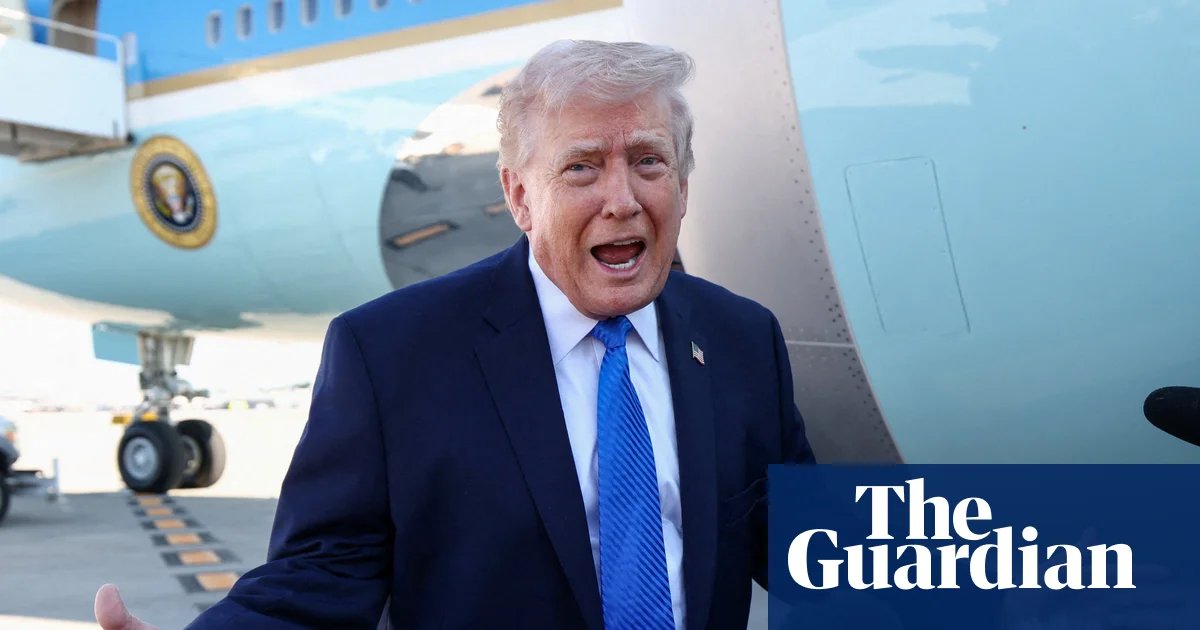
The backchannel talks between Donald Trump’s special envoy, Steve Witkoff, and the Iranian foreign minister, Abbas Araghchi, were not a secret in the sense that the Egyptian Foreign Ministry had tweeted that conversations were under way on Sunday, 24 hours before Donald Trump’s late Monday deadline to start blowing up Iran’s energy infrastructure.
But such is the chaos surrounding the process that the discussions – thought to be well short of negotiations – may have lasted longer than Sunday, with more than one mediator, as is often the case, jostling for the title of peacemaker in chief.
Pakistan’s army chief, Asim Munir, for instance, spoke with Trump on Sunday, while Pakistani prime minister, Muhammad Shehbaz Sharif, held talks with Iranian president, Masoud Pezeshkian, on Monday. It is possible Pakistan could become the venue for further talks that this time would include JD Vance, the vice-president, a private sceptic about the war. Keir Starmer, the UK prime minister, was right to warn not to bank on an early end to the conflict.
Trump insists it was the Iranians who requested to talk, and their minds had been concentrated by Trump’s threat of destroying a $10bn power plant. Tehran initially denied any talks had happened either directly or indirectly, saying: “There is no negotiation whatsoever between Tehran and Washington. The statements of the president of the United States are within the framework of an attempt to lower energy prices and buy time for the implementation of his military plans.”
The Egyptian Foreign Ministry said the foreign minister, Badr Abdelatty, had held the talks involving the foreign ministries of Pakistan, Qatar, Turkey, Iran and the US special envoy. The conversations were designed to prevent the current regional escalation from becoming out of control, the ministry said. At the same time, Oman’s foreign minister said he was holding talks on how to open the strait of Hormuz. Starmer, appearing before a Westminster parliamentary select committee, became the first European leader to say he was aware of the talks.
The first sign that Operation Epic Fury might be blowing itself out emerged when Trump, just before likely disastrous financial markets opened, announced in a social media post that he was holding off from attacking Iran’s energy infrastructure due to the “very good and productive conversations” that had been held with “the country of Iran”. Through the week, those talks could yield “a complete and total resolution” in the war, he wrote.
It was a bombshell, albeit with a slow detonator, since at first it looked as if Trump was either a fantasist or simply creating cover to back down as he has in myriad previous confrontations over tariffs or Greenland, for example.
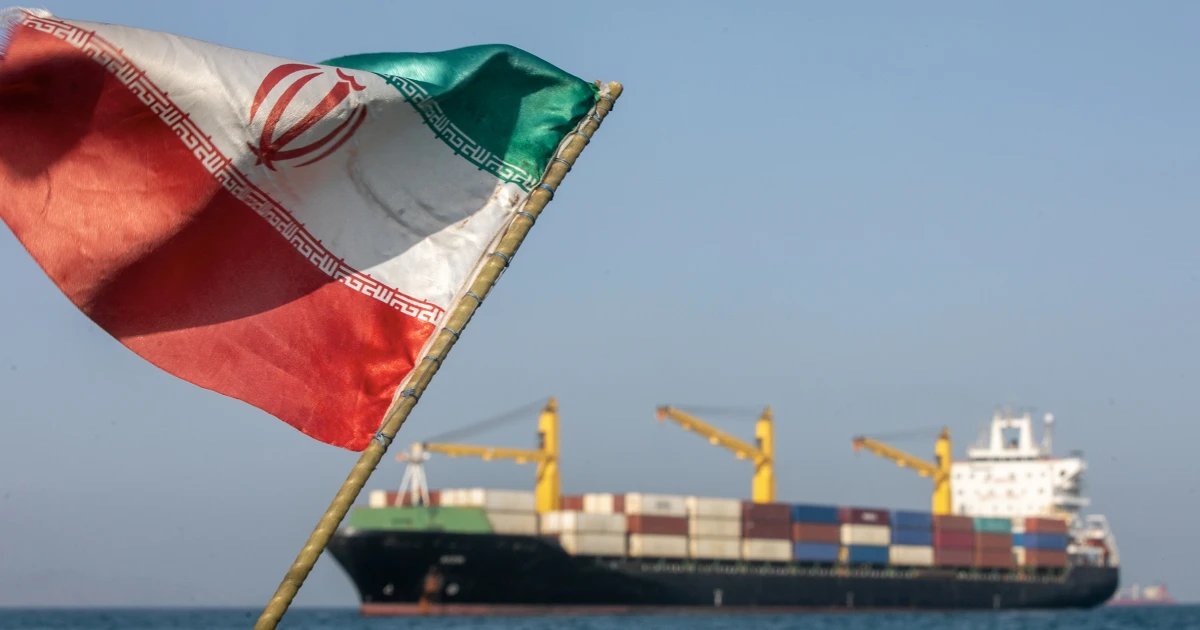
Iran’s Foreign Ministry initially insisted no talks were held and that Trump had simply retreated in the face of the scale of the economic and energy crisis he had singlehandedly created. The Foreign Ministry also accused Trump of trying to lower energy prices – a key metric of Iran’s success in the war – or seeking to buy time to prepare the ground force he needs to take strategic islands in the still blocked strait of Hormuz.
Trump, by his standards, responded politely when asked why Iran was denying these talks had happened, saying it was possible the country’s internal communications system was failing. Trump refused to identify the name of the “respected leader” with whom he said he had been talking, but said it was not the supreme leader, Mojtaba Khamenei. He added that the mystery leader had been reasonable and so far delivered on what he had been asked.
The possibility remained that one of Iran’s reduced leadership group was dangerously freelancing, and, if so, a massive political backlash would occur. Speculation grew that foreign minister and chief nuclear negotiator Araghchi had been sidelined in a power struggle that had yet to be revealed.
Iran’s lines of political authority have been in a state of chaos due to damage wreaked by the Israeli assassination campaign. Among the survivors, Pezeshkian has his strengths as a unifying figure of integrity, but is out of his depth in nuclear talks, and not fully trusted by the military. Ali Larijani, the former secretary of the supreme national security council and Iran’s political glue in the past 12 months, had just been buried. The new supreme leader was possibly in a coma, and definitely invisible. That largely left in terms of politics Mohammad Bagher Ghalibaf, the speaker of the parliament, and a staunch supporter of the Islamic Revolutionary Guards Corps.
But Ghalibaf put out a partial denial by saying no negotiations with the US have taken place, a formula that left other options open short of direct negotiations with the US. He wrote: “Our people demand the complete and humiliating punishment of the aggressors. All officials stand firmly behind their Leader and people until this goal is achieved. No negotiations with America have taken place. Fake news is intended to manipulate financial and oil markets and to escape the quagmire in which America and Israel are trapped.”
Yet gradually, the Iranian Foreign Ministry spokesperson Esmail Baghaei opened up. The spokesperson said: “Over the past few days, messages arrived through some friendly countries indicating America’s request for negotiations to end the war, which were responded to appropriately and in accordance with the country’s principled positions – Iran’s stance regarding the strait of Hormuz and the conditions for ending the imposed war has not changed.”
Regional capitals confirmed indirect discussions had been held most notably on Sunday, and some of Trump’s claims about what had been happening behind the scenes were true, even if his account of the US strategic strength in the war could be disputed. Trump insisted Israel would be very happy with what they have.
Trump spoke of a 15-point deal, reminiscent of the 21-point deal in Gaza or the 28-point deal for Ukraine. In a round of press briefings Trump gave the flakiest of headlines about what the deal might entail.
One of its key elements, he said, was that the strait of Hormuz may be jointly controlled by “me and the Ayatollah. Whoever the Ayatollah is”. Other elements included no nuclear bombs, no nuclear weapons “not even close”, no nuclear dust, by which he meant the stockpile of highly enriched uranium, “low key on the missiles”, peace in the Middle East, by which he meant talks between Iran and its furious Gulf neighbours, and finally “no enrichment”. Most of these proposals had already been agreed in the talks held in Geneva or on their sidelines.
But for Iran to agree to abandon its right to enrich uranium would be an enormous step since it has been the point of principle and dispute between the two sides for two decades. The previous round of three talks mediated in Oman and curtailed by the US attack on Iran was stuck on this issue. Iran had rejected a US offer to provide uranium for 10 years for free.
Nothing is certain, except if talks fail, Trump told reporters: “We’ll just keep bombing our little hearts out.”